Posted in Adult Day Programs for Special Needs, Behavior/ ABA, Down syndrome, Dual Diagnosis Down syndrome and autism, Recreation/Leisure and Special Needs

Blog #259~Nick’s Dual Diagnosis: Down Syndrome and Autism – Day Program Resumes

Blog #259~Nick’s Dual Diagnosis: Down Syndrome and Autism- Day Program Resumes

After nearly a 4 year hiatus, Nick is FINALLY back in his adult day program! The Covid-19 pandemic and subsequent staff shortages really halted these programs across the country. When these programs started back up, they did so cautiously. Many were hesitant to admit clients with higher needs. My son Nick is 30 years old and has a dual diagnosis of Down syndrome and autism (DS-ASD). I am thrilled to share with you how his transition went back to his day program.

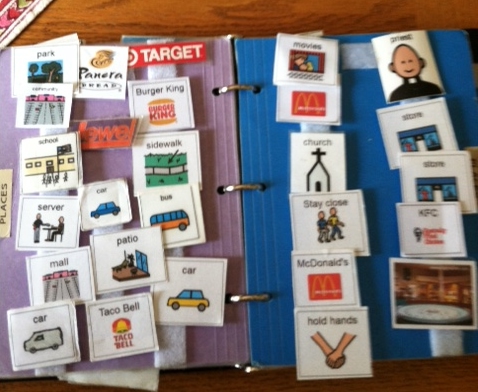
I will admit that I’ve been hesitant to write about Nick’s return to his program for fear of jinxing it. The transition back started as a trial run with Nick going half days, 3 times a week. We worked closely with the behaviorist (BCBA) to create a smooth transition. The BCBA sent questionaires to all of the personal support workers that have been working with Nick for the past few years to get their perspectives. Social stories, daily schedules and a communication book were created to help Nick understand and navigate his new routine. All of these tools are evidenced based practices that help indidivuals with autism and other disabilities to have smooth transitions.

The BCBA did observations and took data on behaviors which led to the creation of a behavior support plan. She fully expected that behaviors would occur when Nick started back. He did test the staff as she expected, with many attention seeking behaviors. Lisa, who is Nick’s personal support worker, reminded us that he’s had her 1:1 undivided attention for nearly 4 years here at home. The new ratio of the day program is 6 clients: 2 staff per room. The class sizes are much smaller than when Nick attended before the Covid-19 pandemic, which has proven to be easier to manage and safer.

Nick gradually expanded to 5 days a week and eventually went to full day hours. The staff was commited to making it a success and he settled into this new routine very well. One key to this success was having Nick’s personal support worker, Mireya work in the room with him for the first few weeks. Here they are making greeting cards for senior citizens:

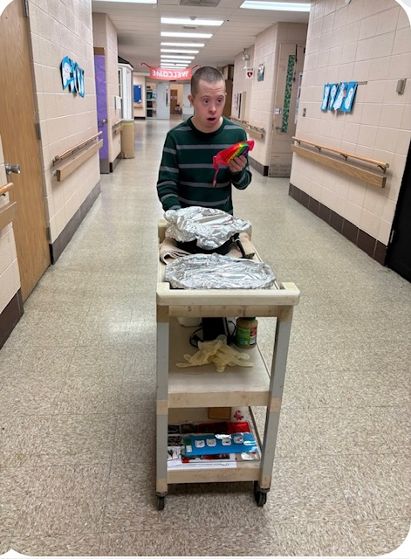
The adult day program provides a variety of activities for the clients. I sent in a few of the matching activities that Nick does at home so there was some familiarity and success with things that he is good at. Here are a few more photos of activites and jobs that he has been doing:

Nick shredding documents:
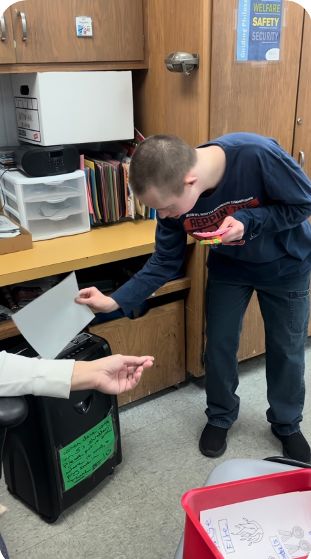
Nick pushing the cooking cart:
Nick in the gym:

Nick walking on the track:
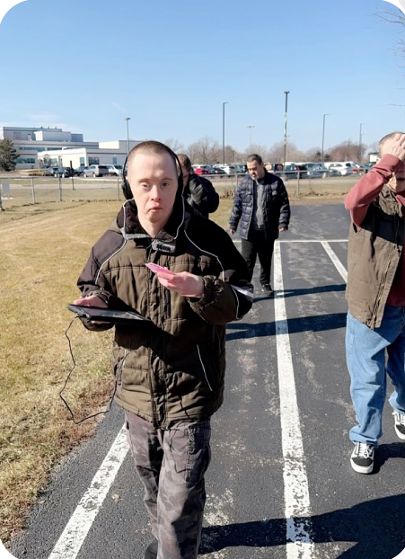
Nick gardening:

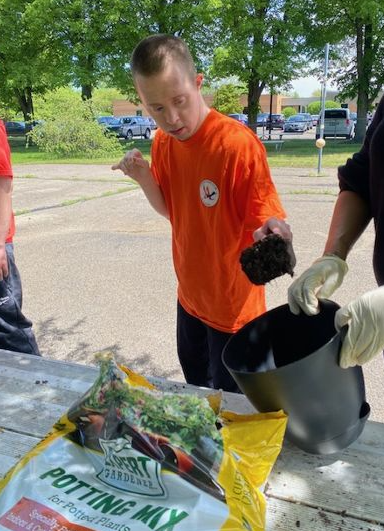
As you can see, Nick has a full day of fun and meaningful activities at his day program. He is always excited to go each day. We are so happy that this opportunity is available for Nick and the other clients who thrive with a routine and structure. I would like to express my deepest appreciation to Nick’ personal support workers, Lisa, Mireya, Lara and Jeannette for their hard work and commitment over the past few years. Having respite care allows families to be able to work outside the home and get a break to enjoy some personal time. I also want to thank my husband, Al for taking on the bulk of driving Nick to and from his program.

I look forward to sharing more about Nick’s return to his day program in future blogs and on social media. Be sure to follow us to see more pictures and videos of Nick in action on Facebook and Instagram at: Down Syndrome with a Slice of Autism. That’s what is in my noggin this week.

~Teresa 🙂

Posted in Dual Diagnosis Down syndrome and autism, Education and Special Needs, IEP (Indivdualized Education Plan), Parenting Special Needs

Blog #247~DS-ASD Back to School Tips

Blog #247~DS-ASD Back to School Tips

This week I have 10 back to school tips and strategies specifically geared to individuals with a dual diagnosis of Down syndrome and autism (DS-ASD) and their families. My name is Teresa Unnerstall, I am a DS-ASD parent, consultant and author of A New Course: A Mother’s Journey Navigating Down Syndrome and Autism. My son Nick is 28 years old and my passion is to help families, educators, therapists, medical professionals and anyone interested in supporting individuals with co-occurring DS-ASD.

Order your copy on Amazon at https://amzn.to/2W3Un6X

10 Back to School Tips for DS-ASD Families:

1. Prepare the student with a visual countdown calendar, and re-instate morning/evening routines.

2. Tour the school with your child. Then, create a social story or video social story of the school settings and staff that the student will be interacting with. Review this story regularly for the first few weeks of school.

3. At the tour, ask the teacher to show you the safety & hygiene precautions, accommodations and equipment that is listed in the IEP to make sure everything is in place.

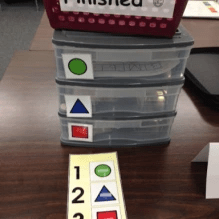
First Then Visual Accommodation
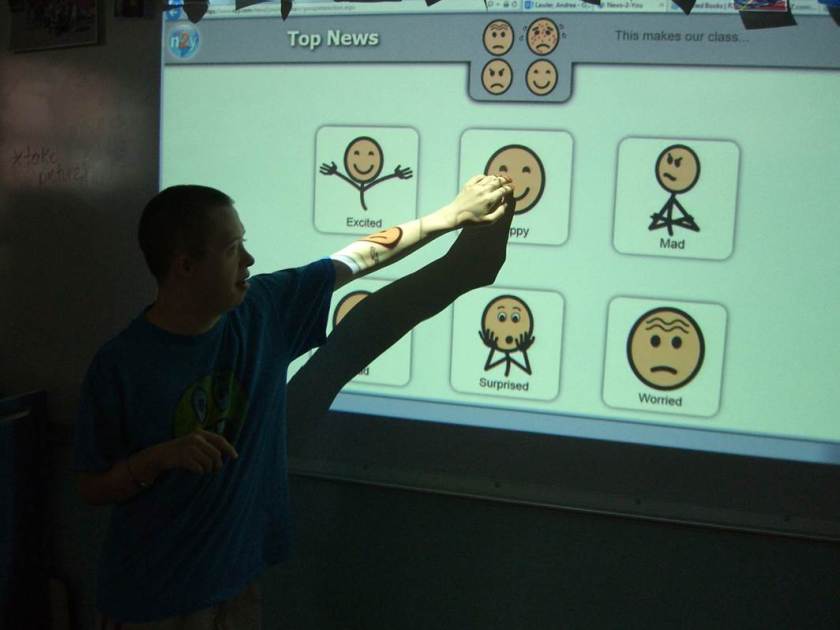
Teaching feelings visual accommodation
Nick using the Smart Board

4. Prepare a student “About Me” profile sheet. There are many templates available online that you can Google or try Canva for free. You can include different sections such as, Things I love, My Strengths, What Works Best for Me, How to best support me, What I struggle with and Interests. Make several copies to share with the staff.

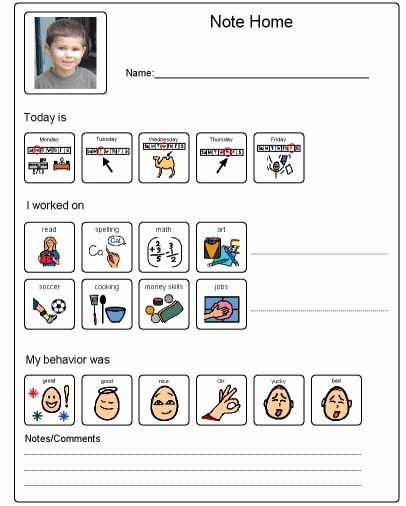
5. Determine the modes of communication back and forth with the teacher and school staff. Examples include texting, email, communication logs/notebooks and daily report sheets. This is very important as many students with DS-ASD who have language deficits or may be non-verbal and unable to share how their day went.

Daily Report Sheet

6. Review the child’s IEP to insure that all goals and accommodations are still relevant and meaningful. Note any additional needs or concerns you have coming off of the summer break and share these with the staff.

7. If the student has a behavior support plan (BSP), check to see if this has been shared with all staff and is ready to put in place on day one. Make a list of any new target behaviors that need to be addressed and added into the BSP.

8. If the student uses AAC (Augmentative and Alternative Communication) make sure the teacher and aides are familiar with how to use the program, whether it’s high tech or low tech like a picture exchange system (PECS). You can request a training for staff and parents on how to program devices, navigate tabs and get trained on how to utilize PECS with the school speech and language therapist or school district AAC specialists.

AAC Touch Chat Program

9. Students may have lost skills or experienced regression over the summer break. Evidenced-based practices help students regain lost skills and develop new ones. Some examples are using visuals, schedules, task strips, task analysis, first-then prompts, visual timers, choice boards and sensory breaks.

Sensory Break PECS IconIs there a sensory break area at your child’s school?
Time Timer App
Countdown Timer App
Choice Boards
Work Station Accommodation

10. Show your commitment by staying on top of your child’s progress. Ask for data at each quarter. Data drives decision making for future conferences and IEP meetings. If possible, volunteer at school, (room parent, field trip chaperone, art awareness presenter, book fairs, picture day and assisting with making learning materials like laminating and making copies).

Being prepared and invested in your child’s needs will help them reach their full potential for the new school year. That’s what is in my noggin this week.

~Teresa 

Follow us on Facebook and Instagram for more ideas and stories:

Posted in Autism, Autism Spectrum Disorder (ASD), Behavior/ ABA, Down syndrome, Down Syndrome Awareness, Dual Diagnosis Down syndrome and autism, IEP (Indivdualized Education Plan)

Blog #226~Beyond Down Syndrome: A New Course

Blog #226~Beyond Down Syndrome: A New Course

World Down Syndrome Day is coming up on March 21st. This day 3/21 was chosen to represent Trisomy 21, where there are 3 copies of the 21st chromosome. WDSD highlights the importance of promoting awareness, understanding, inclusion and acceptance for individuals with Down syndrome. Next week, I will provide concrete ways that you can help promote WDSD.

But what if there is more beyond Down syndrome that families are facing? Did you know that approximately 18% of children with Down syndrome have a secondary diagnosis of autism? This dual diagnosis of Down syndrome and autism (DS-ASD), presents additional challenges with communication impairment that can lead to behavior problems.

Here are some of the signs and symptoms from the National Down Syndrome Society (NDSS) of a dual diagnosis of DS-ASD:

https://www.ndss.org/resources/dual-diagnosis-syndrome-autism/

My son Nick, is 26 years old and has a dual diagnosis of DS-ASD. Ten years ago, I started writing about my journey and this new course our lives took, when Nick got a secondary diagnosis of autism. I felt very alone. I found myself pulling away from our local Down syndrome support group activities, because my son no longer fit in. He did not engage like his peers with Down syndrome. His repetitive movements (rocking, hand flapping, unusual play with toys) and vocal humming sounds made him stand out from the crowd. This new course was different than the one I planned. Nick was very delayed in toilet training and his speech deficits lead to behavior problems. As he approached puberty, his lack of speech and understanding what was expected, led Nick to become very frustrated. My son had no voice and his actions led to dangerous meltdowns.

What I soon learned (when Nick was 10 years old), is that I dealing with way more beyond Down syndrome. There was no way that I could navigate this course alone. Once I sought guidance from experts, we were able to give Nick a voice using a picture exchange system (PECS). Together with the IEP team, we determined what behaviors to target and developed a positive behavior support plan (BSP). The two key components that helped Nick was giving him a voice and finding the triggers that were causing behavior problems. We sought help from the school district’s autism specialist. The IEP team then, put supports in place and we all received training to help support the secondary diagnosis of autism. It is critical to identify target behaviors, and make a game plan to support a child before they escalate to a boiling point and have a meltdown. It’s imperative to write in additional supports to address communication including visuals  into the IEP. A reoccurring theme in my blogs is the need to address speech and behavior collectively, as all behavior is a form of communication. Visuals are key for communication, but also for navigating daily life in the form of picture schedules, social stories and learning tasks. These visuals are the blueprint for your child to understand what is going on and what you are expecting from them, and in turn helps to reduce anxiety levels.

My mission for the past ten years has been to make this DS-ASD journey easier for families following a similar path, and to open the eyes for other’s to understand the complexities and challenges associated with DS-ASD. This path that I’ve been on with Nick has not been easy. Early Intervention after birth and over the years, was critical to helping Nick reach developmental milestones. Our family has weathered a lot of storms, but with each– the sun came back out and we learned a lot along the way. Now, I am ready to share my journey with you!

 I am pleased to announce my book and the journey beyond Down syndrome:

TU_5-5x8-5_WPS_ebook

A New Course: A Mother’s Journey Navigating Down Syndrome and Autism launches May 5, 2020 and takes a deep dive into the complexities of what many families face raising a child with a dual diagnosis of DS-ASD. None of us can escape life without challenges. We each have our own journeys and individuals with DS-ASD are unique and may not be as severe as what we experienced with Nick. Our struggles at times were unsurmountable. But if you are an avid reader of my blog– you know that I’ve guided you down a path and showed you how Nick has become the best version of himself given a dual diagnosis of DS-ASD. Each chapter concludes with a 3:2:1 (3 Lessons I learned, 2 takeaways to use in the future and 1 question or concern I had during that particular time). At the end of the book, I’ve included my version of an appendix, with the final lessons I’ve learned on this journey. These final lessons are taken from my blog entries, that I’ve been writing since 2012.  A New Course is available for pre-order now on Amazon!

My passion is helping other families navigate this new course beyond Down syndrome. As a DS-ASD consultant, I am determined to assist families to find resources, offer support and guidance to make their journeys smoother. I hope my story opens the reader’s eyes and starts a conversation of what it is like to raise a child with the unique challenges associated with DS-ASD. In doing so, perhaps the reader might gain better understanding, awareness and compassion for families dealing with DS-ASD and other complex special needs.

That’s what is in my noggin this week.

~Teresa 🙂

LOGO TRANSPARENCY (5)

Follow on Social Media:

Facebook, Instagram and Pinterest @Down Syndrome With a Slice of Autism

Join us on our new Facebook Page: A New Course Book Launch to get the more inside the scenes and exclusive tidbits about A New Course: A Mother’s Journey Navigating Down Syndrome and Autism.

Twitter @tjunnerstall

Posted in Autism, Behavior/ ABA, Down syndrome, Dual Diagnosis Down syndrome and autism, Parenting Special Needs

DS-ASD~What To Do When It’s More Than Just Down Syndrome

DS-ASD~ What To Do When It’s More Than Just Down Syndrome

If you are a parent, teacher, caregiver of extended family member of an individual who has Down syndrome, you are aware of how challenging it is to hit those developmental milestones. There are even more speech deficits, sensory integration problems and challenging behaviors associated with a dual diagnosis of Down syndrome and autism (DS-ASD). My son Nick is 25 years old and has DS-ASD. Years ago we suspected that his behaviors and speech delays were perhaps more than just Down syndrome. We got a clinical, medical evaluation to determine that he also had autism. Getting the secondary diagnosis enabled us to receive additional services and support.

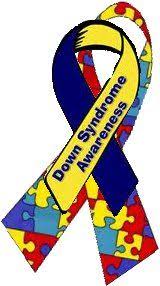
DS-ASD Ribbon

Additional Services and Support for DS-ASD:

Speech and Augmentative Alternative Communication

Behavior Support Plan (BSP) and Applied Behavior Analysis (ABA)

Specialized Training for Toileting

Federal and State Funding for Respite Care and Equipment

Support Groups for DS-ASD families online and on Facebook

Besides the additional services and support, we got validation that our son’s challenging behaviors and speech deficits were more than just Down syndrome. This gave us a peace of mind as a family, that we were no longer alone on this new path.

To read more about additional services, support and links related to a dual diagnosis of Down syndrome and autism (DS-ASD) click here:

https://nickspecialneeds.com/2016/09/12/blog-155more-than-just-down-syndrome/

Getting the secondary diagnosis of autism opened up new avenues for our son to get help with communication and tackle the unique behaviors that hindered his progress both at home and school. This made a huge difference in all aspects of his life and ours. It’s a very different path than just Down syndrome, but with support your child and family can navigate it more smoothly.  That’s what is in my noggin this week.

~Teresa 🙂

Follow Nick:

Facebook and Pinterest @Down Syndrome With A Slice Of Autism

Instagram #nickdsautism

Twitter @tjunnerstall


Posted in Behavior/ ABA, Down syndrome, Dual Diagnosis Down syndrome and autism

Blog #217~DS-ASD: Why the Autism Label Matters?

Blog #217~ DS-ASD: Why the Autism Label Matters?

Over the years I’ve read countless stories of parents struggling to get an autism evaluation and diagnosis for their child who has Down syndrome.  IEP (Individual Education Plan) teams often tell parents that, there is no need to get an autism label, because they already have a primary diagnosis of Down syndrome that they can work with.  A doctor may dismiss the idea because the child makes good eye contact, and is highly social.  This is my story as well with my son, Nick who is 24 years old and has a dual diagnosis of DS-ASD.  So, why does the autism label matter?

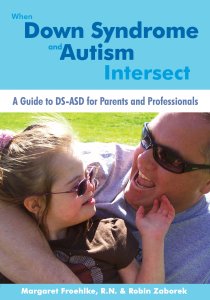
The book “When Down Syndrome and Autism Intersect, A Guide to DS-ASD Parents and Professionals” by Margaret Froehlke, and Robin Zaborek, states that:

“It’s only in  the past 10 to 20 years that we’ve learned that up to 18 percent of persons with Down syndrome will also have autism or ASD (autism spectrum disorder).  This is information that most healthcare professionals are not aware of and underscores the importance of this reference guide.”

Down syndrome and autism intersect2

Getting the secondary diagnosis of autism for an individual with Down syndrome will open up new doors for services to address the unique needs associated with DS-ASD.  For a parent, it validates what they have suspected for quite some time, and allows them to move forward to get services and support for their child.  Honestly, I was sad at first to receive the news of an autism diagnosis.  But eventually, I realized that this label explained the speech deficits, complex sensory, stimming and violent behaviors that Nick was exhibiting.  I rolled up my sleeves and sought help from the school IEP team and support groups to figure out how to help my son.  The secondary formal diagnosis of autism, enabled us to access the services from the district’s Autism Consultant.  This was the key to opening up new doors that helped in the areas of behavior and communication.

Behavior and communication go hand in hand.  As a child matures and approaches puberty, the behaviors can escalate to meltdowns that endanger themselves, family and school staff and peer students.  It is essential to determine the function of these behaviors and get a positive behavior support plan in place.  Evaluating the mode of communication is the second piece of the puzzle that must be addressed.  If a child is frustrated due to lack of speech or being non-verbal, they will often act out through their behaviors.  Individuals with DS-ASD may act out because they are trying to make sense of their world.  That is why a positive behavior support plan and mode of communication can enable a child to make their needs known, so they can get these wishes met.

autism-scrabble-letters-by-Jesper-Sehested

A BCBA Autism Consultant typically observes the child and takes data on behaviors by doing a Functional Behavior Analysis (FBA).  This detective work will uncover what is causing the behavior and lead to developing a behavior plan to support the child.

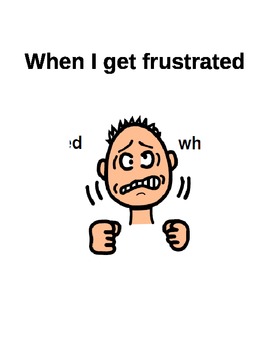
Frustrated icon   Detective-clipart-animation-free-images-2

Once the target behaviors have been identified, the Autism Consultant and IEP team members, along with the parents, can collaborate to find strategies to support the child.

For example if a child hits or pinches himself (Self-injurious behavior known as SIBS), or hurting others.  The Autism Consultant would determine possible causes and the setting in which it took place, and what the function of the behavior could be (avoidance, escape, boredom, etc..).  Possible antecedents might include:

*Diverted staff attention

*Unstructured/wait time

*Loud or crowded environment

*A change in activity to a non-preferred activity.

*Disrupted routine

*An object or activity is taken away

Supports can be put into place so that the child better understands what is expected.  A visual schedule, social stories, and communication mode (Picture Exchange Communication System knowns as PECS, or a higher tech, talker device) can be determined and put into place to allow the child to express their feelings, wants and needs.  The use of sensory diets and breaks, using noise cancelling headphones help the individual cope in stressful, crowded and loud environments, or regulation when the child is over or understimulated.

Providing behavior and communication support and strategies interventions for individuals with a dual diagnosis of DS-ASD will make a positive impact both at school and in the home setting.  In addition, the secondary diagnosis of autism opens up doors to more services and funding from state for respite care and behavior support at home. Having outside help with respite care, relieves the burden of stress on the family, and enables parents to continue to enjoy personal interests and taking a break outside the home.

Getting a proper and formal assessment and evaluation for a dual diagnosis of Down syndrome and autism is a game changer.  Individuals with DS-ASD experience the world differently than just having Down syndrome or autism alone.  Intervention and support strategies can be targeted to the individual to specifically address behavior, communication and sensory needs for the child.  Finally, the second label of autism, will open up doors to support groups and additional funding for waivers that provide in home support and respite care for weary families like mine.

That’s what is in my noggin this week. 🙂

~Teresa

Follow Nick on Social Media:

Facebook and Pinterest @Down Syndrome With A Slice Of Autism

Instagram #nickdsautism

Twitter @tjunnerstall


Posted in Autism, Down syndrome, Dual Diagnosis Down syndrome and autism, Education and Special Needs, Parenting Special Needs

Blog #213~Back to School Tips for Special Needs Parents

Blog #213~Back to School Tips for Special Needs Parents

There are a few more areas to consider when sending a child with special needs back to school.  Children with intellectual and developmental disabilities may not be able to understand change and transitions related to school.  The student’s language skills may be limited and they might have difficulty expressing emotions.  This can all lead to anxiety which can result in behavior problems.  You can help your child by planning ahead, getting organized and putting visual supports in place for the new school year. Here are 5 tips to ensure a smooth start to the new school year for your child with special needs.

backtoschool94

5 Back to School Tips for Special Needs Parents:

1. Look over your child’s IEP (Individualized Education Plan) before school begins. The IEP outlines academic and functional goals, supports needed, accommodations and services. Reach out to your child’s case manager/IEP coordinator or Support Teacher, and ask specifically how these will be implemented, and how data will be tracked.  If there is a Behavior Support Plan (BSP), review it, and make sure that all staff members working with your child have as well.  Note anything that might need to be tweaked in both plans, and share with the school staff. Summer and holiday breaks can often lead to regression in behaviors that may need to be addressed.

2. Arrange a visit to the classroom before school begins.  Provide a profile/resume sheet about your child for the staff, containing any information that will help them understand their likes, dislikes, behavior and communication concerns.  Look for visual supports and a schedule posted in the classroom to enhance learning and understanding.  You can request that a social story (pictures or video); be made of the settings that your child will be in at school, (classroom, lunch room, gym, sensory area, etc.).  It also helps to include pictures of support staff and classroom peers (if possible), in the social story. If a child with autism can see it in picture and/or written form, they will better understand it.  Visual supports, social stories and schedules all act as blueprints to help your child navigate their day.  This will help them understand what is expected and occur, leading to reduced anxiety levels for your child.  The support teacher/ case manager can make these for you to read with your child before school starts.

Social Story for Back to School:


3. During the classroom meet and greet, arrange a mode of communication with your child’s teacher.  In the past I have used both email, texting and a communication notebook which goes back and forth.  My son, Nick has a dual diagnosis of Down syndrome and autism.  His verbal language skills are limited.  The communication notebook gives the child a voice that describes what their day has been like at school, and how they are doing at home.  This is especially helpful, if your child didn’t sleep well, and you can give the teacher a head’s up, to incorporate more breaks in the day if needed.  In addition to a communication notebook, the teacher can create a custom daily report to share with parents.  Depending on the skill level of your child, words or pictures can be used and looked at together at home after school each day:

Daily Report Charts:

4. Start Early! Get school supplies, clothes and shoes shopping done and haircut at least a week before the start of school.  Having a child with special needs often means a lot of angst over haircuts. For Nick the stress of getting a haircut use to affect him for several days afterwards.  Fortunately, now that my son is older the haircuts are much easier.  Maturity and a good set of clippers have made haircuts successful.  I’m super excited to share with you the new hair clippers that are a GAME CHANGER!  The Remington Short Cut Pro Self-Haircut Kit is cordless, smooth, quiet and quick as it takes more hair in a single pass.  It’s the most sensory friendly clippers we’ve ever used on our son.  5 Minutes and no tears!


The night before school starts, have your child help lay out the clothes, organize the school supplies and pick out lunch/snack choices.  This will help to set the tone for  a smooth start to the day and this helps especially at six o’clock in the morning. One thing that was NEVER EARLY; the school bus. Make sure you have carved out your schedule accordingly and have something for your child to do while you wait. On average, we’ve waited 30-45 minutes for the bus to get to our house the first few days of school.

5. Consider doing volunteer work at your child’s school. It is fun and you can see firsthand how your child is doing in the classroom.

Here are a few school volunteer ideas:
*Holiday Parties
*Art Awareness Presenter
*Chaperone Field Trips
*Field Days
*Picture Day
*Work book fairs
*Library aid
*Special Olympics Practices
*Assist Case Manager/ Support Teacher- Making copies, laminating, helping to create classroom supports.

Taking a few extra steps to get organized, familiarizing yourself with the IEP/ Behavior  support plan, visiting the classroom, and providing visuals for your child will lead to a smooth start to the new school year.  Getting involved as a classroom volunteer is rewarding and a great way to interact with student peers and school staff.  Careful planning, organization and providing visual supports will make things easier for your child starting back to school.  Do you have any back to school tips or tricks for your child with special needs? I’d love to hear them.

That’s what is in my noggin this week!
~Teresa 🙂

back to school bus

Follow Nick on Social Media:

Facebook and Pinterest @Down Syndrome With A Slice Of Autism

Instagram @nickdsaustim

Twitter @tjunnerstall


Posted in Autism, Behavior/ ABA, Dual Diagnosis Down syndrome and autism

Blog #178~ 5 Behaviors that have Improved with Age

Blog #178~ 5 Behaviors that have Improved with Age

The behaviors associated with autism has made for a very different journey than Down syndrome alone.  My son Nick is 23 years old and has a dual diagnosis of Down syndrome and autism.  I like many other parents, have been in the trenches dealing with some tough, scary and dangerous behaviors.  The good news is that many of these behaviors have improved with age!

Don’t get me wrong, Nick still has behaviors that we continue to work on.  But these 5 behaviors have greatly improved now that he is a young adult:

5 Behaviors that have Improved with Age

1-Eloping/Wandering

2-Haircuts

3-Meltdowns

4-Self-injury

5-Poop Smears

1-Eloping/Wandering

Yes, we have lost Nick a few times and it is one of the most frightening and heart pounding things a parent can experience.  Nick use to think it was funny to take off running.  This behavior has mellowed significantly, with the exception of when he spots a fire alarm.  He’s got a thing for pulling fire alarms, 44 times since third grade!

Big Guy, Nick…

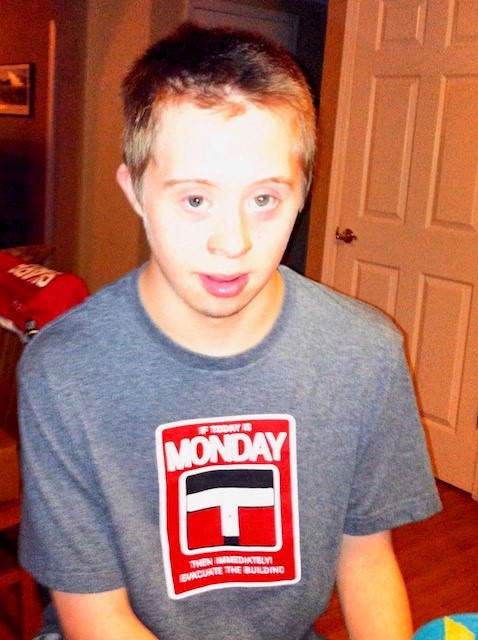
Nick fire alarm shirt

Over the years we have put a few things in place to prevent this from happening.  You can access previous blogs with specific information on how to secure your home and child against wandering in by typing  Blog 142~Wandering and Autism” in the search box.  I still make sure that Nick is arm’s distance from me when out in public.  I also cue him with reminders to “Stay close”, “Big guys keep on walking”, and “Hands to self, Nick”.  Bottom line, now that Nick is older and understands the verbal cues, he doesn’t take off running for the heck of it.

2-Haircuts

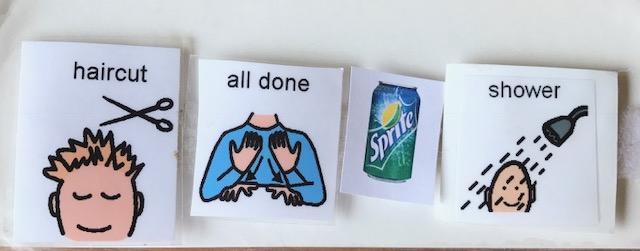
There was a time when Nick flailed and put up a fight when getting a haircut.  It was a two-man effort that left us in a pool of sweat with Nick being red-faced and in tears.  Three things that have helped to make haircuts easier are using visuals, immediate rewards and investing in good hair clippers.  The visuals helped him to understand the sequence of events which lessened his anxiety and showed a positive ending to the experience with highly preferred rewards (Sprite and a shower).

haircut visual

Spending the extra money on a quality set of hair clippers helps to make the haircuts go smoother.  In the past several years, what was a two-man operation is easily done by Nick’s Dad, and with no tears or Sprite needed as a reward.

3-Meltdowns

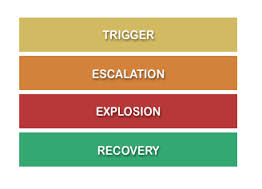
Autism Spectrum Disorder can cause behavioral and developmental problems, one of which is outbursts, called autistic meltdowns.  For many years, especially during puberty, these meltdowns would cause injury such a pinching, bruising and skin cuts to us and those caring for our son.

meltdown

Working with a behaviorist specializing in autism has helped greatly.  Nick has a behavior plan in place that identifies all possible triggers and what to do to prevent a meltdown.  Now these meltdowns are much less frequent and manageable because of learned appropriate coping skills.  More often than not, these meltdowns can be avoided or quickly diffused.

4-Self-injury

Self-injurious behavior can be exhibited by people with developmental disabilities, including autism.  Such behaviors can include, (but not limited to) head-banging, hand-biting, and excessive self-rubbing and scratching.  Having Down syndrome and autism can often limit speech making it frustrating for your child to communicate.  Self-injurious behavior in itself is communicating something, (anger, frustration, fatigue, and  health issues to name a few).

No pinching

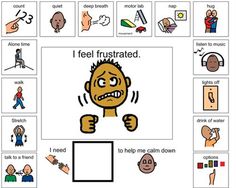
Getting a solid behavior plan in place, that identifies triggers that might set off self-injurious behaviors has helped enormously.  This can be done with the help of an autism behavior specialist.  Again, visual supports can help to manage behaviors before they escalate to cause injury.  School or private ABA (Applied Behavioral Analysis) specialist can customize visual supports and other strategies for your child.

Frustrated and Autism

Over the years we’ve identified the triggers that may cause self-injury, and sensing this frustration (for Nick it’s when he pinches his own cheek).  Using redirection and preventing escalation is the key to keeping self-injury to a minimum.

*Poop Smears

Probably the best news is that poop smears are a thing of the past!  There was a time when we were in the thick of it.  However, “Operation Code Brown” has been shut down. 🙂

poop icon

Toilet training has been by far one of the most challenging behaviors to work on having a child with Down syndrome and autism.  It’s a marathon, not a sprint, so be patient.  It requires just as much discipline on the parents part, (if not more) than your child.  We used the Azrin-Foxx Method of habit training as the basis of getting Nick fully trained.  This took many years and commitment but it CAN be done!

Things do get better with age.  These 5 behaviors have much improved, now that Nick is a young adult.  Getting support to address the autism piece has made a huge difference.  If you find yourself up against a wall, look for another solution utilizing the help of autism behavior specialist and the school staff.  Finally, try and be patient and rest assured that as your child gets older, these behaviors will improve.

That’s what is in my noggin this week. 🙂
~Teresa

Follow Nick:

Facebook and Pinterest @Down Syndrome With A Slice Of Autism

Instagram #nickdsautism

Twitter @tjunnerstall


Posted in Down syndrome, Dual Diagnosis Down syndrome and autism, Education and Special Needs

Blog #156~Is Inclusion For Your Child?

Blog #156~Is Inclusion For Your Child?

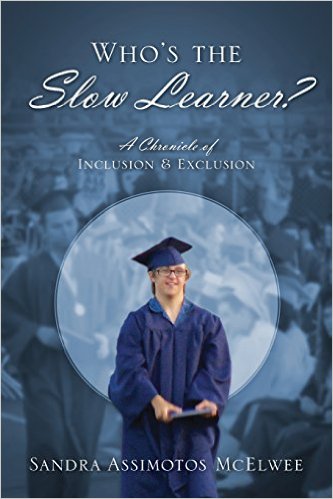
Are you raising or involved with educating a child with special needs within an inclusion setting?  Perhaps you are considering  an inclusion classroom for your child.  If so, then THIS is the book you need to read:

whos-the-slow-learner

Who’s The Slow Learner? A Chronicle of Inclusion & Exclusion, written by Sandra Assimotos McElwee (Outskirts Press) is a great book and and resource on inclusion.   Her son Sean McElwee was born with Down syndrome.  Sean is now 22 years old and is one of the star cast members of the Emmy Award Winning series, Born This Way on A&E.  

Her goal for writing this book was to educate and inspire, while chronicling her son’s education experiences.  In Sandra’s words, “This is not a ‘How-to’ book, but a ‘How we did it’ book.”

What is inclusion?

Inclusion is a term which expresses commitment to educate each child, to the maximum extent appropriate, in the school and classroom he or she would otherwise attend.  It involves brining the support services to the child (rather than moving the child to the services) and requires only that the child will benefit from being in the class (rather than having to keep up with the other students).  Proponents of inclusion generally favor newer forms of education service delivery.

Full Inclusion means that all students, regardless of handicapping condition of severity, will be in a regular classroom/program full time.  All services must be taken to the child in that setting.  

(From Sandra’s book this information was taken from the Wisconsin Educational Council’s Website)

Inclusion not only benefits the special education student, but also the regular education students in class.  It can be highly successful with the right supports, accommodations, modifications and supportive school staff.  From my own experience, I found this to be the case with my son Nick, who is also 22 years old and has Down syndrome and autism.

Sandra offers a wealth of information in this book.  Each chapter begins with all Sean’s IEP goals for that school year.  The book is loaded with great ideas on how to navigate the school system and how/when to reach out for outside help using consultants to advocate for your child.  This was the case when Sean transitioned into intermediate school, where they determined a need to put a behavior support plan in the IEP.  Sandra provides this full behavior support plan in the book as well, which is very beneficial.  Getting outside support for communication and behavior also helped greatly during the adolescent years with my son, Nick. Keeping in the loop with staff and volunteering in the school and classroom is another great way to keep up with how your child is doing in school.

There are so many valuable lessons that Sandra learned and shares about her son’s educational journey.  Many of which I can relate to having gone through this with my son, Nick.  You are not always going to have a school team or some of the members supporting inclusion for your child.  Sometimes it’s the school staff that are the slow learners.  In this book, you can see how Sandra had to advocate even harder during the intermediate and high school years. Unfortunately this was not always a success. But these actions set the foundation, to make it easier for other families to follow.

The book not only contains a wealth of education information, but many funny and inspiring stories on how Sean touched so many lives.  In one story, Sandra gets out of the shower and noticed the unmistakable odor of popcorn being microwaved.  She fully expected to smell a burnt popcorn next, so she hustled quickly downstairs.  To her surprise, Sean had just opened a perfectly cooked bag of popcorn.  She asked Sean what number he pushed?  Sean looked at her like she was crazy, and pointed to the control panel and said “popcorn”.  It turned out that the all the site words Sean had been learning in first grade were working. Sandra didn’t even know there was a popcorn button on the panel.  In this case she, was the slow learner.

Who’s The Slow Learner? is not just for parents, but a great resource for educators, future regular & special education teachers, school administrators and advocates.  This is the first book that chronicles a student with special education needs from pre-school to high school graduation.  It’s a very instructive book that shows a mother’s determination to advocate for the best available resources in not always a cooperative educational system.

I’m sure this book will benefit many considering inclusion for their child with special needs, and the education team that will be providing for them. That’s what is in my noggin this week.

~Teresa

Catch Sean and his family on the Emmy Winning Series, A&E’s Born This Way, Tuesday nights at 9pm (8pm Central)!

Trump_Key_Art_Premiere_FIN.indd

Follow Nick:

scan0016

Facebook and Pinterest: @Down Syndrome With A Slice Of Autism

Instagram: #nickdsautism

Twitter: @tjunnerstall


Posted in Augmentative and Alternative Communication (AAC), Autism, Down syndrome

Updates on Behavior & AAC Device

Updates on Behavior & AAC Device

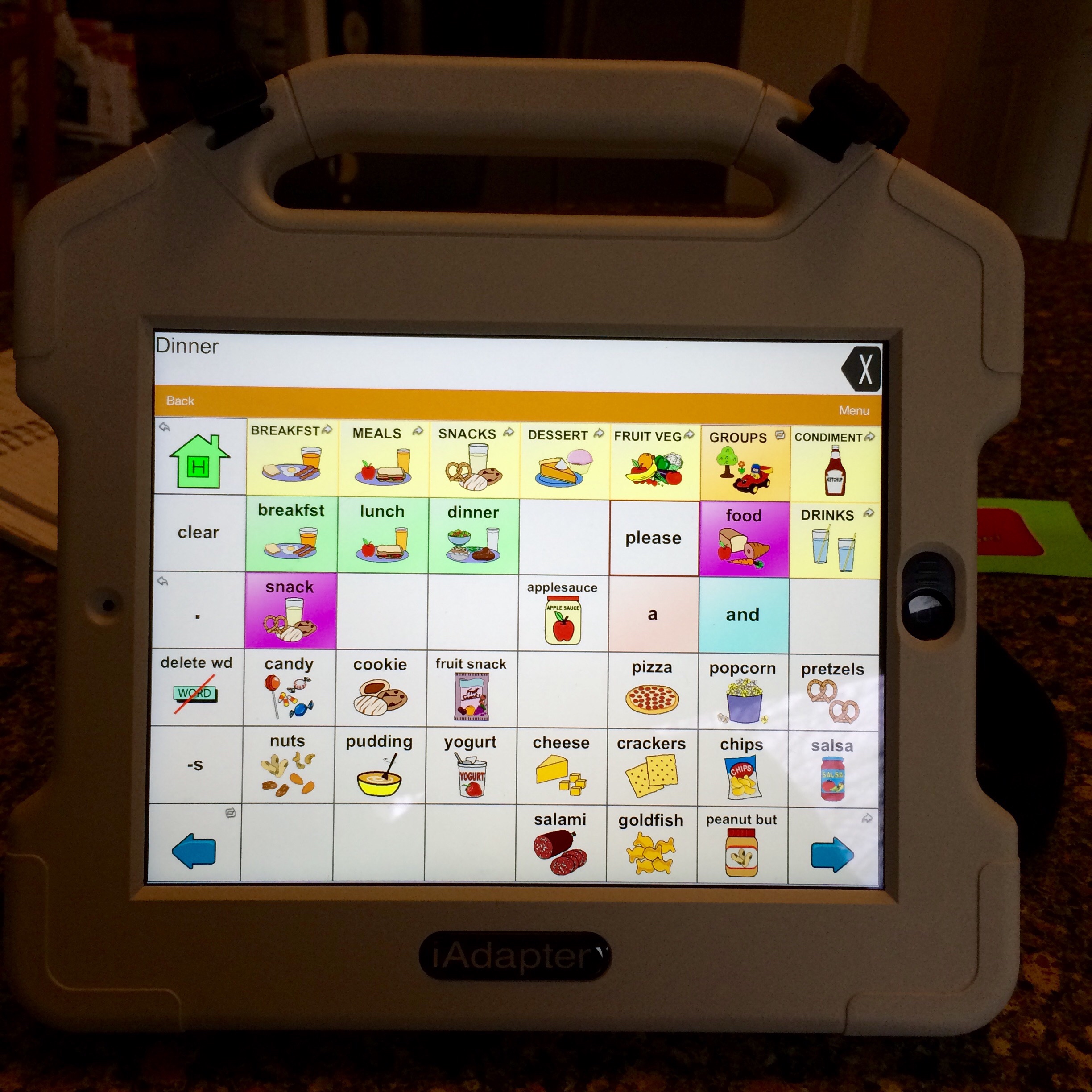
Nick’s behavior has been escalating over the last few months.  He is 21 years old and has Down syndrome and autism.  The incidences of throwing objects has increased.  This also includes his new AAC Device (talker). AAC stands for Augmentative Alternative Communication.  The school district’s autism specialist has done some observations of Nick and data collection of behaviors.  I did this as well at home with Nick’s behaviors.

The school team met last Friday to go over the observations and brainstorm on how to adjust his behavior support plan.  A significant amount of the behaviors are attention seeking.  The team is working on a system to reward Nick for being compliant. In addition, they will be utilizing his new AAC device to seek appropriate attention and making more requests and comments with it.  He has been throwing the device both at home and school.  The iPad is in sturdy enough case to survive a throw from the second floor of the Naperville Library as well as being pitched out the bus onto Montgomery Road at a railroad crossing.

On a positive note, he is using the device well to requests food, rewards as well as making some comments like, “excuse me” when he lets out burps.  He is learning how to navigate it with minimal prompts as well.

ipad touch chat

Nick’s behavior support plan is much like painting the Golden Gate Bridge.  Just when you think it’s all done and figured out, a new behavior pops up and you have to start over again.

paint golden gate bridge

That’s Nick’s world….. the rest of us are just trying to keep up.  That’s what is in my noggin this week.

~Teresa


Posted in Autism, Behavior/ ABA

Blog #77~Autism and Meltdowns

Blog#77~Autism and Meltdowns

I would rather write about anything else than what an autism meltdown looks like (even poop accidents).

poop icon

It’s a difficult subject, personal in nature and exposes a lot of vulnerability.  I am just one of so many dealing with these raging outbursts. My son Nick is 19 years old and has Down syndrome and autism.  So, for all of the warrior moms out there in the battlefield…. This one is for you!

When Nick was in the throes of puberty, his meltdowns were horrific.  He would destroy everything in his path.  His arms slung hard hitting, kicking, biting and drawing blood with his pinching.  These intense battles became so bad and frequent that I had to take action.  I was no longer able to control my own son.  Here is what I did……

Three things we did to get things under control:

1.  Nick was put on medication, Risperdal to help calm him down and be less agitated.

2.  I called an emergency IEP meeting and insisted that the school district’s autism specialist be brought in to help out. We tracked his behavior both at school and home to figure out what might be triggering his anger.  Then we came up with a behavior plan.  You see, every behavior communicates something.  In Nick’s case, he wasn’t being heard.

3.  The autism specialist determined that the staff, Nick and I needed to be properly trained to use the picture exchange system (PECS). The pictures gave Nick a voice that autism had robbed him of.  Finally, he felt in control.  The incidences of the teenage sized temper tantrum quickly diminished.

PECS Communication Book:

photo (123)

Fast forward to the present….. Nick has been unsettled.  He is expressing it by shoving us away.  It’s like he is saying, “Hey, I am 19 years old and coming into adult age.  Back the F#&K off!”  Nick had two serious meltdowns in the past week.  Each seemed to come out of nowhere.  But there is always something brewing inside. You just have to back track and figure out what might have been the trigger(s) to set him off.

Portrait of an Autism Meltdown: The Scenario, Triggers and Outcome

(Also known as the ABC’s: Antecedent-Behavior-Consequence) Here’s a sample form used to work on a Behavior Support Plan………

IMG01

Timeline of Nick’s Meltdown

A=Antecedents:

*Routine is off the past couple of weeks Nick’s Dad had shoulder surgery=added stress around the house.

*Nick has a runny nose and woke up way too early.

*Dinner at Nick’s Aunt & Uncle’s recently purchased home-new environment

*Al pulls into his brother’s driveway and has to back up a few times.  Nick hates it when you pull in and then have back up.  He thinks you aren’t going to stay so he panics, bangs on the window, pinches his cheeks and yells loudly.

*Nick’s bored and no one is paying attention to him.  He looks to stir things up. He sits down on the couch with his iPod, but doesn’t last there long.  He finds my purse and empties the contents it down the stairs. Then, he bonks poor Cali on the head with the can of tennis balls he is stimming on.

Poor Cali, retreats to the kitchen…….

IMG01 (2)

*Aunt Ali makes Nick’s favorite pasta dish, and has bought his favorite dessert. 🙂

little debbie cakes

*Oh no, I realize that once the Little Debbies are introduced Nick’s going to make a bee line to the shower. That’s his routine.

beelinne pic

*Sure enough, he strips down in the bathroom upstairs. The water doesn’t get as hot as Nick likes…. NOT GOOD, this is going to make him mad.

B=Behavior:

*He shivers and is pissed as I help him towel off.   I hand him his street clothes to put back on.  (I should have brought his pajamas.)  He flung them across the bathroom, then he proceeded to grab the tissue box, toothpaste, magazines, hand towel and hurl them as well. THIS IS IT…….

Point of no return

*I managed to contain him between the toilet and bathtub and shield myself as he lunges at me pinching, bruising and scratching my arms.  I use a towel much like a bullfighter does against a raging bull.  Only I am the one who becomes bloodied, not the bull.

bullfighter pic

*Nick is nearly my size.  There is no possible way to do *CPI Holds (see link below) on him anymore.  It’s more about getting him in a safe place and deflecting his blows.

calm down autistic child

It took 30+ minutes for Nick to de-compress from this meltdown, (most are 10-15 max these days).  I felt raw, defeated and exposed.  Nick started to work through his emotions.  He cursed, hit and pinched himself as if he was replaying the meltdown. My heart breaks a thousand times in these moments.

Consequence:

Eventually Nick showed remorse and said, “sorry”.   That’s when you know he has de-escalated.  He put on his clothes, said our apologies and drove home in silence.

THAT is a portrait of an autism meltdown!

The next morning, I brewed a K-cup and began to dissect what had happened to cause the meltdown.  Nick thrives best in a predictable environment and visual picture schedule that he can follow.

So, I go back to the ABC Functional Behavior form:

A=Antecedent (what happened before)? All the things listed above were building up inside him.

B=Behavior (Nick’s tired, confused, mad at the cold water and no pj’s, he lashes out.)

C=Consequence (After the meltdown, Nick de-escalates and apologizes and we go home.)

I’m still trying to figure out Nick’s world.  In retrospect, I should have increased his med dose before the dinner and made a visual schedule with pictures of their new home.  On the schedule put the following icons on:

“New house”

“Dinner”

“Dessert”

“All Done”

“Car”

“Home”

Or at the very least, just brought his pajamas.  So, I will re-boot and learn from this mistake just as I’ve done before.  Autism and meltdowns can be scary and brutal.  But they can also be prevented if you look ahead to the environment, and plan ahead for anything that might set your child off.

That’s what is in my noggin this week.

~Teresa

*CPI= “Crisis Prevention Institute offers trainings in “Nonviolent Crisis Intervention.”  The program is safe, nonharmful behavior management system designed to help humans service professionals provide the best possible care, welfare, safety and security of disruptive, assaultive and out-of control individuals even during their most violent moments”  For more Information: http://www.crisisprevention.com.