Posted in Down syndrome, Down Syndrome Awareness, Dual Diagnosis Down syndrome and autism, Government/Legal Matters Related to Special Needs, IEP (Indivdualized Education Plan)

Blog #195~ Being a Firestarter

Blog #195~ Being a Firestarter

What is the difference between those bold enough to pursue their dreams and others who never get comfortable enough to ignite their lives? The doers are “Firestarters” and, because of them, the world is a much different, and often, better place.

Fire

Are you looking for a way to ignite your life and dreams?  Firestarters-How Innovators, Instigators and Initiators Can Inspire You To Ignite Your Own Life,  is a new book released last week; that will help you to do so. As I wrote in last week’s Blog #194, Firestarters are innovators, instigators and initiators that get things accomplished.  Recently I had the opportunity to interview one of the co-authors of this new and powerful book, Paul Eder along with a featured Firestarter, David Egan who is an advocate for special needs.  This week, I am sharing more on these interviews about being FIRESTARTERS!

Firestarters

David Egan is the first person with an intellectual disability to be awarded a Joseph P. Kennedy JR. Public Policy Fellowship, he made history by working on Capitol Hill with the Ways and Means Social Security Subcommittee.  David Egan, born with Down syndrome, is a trailblazer for others who have intellectual disabilities.

David Egan-Advocate Photo

He believes in promoting the idea of people with disabilities having special talents.  David states that people with intellectual disabilities should be included in as many sectors of our society as possible, and being featured as a leader in this book makes made him proud.  The most important part of his advocacy is to demonstrate that people like himself are Valued, Able, and Ready to work.

David Egan Work Photo         David Egan swimming

“We are citizens that matter and we belong in our community.” -David Egan

David-Egan-Capitol-Hill-2011

“People with intellectual disabilities do not want pity; we want respect, inclusion, and the opportunity to reach our full potential like any other citizen.” -David Egan

Paul Eder is the co-author of Firestarters along with Raoul Davis JR. and Kathy Palokoff.  From early on, Paul Eder wanted the book to be inclusive.  He has a 6-year old son, Brady who has Down syndrome and believes his potential is limitless.  Paul says that a Firestarter is partially defined by the impact you have on others. His son, Brady has certainly impacted his life.  Paul hopes his son’s achievements go beyond and push the boundaries like David Egan.

I asked Paul how he plans to use the concept of Firestarters to help navigate his son through school and working with IEP team members? 

Paul said that, “The IEP (Individualized Education Plan),  generally taps into a number of the concepts we discuss in the Firestarters book, but the section on Accelerants is very relevant. Accelerants include: Mission-focused behavior, Cooperation, Constructive competition, sweat equity (working hard), and support seeking.”

Paul goes on to further state this about IEP’s:

“An IEP certainly focuses on the mission surrounding your child’s educational path. From a cooperation perspective, the IEP defies all the supporting partnerships that are necessary to propel his success.  All of the IEP goals are measurable, which gives it a competitive flair. We want the goals to be challenging but not impossible, and we want to be able to compare his progress against some standard of success (e.g., grade-level expectations). My son has a daily behavior log where his social and academic behaviors are tracked. From this sheet, we are able to tell whether he is putting in his full effort and devoting the sweat equity needed to learn. Support-seeking is an obvious one.”

“The IEP team is a support structure in itself.  As parents, we can’t be afraid to ask the questions needed of the team and push for the supports required to ensure his success.” -Paul Eder

I asked Paul how can someone support the Firestarters in their lives, especially those with potential but who may have special needs?

In the book we define 4 types of supporters based on the research we conducted:

1.Nurturers listen and help you follow through with your ideas.
2.Motivators get you moving. They are people like Tony Robbins who exude an energy that make you want to be a better person.
3.Illuminators are the teachers in your life who help you grow socially and intellectually.
4.Protectors are the people who defend you when others won’t.

A FIRESTARTER, seeks support to fan their flame, and finds ways to limit the influence of Extinguishers.

As we begin 2018, what do you want to accomplish?  Find the people who can support you and don’t allow the extinguishers to have power over your life.  We’ve all met FIRESTARTERS, and seen what they’ve accomplished.  They create, disrupt and start things.  The book FIRESTARTERS  interviewed successful entrepreneurs, CEO’s, organizational leaders, advocates and forward thinkers from a variety of professions to find out what makes them tick.  There are step by step guides to teach you how to join the ranks in whatever you want to accomplish.

For more information about FIRESTARTERS click here: https://goo.gl/4VmHKo

Thank you to Paul Eder and David Egan for sharing your inspiring stories of being FIRESTARTERS, who make the world a better place!  That’s what is in my noggin this week.

~Teresa 🙂 


Posted in Down syndrome, Down Syndrome Awareness, Dual Diagnosis Down syndrome and autism, Government/Legal Matters Related to Special Needs

Blog #194~ Firestarters

Blog #194~ Firestarters

What is the difference between those bold enough to pursue their dreams and others who never get comfortable enough to ignite their lives? The doers are “Firestarters” and, because of them, the world is a much different, and often, better place.

Recently, one of the co-authors of a new and powerfully motivating book, Paul Eder reached out to me to do an exclusive interview about Firestarters- How Innovators, Instigators and Initiators Can Inspire You To Ignite Your Life.

Firestarters

There is a big difference between people who MAKE things happen and those who only THINK about making an impact.  So many people have dreams, yet few are willing to take action.  The authors of Firestarters set out to find the “secret sauce” providing pragmatic advice for readers to ignite the qualities from successful entrepreneurs, CEO’s, organizational leaders, advocates and forward thinkers from a variety of professions.  Co-Authors Raoul Davis JR., Kathy Palokoff and Paul Eder did extensive research interviewing and studying hundreds of people who have all been a catalyst for change.

In my interview with co-author Paul Eder, he states that a Firestarter is someone who makes an impact, someone who presses forward in the face of challenges that would cause others to run the other way.

There are 3 types of Firestarters in the book:

*Innovators create things.

*Instigators disrupt things.

*Initiators start things.

All three types are bonded together by the great impact they have on other people and the world by creating, disrupting and starting things.  So, how do you know if you’re an Innovator, Instigator, or an Initiator?  The book provides a quiz that you can take, but the short answer is to investigate both what motivates you and how you interact with others.

*Do you like to explore new ideas for the sake of exploring them? Do you come up with your own pet theories of how the world works? You may be an Innovator.

*Do others always call you out for debating too much? Do you strive to be different and do things in a way no one has done? You may an Instigator.

*Are you constantly moving? Do you have the energy of 10 thoroughbreds and need to sleep only 4 hours a night to be fully effective? You may be an Initiator.

Firestarters aren’t constrained to one type. Different situations may require you to act more like an Innovator. Others require you to be an Initiator and just get things done. Firestarters are amazing in that they are flexible to tap into all three types as needed – when most people would be more likely to stick to their default type, according to Paul.

From early on, Paul Eder wanted the book to be inclusive. He has a 6-year old son, Brady who has Down syndrome and believes his potential is limitless.  The Firestarters concept  applies to CEOs of mega corporations as well as PTA moms. There are interviews John Sculley, a former CEO of Apple and present his profile at a similar level of prominence of David Egan, who has Down syndrome and is a self-advocate who has single-handedly re-defined the perceived capabilities of people with intellectual disabilities.

David Egan is the first person with an intellectual disability to be awarded a Joseph P. Kennedy JR. Public Policy Fellowship, he made history by working on Capitol Hill with the Ways and Means Social Security Subcommittee.

David-Egan-Capitol-Hill-2011

In my interview with David Egan, he showed great passion about being an advocate with an ongoing commitment that never ends. His dream is to help people with intellectual disabilities.  All of his jobs and activities have been very important. However, being  selected as the first person with intellectual disabilities to serve as a JP Kennedy JR. Public Policy fellow was an honor and a breakthrough.  Previous fellows were doctors, professors, parents, educators or with physical disabilities but David made history and is proud to follow in the vision of Eunice Shriver, the founder of Special Olympics. She believed that we belong and we have the same rights as any other citizen.

Paul Eder feels his 6-year old son Brady, who has Down syndrome will follow the path forged by David Egan, in not allowing a label to define his future. A diagnosis is not a destiny.  Down syndrome isn’t a determinant of his son’s potential.  This is a powerful message on never setting limits!  This message has resonated with me for the past 23 years in raising my son, Nick- who has a dual diagnosis of Down syndrome and autism.

Next week, I will share more of my interviews with Paul and David with their great insights on being a Firestarter.  Here is a review of this book from Forbes magazine: https://goo.gl/eznjQx  If you are looking for a way to set your goals in motion and take action for 2018, I highly suggest reading Firestarters!  

This book will be released tomorrow, January 9th, click here to learn more: 

https://goo.gl/4VmHKo

Fire

Is this the year you are going to MAKE things happen, or just think about it?  What things or people threaten to extinguish your fire?  Set your goals and be a Firestarter, that’s what is in my noggin this week.

~Teresa


Posted in Autism, Down syndrome

Blog #193~CNN Hero of the Year 2017: Amy Wright of Bitty & Beau’s Coffee

Blog #193~CNN Hero of the Year: Amy Wright of Bitty & Beau’s Coffee

bitty and beau coffee shop

Last night Anderson Cooper and Kelli Ripa presented the CNN Hero of the Year 2017 award to Amy Wright, who founded Bitty & Beau’s Coffee.  Inspired by her two youngest children, Bitty and Beau, who have Down syndrome, she set out to empower and advocate for people having disabilities by providing meaningful employment.  Amy Wright is the founder and CEO of Bitty & Beau’s Coffee which employs 40 individuals living with intellectual and developmental disabilities ranging from Down syndrome to autism to cerebral palsy.

bitty and beau three

It’s more than a coffee shop…”Bitty and Beau’s Coffee creates a culture where diversity is not just appreciated, its celebrated.”

CNN Heroes is a television special created by CNN to honor individuals who make extraordinary contributions to humanitarian aid and make a difference in their communities.  Amy Wright started a grass-roots movement, opening up Bitty & Beau’s Coffee, which is located in Wilmington, NC.  National statistics have shown that 70% of people with intellectual and developmental disabilities are unemployed.  Her mission is to provide purposeful jobs that bring the community together, and helps people with and without disabilities to spend time together.

2498202_Beaut_26

Congratulations to Amy Wright, CNN Hero of the Year 2017 for creating a culture of inclusion and putting 40 individuals with disabilities to work! With the award, she will receive $100,000 from CNN to grow her cause.

CNN Heroes .jpg

Amy finished her acceptance speech with these powerful words to her children Bitty and Beau who were watching the show at home:

“I would not change you for the world, but I will change the world for you.”

Her powerful statement promotes acceptance and inclusion which I find inspiring.  Bravo to you, Amy Wright and Bitty & Beau’s Coffee for making a difference.

For more information visit the website and social media links: https://www.bittyandbeauscoffee.com/about/our-story/  Follow Bitty & Beau‘s Coffee on Facebook and Instagram!

That’s what is in my noggin this week.

~Teresa 🙂

Follow my son Nick:

Facebook and Pinterest @Down syndrome With a Slice of Autism

Instagram #nickdsautism

Twitter @tjunnerstall


https://www.bittyandbeauscoffee.com/about/our-story/


Posted in Autism, Down syndrome, Dual Diagnosis Down syndrome and autism, Resources for Special Needs

Blog #192~Down syndrome-Autism: Green Monday Gift Ideas

Blog #192~Down syndrome-Autism:Green Monday Gift Ideas

green-monday

It’s green Monday and just two weeks until Christmas.  Here are some gift ideas for individuals having Down syndrome (or a dual diagnosis of Down syndrome and autism, or other special needs) along with their caregivers, teachers/aids, and therapists.

http://papercloudsapparel.com/  Order T-shirts, hats and totes designed by artists with special needs

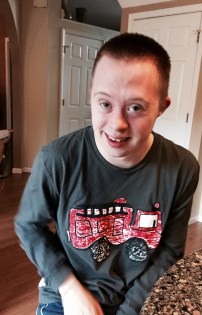
My son Nick, wearing a Paper Clouds Apparel shirt designed by Justin Lundeen…

nick fire truck shirt

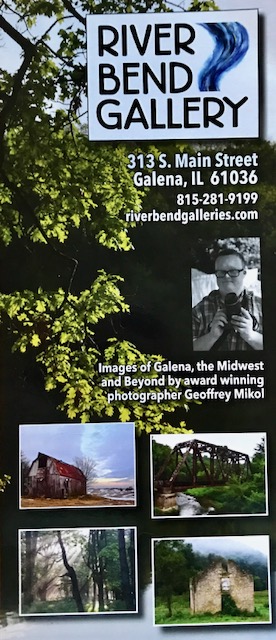
https://www.riverbendgalleries.com/  Features the beautiful photography of artist, Geoffrey Mikol prints, framed art, calendars, coaster sets and greeting cards are available for purchase online….

Geoffrey Mikol picture    Geoffrey Mikol

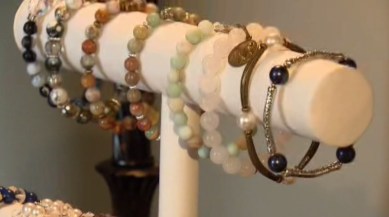
http://specialsparkle.com Kelly is a young entrepreneur who has Down syndrome.  She designs and makes fashionable jewelry you can order online….

special sparkle jewelry

http://www.christianroyalpottery.com/pages/about  Beautiful pottery (bowls, platters, plates, jewelry) by Christian Royal…..


One of the best gifts is an iPad and there are countless apps for learning and play.  If you are looking for a sturdy case, the Go Talk Rugged and Big Grip cases have held up the best…..  


If your child has sensory needs, and likes to do a lot of dropping, check out these toys:

vortx-dropping-coins  marble racemagic-tracks-mega-set-360-piece--A817AA38.zoom

Gifts ideas in located in the archives, type this in the search box: Blog #131~Christmas Ideas for a Child With Special Needs…..


Gift ideas for babies and toddlers with Down syndrome: http://www.cedarsstory.com/?s=Best+Gift+Ideas

Noah’s Dad- Down syndrome Awareness Top 10 gifts for a 7 year old: http://noahsdad.com/7-year-old-gift-ideas/

Books for caregivers and families, here are a few suggestions and there are more listed in this Blog #144~ Inspiring Books Related to Down syndrome located in the archives……


Gifts book cover    Book An Uncomplicated Life  down syndrome and autism intersect

Please feel free to share this, and any of my blogs with others and on social media.  Also, check out my Pinterest page for more gift recommendations and other helpful information. Do you have any gift suggestions? I’m always looking for unique gift ideas related to Down syndrome and autism to post on my website.  Nick and I wish you all the best as you are preparing to enjoy the holiday season.

That’s what is in my noggin this week. 🙂

~Teresa

Follow Nick on Social Media:

Facebook and Pinterest @Down Syndrome With A Slice Of Autism

Instagram #nickdsautism

Twitter @tjunnerstall


Posted in Adult Day Programs for Special Needs, Autism, Down syndrome, Dual Diagnosis Down syndrome and autism, Recreation/Leisure and Special Needs

Fall Update: Nick DS-ASD

Fall Update: Nick DS-ASD

Time flies when you are having fun, and Nick is having a blast this fall.  My son, Nick is 23 years old and has a dual diagnosis of Down syndrome and autism.  He attends an adult day program which provides a wide variety of activities.  Community outings this fall included volunteer jobs, bowling, visits to local parks, fire station, grocery shopping and going out to eat.  His group also works in-house doing gardening, cooking, skill along with communication building using their Augmentative Alternative Communication (AAC) devices.  Nick uses a program called Touch Chat on an iPad for communication.

Nick cooking at his day program…..

Nick cooking meatballs

Nick was very excited to visit the fire station 🙂  He wasted no time buckling up right away….

Nick fire truck

Outside his adult day program, Nick enjoys community visits to the library, mall, parks, shopping, the movies and eating out.  He continues to have “date nights” meeting up with his buddy, Christopher.  We are very grateful to have such caring respite workers, to take him out several times each week.

Fun at the Halloween Store…..

Nick crown

Buddy Up Tennis, see Blog #190 to read all about it @https://nickspecialneeds.com/?s=buddy+up

Nick buddy tennis 2

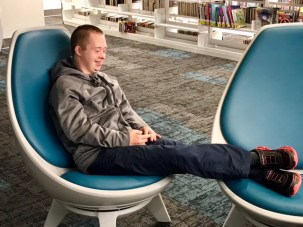
Nick relaxing at the library.  Make yourself at home there, Big Guy….. 🙂

Nick library

That’s Nick’s world and update for this fall.  I would like to take a moment to thank our respite workers, Lara, Jodi and Kelsey for all they do for Nick and our family.  My son has a full and rich life, and we are grateful to have these supports in place to make this possible.

That’s what is in my noggin this week. 🙂

~Teresa 🙂

Want to see more pictures of Nick?  We have a lot more on social media:

Facebook and Pinterest @Down Syndrome With A Slice Of Autism

Instagram #nickdsautism

Twitter @tjunnerstall


Posted in Down syndrome, Dual Diagnosis Down syndrome and autism, Recreation/Leisure and Special Needs

Blog #190~Nick & Buddy Up Tennis

Blog #190~ Nick & Buddy Up Tennis

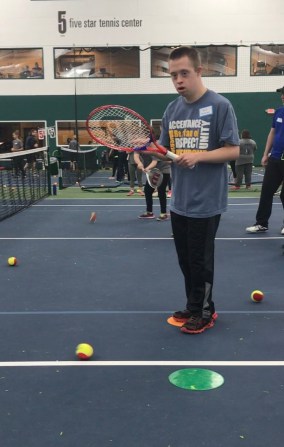
I took my son Nick, to the Buddy Up Tennis program over the weekend.  Buddy Up Tennis is a high-energy, adaptive tennis and fitness program for children and young adults with Down syndrome.  They provide fun and rewarding 90-minute clinics on a weekly basis.  The program currently serves 550 individuals ages five to young adults with Down syndrome across the country.  Honestly, I wasn’t sure how cooperative Nick would be given that he has a dual diagnosis of Down syndrome and autism.  I am happy to report that he participated and followed directions fairly well, for his first time out.

Nick buddy tennis 2

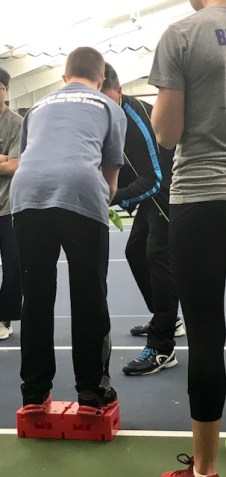
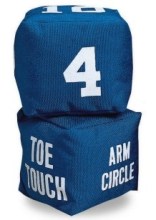
This 90 minute Buddy Up Tennis-Naperville clinic, is held at Five Star Tennis Center.  Athletes are paired with a buddy and start off with a warm up.  Each participant gets to toss the dice and perform a variety of calisthenic exercises like toe touches, push-ups, jumping jacks and sit ups.  Nick needed some prompting on these.  I had to laugh when everyone got down to do push ups and Nick was still standing.  Then about the time he got down on all fours, the rest of the group was up doing jumping jacks. 🙂

fitness dice                Buddy Up Tennis Logo

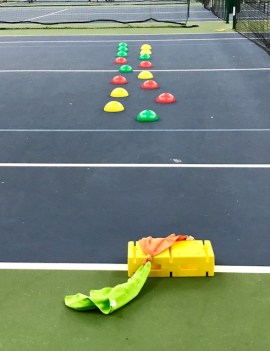
After the warm-up, the participants break up into groups.  The younger kids use modified equipment and balls on a separate court.  The teens and young adults move to circuit training.  Stations are set up focus on balance, agility, hand-eye coordination and upper body movements that mimic tennis strokes and serves.

Nick navigated each station with prompts, praise and elbow bumps, from his buddies and coaches.  He moved at a slower pace than his peers, and there were a few stations he was less interested in.  But overall, did a good job!

Nick Buddy Tennis balance

After circuit training, the athletes worked on volleys and ground strokes.  Nick needed more prompting and hand over hand assistance, to move through these drills.  But he remained patient and compliant.  It really helped to have a peer partner and the coaches cheering him on, as well as the other athletes modeling appropriate behavior.

Nick buddy tennis

Towards the end of the clinic, Nick did begin to lose interest in hitting tennis balls.  I grabbed a ball hopper, and he and his peer buddy collected balls.  Nick is good at putting things away, so this kept him perked him up and engaged.  For the last 10 minutes, all the groups come together, and play a few rounds of duck, duck, goose. Then, the coaches present certificates to the top awesome athletes for that week.  Nick was awarded one of these for working hard.  Yay Big Guy! 🙂

Overall, I feel the experience was a success for Nick.  I was a little nervous going in, because he can be loud and distracting with the stimming behaviors associated with autism.  However, these behaviors were quite diminished during the clinic.  It reminded me of when Nick was in a full inclusion classroom, when we first moved into the Chicago area, 15 years ago.  Positive peer role models is one of the benefits of placing your child in full inclusion classroom.  When Nick was in a full inclusion classroom, the loud noises, tapping and other stimming decreased.  That alone, makes it worthwhile to enroll him in the next session coming up in January.

I plan on making a few visuals of the calisthenic exercises, circuit stations and sequence of moving through the drills will help with transitioning.  For individuals with autism, it helps to have a picture schedule to assist them in understanding what is expected of them.  If they can see it, they can better understand it.

Buddy Up Tennis is a wonderful program, and I’d like to thank the coaches and volunteers for the opportunity to have Nick be a part of group.  For more information about Buddy Up Tennis, visit their website at http://buddyuptennis.com/

That’s what is in my noggin this week. 🙂

~Teresa

Follow Nick:

Facebook & Pinterest @Down Syndrome With A Slice Of Autism

Instagram #nickdsautism

Twitter @tjunnerstall


Posted in Down syndrome, Down Syndrome Awareness, Recreation/Leisure and Special Needs

Blog #189~Buddy Up Tennis

Blog #189~Buddy Up Tennis

Buddy Up Tennis Logo

I had the pleasure of observing the Buddy Up Tennis program over the past weekend. Buddy Up Tennis is a high-energy, adaptive tennis and fitness program for children and young adults with Down syndrome.  They provide fun and rewarding 90-minute clinics on a weekly basis.  The program currently serves 550 individuals ages five to young adults with Down syndrome across the country.

The program I visited was Buddy Up Tennis Naperville in Illinois, located at Five Star Tennis Center.  Athletes are divided into 3 groups according to age and ability.  They kick off the morning with a warmup and fitness component.  Each participant is paired with a volunteer buddy.  Everyone gets a chance to throw the dice and perform a variety of exercises together like toe touches, arm circles, sit-ups, jumping jacks and push-ups.

fitness dice

After the warm-up and calisthenics, the participants move to circuit training.  Stations are set up focus on balance, agility, hand-eye coordination and upper body movements that mimic tennis strokes and serves.

Balance Work Stations…..

Buddy Up Balance

The tennis serve motion is mimicked by throwing a football through the hoops.  Balls are thrown from the hip on both sides of the body into a basket to work on the forehand and backhand movements……

Buddy Up Hoops

Other stations include using an agility ladder, cones, balance beam and tug of war.  All of these work on each component of fitness, as related to playing tennis.

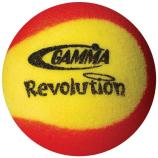
Following the fitness segment, the groups work on tennis strokes and games.  The younger players used smaller nets and foam transition balls which are easier to hit.

gamma-tennis-revolution-ball.jpg

The player’s ages 10 and up, worked on forehand and backhand volleys.  Coaches use the cues,  “Squash the bug”, No swinging” and “High five it” to teach proper form on volleys.  The athletes had fun trying to win a prize by hitting a target on the court.  After volleys, the group worked on overheads, with the coaches using cues like, “Point the left arm to the ball, and hit the ball at the highest point”.

It was wonderful to see the players working hard and enjoying the experience with their fellow teammates, buddies, and coaches.  The staff and volunteers were so encouraging and positive.  There were lots of high fives, smiles, cheering and laughter.  Buddy Up Tennis helps players build fitness, tennis skills, friendships, and cooperation.  These life skills are valuable both on and off the court.

For more information about Buddy Up Tennis visit their website: http://buddyuptennis.com/

tennis racket

I highly recommend this program and look forward to taking my son, Nick next week.  That’s what is in my noggin this week!

~Teresa 🙂

Follow Nick:

Facebook and Pinterest @Down Syndrome With A Slice of Autism

Instagram #nickdsautism

Twitter @tjunnerstall


Posted in Down syndrome, Down Syndrome Awareness

Blog #187~Artist With Down syndrome Captures Amazing Images

Blog #187~Artist With Down syndrome Captures Amazing Images

Geoffrey Mikol

I had the pleasure of meeting Geoffrey Mikol, who is a professional artist, over the past weekend.  Geoffrey owns River Bend Gallery, which is located in Galena, Illinois.  He is 23 years old and as a person born with Down syndrome, Geoffrey has a natural talent of capturing images in nature.  He studied photography since high school, and his fine artwork is incredible.  What draws your eye to his work, is how he captures the light and beauty uniquely in each piece.

Geoffrey Mikol, artist:

Geoffrey Mikol picture

Geoffrey warmly greets everyone outside his gallery and his work speaks for itself.  He is an award-winning photographer who started selling his work 10 years ago, in the Chicagoland area.

River Bend Gallery

Visiting River Bend Gallery and meeting Geoffrey and his family was a real highlight to the Galena trip.  You can feel the serenity in his work and a warmth when you enter River Bend Gallery.

To view more images click here- https://www.riverbendgalleries.com/ and follow on Facebook at River Bend Gallery.  There are prints, calendars, coaster sets and greeting cards available for purchase.  They would be great Christmas gifts for family, friends, teachers, aids and therapists.

That’s what is in my noggin this week!

~Teresa 🙂


Posted in Down syndrome, Down Syndrome Awareness

October is Down Syndrome Awareness Month

October is Down syndrome Awareness Month

DS-Awareness-Month

October is Down syndrome Awareness Month.  I’ve had the privilege of raising my son,  for the past 23 years.  Nick has Down syndrome and autism. He has touched my life, and those of so many others along the way.

nick-senior-alarm-pic

Down syndrome awareness is about promoting acceptance and inclusion of all individuals with Down syndrome.

FACTS about Down syndrome from National Down Syndrome Society (NDSS):

*Down syndrome occurs when an individual has a full or partial extra copy of chromosome 21. This additional genetic material alters the course of development and causes the characteristics associated with Down syndrome.

*There are three types of Down syndrome: trisomy 21 (nondisjunction) accounts for 95 percent of cases, translocation accounts for about 4 percent and mosaicism accounts for about 1 percent.

*Down syndrome is the most commonly occurring chromosomal condition. One in every 691 babies in the United States is born with Down syndrome.

*There are more than 400,000 people living with Down syndrome in the United States.

*Down syndrome occurs in people of all races and economic levels.

*The incidence of births of children with Down syndrome increases with the age of the mother. But due to higher fertility rates in younger women, 80 percent of children with Down syndrome are born to women younger than 35.

*People with Down syndrome have an increased risk for certain medical conditions such as congenital heart defects, respiratory and hearing problems, Alzheimer’s disease, childhood leukemia and thyroid conditions. Many of these conditions are now treatable, so most people with Down syndrome lead healthy lives.

*A few of the common physical traits of Down syndrome are low muscle tone, small stature, an upward slant to the eyes and a single deep crease across the center of the palm. Every person with Down syndrome is a unique individual and may possess these characteristics to different degrees or not at all.

*Life expectancy for people with Down syndrome has increased dramatically in recent decades — from 25 years old in 1983 to 60 years old today.

*People with Down syndrome attend school, work and participate in decisions that affect them, and contribute to society in many wonderful ways.

*All people with Down syndrome experience cognitive delays, but the effect is usually mild to moderate and is not indicative of the many strengths and talents that each individual possesses.

*Quality educational programs, a stimulating home environment, good health care and positive support from family, friends and the community enable people with Down syndrome to develop their full potential and lead fulfilling lives.

More information @http://www.ndss.org/Down-Syndrome/What-Is-Down-Syndrome/

NDSS_logo

Here are a few simple ways to promote Down syndrome awareness:

*Post something about Down syndrome on social media

*Send updates, pictures and tell your story to your family doctor and OB-gyn.

*Many local Down syndrome support groups have promotional materials, like books and bookmarks that can be distributed at libraries and schools.

*Many local DS support groups have public speakers who can talk to schools, businesses, community groups, hospitals, and other organizations.

*Support or volunteer for local fundraisers like the Buddy Walk in your community @http://www.ndss.org/buddy-walk/

*Encourage your kids to volunteer for Special Olympics and Best Buddies programs through their school.

Down syndrome journey

Thank you for supporting Down syndrome awareness this month!  That’s what is in my noggin this week.

~Teresa 🙂


Posted in Behavior/ ABA, Down syndrome, Dual Diagnosis Down syndrome and autism, Parenting Special Needs

Blog #185~ Down Syndrome: Supporting Positive Behavior

Blog #185~Down Syndrome: Supporting Positive Behavior

This month’s blog posts have focused on behavior management, specifically to individuals who have Down syndrome and autism.  I recently read, Supporting Positive Behavior in Children and Teens with Down Syndrome.  This book by pediatric psychologist, David S. Stein gives a comprehensive breakdown of how to deal with challenging behaviors, with a specific look at how the brain of a person with Down syndrome works.

Book Supporting Positive Behavior DS

This book is a must read for anyone who cares for, or works with, a child or teen with Down syndrome.  I only wish that this book had been available when 23-year-old son, Nick, was younger.  One of the key messages from this book, is how to look at behavior.  If you view a bad behavior as willful or intentional, the immediate reaction is to punish.  However, it is important to consider that the behavior is communicating some need.  The first section of this book, dives into the brain of a child with Down syndrome and cover behavior basics “101”.

In chapter 5, there is a step by step guide to behavior management system designed for children with Down syndrome:

Step 1:  Maintain the relationship (keep it positive)

Step 2:  Structure the environment for success

Step 3:  Use visuals, visuals, visuals

Step 4:  Notice good behaviors and set up token economies

Step 5:  Use proactive strategies to prevent negative behaviors and support positive behaviors

Step 6:  Manage the difficult situation before they happen 

The underlying theme in this book is how you approach behaviors.  Acknowledge that the behavior is NOT a willful or intentional act designed to make you upset.  Instead, view the behavior as an expression of some unmet need or challenge that has not been addressed.

“You can respond to a behavior thoughtfully, rather than emotionally.  You can learn to respond…but don’t react.”

Throughout the book, this is the common thread.  Respond… but don’t react.  Take your emotions out of the equation, and sometimes your gut reaction as well.  There are several chapters that address positive behavior management at home, school, community and with siblings.

When disciplining or responding to behavior, here’s what you should and should not do:

 You should:

*Take away eye contact.

*Keep your facial expressions neutral.

*Speak very little, if at all.

*Keep your tone of voice neutral.

*Keep your emotions in control.

*If removing attention and emotions is not enough, then direct the child to “take a break”.

And you should not:

*Look right at the child

*Make angry or upset faces.

*Try to explain, using words, why or what they did was horrible.

*Speak in a harsh, animated way.

*Show strong emotions.

Whenever possible, look for ways to prevent the behavior in the first place.  Try to determine what is causing the behavior, and what this functions serves the child.

There are often times which may be more difficult and cause more behavior problems.  These often occur in transition times, and especially during puberty.  These are addressed specifically in this book, along with when and how to seek help from a certified behavior specialist.

This book, Supporting Positive Behavior in Children and Teens with Down syndrome, is a concise guide to understanding behavior and how to manage it thoughtfully, by responding and not reacting to meet a child’s needs.  David S. Stein, packed a lot of punch into 132 pages.  I highly recommend adding this book to the cart.  That’s what is in my noggin this week.

~Teresa 🙂

Follow Nick: