Posted in Autism, Down syndrome

Blog #76~Social Skills and Autism

Blog #76~ Social Skills and Autism

 
A few weeks ago I did a guest lecture at Northern Illinois University. The graduate level class topic was “Functional Communication Skills and Social Skills” from a parent perspective.

 
NIU at  WCC Sugar Grove Campus

Bodie Hall Waubonsee Community College
Blog #73 covered the topic of communication skills as it relates to autism. This week I will cover how to incorporate social skills for individuals with autism. Nick has Down syndrome and autism. It makes for an interesting mix because his verbal speech is lacking, yet he is very outgoing.

Here some of the ways in which his teachers have incorporated opportunities to practice social skills:

*Lunch bunch groups in school-play board games, practice turn taking, boundaries.

*Community outings to grocery store, library, mall, and eating out.

*School and community jobs

*Practice self-regulation through his behavior plan. Work in a controlled setting on  what triggers his outbursts.

*Social Groups tailored for kids/teens with autism

*Best Buddies Program- monthly meetings, parties, bowling, movies, dances, etc…

Nick trying a hat at Jewel Osco Grocery Store 🙂 ………..

016 (2)

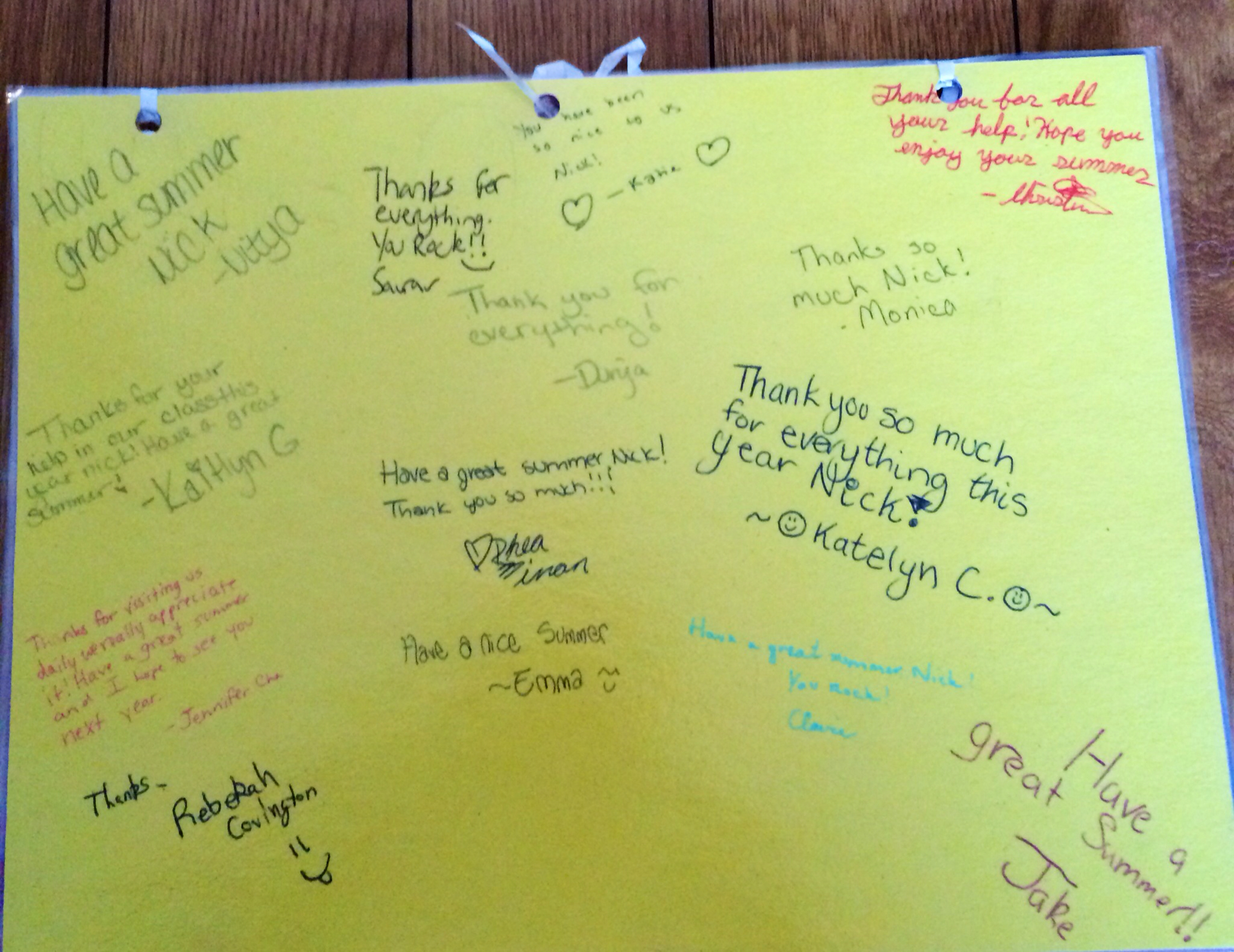
All of these opportunities have helped Nick to behave more appropriately when out in the public. When Nick was in middle school he went to each classroom and emptied the recycling bins. He was able to practice greeting students. At the end of the semester, the students made thank you card for Nick: IMG01
Having peer role models is very valuable in this process. At his recent school conference his teacher commented that Nick was quite “restaurant savvy.”

Nick’s all aboard for lunch with his classmates 🙂

All Aboard Diner 4-23-10 006

Children and teens with autism can benefit in participating in social skills groups. These groups have not been a fit for Nick because he lacks the verbal skills. They tend to be suited for higher functioning persons with autism who have speech. Check with community autism support groups, speech therapy clinics and schools to find a one in your area.

Here is a sampling of topics that might be covered in a social group for individuals with autism:

*Interventions for hitting/biting and conflict resolution

*Handling transitions

*Asking friends to play and what to do if they don’t want to play with you.

*Turn taking in general conversation.

*Facilitating cooperative play- taking turns, practicing patience coping with losing a game

*Dealing with large crowds, busy settings and stimulus overload.

*Initiating a variety of conversational topics – Sometimes intense, restricted interests result in sticking with only their preferred topics (like dinosaurs, academy award winning movies, etc..)

*Working on conversations that reciprocate the interests of others in the group.

*Providing needed information based on a partner’s knowledge of the topic – Gauging length of conversational turn and working on noticing the cues others send us so we can adjust the length of our conversational turn.

 
Currently, Nick participates in the post-secondary transition program. His schedule  includes community trips to the store, library, mall walking, cooking, vocational jobs and move and groove (dance party) along with the regular curriculum. The STEPS program also has dances and recreational trips after school from time to time. As you can see, there are  many occasions built in his schedule to practice social skills. It is essential to keep Nick’s world open and provide opportunities to socialize.

This past weekend his brother came home from college. I found it touching that Nick wanted to hang out upstairs in Hank’s room a lot of the time he was here.

Nick with his brother a few years back…..

009

Having a child with autism doesn’t mean you have to close yourself off to the world. Look for ways to get out there and mingle. That’s what is in my noggin this week! 🙂
~Teresa

Posted in Autism, Down syndrome, Fun Side of Nick

Blog #75~ 5 Reasons I am Thankful for Nick

Blog #75~ 5 Reasons I am Thankful for Nick
thankful
The road I have travelled with Nick was not in the plan.  It’s the thin, grey line on the map that is bumpy and full of twists and turns.  Nick has Down syndrome and autism.  The pace was bogged down as he struggled to hit developmental milestones. Other times it has been lightning fast, (like when you are racing to beat him to an exposed fire alarm). After 19 years and 30 fire alarm pulls, I am very thankful for Nick and here is why:

IMG01 (6)

1. I appreciate the small successes much more now. I don’t take anything for granted that a child has to learn like sitting, eating, crawling, walking, talking and especially toilet training. Each victory has been sweeter when Nick hit the marks.

2. I am more grounded because of Nick. He has taught our family to stay humble. While other moms were bragging about their child getting A’s in honors classes, being the star athlete and what colleges they were looking at, I smiled politely.  In my mind I was thinking, “At least Nick didn’t pee in his pants at school this week.”

3. I’ve become some what of an expert on Down syndrome and autism. Through trial and error along with wonderful teachers, therapists and mentors I have learned what works best for Nick. I am now able to pay it forward in my writing, speaking engagements and helping other parents out.

4. Life is never boring with Nick. He cracks me up with his mischievous ways.  He generates  laughter and tons of  “Likes” on my Facebook page: Down syndrome With A Slice Of Autism”.

like button

Here’s Nick’s signature elbow bump, (his version of a high five) with his Dad and Aunt Laura  🙂

IMG02

He’s got that look on his face like, I’m going to grab your wine)  🙂

IMG01 (3)

What a jokester, hardy har har Nick……

photo (40)

5. Nick gives unconditional love so freely. Each morning he wakes up, lets out a fart and smiles. All through the day he showers me with kisses, elbow bumps and hugs.

photo (33)
I am truly thankful to have travelled down this road with Nick.  It has been a blessing to be his mom.  That’s what is in my noggin this week. Have a wonderful Thanksgiving!
~Teresa

snoopy thanksgiving

Posted in Autism, Down syndrome, Dual Diagnosis Down syndrome and autism

Blog #74~ Teaching to 21

Blog #73~ Teaching to 21
Last week, I was a guest lecturer at Northern Illinois University. The graduate level class topic was “Functional Communication and Social Skills” as it relates to autism. I presented a parent’s perspective.

NIU logo

One of the greatest gifts we can give our kids is teaching personal independence. It’s never too early to start working on these skills. One concept brought to my attention by Nick’s support teacher from elementary school is called, “Teaching to 21.” What skills will an individual with special needs require to lead a successful life after school is finished? Here is a list of skills that should be addressed both in school and at home for students with special needs:

 Assessment of Functional Living Skills (AFLS)

Source: http://autismbeacon.com/topics/article/functional_skills_for_people_on_the_autism_spectrum

“Functional skills” are those skills that if learners cannot do for themselves, someone will have to do for them. Functional skills are immediately useful and important. They increase self-help and independence and are present in every setting and throughout every stage of life:

Basic skills:
Self-management
Basic Communication
Dressing
Toileting
Grooming
Bathing
Health, safety, first aid
Night time routines

Home Skills Module:
Meals at home
Dishes
Clothing
Laundry
Housekeeping
Chores
Household mechanics
Leisure
Kitchen
Cooking

Community Participation:
Basic mobility
Community knowledge
Shopping
Meals in public
Money handling
Phone
Time
Social awareness
Manners

School Skills:
School waiting and transitions
Classroom routines
Meals at school
Classroom people, places and objects
Classroom mechanics
Outside school
Functional academics
Classroom leisure and independence

The IEP team should address these skills in goal planning and daily schedules of the student. In addition, supports should be put in place that will assist the student in reaching these goals. Here are some of the supports that Nick has used in school. Since Nick has a dual diagnosis of Down syndrome and autism, these tangible provisions give him clarity and focus in doing his tasks.

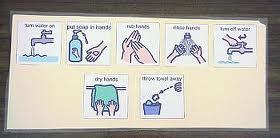
*Visual supports such as task strips, social stories, picture schedules and video modeling:
task strip
*First-then visual or app to remind student what they are working for:
first then

first then app
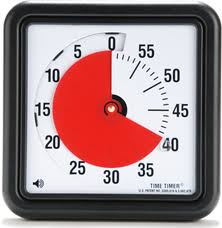
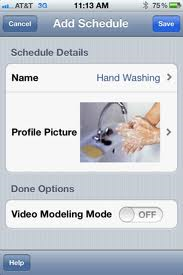
*Timed Timer clock or app and Picture Scheduler app:

timed timer

picture schedule app
*Physical prompting-teacher may do hand over hand to teach a school and fade back to just pointing to direct student.

*Guiding student with visual cues (putting stickers on washcloths to teach folding sequence, sprinkle hole punch paper dots on floor to teach vacuuming, using counting templates, etc…)

Nick packaging door knobs_Habitat_4 (2)

For students with autism, if they can see it…. they can understand it. In Blog #5~Ready, Set, Action (located in April 2012 Archives) I wrote about how successful video modeling was in teaching Nick skills around the house. He responds to and is motivated by seeing the footage in a video format. It also landed him a community job at a local elder residence care facility.

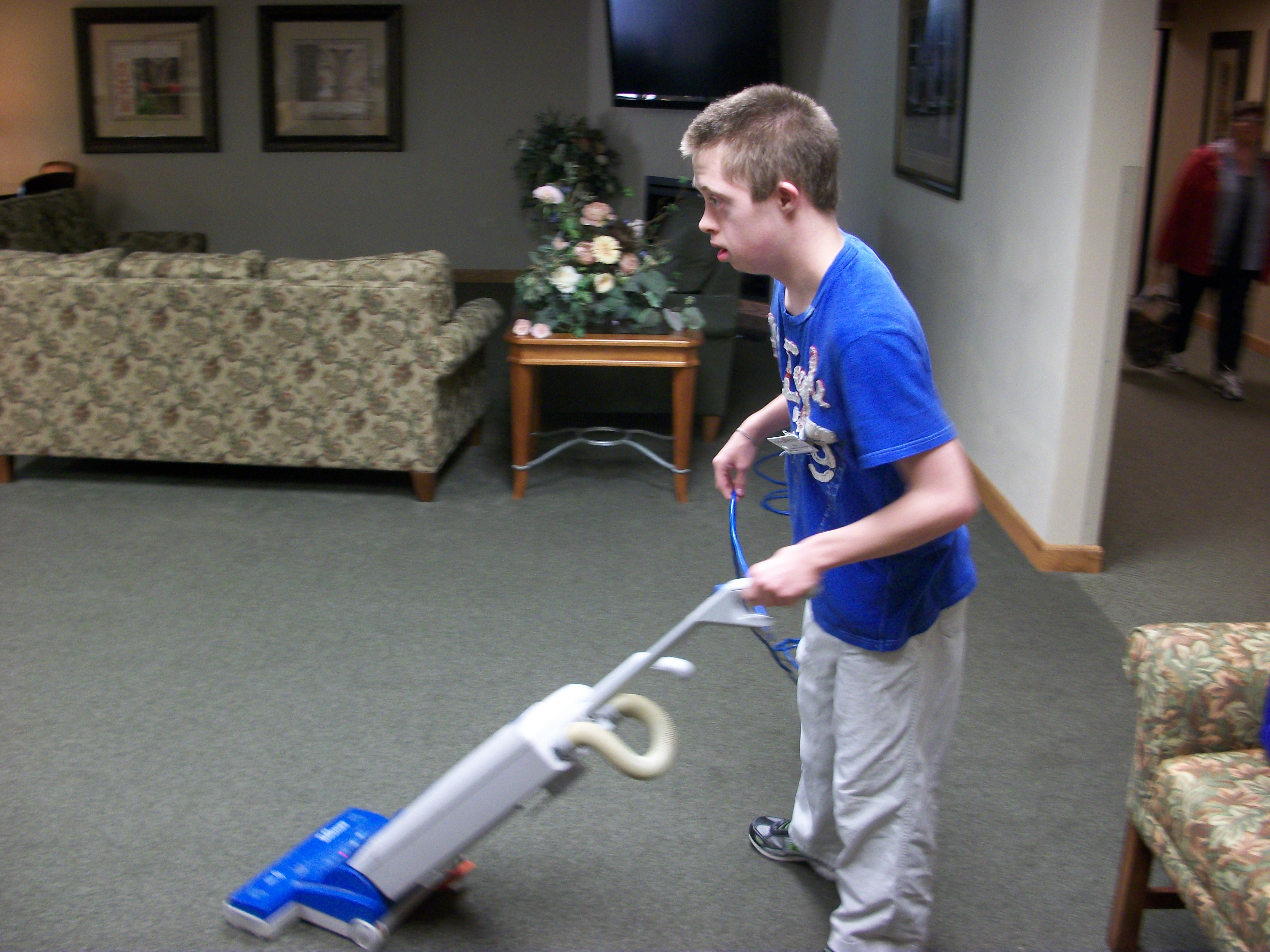
Nick hard at work 🙂
Nick vacumming_Tabor Hills (3).

Nick takes great pride in his jobs both in the community, school and at home. We continue to work on the skills needed for him to be as independent in all areas of his life so he is ready to manage things when he is finished with school. It’s all about starting early and teaching to 21! That’s what is in my noggin this week. 🙂

~Teresa

Follow Nick on Social Media:

Facebook and Pinterest @Down Syndrome With A Slice Of Autism

Instagram @nickdsautism

Twitter @tjunnerstall

Posted in Augmentative and Alternative Communication (AAC), Autism, Down syndrome, Speech and Occupational Therapy

Blog #69~Down Syndrome, Autism and Speech

Blog #69~Down Syndrome, Autism and Speech

I am often asked about Nick’s ability to produce words given the fact that he has Down syndrome and autism.  He does have a vocabulary including a few expletives that he picked up from us somewhere along the way. I find it interesting how he can say those words pitch perfectly.  This week I have a very special guest blogger.  Brian Sabella is Nick’s speech therapist and shares his perspective on working with Nick at Suburban Pediatric Therapies:  

Speech-Language Therapy and Nick

By Brian Sabella, CCC-SLP

I have been providing clinic-based speech-language therapy for Nick for over four years now. I feel fortunate for the experience for a couple reasons. First and foremost, he absolutely cracks me up—every week. There’s something about his brand of adolescent, slapstick humor that just resonates with me as a fellow male. Additionally, Nick’s family and support system are a pleasure to work with. They hold very high expectations of his communication abilities and understand communication takes other forms besides the spoken word. Nick uses a multifaceted system that includes spoken words, printed pictures, and electronic devices to communicate throughout his day. And as a speech therapist, I love it. For Nick, progress in “speech” means being able to communicate more effectively; it isn’t just about talking!

For those curious about the speech Nick does work on, here is a sample of some words we have practiced and continue to practice: help, Sprite, plate, shower, taco, pasta. With many of these words, Nick is not expected to articulate them exactly as you or I would, but rather, to produce them in a way that a listener would be more likely to understand. The idea is that Nick will probably be handing his conversational partner a picture of a taco anyway, so the spoken word is meant to enhance the communicative exchange. With this specific word, Nick will often produce aco, omitting the t. During our drill practice, I will call attention to my mouth and ask Nick to say it like I do, annunciating that missing t  sound and providing a visual cue (such as pointing near the area of my mouth where the sound is produced). After a correct production is established, Nick is encouraged to say it again a total of five times. Performing a high number of repetitions is always the best way to learn a new movement pattern, whether that movement is a golf swing, a pencil stroke, or a spoken word. Admittedly, speech drill is not one of Nick’s favorite things to do, so his good efforts are always rewarded with a bit of praise or even a small morsel of food.  You know, just to stay on his good side.

Most of my time spent with Nick in therapy hasn’t actually been focused on improving his speech. Some of it has. But I’m actually more concerned with improving Nick’s ability to communicate through other means. The reason for this is because, like many other individuals on the autism spectrum, Nick shows a strong preference for pictures.  He also presents with apraxia of speech, which further complicates matters. This is why at home and at school, Nick’s uses a picture exchange system that helps him communicate during everyday activities.

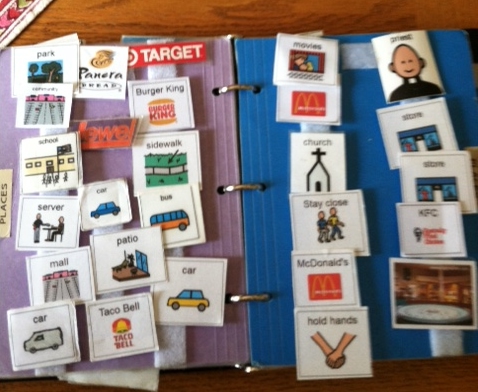
Teresa carries around with her a set of pictures of Nick’s favorite fast food restaurants.  When they are out running errands and it’s time for lunch, she shows Nick the pictures and he points to the logo of the restaurant he’s in the mood for. If he requests Taco Bell (which he usually does) he can then flip to a page that shows pictures of their menu items and he can indicate which ones he wants to order. Much of our time in speech therapy has been spent working on expanding his comprehension and use of these pictures.

photo (123)

Then there’s the Bored Board. As readers of this blog, you know that when Nick is bored, he finds ways of wreaking havoc in extremely creative ways. Picking up on these signs of boredom before Nick decides to dump fajita seasoning on the cat or spill an entire bottle of cooking oil on the floor will allow his parents to redirect these behaviors to something less destructive. The Board Bored shows Nick pictures of more appropriate objects and activities to request: DVDs, computer games, an iPod, a whoopee cushion, Flarp noise putty, a (fake) bloody Halloween hand, a sound effects toy that makes burping and glass-breaking sounds, etc.  Nick and I have spent hours working on requesting with the Bored Board so that he can more effectively use it in a time of need.

0916091611

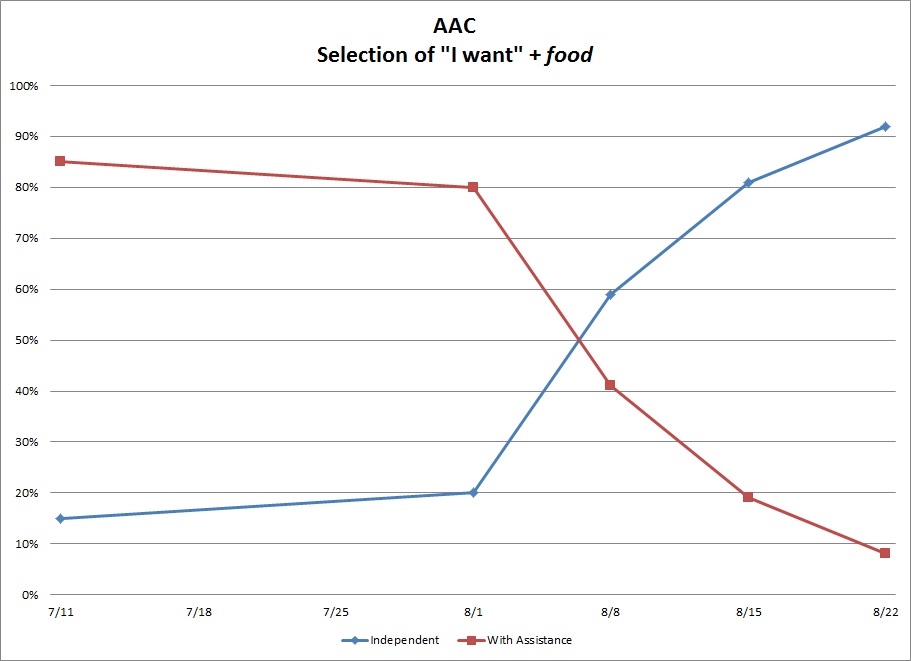
Recently, our sessions have been focusing on having Nick formulate requests using “I want.”  We set up a board using an alternative-augmentative communication (AAC) iPad app called Proloquo2Go. It transforms the iPad, iPhone, or iPod Touch into a high-tech voice output device that helps a person communicate by typing or touching pictures. Nick’s screen displays a variety of preferred snacks and some phrases, including “I want.” Our goal was to have Nick indicate which snack he wanted by pressing “I want” then the snack item.  When he does this, the device speaks the sentence “I want popcorn;” I then reward him with some popcorn.  If Nick only touches the snack item without “I want” first, then I prompt him to press both.

Proloquo2Go

As you might imagine, producing these sentences was initially difficult for Nick.  But over time, he became very good at producing them.  This graph tracks his progress and shows that Nick went from almost always needing support to produce these “I want” requests to, after five sessions, almost always producing them independently.

Graph

As you can see, speech therapy is not always about speech.  For Nick, speech therapy is about helping him communicate effectively, even if it means doing so with pictures or electronic devices. With an alternative system of communication in place, Nick’s life is a little easier.  And his pets are a little safer, too.

Brian Sabella and Nick working at Suburban Pediatric Therapies 🙂 ……

Brian and Nick

Special thanks to Brian Sabella, CCC-SLP for sharing his insights this week.  For more about Suburban Pediatric Therapies check out their website at http://www.sptherapies.com.  As you can see there is much more to communication then just speaking words.  That’s what is in my noggin this week. 🙂

~Teresa

Follow Nick on Social Media:

Facebook and Pinterest @Down Syndrome With A Slice Of Autism

Instagram @nickdsautism

Twitter @tjunnerstall


Posted in Autism, Down syndrome, Recreation/Leisure and Special Needs

Blog #66~Taking the Leap to a Support Group

Blog #66~Taking the Leap to a Support Group

I can’t make it there.  I have two boys that are 19 months apart under the age of two.”

“I have it under control.”

“We are okay.  There is no need to reach out to the local Down syndrome support group.”

“I have no energy to get out in the evening to make it to a meeting.”

Those are some of the excuses I have used.  It’s hard to take the leap to a support group.  Over the years friends and teachers have offered names and phone numbers of other parents whose children had Down syndrome.  I found it difficult to make those cold calls as well.  It’s not easy to open up and be vulnerable around people you don’t know.  Every parent handles the diagnosis of a child’s disability in their own way.

Eventually I did reach out to the local Down syndrome support group.  What I found was a community of individuals who had been on their own roller coaster of emotions.  They had dealt with uncertainty and doubt.  They had experienced anger, fear, worry, sorrow and guilt.  These parents offered encouragement and reassurance.  In addition, support groups can provide a forum for sharing feelings and concerns as well as providing information, advocacy and resources available.  See more information at: http://www.ndss.org/Resources/New-Expectant-Parents/Finding-Support/#sthash.dTRJb4bF.dpuf.

When we moved out to the east bay area outside San Francisco we didn’t know anyone.  The Down Syndrome Connection: http://www.dsconnection.org  provided resources, after school classes, social events and an invaluable kinship.

5 Year old Nick with his buddy playing in the Challenger Baseball League….

Scan0002

Nick at the Down Syndrome Connection Picnic 🙂

Scan0003

Before we relocated to the Chicago area twelve years ago, the local support group called National Down Syndrome Association, NADS: http:// www.nads.org,  provided a list of parents that lived in the area which we were planning to look for a home.  These parents were so open to answer my questions about school districts and gave me emotional support even before the moving truck had pulled up to our house.  NADS continues to provide services and has been instrumental in making a difference with Nick having the second diagnosis of autism.  Within NADS, there is also a sub-group called “Down syndrome and More,” which holds retreats for families dealing with a second diagnosis.

Nick at the NADS Retreat….. 🙂

Nick 2 (2)

Music Therapy at the NADS Retreat…..

Nick beatnick

These days there are multitudes of online support groups and Facebook pages to reach out to.  There are several Facebook groups specific to Down syndrome and autism.  Be sure and check out my resource page for more.  As a parent I have gone through phases where I thought I had things under control.  When Nick’s body was raging with hormones during puberty he had massive meltdowns.  After talking to a few parents whose children had Down syndrome also had autism, I realized the need to get help.  I also quit being ashamed that I was a bad parent that couldn’t control my child.  By reaching out to the support groups for assistance, I found out that I was not alone.  It has made all the difference.

Help is out there, sometimes you just have to take a breath and make the leap.  That’s what is in my noggin this week.

~Teresa

Posted in Autism, Down syndrome, Government/Legal Matters Related to Special Needs

Blog #64~When Your Child With Special Needs Hits Adult Age

Blog #64~ When Your Child With Special Needs Hits Adult Age

What happens when a child with special needs hit the age of 18?  While other parents are busy visiting college campuses and searching for extra-long sheets for the dorm bed, a parent with a child with special needs is going down a different path.

Nick’s legs are long and hairy like a man, but he still enjoys sitting like a kid.  That along with watching Disney movies and Thomas the Tank Engine….. Welcome to Nick’s world 🙂

IMG_0399

Our son, Nick has Down syndrome and autism.  He is unable to take care of himself and live independently.  When he turned 18 years old we had to file with the court to become his legal guardian.  This process involves a trip to the courthouse to fill out paperwork, pays some fees, secure a court date and then appear in court before a judge with your child. We did not use an attorney but the advantage would be that you get in the queue faster.  Each year you are required to submit an annual report, (available from the county courthouse website), 30 days before the yearly court date.

The next step was to apply for SSI (Supplemental Security Income.)  Supplemental Security Income (or SSI) is a United States government program that provides stipends to low-income people who are either aged (65 or older), blind, or disabled. It is administered by the Social Security Administration and funded from the U.S. Treasury general funds, not the Social Security trust fund.  The application process can be done online (www.socialsecurity.gov).  Once this is processed, a phone interview is scheduled where the application is reviewed and verified.  Determination of how much the stipend will be is based on the applicant’s income, residency/ living arrangement, and resources.

The next item of business in our state was this;  when a child with special needs turns the age of 19 in the state of Illinois, it is required that you apply with the Department of Human Services (DHS) for the adult waiver which covers medical benefits and funding for respite care.  Nick had been receiving state funding through a child based waiver under the umbrella of Medicare.  The funds are used for medical benefits if needed and respite care which allows me to still teach my classes and go out and go out and have a life on occasion.  It is essential to do this before the end of the month of the child’s 19th birthday.  I found myself tangled up in some major *red tape not realizing this.  Be sure and scroll back to Blog #44~Who’s in Control? ( scroll down the right side to the March 2013 archives) for the full story about that debacle! Spoiler alert in case you missed Blog #44 the first time….. oh my!  🙂

photo (116)

Managing a child over the age of 18 years old has become a part time job.  Every month, all the receipts on Nick’s expenses have to be entered on a spreadsheet to manage his checking account. If the account gets above a specified amount, SSI will be denied.  Each year the annual reports and accounting records have to be reviewed by the county judge and the Social Security Administration. The matters associated with becoming an adult special needs citizen is serious business.  Staying on top of things is essential.  Many school districts offer transition fairs and provide guest speakers who offer valuable information regarding how to navigate through the hoops of bureaucracy.    My advice is to take advantage and learn all you can before your child hits adult age. Oh, one last note~ All 18-year-old males must register for the draft, that’s right even those with special needs. The image of Nick wearing a camo uniform holding a M-16, priceless. 🙂 That’s what is in my noggin this week.

~Teresa
*Red Tape is a derogatory term for bureaucratic methods, derived from the fastening for departmental bundles of documents in Britain. 

red tape documents

 According to Wikipedia:

The origin of the term is somewhat obscure, but it is first noted in historical records in the 16th century when Henry VIII besieged Pope Clement VII with around eighty or so petitions for the annulment of his marriage to Catherine of Aragon. A photo of the petitions from Cardinal Wolsey and others, now stored in the Vatican archives, can be seen on page 160 of “Saints and Sinners, a history of The Popes”, by Eamon Duffy (published by Yale University Press in 1997). The documents can be viewed rolled and stacked in their original condition, each one sealed and bound with the obligatory red tape, as was the custom.

It appears likely that it was the Spanish administration of Charles V in the early 16th century, who started to use the red tape in an effort to modernize the administration that was running his vast empire. The red tape was used to bind the important administrative dossiers that had to be discussed by the Council of State, and separate them from the issues that were treated in an ordinary administrative way, which were bound by an ordinary rope.

All American Civil War veterans’ records were bound in red tape, and the difficulty in accessing them led to the modern American use of the term,[5] but there is evidence (as detailed above) that the term was in use in its modern sense sometime before this.”

Posted in Autism, Fun Side of Nick

Blog #63~Furry Family Members

Blog #63~Furry Family Members

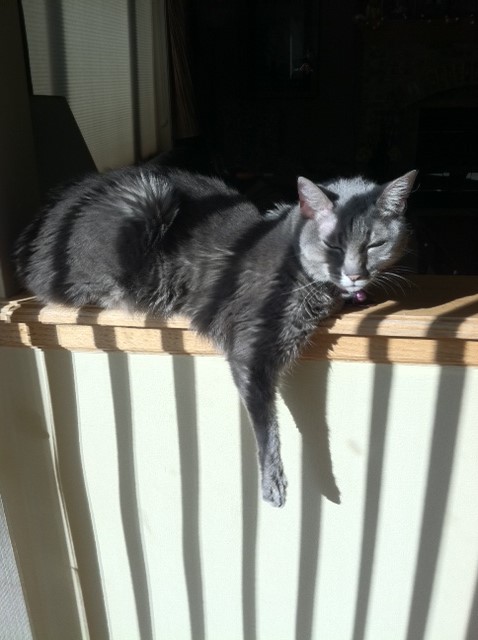
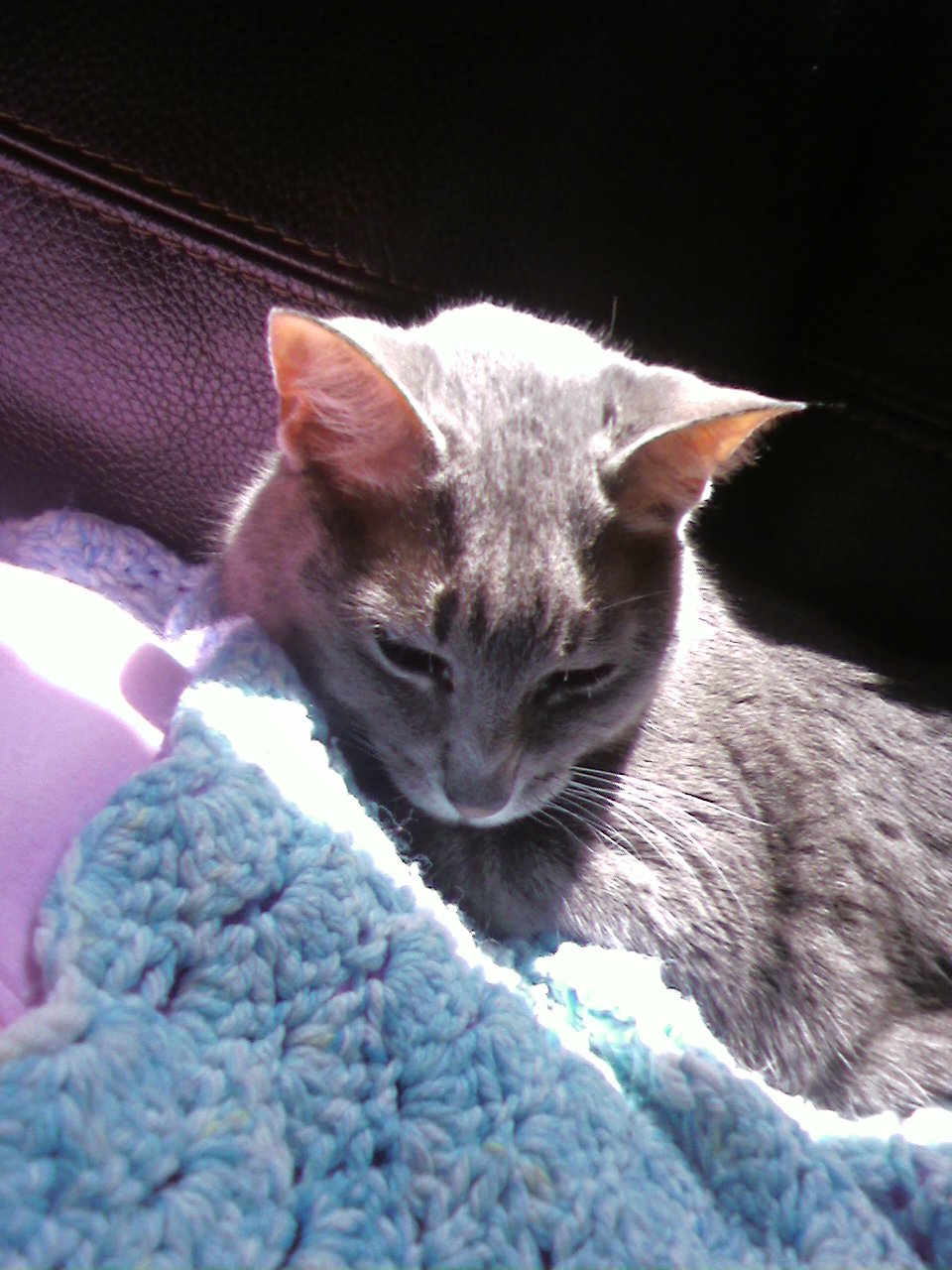
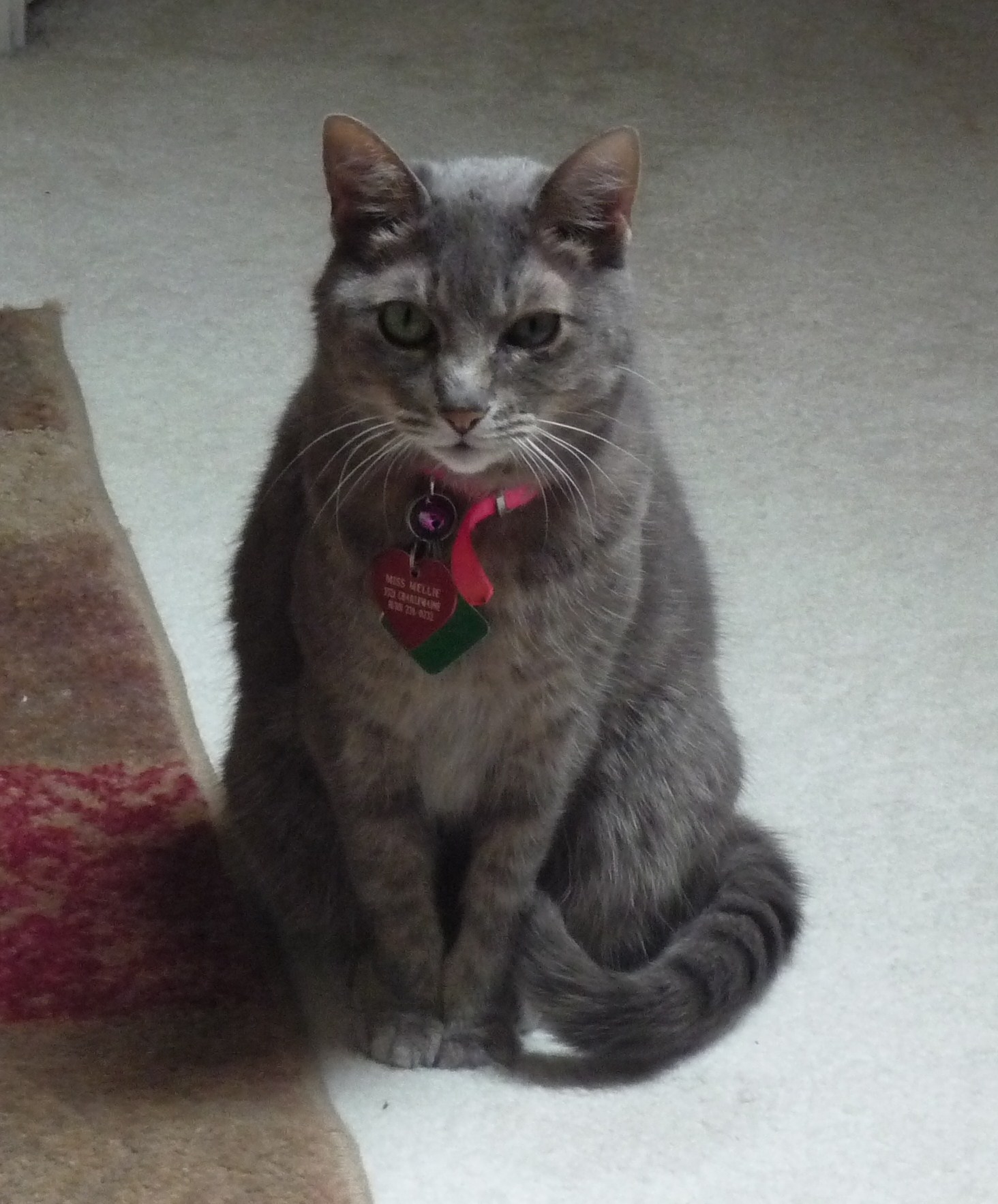
It is with great sadness that I begin this piece by telling you that our cat of 17 years has passed away.  She has been such a part of our family history and will be dearly missed.

I posted this picture on Facebook last Saturday and received so many thoughtful sentiments.  I often post pictures and updates about Miss Mellie.  It appears she had quite a following……..

photo (115) (2)

I loved her from afar.”

“She warmed the hearts of many of us on Facebook too.”

“Miss Mellie stories have been endearing and a bright spot in my week.”

“We take in theses wonderful animals, love them, take care of them and they become part of our family. Part of our daily routine, part of our home and part of our life. When they are gone it is like an emptiness that is hard to explain to someone who doesn’t have a pet. But those of us who do…we understand your pain and wish we could help you. miss seeing her face.”

“So sad, I will miss the Mellie stories.”

“Oh, I am so sorry. A furry loss is a tough one.”

Our son, Nick who has Down syndrome and autism had a lot of fun with Miss Mellie over the years.  If you are a regular follower of the blog you know about a lot of the pranks he has pulled on her.  Nick’s antics have given me enough material to write two blogs, Stuff on My Cat (Blog #33 located in the December 2012 archives) and Stuff on My Cat, Part II (located in the July 2013 archives.)  Here are the last two things he put on our sweet, gray tabby 🙂

Oh no, looks like Miss Mellie is getting some deep pressure with the therapy ball….

photo (127)

Nick thought she might enjoy some music, rock on kitty……

photo (121)

Harold makes a rough landing into the cat food.  Hardy har har, Nick 🙂

photo (123)

On our cross country move from Livermore, California here to the Chicagoland area we stopped for the night in Reno. Six year old Nick decided to do a little “Magic Mike” action for Miss Mellie.  I don’t think she was too impressed……..

Scan0001

A sweet moment between Nick and our cat. By the way, he hasn’t handed me the icon picture of her out of his PECS communication book yet.  But I know he will soon.  That moment will be a tearful one for me 😦

photo (119)

She shared so much love with our family and friends. She adored being in Hank’s arms and seem to comfortably nestle there……

photo (116)

Snuggled in with Al, she was a good lap cat…..

IMG_0782

She insisted on being on my lap, helping me to write 🙂

photo (129)

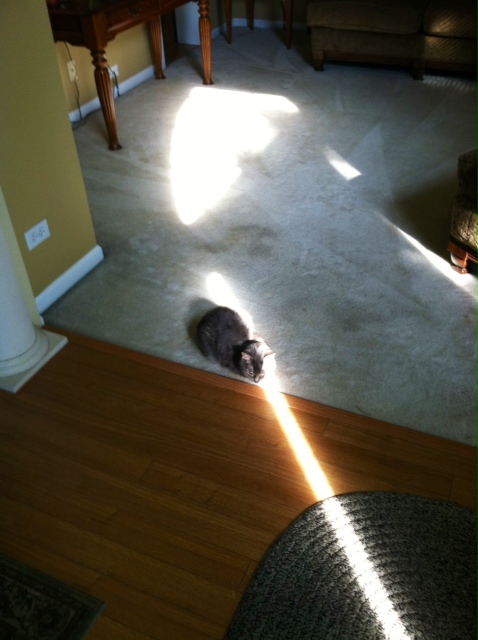
I will miss so many things about our cat like how she follows the sun beams throughout the day and running into the kitchen whenever she heard the can opener, tuna!…….

photo (124)

photo (115)

How she parked herself in front of the fireplace during the winter months waiting for  the hearth to be prepared for her……

photo (122)

Most of all I will miss our lap time together, the sound of her purring, her warmth and the love that she gave all of us. Thank you KB (my cat loving friend), for framing this picture and giving it to me last Christmas.  I will cherish it always…….

0516091435

A younger and heavier Mellie that my sister, Laura gave me… Aaahh she’s so cute…..

Summer_Oct2009 027 (3)

My friend Jimmie P. shared this quote on my Facebook wall…..

There has never been a cat who couldn’t calm me down by walking slowly past my chair.”
~Rod McCuan

That’s what is in my noggin this week.  Rest in peace, Miss Mellie.

~Teresa

0604102354 (2)


Posted in Autism, Fun Side of Nick

Blog #61~Stuff On My Cat Part II

Blog #61~ Stuff on my Cat Part II

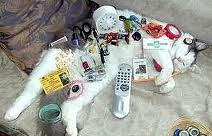
Stuff + Cats= Awesome

stuff on my cat book

That’s the motto for the internet phenomenon called “Stuff on my cat.”  Here’s what Amazon wrote about this book by Mario Garza:

“It began with a handful of digital photographs of office supplies, toys, and spare computer parts thoughtfully placed on Mario Garza’s snoozing cat, Love. Over time, the objects became bigger: remote controls, shoes, empty pizza boxes. And then cat owners everywhere were sucked into the Internet phenomenon that is defined by a simple motto: stuff + cats = awesome.  Culled from the thousands of outrageous photographs submitted by mischievous animal lovers, here are 200 of the most unbelievably entertaining images of cats with all manner of things on them: wigs, Easter eggs, dogs, cheeseburgers, cookware, gummi bears, action figures, tiaras, beer cans, pinecones, a statue of the Buddha, and much more. An introduction by the site’s creator explains the Stuff on My Cat philosophy, and playful illustrations and graphics are sprinkled throughout.”

In Blog #33~Stuff On My Cat (located in the December 2012 Archives), I wrote and shared numerous pictures of random objects we put on our cats over the years.  Why do we do this?  I have to embrace Mario Garza’s philosophy to answer this one.  Our cats rule the house.  Sleeping all day long wherever the sun radiates, claiming the fresh, warm laundry as their “personal paradise” and plopping on your lap even if you just want to sit down for a second.

God forbid you disturb them.  I have to contort my legs with bizarre yoga moves  slinking out of bed so as not to disturb her slumber. She wields her power at 5:00 a.m. letting out piercing cries and meows that sound as if you haven’t fed her in a week.  So, why put stuff on our cats?  Mario Garza is right on his philosophy:  “There is a very satisfying shift of power going on.  Now I’m in control when I sneak up behind her while she naps and put a pancake on top of her head-checkmate.” 🙂

Check out a few from the website www.stuffonmycat.com……

stuff on my cat loaded

stuff on cat with cig

stuff on my cat glasses

stuff on my cat post its

Nick loves to do this too,  he is 19 and has Down syndrome and autism.  Here are some of the stunts he’s pulled on our 16+ year old  tabby……..

photo (121)

Mellie has some company, Nick’s plush animals and a Taco Bell dog….

photo (122)

Another deluge of toys along with a package of microwave popcorn…..

photo (128)

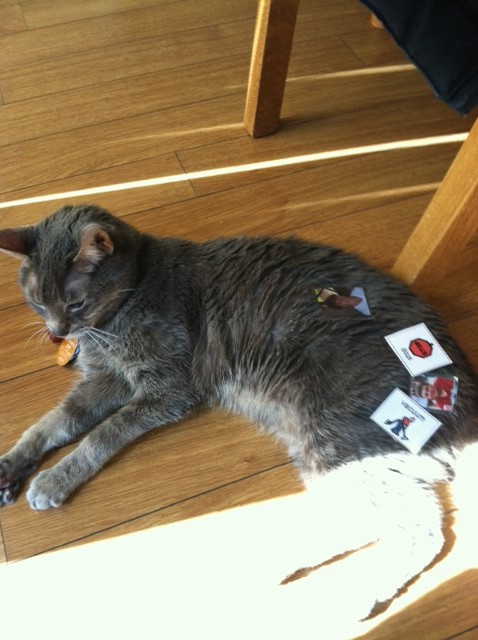
Mellie is trying to relax in her 1:00 p.m. sun spot.  Nick had other ideas his PECS icons, (Picture Exchange System.) I think he was communicating that he missed his brother, Hank and friend/respite worker, Bobby……

photo (123)

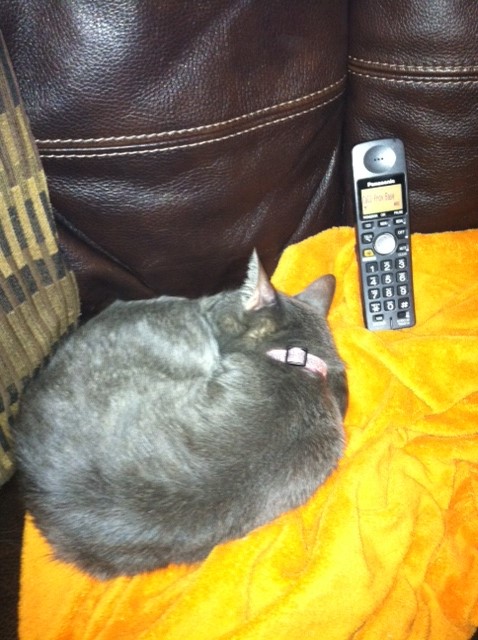
Apparently Nick thinks Mellie is expecting an important call…. 🙂

photo (119)

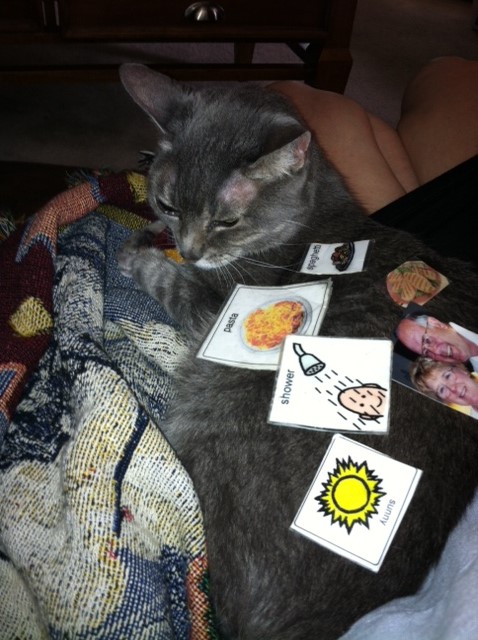
More fun with PECS icons….Nick mapped out his agenda last Friday…….

photo (124)

“Oh Kitty, go get me some Sprite please!”

photo (127)

I get a kick out of how creative Nick is and appreciate his mischievous side.  Here is one of Nick who had been “stimming” (a trait of autism) with my makeup mirror. He fell asleep next to the cat who had melded herself to a warm towel out of  the dryer…… apparently the cat doesn’t hold a grudge….. 🙂

IMG-20121123-00001

Speaking of being mischievous, here are a couple I did.  Oh I just can’t resist every once in awhile…. hee, hee, hee…… 🙂

Cinco de Mayo Mellie….. Ole!

photo (130)

“The Graduate”

photo (129)

Hope you enjoyed the second installment of stuff on my cat.  Next week I will get back to part two of “Wandering and Autism”.  Sometimes its fun to be mischievous. That’s what is in my noggin this week, meow!

~Teresa 🙂


Posted in Autism, Autism Safety and Wandering, Dual Diagnosis Down syndrome and autism

Blog #60~Wandering and Autism: 7 Prevention Strategies

Blog #60~ Wandering and Autism: 7 Prevention Strategies

Wandering and autism

HEADLINES…… 

“Car hits, kills 11-year-old autistic boy on the Katy Freeway” 

“Body found in pond is missing autistic child” 

“Autistic boy found dead, face down in a lake”

A lost child is a parent’s worst nightmare. Sadly, the headlines above are just a sample of instances involving wandering/elopement and autism all over the country.

Much like the wandering behaviors in seniors with dementia or Alzheimer’s, children and adults with an Autism Spectrum Disorder (ASD) are prone to wandering away from a safe environment.  A study done by The Interactive Autism Network through the Kennedy Krieger Institute found this: “49% of children with autism attempt to elope from a safe environment, a rate nearly four times higher than their unaffected siblings. Two in three parents of elopers reported their missing children had a “close call” with a traffic injury. Thirty-two percent of parents reported a “close call” with a possible drowning.”

I understand this fear all too well.  There have been a several occasions where Nick has wandered, taken off at the pool and bolted down the street.  Nick is 19 years old and has a dual diagnosis of Down syndrome and autism (DS-ASD).  He has deficits in the areas of language and cognitive function which limits his understanding of safety.  He has no concept of danger.

One day when Nick 11 years old he was on the swing set in the backyard.  His Dad stepped inside to grab a baseball hat for a second.  Something made me stop and put down the garden shovel next to the flat of flowers. I walked around to the backyard.   He was gone.

Al came out the patio door.  I shouted to him, “Did Nick go inside?”

“No, I just came in for a second to grab a baseball hat.”

I felt a hot wave run through my body as I climbed up the burm, the slow crested hill that separated the backyard from the busy street.

downsized_0511010726 (2)

Al had recently ruptured his Achilles tendon and was wearing a therapy boot.  He hobbled up slowly behind me.  There was nothing but a stream of fast-moving cars pacing the road behind our house.

 I called out to his older brother, “Hank, go to the front and check with the neighbors and see if anyone saw him okay. Do it now!”

My neighbor came over, “I saw him a few minutes ago.  He got off the swing and started chasing a bunny.”  He pointed his finger left, “He ran that way.”

In the Midwest, the yards blend from one to the next in a seamless row like football fields connected one after the other. I squinted hoping to see some movement.  There was nothing,  just eerie silence. I took off running.  A dozen houses down, nothing.  Over ten minutes had passed since he had gone missing. I was in panic mode, my body was shaking and legs began to fatigue.  I kept sprinting but there were only five houses left before the subdivision entrance.   Suddenly, I saw a small figure running. “Nick stop now!”

He just kept going.  My strides turned into leaps.  I caught up with him 2 houses before he reached the subdivision entrance.  He looked at me as if nothing was wrong.  We walked in silence back home.  I gripped his hand tightly and counted how many houses he had run passed.  Final count=20 houses!

It makes me sick to my stomach recalling that horrible day. We have since put some things in place as a precaution to keep Nick safe. What can families do to insure the safety of their child?  In my research, I found an excellent website called AWAARE which stands for Autism Wandering Awareness Alerts Response Educationwww.awaare.org.  This site has a comprehensive list of tips, materials and tools.

7 TIPS FOR WANDERING AND AUTISM RISK MANAGEMENT:

1. Secure your home

Install secure door locks, home security systems, install inexpensive battery operated alarms on door and window to alert when opened. Place hook and eye locks on all doors above your childs reach.  Fence in the yard and put visuals like stop signs to doors.

Here is what we have on our doors…….

photo (115)

2. Get an ID Bracelet

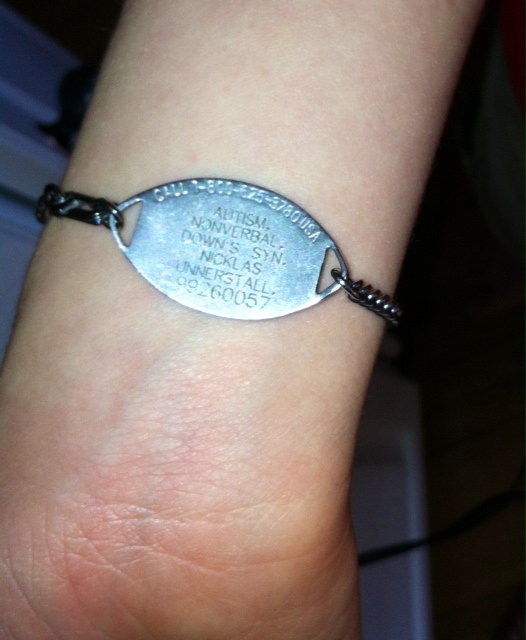
Medic Alert, www.medicalert.org  is what Nick wears and it stays on him firm.

photo (116)

Another popular bracelet is called Project Lifesaver, www.projectlifesaver.org.

3. Consider a mobile tracking device

Project Lifesaver (https://projectlifesaver.org), Angel Sense https://www.angelsense.com) and LoJack SafetyNet (www.safetynetbylojack.com) services have wrist and ankle tracking devices.  There are many other mobile GPS tracking systems you can purchase at Best Buy and other big box stores along with phone apps as well.  See the resource page on the AWAARE website above for more information.

4. Teach your child to swim

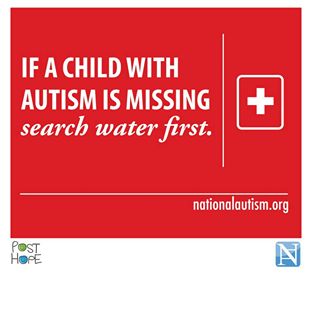
A large percentage of the headlines for wandering and autism end tragically because of drowning deaths.  Children are often drawn to water.  Check your local YMCA or special recreation association for swim lessons.

autism missing pic

5. Alert your neighbors

Make a simple handout with your name, address, phone number, information about your child (autism, non-verbal etc….) and include a photograph of your child.   Ask them to call you immediately if they see your child outside of your home.

6. Alert First Responders

Provide the local police and fire stations with key information before an incident occurs. Ask your local police department if they have a data base and registration program for individuals with special needs. See the AWAARE website given above for printable handouts.  There is also a free Big Red Safety Toolkit with free downloads on wandering and prevention.

7. Work with an ABA Therapist on a Behavior Plan

A BCBA certified behavior therapist can help with understanding the child’s goal and triggers that cause them to wander. The child may be trying to get to something they prefer, or avoid something they don’t want to do. When you can determine the function of this behavior, you can put supports and strategies in place to decrease wandering or bolting. If the behavior is occuring in school, address this with the IEP team and put measures in place to insure safety for your child.

Nick still requires 24/7 supervision and the house is sealed up like Fort Knox.  As a family we have to make sure there is always a designated watchman.  After doing this research on autism and wandering, I understand the necessity to be proactive and more responsible. Next stop: Make a call into the local police and fire stations to see what they have in place for wandering and persons with autism and other special needs in our community.   Discussion of this topic needs to continue.  I will be researching more tracking and monitoring devices.  Look for this on Part Two of  Autism and Wandering within the next two weeks.

That’s what is in my noggin this week!

~Teresa 🙂

Follow Nick:

Facebook and Pinterest @Down Syndrome With A Slice Of Autism

Instagram #nickdsautism

Twitter @tjunnerstall

Posted in Augmentative and Alternative Communication (AAC), Autism, Fun Side of Nick

Blog #59~ The Sleuth Detective

Blog #59~ The Sleuth Detective

The iPod has disappeared, here we go again…..geesh.  One of the many “gifts” that Nick has given me besides razor sharp reflexes is a keen eye as a sleuth detective.

inspector klouseau

Things have a way of vanishing into a *black hole around here.

black hole

Since Nick has Down syndrome and autism and limited verbal skills, I can’t exactly ask him to back track his steps to find his iPod.  I showed him the media bin where it’s should be kept as I signed the word, “help.”

photo (125)

Then, I pointed to the icon in his communication book asking him where is it?  I am met with a blank stare.  So, I take off to check the usual spots.  First stop, behind the couch….nada.  Next, a peer underneath my bed….nil. Now I have to do some back tracking.  When did he have his iPod last?  Over twenty minutes have past as I searched the house.  Then I remembered he was hanging out in Hank’s room.  I do a full room scan for a few minutes then zero in on the bed.  I pulled the comforter back…..bingo!

photo (121)

A few weeks ago I thought I was losing my mind.  I had a stack of letters sitting on the kitchen counter that I was going to mail the next day.  Poof, they were gone.  I sent a text to Al to see if he had mailed them…… nope.  I followed the trail again checking the usual spots….crickets……

“Oh great, now what?  Please don’t be in the trash.”

I dug my way down the garbage, picking through as coffee grounds and gunk stuck to my hands.  No luck.

detective

Finally I had one last thought.  I opened the door to the basement that is in a state of disarray after being flooded  from the spring rains in April………

photo (115)

There’s an hour of my life I will never get back. 

What is the worst thing that has vanished in the black hole?  The entire contents (10 pages) filled with icons out of Nick’s communication book.  I spent a day and a half a day sniffing out every trail I could think of that Nick might have taken.  I couldn’t imagine having to make all those icons, laminate and apply the Velcro again.

Noooooooooooooooooooooooooooo!

photo (116)

I went into the bathroom to see if he might have flushed them down the toilet. Well, it wouldn’t be the first time.  In Blog #21~ What is Normal?  (located in the September 2012 archives), I wrote about the time my leopard reader glasses went missing.  I always keep them next to the laptop in the same place.  The next day Sergio, our plumber was fixing a clogged toilet……

photo (113)

“I found out why your toilet was clogged. You can still wear theeeese glasses they were in clean water, not poopy water.”

Leopard readers back in it’s rightful place…..

photo (124)

The toilet flushed just fine, what a relief…..  The next day, I went to get Nick’s work bins that are stored on a high shelf in the laundry room.  I glanced inside one.  He had emptied his book one by one and put them all in here.  Whew……Thank goodness! 🙂

Communication Book restored, we dodged a bullet on that one…..

photo (123)

The phone went missing a few weeks ago. The phone is easy to find since you can hit the intercom button, but not this time.  Finally I discovered it tucked in the blue bin where I keep my blow dryer. Normally I just reach up and pull the dryer out, but last Thursday and I pulled the whole bin down.  Mystery solved, inside there it sat, the long, lost uncharged phone.

photo (122)

It seems as I write this piece there is a pattern emerging.   Nick definitely likes to drop things, but then other times he likes to put them up in those high bins. Note to self for the next thing that drops into the black hole. There are no lessons
to be learned this week.  It’s just a slice of life in Nick’s world…. The rest of us are just trying to keep up!  That’s what is in my noggin.

~Teresa

*According to Wikipedia:  “A black hole is a region of space-time from which gravity prevents anything, including light, from escaping.[1] The theory of general relativity predicts that a sufficiently compact mass will deform space-time to form a black hole. Around a black hole, there is a mathematically defined surface called an event horizon that marks the point of no return. The hole is called “black” because it absorbs all the light that hits the horizon, reflecting nothing, just like a perfect black body in thermodynamics.”