Posted in Autism, Behavior/ ABA, Down syndrome

Blog #122~Parent Stress and Autism

Blog #122~ Parent Stress and Autism

Research has clearly shown that mothers of children with autism experience more stress, depression and poorer health than is typical of mothers in general. Autism Research Review (ARRI) reports this editorial, “Parental Stress in Autism Spectrum Disorders: In a survey of 219 parents of children with autism, Sharpley, et al. (1997), found that more than 80% reported sometimes being “stretched beyond their limits,” with mothers reporting higher stress levels than fathers.   The authors commented that the three most stressful factors are “(a) concern over the permanency of the condition; (b) poor acceptance of autistic behaviors by society and, often, by other family members; and (c) the very low levels of social support received by parents.”

I know of this stress too well. My son, Nick is 21 years old and has Down syndrome and autism. His impulsivity is at an all-time high. In the 5 minutes I stepped out to roll the garbage bins to the curb, he cleared out a desk drawer and threw the contents all over place. A few days before, he was up at 4am and proceeded to take two bottles of salad dressing and dump them all over the kitchen and laundry room floors.

At least he put the empty bottles in the recycle bin 🙂

dressing

According to an article written in Disability Scoop (www.disabilityscoop.com):

“Mothers of adolescents and adults with autism experience chronic stress comparable to combat soldiers and struggle with frequent fatigue and work interruptions, new research finds. These moms also spend significantly more time caregiving than moms of those without disabilities.

Researchers followed a group of moms of adolescents and adults with autism for eight days in a row. Moms were interviewed at the end of each day about their experiences and on four of the days researchers measured the moms’ hormone levels to assess their stress.

They found that a hormone associated with stress was extremely low, consistent with people experiencing chronic stress such as soldiers in combat, the researchers report in one of two studies published in the Journal of Autism and Developmental Disorders.

Such hormone levels have been associated with chronic health problems and can affect glucose regulation, immune functioning and mental activity, researchers say.

autism war girl

Now, I would never compare my level of stress to that of a combat soldier. But I do have to remain on point to keep up with Nick. I must jump out of my skin dozens of times a day when he pushes the ADT keypad, microwave, garbage disposal, and phone intercom buttons, runs upstairs to run the faucets full blast, or empties a full basket of folded laundry and the basket off the second floor.  Mix in sleep deprivation and dodging potential meltdowns situations, topped with a constant barrage of stimming sounds all of which send tension levels skyrocketing.
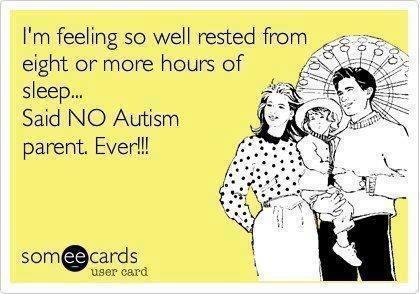
autism and sleep cartoon

The stress of parenting a child with autism is high for many reasons. Parents cope with grief, worries about the future, struggling to find resources and support for their child on top of handling the behavior and communication issues associated with having autism.

A child with autism may display unpredictable and disruptive behaviors have meltdowns that can be of danger to themselves and others and have trouble sleeping through the night. Deficits in speech and communication can contribute to behavior problems as well. In addition, parents may be dealing with seizure disorders related to autism.

A child’s autism diagnosis affects every member of the family in different ways. Parents must now place their primary focus on helping their child with autism. This may put pressure on their marriage, other children, work, finances, and personal relationships and responsibilities. Much of the focus shifts to finding resources and spending money towards treatment and interventions for their child. These needs can complicate family relationships, especially with siblings.

So what coping mechanisms help a parent dealing with anxiety and drained of energy?

*Get involved with support groups locally and online

*Obtain respite care and apply for funding for supportive services.

*Get your child/young adult into programs and social groups specifically tailored to autism.

*Carve out time to enjoy leisure activities like exercise, massage, meditation and self-relaxation techniques.

These can go a long way towards improving mental health and reduce the strain caused daily. While I try and do most of things, there are some days that push me close to the edge. Ask any parent raising a child with autism and they will tell you that some days you just can’t combat the stress.  That’s what is in my noggin (and heart) this week.

~Teresa


Posted in Down syndrome, Education and Special Needs

Back to School Tips for Special Needs Kids

Back-to-School

Back to School Tips for Special Needs Kids

This week, my top 5 back to school tips for special needs kids and their parents.  Click on this link to view @https://nickspecialneeds.wordpress.com/2012/08/27/blog-19-back-to-school/

Good luck with the new school year.  That’s what is in my noggin this week!

~Teresa 🙂

Posted in Autism, Down syndrome, Speech and Occupational Therapy

Blog #121~10 Years of Autism

Blog #121~ 10 Years of Autism

Last Saturday, the Chicago White Sox gave a replica of the 2005 World Series Ring to all the fans. This was to commemorate the 10 year anniversary of the Sox winning the World Series.

This sure beats the heck out of any bobble head they’ve given out…

White Sox Ring

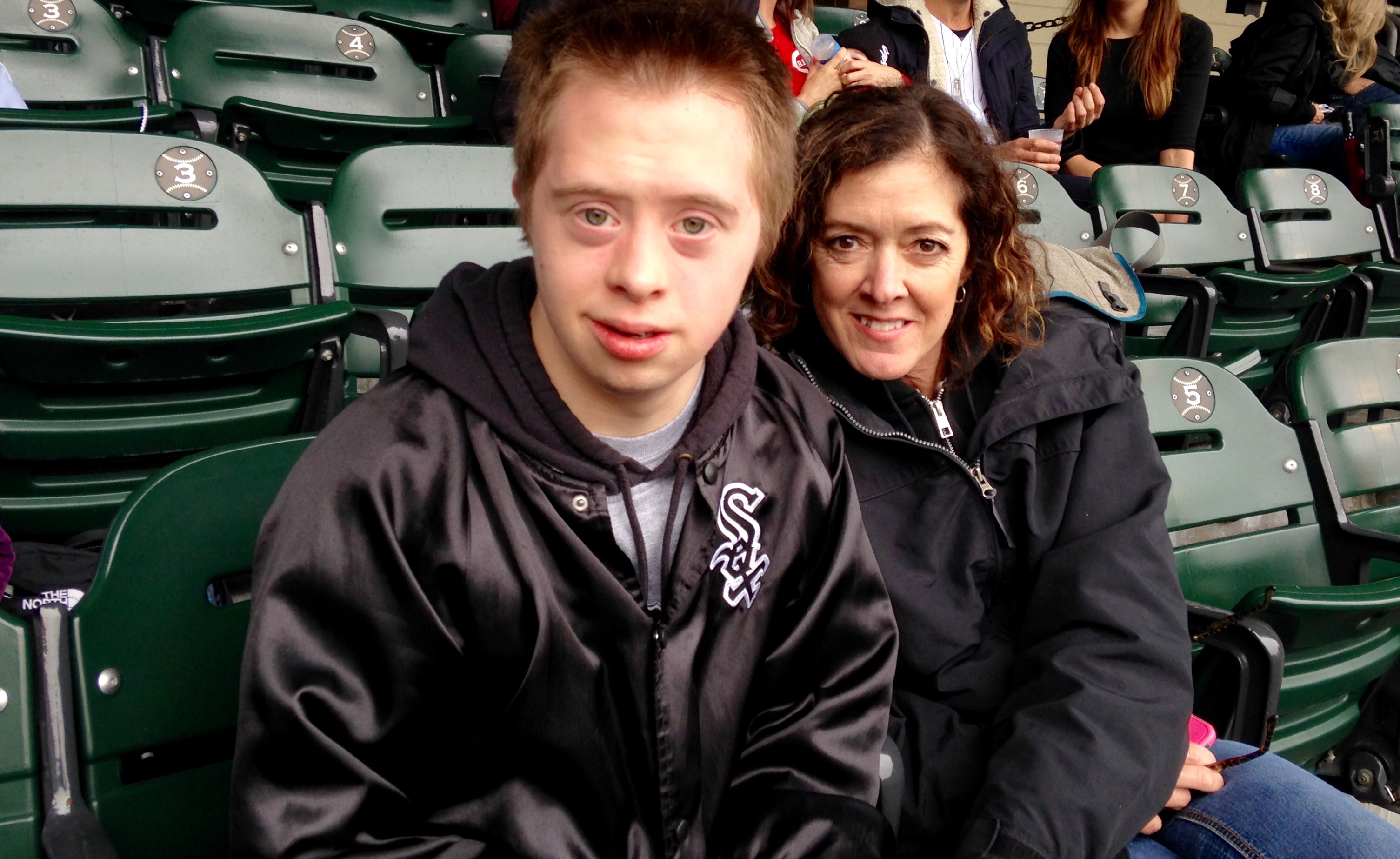
I slipped the heavy ring on, that Al brought home from the game. I thought back on the week that the White Sox won the American League Championship securing their spot in the World Series. That was the week, that we got the firm diagnosis that our son Nick, had autism. Nick is now 21 years old and has Down syndrome along with autism. A lot has happened in the last 10 years, and I’ve learned plenty in the process.

Sox  Nick and mom

What about the 11 years prior to the diagnosis of Nick having autism? Well, when he was 5 years old we had him tested but it was found that he was not on the autism spectrum because he was highly social and the oddities were due to having Sensory Integration Dysfunction.

According to the Sensory Processing Disorder Foundation (SPD Foundation), “Sensory Processing Disorder (SPD, formerly known as “sensory integration dysfunction”)

is a condition that exists when sensory signals don’t get organized into appropriate responses. Pioneering occupational therapist and neuroscientist A. Jean Ayres, PhD, likened SPD to a neurological “traffic jam” that prevents certain parts of the brain from receiving the information needed to interpret sensory information correctly. A person with SPD finds it difficult to process and act upon information received through the senses, which creates challenges in performing countless everyday tasks.”

Nick sought out input by tapping objects, walking heavily and stimming with his toys to help organize his senses. His occupational therapist worked with him weekly providing him with a sensory diet.

photo (115)

In addition, Nick also has Verbal Apraxia of Speech (an acquired oral motor speech disorder affecting an individual’s ability to translate conscious speech plans into motor plans, which results in limited and difficult speech ability). The sensory and speech conditions blurred the lines, therefore the autism didn’t come to view at the time.

As Nick entered the throes of puberty, it became evident that there was more to his behaviors than just Down syndrome. That’s when we sought out Little Friends Center for Autism to do an assessment 10 years ago. Looking back I had a hunch he did. However, part of me wasn’t ready to face such a daunting diagnosis as autism. We got the report from Little Friends the day that the White Sox won the ALC championship. That report was the key to opening up a new world for us.

The official diagnosis of autism, allowed us to request more specific services for Nick. This included a better communication system, behavior plan, training, finding the NADS (National Association for Down Syndrome) support group for dual diagnosis families, and respite care through the state. With the help of Little Friends, I attended training sessions to help Nick foster independence and better communication. More importantly, I learned how to get my son toilet trained once and for all, and out of those Depends diapers.

Nick has grown a lot in the last 10 years. Things are not near perfect, nor will they ever be. We face our daily  battles. He is still stimming and raising autism awareness everywhere he goes. But the meltdowns are fewer and far between. Nick is happy and a funny guy. And when I see him standing there in his boxer briefs I am reminded of perhaps the greatest accomplishments in my life. I’m proud to say that we are done with what our autism community refers to as “Code Brown”

No more poop smears!

poop icon

If you are a parent and have a hunch that your child may have autism, this is my wish for you. That you go get an assessment, take that piece of paper and use it as your ticket to get the services to help your child.  Seeing where Nick is today is a sweet victory that I savor.  It feels like I’m winning the series in Nick’s world.  That’s what is in my noggin this week!

~Teresa 🙂

Posted in Autism, Down syndrome

Blog #120~Lessons Learned on a Zip Line

Blog #120~Lessons Learned on a Zip Line

Recently on a vacation to Punta Cana in the Dominican Republic, my siblings and I decided to book an excursion to go on a zip line.  It seemed like a good idea at the time. You know something to knock off the bucket list.  That is until the crew at Runners Adventures began to strap the equipment on me.  The instructor explained the zip line course, proper technique and hand signals to watch for.  There were 12 lines total, the first few were lower.  All I had to do was make it through the first set and I could bail out.  As we climbed the stairs to the first cable, the fear began paralyzing me.

The staff person clipped the metal hooks over the double cables and instructed me to sit back, tuck my knees in, and to rest my hand on the cable and keep it relaxed.  I let go of my clenched fist and glided to the other side (and without one single scream or swear word).  The second line was a fast one, 6 seconds to the other side (oh and be sure to smile because there was a photo op).  I came down that line like a bullet and finished feeling like a crazed, adrenaline junkie.

zip line

The stairs leading up to the rest of the lines got higher and the cables were longer and more risky.  My brother in law could see the look on my face, that of singular focus. He reminded me to take time to enjoy the scenery.  I kept my hand loose soaring with ease and taking in the beautiful views. By the way, I made it through all 12 lines. 🙂

Zip line view

Later at the beach, I glanced out at the brilliant, blue Caribbean ocean reflecting on the adventure……

beach

Sometimes, we need to push ourselves way out of the comfort zone.  Doing something so scary and unfamiliar forces you to face life’s uncertainties.  I have a lot of fears regarding my son, Nick.  He is 21 years old, and has Down syndrome and autism.  I worry about his future after he finishes the post-transition program next February.  I’m uncertain about him living in a group home someday.  Who is going to insure his safety? How will I know if he was possibly neglected or abused, since he has very limited speech?  Will he think that I have abandoned him? Will he be fulfilled and loved as much as he is here at home?

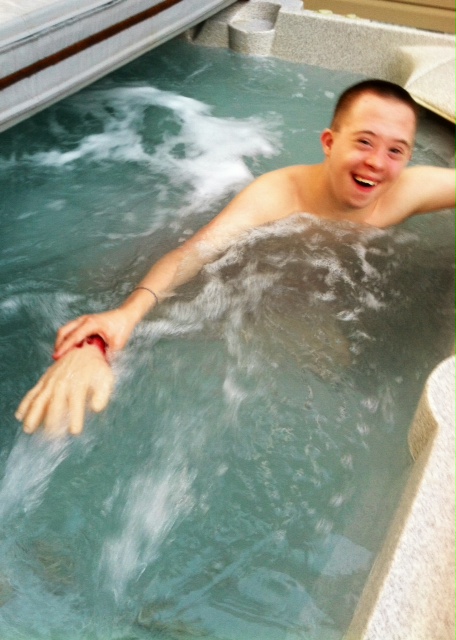
Nick enjoying the hot tub on our deck……

photo (30)

I learned a few things on the zip line.  Even if you are uncertain, you have to trust that the staff has your back and just let go.  At some point, I need to loosen my grip and trust that others can take care of Nick in the future.  It’s okay to be uncertain; but those fears can hold you back, and you might miss a great ride.  In fact by relaxing my hand and letting go, I felt a spark ignite inside me. That’s what is in my noggin this week. 🙂

~Teresa

Posted in Autism, Down syndrome

Summer Break

Summer Break

Summer break

I’m taking the next two weeks off for a summer break.  There are plenty of great stories and information about Down syndrome, autism and more in the archives located on the right side as you scroll down. Dig in and enjoy them! Thank you for reading and sharing Nick’s world.  Have a great 4th of July holiday and be safe.

~Teresa

Posted in Autism, Down syndrome, Fun Side of Nick, Recreation/Leisure and Special Needs

Summer Fun

015

This week, a look back at summer fun over the years.  Nick enjoys vacations especially if there is swimming involved.  He is now 21 years old and has Down syndrome and autism.  Click on this link to view @ https://nickspecialneeds.wordpress.com/2012/06/11/blog-11the-good-ole-summertime/

That’s what is in my noggin this week.  Happy summer to everyone and thank you for reading and sharing Nick’s world!

~Teresa


Posted in Autism, Down syndrome

Father’s Day Tribute

Father’s Day Tribute

Daddy-O

This week,  a tribute to the men who have shaped Nick’s life along with my own. Nick is 21 years old, he has Down syndrome and autism. Nick and I wish you all a Happy Father’s Day and enjoy @ https://nickspecialneeds.wordpress.com/2012/06/18/blog-12-daddy-o/

Posted in Autism, Down syndrome

Blog #119~Autism Survival Kit

Blog #119~ Autism Survival Kit

Recently I was reading a Facebook post.  It was a poll, asking parents to name their number one necessity item needed for their child with autism.  This got me thinking what would I include in an autism survival kit?  My son Nick, is 21 years old and has Down syndrome and autism. Here is a list of 21 things that you might want to pack in that survival kit.  Note, the last 4 are MY essentials 🙂

survival_kit

  1. Rug shampoo machine
  2. Plumbers snake
  3. Paper towels in bulk
  4. Deadbolt or key pad locks
  5. Child proof locks and rubber bands for cabinets
  6. Noise canceling earphones
  7. Weighted blankets
  8. Swing set
  9. Mini trampoline
  10. Essential oils with a diffuser
  11. Chewy tubes
  12. Figit toys and stim objects
  13. Melatonin
  14. Back up iPads and iPods
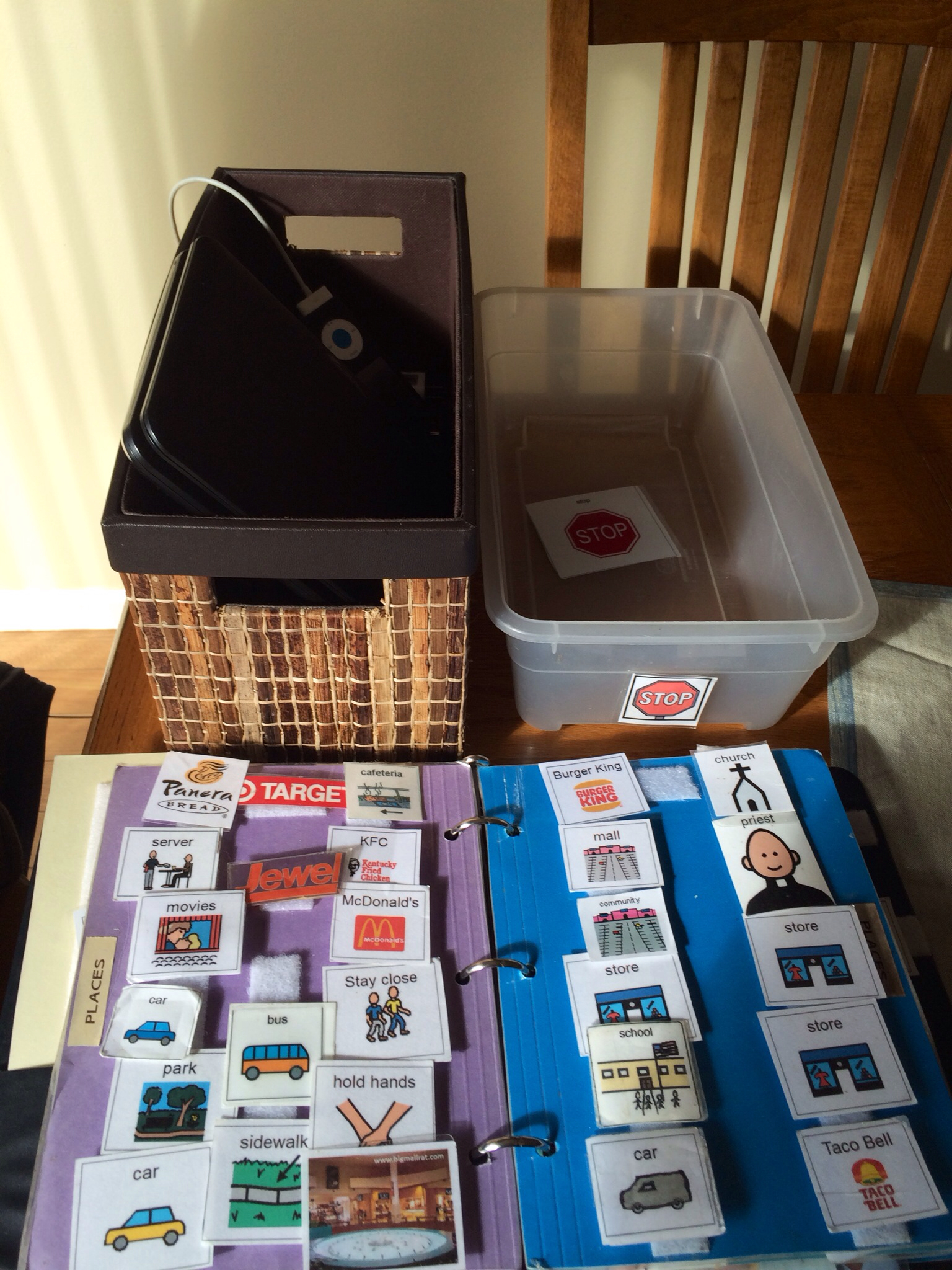
  15. Laminator for PEC pictures and schedules
  16. Nail polish remover
  17. Back up clothes for trips and community outings
  18. Coffee
  19. Wine
  20. Earplugs
  21. A good sense of humor

Figit toys…..

figit toys

Transition Timer….

transition timer

Laminated PECS pictures….

IMG01 (13)

This is why I included nail polish remover….

photo (116)

School is going to be out for the summer. ESY (Extended School Year is a short day), so arm yourselves and be ready.  What is YOUR necessity item that you would add to the kit?  I’d love to hear it!  That’s what is in my noggin this week.

~Teresa

Nick sensory toys

Posted in Augmentative and Alternative Communication (AAC), Autism, Down syndrome

Blog #118~If You Can’t Fix It, Duct It!

Blog #118~ If You Can’t Fix It, Duct It!

duct tape

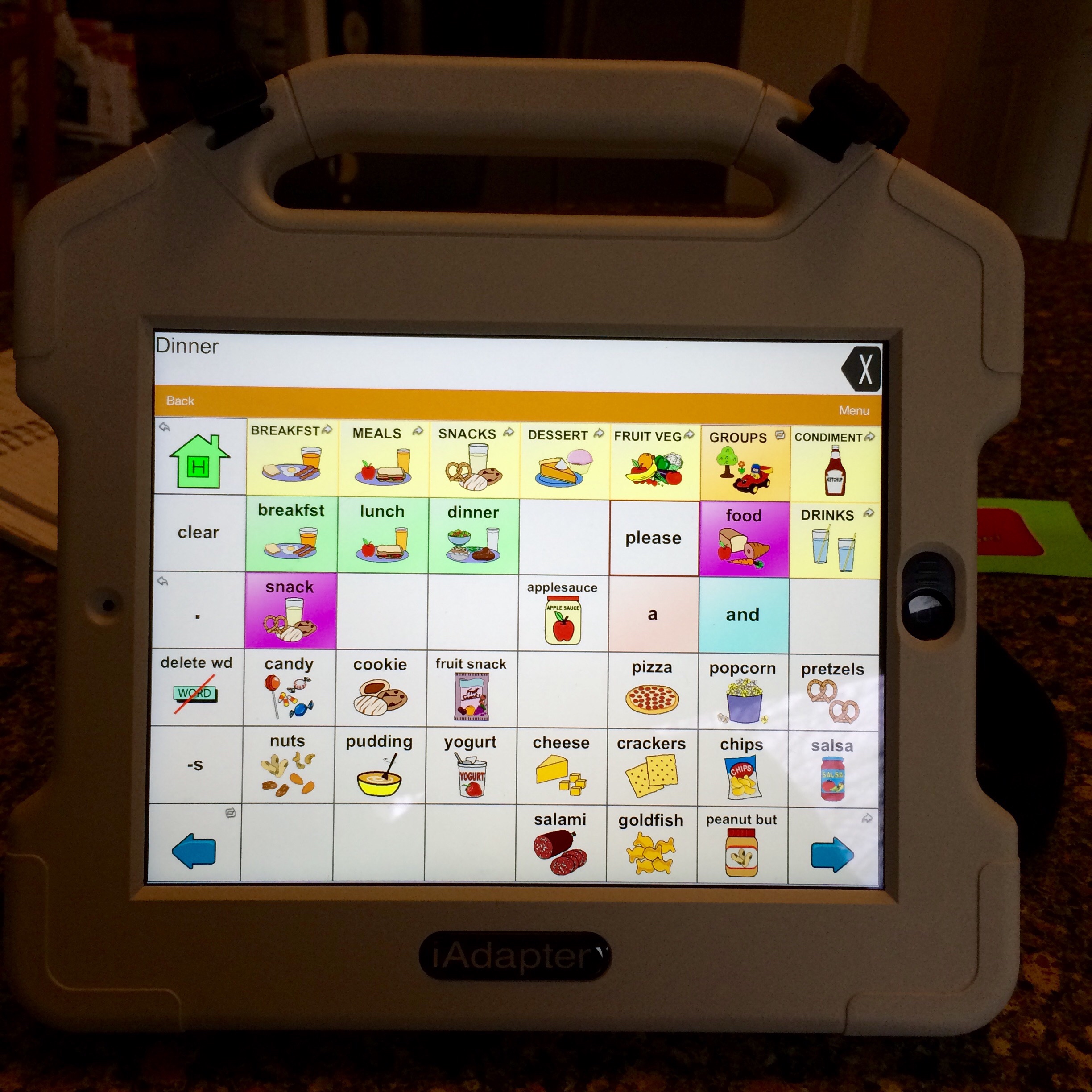
I reported two weeks ago, that Nick’s talker (AAC device) has survived being dropped from the second floor of the Naperville Library and onto the railroad tracks off Montgomery Road.  The case is sturdy but has taken a beating.  Nick is 21 years old and has Down syndrome and autism.  He’s a crafty one.  It’s all we can do to keep up with his antics.  The school team has come up with two things to secure his talker better.

ipad touch chat

First, the team has devised a bumper around the iAdapter case with foam and duct tape to absorb the impact. I’m thinking that we need to patent this prototype.

IMG_5231

In addition, Nick has it tethered securely to his body with two straps (one over the shoulder and the other around his waist).

IMG_5116 

Nick is using his talker to make requests for iPad, Sprite, food items. When he burps he pushes the buttons, “excuse me” or “that’s gross”.  The other night I was busy doing laundry and getting dinner ready.  He was getting impatient and growing tired.  He proceeded to push “stop”- “I’m tired”- “I want to eat”.  When he finished dinner, he pushed the buttons “finished” and “bedtime”.  I’ve also noticed that he is using more verbal language since getting talker 2 months ago!

At home I figured out a way to tether it to a shelf with Velcro straps in the kitchen so it’s accessible.  So, between the straps and duct tape, we are staying one step ahead of big guy (at least for now). Hey it’s Nick’s world, the rest of us are just trying to keep up.  That’s what is in my noggin this week!

~Teresa


Posted in Augmentative and Alternative Communication (AAC), Autism, Down syndrome

Updates on Behavior & AAC Device

Updates on Behavior & AAC Device

Nick’s behavior has been escalating over the last few months.  He is 21 years old and has Down syndrome and autism.  The incidences of throwing objects has increased.  This also includes his new AAC Device (talker). AAC stands for Augmentative Alternative Communication.  The school district’s autism specialist has done some observations of Nick and data collection of behaviors.  I did this as well at home with Nick’s behaviors.

The school team met last Friday to go over the observations and brainstorm on how to adjust his behavior support plan.  A significant amount of the behaviors are attention seeking.  The team is working on a system to reward Nick for being compliant. In addition, they will be utilizing his new AAC device to seek appropriate attention and making more requests and comments with it.  He has been throwing the device both at home and school.  The iPad is in sturdy enough case to survive a throw from the second floor of the Naperville Library as well as being pitched out the bus onto Montgomery Road at a railroad crossing.

On a positive note, he is using the device well to requests food, rewards as well as making some comments like, “excuse me” when he lets out burps.  He is learning how to navigate it with minimal prompts as well.

ipad touch chat

Nick’s behavior support plan is much like painting the Golden Gate Bridge.  Just when you think it’s all done and figured out, a new behavior pops up and you have to start over again.

paint golden gate bridge

That’s Nick’s world….. the rest of us are just trying to keep up.  That’s what is in my noggin this week.

~Teresa