Posted in Autism, Behavior/ ABA, Feeding, Personal Hygiene, Toileting

Blog #51~Pushing My Buttons

Blog #51~Pushing My Buttons

Pushing the microwave and phone intercom buttons, running water faucets full blast, dumping out coffee mugs…. You name it Nick does it. I try to ignore the behavior and not give him any attention which is what he desires.  This tactic isn’t really working.  Now what?  Enter Toni Van Laarhoven, Associate Professor at Northern Illinois University.  She spoke at the NADS Behavior Retreat a few weekends ago.  Before she did her presentation on using video modeling to teach behaviors she spent some time talking about the struggles that we as parents were going through. The NADS (National Down Syndrome Association) retreat families all have children with Down syndrome and autism.  I sat up in my chair, she had my full attention. I began jotting notes in my journal frantically as she spoke.  I am always looking for solutions, she had me at DRO.  

It’s been a long time since my days of taking psychology classes at The University of Texas.

Longhorn logo

I remember the basics but this technique I have never tried with Nick.  What is DRO?  It stands for Differential Reinforcement of Other Behavior, and it is the delivery of reinforcement. This reinforcement procedure is designed to reduce a given behavior by increasing alternative behavior while withholding reinforcement for the unwanted response.

 I did a little research and have to give credit to Toni Van Laarhoven and these two resources: 

Cooper, J.O., Heron, T.E., & Heward, W.L. (2007). Applied Behavior Analysis (Second Edition). Upper Saddle River, NJ: Pearson Education, Inc.

Sulzer-Azaroff, B. & Mayer G.R. (1991). Behavior Analysis for Lasting Change. Belmont, CA: Wadsworth/Thomson

Here is my take on this technique and how I might apply it to help with some of Nick’s behaviors.  DRO is a specific schedule of reinforcement that is used to decrease the rate of behaviors that are inappropriate.  It is time-dependent, so rather than responding to a behavior after the fact you reinforce the time that the child is NOT engaging in the inappropriate behavior. In essence, you catch them being good. 🙂

angel pic

Advantages of using DRO: 

* Decreases inappropriate behaviors rapidly

* Positive approach to change inappropriate behaviors

* Used to reduce a wide variety of behaviors

* Easy to implement

Guidelines for implementing a DRO Program: 

* Define the target behavior.

* Determine highly preferred items or activities to be used as reinforcement.

* Collect baseline data of current behavior, how often does this occur?

* Set initial DRO intervals just below the average period of time that the child  emits the inappropriate behavior. (5, 10, 15 minutes?)

* Explain rules to earn reinforcement.  Child will earn reinforcement if they do not engage in the target behavior during each interval.

*DRO may be more effective when combined reinforcing replacement behaviors.

*Use visual supports (tokens, picture of reward)

*At the end of the time period, provide the child with the reward if the target  behavior was not emitted.

* If the child engages in the target behavior, inform them that there will be no reward at that time.

* Start time period and continue sequence above.

*Implement daily and consistently.

* As the student makes progress, increase the time period.

Here is what I picture with Nick.  The target behavior will be pushing the phone intercom button.  I will do some data keeping on how often he does this.  In addition, I will see what is occurring in the environment that might trigger him doing this and make a note in the behavior journal.  Once a pattern is established I will set the interval schedule.  Next will be determining what motivates Nick.  Normally he is rewarded with a Sprite when he does his work bins well.  However I am going to use a different reward specific to this DRO project.  Nick enjoys watching Funny Cats on You Tube and the laptop is right by the phone.  Right now I am thinking this might work.  I like the idea of doing a visual token system for Nick.  Toni mentioned making a puzzle of the highly preferred item.  For each successful interval you put a piece in the puzzle.  Once the puzzle is filled in then Nick would get his reward  🙂

you tube cat pic

The DRO technique could be used in home and in the classroom as well.  One instance might be a child who interrupts the teacher during classroom instruction. The end result is to have the child learn to exercise more self control.  This may sound like a lot of work.  The data keeping and setting of the interval schedule can be tedious.  Flashback to the toilet training days….. this is when I use to put Nick on the throne every 30 minutes and do a dry pants check.  I also kept data on how often he took in food and drinks. Over time I saw a pattern of two things.  First,  was how long he could stay dry and clean.  Secondly I figured out what amount of time it took him to digest what he ate and drank thus needing to use the bathroom. This is how I habit trained him.  As he matured he was able to self-monitor toileting on his own. Put the time and effort on the front end (so to speak 😉 ) and there will be a payoff.  That’s what is in my noggin this week….. Stay tuned…..

~Teresa 🙂

Posted in Autism, Behavior/ ABA

Blog #50~Up, Down and Somewhere in Between

Blog #50~ Up, Down and Somewhere in Between

Life has its ups and downs like a roller coaster. The highs from a peak adrenaline rush don’t last forever. What goes up must come down. Then there are those periods of in between. Over the weekend we attended the National Down Syndrome Association (NADS) Behavior Retreat. This is unique group of kindred spirits all which have children with Down syndrome and autism. This support group always divulges uncanny stories that are frighteningly similar. Some are on a high, others are on a low and a few are somewhere in between.

The retreat opens with sharing of stories. The first was a success story of a boy the same age as Nick. He is navigating his schedule independently using his iPad and a scheduler app. The next mom had poured out tears last year. At that time her son plopped down outside in a busy parking lot. She physically couldn’t get him to move. We call that the “stop, drop and plop.” This year she said they were in a honeymoon period experiencing much success and growth with their son. Another parent was struggling with many things. Her son was now a one man wrecking crew. He’s on a dumping rampage like Nick.  The only pictures she had were up on the high shelves in her home.  He found a way to hurl objects way up on the shelves and successfully knock down the last remaining picture frames. Why? He likes to stare into the frame because it’s reflective. His sensory need was desperately craving shiny objects. Crafty little guy. 😉

Nick likes reflective objects too…..

photo (112)
The gal next to me was on a high. She had grasped the Holy Grail. Her child was finally potty trained. The group broke out clapping and cheering. This is no easy feat with our kids. Al and I spoke next. Right now we are somewhere in between. Nothing horrible is going on with Nick. Yes, he is still pushing the microwave and phone intercom buttons. The water faucets  run full blast from time to time. He’s still dumping and dropping things. On the flip side, his meltdowns have been minimal and he hasn’t pulled a fire alarm in a while.

Nick’s last alarm pull was at this retreat six months ago, that was #27….

firelite-pull-station
While these things are bad, I don’t see it as unmanageable right now. I know what rock bottom looks like. We hit it hard while he was going through puberty. This ride is wild and often met by hitting a breaking point. We came close. Over the years during these retreats, some families had to come to the realization that the support at home just wasn’t enough. You can see the pain in their eyes. You can tell by the body language as they sit with their arms crossed wound up tight as a ball of yarn. You can feel it as they speak of their hopelessness and guilt with tears flooding their down their faces.

At some point we as parents have to make the difficult decision to put our kids into a group home. Over the years many families expressed their relief of having done so and reported that their child not only adjusted but thrived. It’s a personal decision. I am guessing that when the time and situation is right, you will know it.

Listening to all the stories got me thinking that it’s like that Seinfeld episode with the coffee table book….

Seinfeld coffee table book
George who had no job and living with his parents adopts a new mantra, to do everything the exact opposite. Elaine is up, landing the job at Pendant Publishing but then things come crashing down. Damn those Jujyfruits. 😉

Seinfeld Jujyfruits
Meanwhile, Jerry loses a stand-up gig and five minutes later is asked to perform another one on the same night. This prompts Kramer to call him “*Even-Steven”. This causes Jerry to start noticing how everything always ends up turning out exactly the same for him as originally planned, never losing or gaining. By the end of the episode, Elaine claims that she has “become George,” but Jerry marvels at how things always even out for him: first, Elaine was up and George was down; now, George is up and Elaine is down, but Jerry’s life is exactly the same.

Seinfeld cast
Besides the successes and war stories, the retreat offered some great information. Toni Van Laarhoven, an Associate Professor from Northern Illinois University gave  a fantastic presentation. We learned about using video modeling to teach new skills and behaviors. I can testify this works. Check the April 2012 archives for my story on this in Blog#5~ Ready, Set, Action. Toni also provided some helpful information regarding behavior problems. Stay tuned for more on this in the next two weeks.

In life sometimes you are up, other times down, and sometimes in between. I am okay with being “Jerry” right now. I’ll take even-steven. I think TODAY, most of us would.
tax day
That’s what is in my noggin this week and don’t forget to ask for those tax day specials! AMC (free popcorn), Sonic, Arby’s, Cinnabon and many other businesses are offering some sweet deals today. 🙂

~Teresa
*even- steven: According to Dictionary.com it means exactly equal; also, with nothing due or owed on either side. For example, I’ve paid it all back, so now we’re even-steven. This rhyming phrase is used as an intensive for even. Random house.com states that the noun steuen/steven originally meant ‘a time or place’, but later took on the meaning of ‘a condition, situation, or circumstance’. So the phrases set steven and even-steven both meant ‘settled circumstances; settled accounts’.

Posted in Autism, Behavior/ ABA, Education and Special Needs

Blog #49~April is what?

Blog # 49~April is what? 

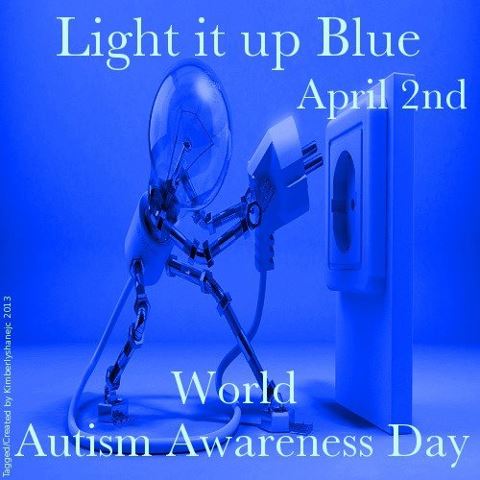
April 2nd was “Autism Awareness Day.”  Nick and I didn’t wear blue to show support or acceptance.  Quite frankly, I forgot.  I am down in the trenches trying to keep him from running the faucets full blast, pushing the popcorn button on the microwave and dumping out my cup of coffee all over the floor every single day.  Seems to me they should have kicked it off on April fool’s Day. 🙂

April and autism awareness…..

light it up blue

I applaud these gestures.  In the October archives (Blog #26~Down syndrome Awareness Month), I posted some pictures of iconic places lit up pink in support of breast cancer and shared some ways to support Down syndrome which is also during that month.

Here are a few light it up blue pictures…..

blue eiffel tower

Chicago lights it up blue…..

photo (119)

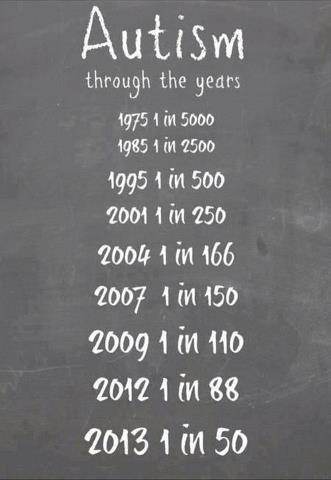
The CDC estimates that about 1 in 88 children has been identified with an autism spectrum disorder (ASD), and a study released just last week suggests that number may be even higher. In the Medical Daily article it stated: “A recent government survey as report of more than 95,000 parents in U.S. exceeds previously recorded accounts.  Now 1 in 50 schoolchildren between the ages of 6 and 17 are diagnosed with autism.  The CDC found that boys are four times likely to have autism than girls which has remained true since it was first discovered.”

An epidemic………

autism through the years

Personally I would like to see the focus on more educational, behavioral supports and other treatment options.  What is going to happen to our kids when they age out of the school system?  There aren’t near enough employment opportunities, day programs or group homes for this rapidly growing population.  In addition, I’d like there to be an easier path to obtain funding through the government.

I have spent the last year writing about Nick in this blog so that you can better understand the way he functions having Down syndrome and autism. I have crawled through the gutter like so many other parents.  What I think we all want most is support.  We also need understanding and compassion without judgment.  That along with a night of uninterrupted sleep. 🙂

autism and sleep cartoon

Yes my child is loud, try living with it 24/7…..

autism mute button saying

Yup…….

photo

No, I didn’t change the light bulbs to blue on the porch or add lawn decorations like this person…..

photo (115)

I didn’t go out and get a *puzzle piece manicure.  It wouldn’t last anyway with all the cleaning up of stuff Nick has dumped out… April archives, Blog #3~ Getting your Goat for the full list.

autism manicure

But I do have a salon appointment to cover the grays Nick has put in my hair this Friday. 🙂  That’s what is in my noggin this week.  I will leave the lighting up campaign for everyone else and Nick with his flashing blue stim toy and blue water bottle… while I try to keep up in his world.

photo (121)

Seeing the world in blue, cool ……

scan0007

~Teresa

autism ribbon

*The puzzle pieces are used to reflect the mystery and complexity of Autism Spectrum Disorder (ASD.)  It’s a puzzle that has yet to be solved.

Posted in Autism, Down syndrome

Blog #48~Joy and Sorrow

Blog #48~Joy and Sorrow

Yesterday during the homily at mass the message began with the feeling of true sadness for those who witnessed Jesus dying on the cross.   Then just imagine days later what it must have felt like to see the rock pushed way from the tomb and find it empty.  But then Jesus reveals himself as having risen and bringing the great message of eternal life. What an array of emotions.  The depth in which we experience a range of feelings can be overwhelming. The homily message was this…..  Life is like that with the ebb and flow of joy and sorrow.

Rewind 19 years ago to the moment Nick was born.  “It’s a boy!  Does he have all his fingers and toes?”  He did and he was beautiful.  He was smaller than his brother and his hair was lighter. He was perfect. 🙂 We were elated!  Within ten minutes, they whisked him out of the room for further examination.  He was having breathing difficulties.  The room became silent.

Like a light switch the emotions flipped from joy to fear.  Time ticked away as I sat there deserted waiting to find out if my baby was okay.  Cold and alone under a bare sheet and thin blanket, I braced myself.  It seemed like forever until the doctors came back with Al.  Fear was replaced by sorrow.  I saw it all over their faces.  I could tell the news was not going to be good.  Two words:  Down syndrome.  These two words would change our lives forever.

I never saw Down syndrome as the end of the world. After a week in ICU, the breathing tube and monitors were unplugged and we were able to bring him home.   It was more like entering a different world.  Emily Pearl Kingsley wrote this poem about her experience.  She has a son who has Down syndrome.

“Welcome to Holland”
I am often asked to describe the experience of raising a child with a disability – to try to help people who have not shared that unique experience to understand it, to imagine how it would feel. It’s like this: When you’re going to have a baby, it’s like planning a fabulous vacation trip – to Italy. You buy a bunch of guide books and make your wonderful plans. The Coliseum. The Michelangelo David. The gondolas in Venice. You may learn some handy phrases in Italian. It’s all very exciting. After months of eager anticipation, the day finally arrives. You pack your bags and off you go. Several hours later, the plane lands. The stewardess comes in and says, “Welcome to Holland.” “Holland?!?” you say. “What do you mean Holland?? I signed up for Italy! I’m supposed to be in Italy. All my life I’ve dreamed of going to Italy.” But there’s been a change in the flight plan. They’ve landed in Holland and there you must stay. The important thing is that they haven’t taken you to a horrible, disgusting, filthy place, full of pestilence, famine and disease. It’s just a different place. So you must go out and buy new guide books. And you must learn a whole new language. And you will meet a whole new group of people you would never have met. It’s just a different place. It’s slower-paced than Italy, less flashy than Italy. But after you’ve been there for a while and you catch your breath, you look around…. and you begin to notice that Holland has windmills….and Holland has tulips. Holland even has Rembrandts. But everyone you know is busy coming and going from Italy… and they’re all bragging about what a wonderful time they had there. And for the rest of your life, you will say “Yes, that’s where I was supposed to go. That’s what I had planned.” And the pain of that will never, ever, ever, ever go away… because the loss of that dream is a very, very significant loss. But… if you spend your life mourning the fact that you didn’t get to Italy, you may never be free to enjoy the very special, the very lovely things … about Holland. – Emily Pearl Kingsley

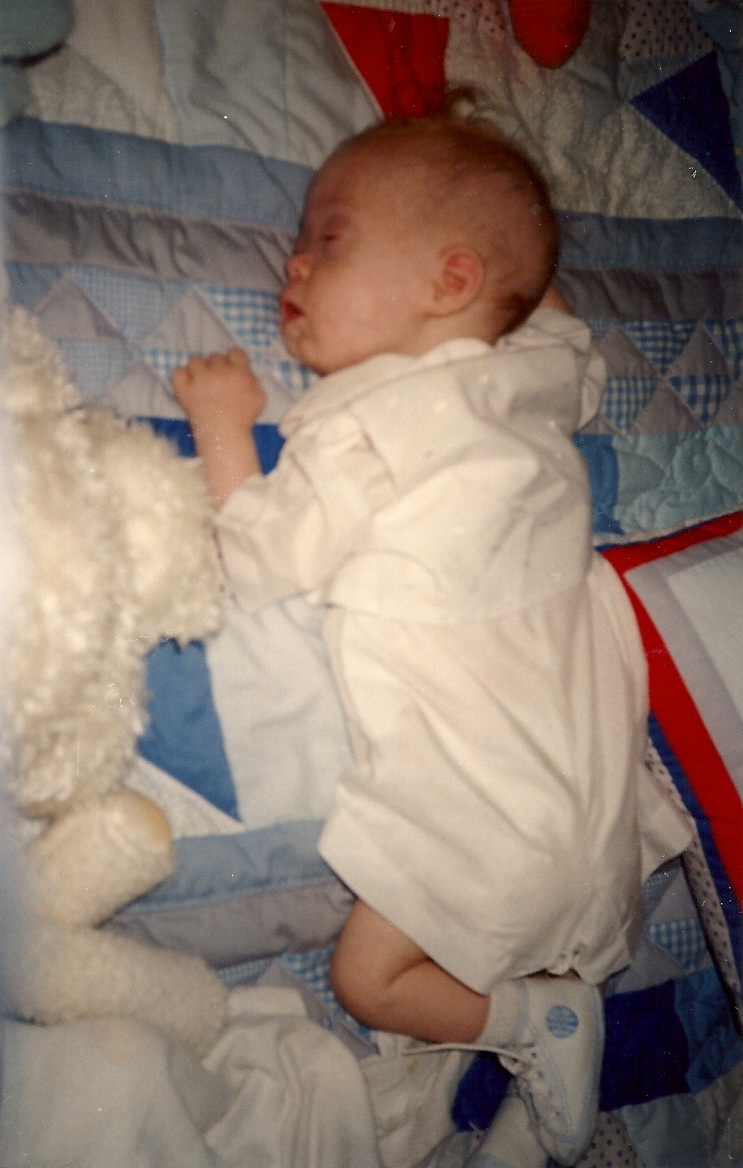
Baby Nick sleeps contently after his christening.  See how baggy his white jumper looks with his low muscle tone………

scan0001

Our trip to Holland, while unexpected was filled with joy and sprinkled with sorrow.  There were twinges of jealousy on occasion wishing my child could do the normal things that most children naturally did. But what was much more devastating was the second diagnosis of autism.  The trip to Holland took a bad turn to what resembled Siberia. This change in flight plans changed the game entirely.  For me, this is when sorrow took over.  This new world felt isolated.  My son didn’t fit in with the Down syndrome support group anymore.  The autism groups all seem to have children who were higher functioning both academically and stronger verbal skills.  I felt lost and found myself pulling inward.

Eventually, I plucked myself up, got out of the funk and sought support.  Little Friends Center for Autism helped me educate myself and offered trainings to help my son navigate his world better.  The National Association for Down Syndrome (NADS) offered a retreat for families with a dual diagnosis.  This is where we found parents who “got it.”  We all shared similar stories.  Some which we dared not to tell anyone else before as it would be too shocking.  We laughed and cried as we commiserated.  We found a new home.

Right now the days are filled with more joy than sorrow.  But like all of us there are times where I feel overwhelmed and sad.  I try to remember what saved me. Stay plugged in and ask for help. Always keep the faith that there will be better days ahead.  That’s what is in my noggin this week.

~Teresa

This smile brings me great joy…….. 🙂

060406_19341


Posted in Down syndrome, Fun Side of Nick

Blog #47~Easter thru the Years

Blog #47~ Easter thru the Years

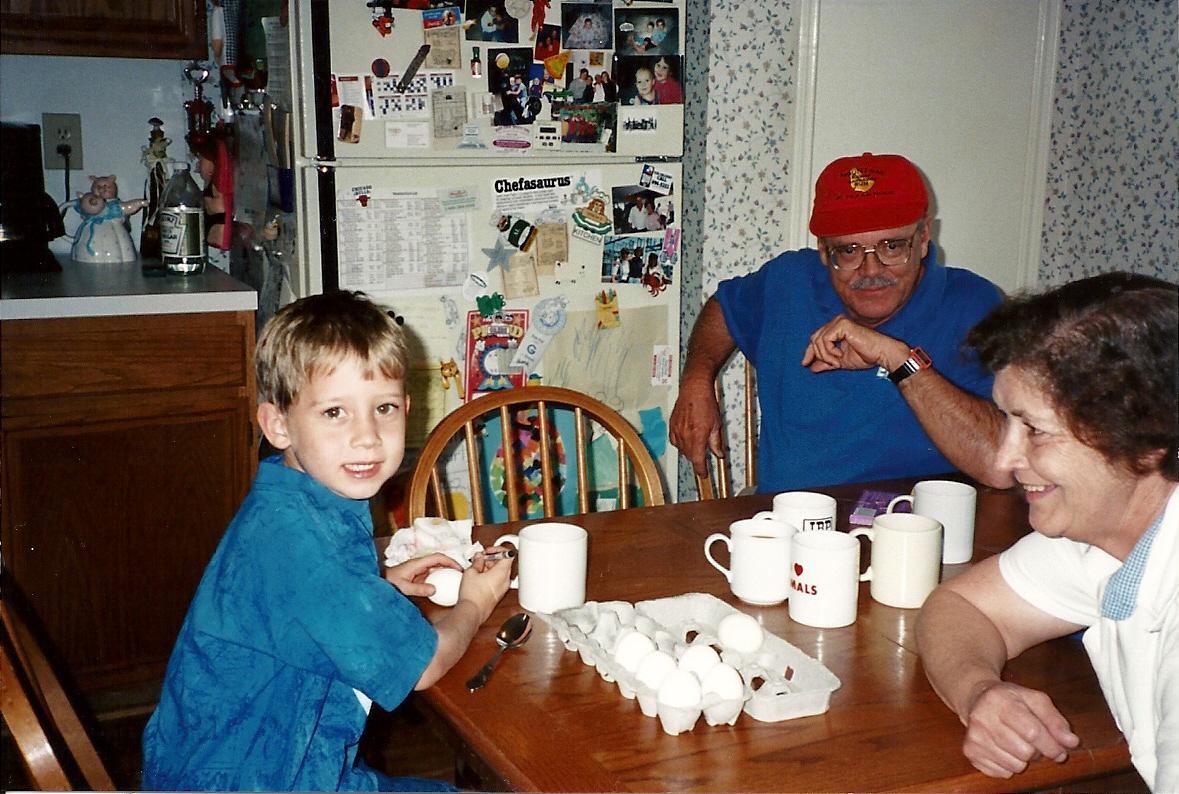
I love holiday traditions.  Growing up each holiday was filled with many rituals that I carried over with my own family.  At Easter, Mom would pull out all the coffee mugs and prepare each by dropping in a tablet out of the Paas egg dye kit.

Paas Easter Dye

Our tiny, shaking hands would carefully balance the egg on the wire ring and dip it into the rainbow of colors filled in each mug. I always made one like the Sprite “limon” commercials.

Sprite limon

Of course my older brother, Tom would always take one egg and be sure to dip it in every single mug.  The end result was a gross, olive hued mess that he was quite proud of.

The next morning we would put on our Easter outfits.  After church we would pause for a quick photograph before we started the egg hunt in our backyard. Mom’s handy work as a seamstress is unmatched.  Of course, no outfit would be complete without the white, patent leather shoes. Just don’t wear them after Labor day. 🙂

Me and sis in matching dresses my mom sewed.  That’s Bo, our Border Collie in the background…

scan0024

The Easter bunny would leave a basket for each of us filled with plastic, green grass.  Mom hated that fake grass. It would get all over the house and she probably cursed it for months afterwards.  The baskets would brim with  jelly beans, tiny bright colored chocolate eggs and the hallowed Russell Stover filled eggs….

Nummy…..

Russell Stover egg

After raiding the baskets, we would change into shorts and spend all afternoon hiding and re-hiding the eggs.

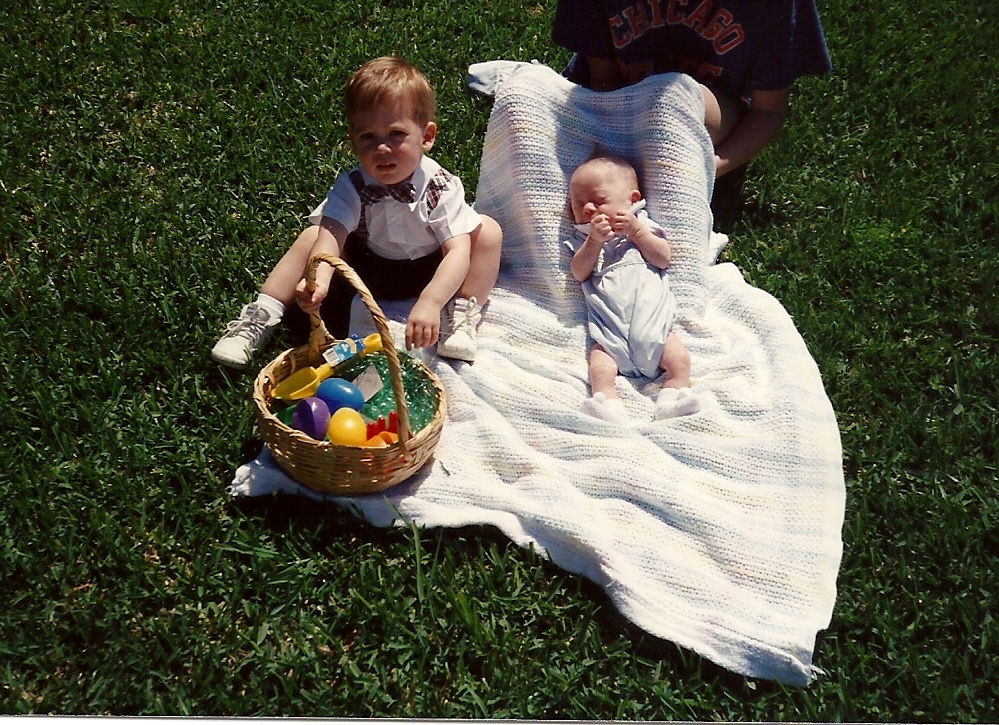
Years later with my own boys in Houston, I carried on the traditions of dying eggs and Easter egg hunts. Here is the first Easter for Nick who is two months old.  I had to hold him up in a coccon because he was so floppy.  You can really see the low muscle tone (a trait of having Down syndrome) in his scrawny legs. His brother, Hank (21 months old) looks thrilled to be wearing that stuffy bow tie and suspenders.

scan0026

Nick just over a year old with Easter Bunny, he’s growing…..

scan0027

Hank with Paw Paw Tommy and Grandma Babs, all prepped for egg coloring….. Yes I still made the  “limon” egg and Hank took over making the gross egg like my brother use to do.

scan0028

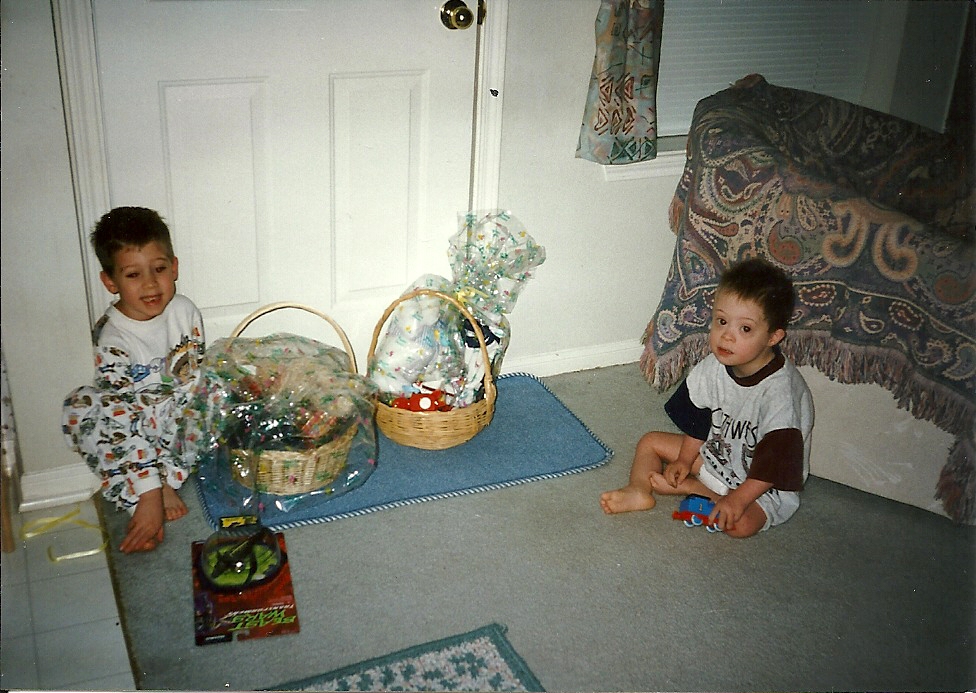
Hank (5) and Nick (3)….

scan0029

After Texas, we moved to California and still had our holiday rituals….

scan0031

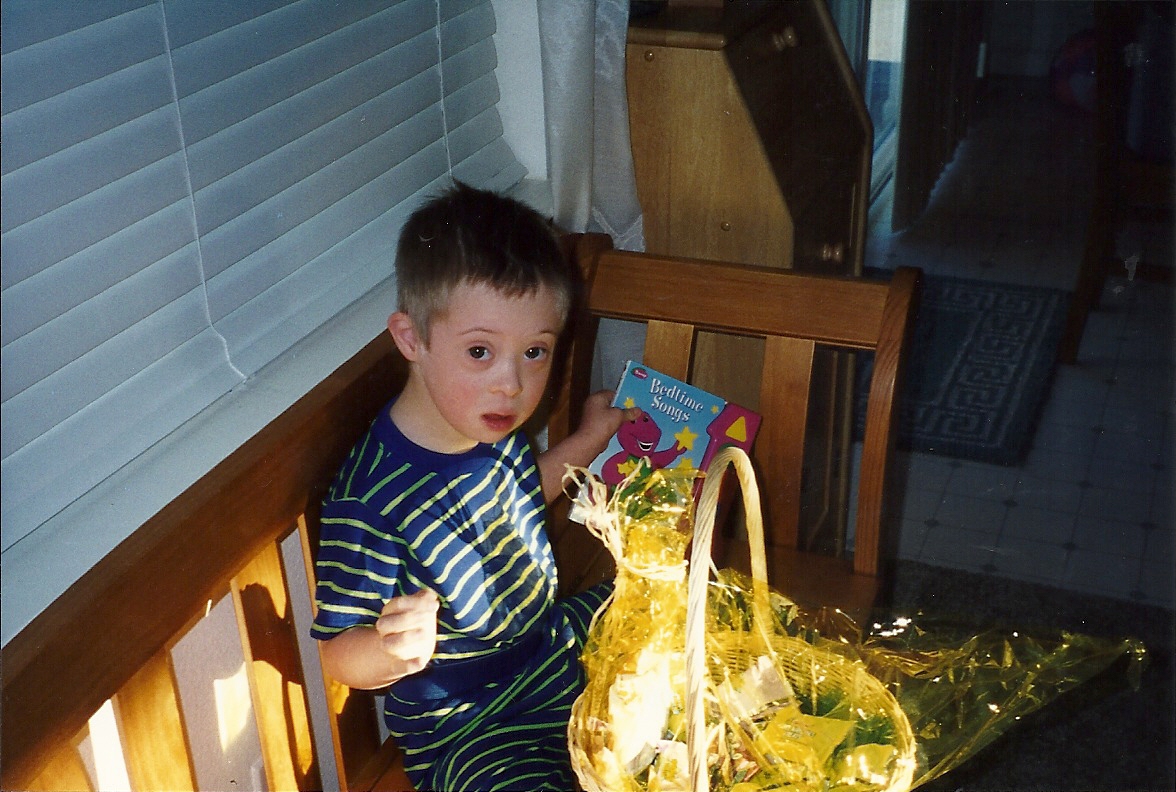
Easter Morning in California, Nick is getting bigger!

scan0030

This Easter egg hunt was the following year.  We had it out amongst the dunes at Hilton Head Island, SC. with the cousins……

scan0032

This is the first time that Nick hunted and found and egg on his own.  Way to go Nick! 🙂

scan0033

Since we moved up to the Chicagoland area the egg hunts look a lot different. The egg hunts are usually indoors because the temps are below 40 degrees.  Hank and Nick are searching at their grandparent’s house before mass….

scan0034

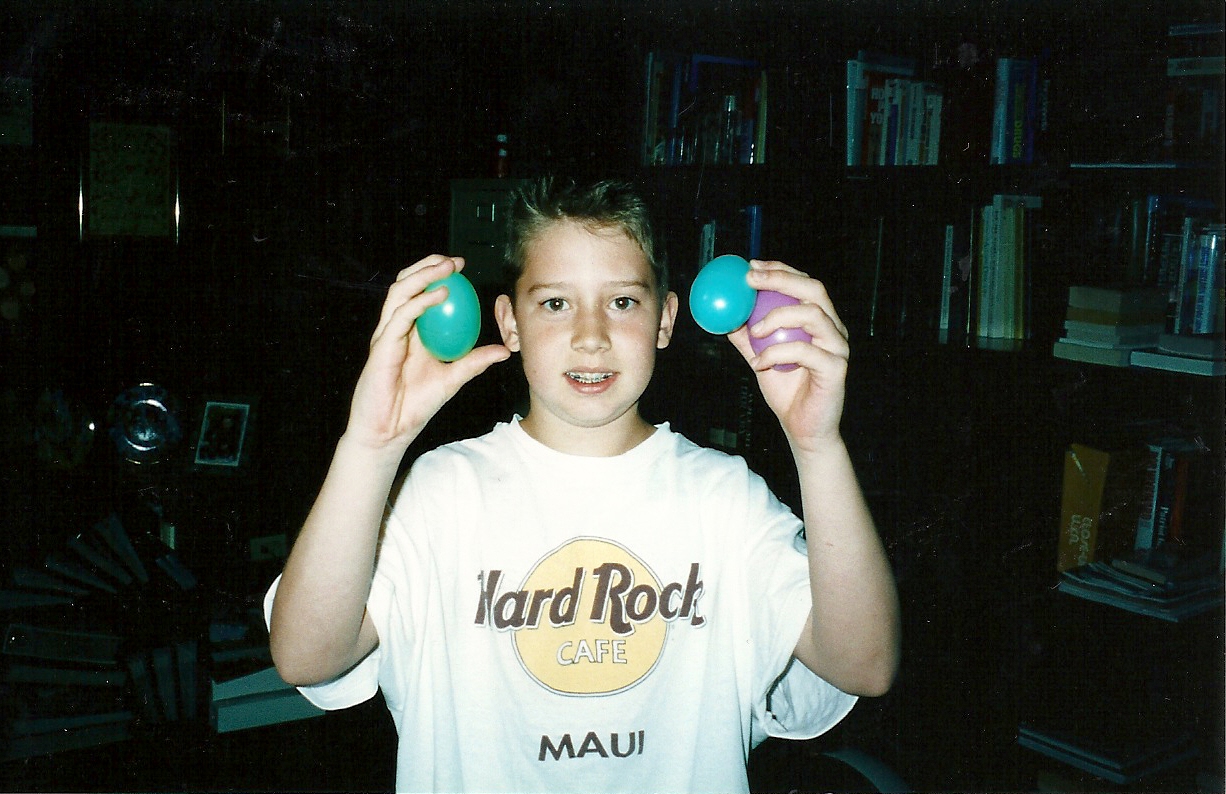
Hank scores some eggs! Now where is the shiny, golden egg with the $5 bill in it?

scan0035

Miss Mellie looks purr-fectly wonderful!

mellie with ears

I hope you enjoyed a look back at our Easter traditions and memories with the boys.  That’s what is in my noggin this week.

Have a blessed Easter!

~ Teresa 

Easter for Jesus


Posted in Autism, Down syndrome, Education and Special Needs

Blog #46~A Day in the Life of Nick

Blog #46~A Day in the Life of Nick

This morning I am prepping for Nick’s IEP meeting to be held at 11:51 a.m.  I review all of the progress reports that I requested ahead of time. It is essential to get those reports early so you know what is going on.  Plus it saves time during the meeting.  I have more tips in Blog #24~Top Ten Things I have Learned While Navigating Nick through School, (located in the October archives). I want to give you a glimpse into the day in the life of Nick’s world at school.  What does someone like Nick who has Down syndrome and autism (lacking reading and writing skills) work on in school?

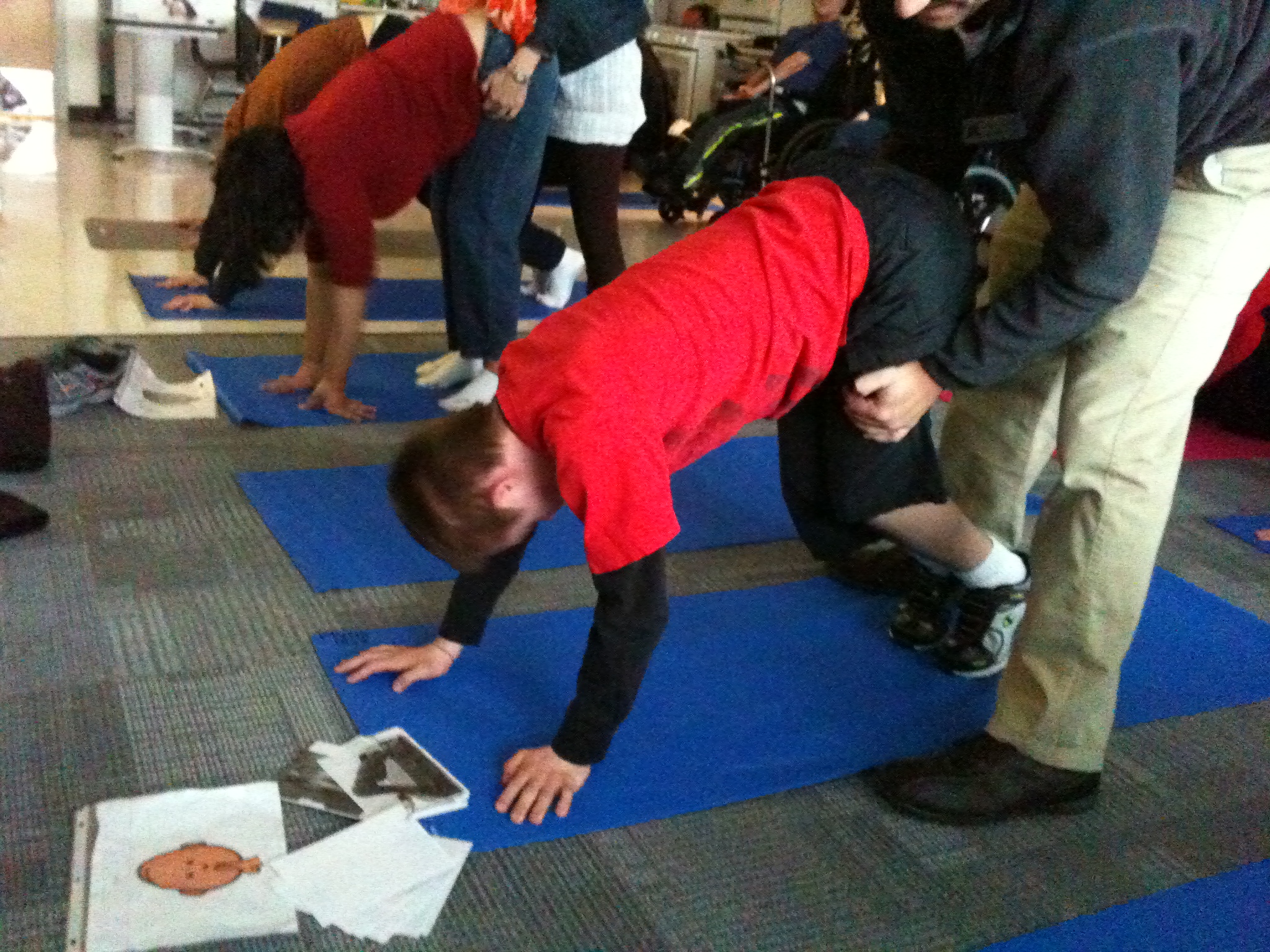
His day starts early, the skies are still dark when the bus rolls up at 6:30 a.m.  Most mornings Nick is dragging but when I mention it’s a community day he tends to perk up a little quicker.  The first two periods of Nick’s day are called “Life Skills.”  The class looks at the calendar, works on dates, upcoming events and the weather.  Nick enjoys telling others about the weather and is consistent in picking out the correct icon and working the weather page on his iPod Touch Chat program. After calendar, the students practice yoga.  They are following the “Get Ready to Learn Yoga Program.”

nick_yoga2

This is followed up with reading skills working on IEP goals of community safety words and pictures, computer programs and group news sharing session of current events.  On Thursdays there is a cooking unit.  Nick loves it and has tried several new foods this year including chili mac, waffles, pancakes, chocolate chip cookies and spaghetti tacos.  Now I am hungry! 🙂

Here’s an example of a recipe they use at school for monkey bread…….

scan0002

Third period is called “Home Maintenance.” During this time Nick prepares a simple snack.  He makes a choice using either his picture icons or iPod Touch Chat.  He likes Cheezits, pretzels, popcorn, salami and cheese. Here he is able to practice fine motor skills like cutting and opening packages with the occupational therapist.  He also works on hygiene skills, (brushing teeth, putting on deodorant and body spray, etc…).  For practical information and visual supports about hygiene and dressing be sure to read  Blog #22~Grooming 101 (located in the September archives).

Nick takes adapted physical education in fourth period.  Units include soccer, swimming, basketball, volleyball, badminton, kickball, adventure education and walking.  He really enjoys the interaction with peer buddies in class.  Period five is lunch time. 🙂

APE swimming 006 (4)

In the afternoon for periods six through eight, Nick has “Vocational and Community” skill building. Nick is working at job training sites three days a week.   These include Tabor Hills (retirement home) and Re-Store (Habitat for Humanity) where is responsible for vacuuming.

Nick vacumming_Tabor Hills (3)

His third job is at Adopt (animal shelter) where he removes leaflets from stacks of newspapers for cages.  On the other days he has school jobs which include shredding, work bins, rental laundry.  Wednesdays I have no problem getting Nick out of bed. It’s community day. 🙂 He enjoys it and is so happy being out and about.  The activities include dining out both at fast food and sit down restaurants, mall walking and shopping at Wal-Mart for groceries to use in the cooking unit.  Here he works on his goal to pay with a debit card.

Nick trying on sunglasses at the store…… He’s looking pretty fly!

018 (2)

He can manage a grocery cart (with reminders to not purposefully run into items or people)

Ramming speed ahead! You should see Nick barreling through Costco 🙂

grocery cart

That is the day in the life of Nick in high school.  His days are filled and structured during the week from 6:30 a.m. until 2:30 p.m. He loves going to school and enjoys the staff (and giving them a run for their money.) That’s what is in my noggin this week.

~Teresa

Posted in Augmentative and Alternative Communication (AAC), Speech and Occupational Therapy

Blog #45~Can We Talk?


Blog#45~Can We Talk?

How does someone like Nick who has Down syndrome and autism communicate his needs and wants?  Let me start at the beginning.  When Nick was in the infant program he was taught sign language.  He would sign “more, all done, yes, no and other basic words.”  Using sign language gave him a voice when the low tone of having Down syndrome slowed up his speech.

When he was around 4 years old I began to snap photographs and put them on one of those blue school pocket charts.  These pictures included things he enjoyed like juice, Goldfish, Thomas the Train and Barney videos. These worked great and he understood all of them.

In first grade I requested an assessment to see if he would do better with an augmentative and alternative communication device. According to  About.com, Augmentative communication is an alternative way to help students and adults with language disorders use expressive language or receptive language. Augmentative communication can be accomplished through assistive technology devices such as computers or hand held devices. Low technology such as picture communication systems can also be used as augmentative communication.

The evaluator came out to the home to try some of the voice output devices with Nick.  He just stimmed on the devices,  hitting the buttons rapid fire like a DJ scratching a rap record.

Cat-DJ-Scratch-Set-1

The evaluator concluded that it would serve Nick better to use a low tech picture system to help him communicate.  She gave me a handful of laminated pictures (goldfish, chicken tenders, pasta, milk, juice and Coke.) They were like rare, gold coins that I treasured. (There was nothing like Google Images back when he was 6 years old.) You either had to snap photographs, cut out pictures out of magazines or beg for icons from the speech therapist. Note that around this time, Nick was also diagnosed with Verbal Apraxia of Speech which further complicated his ablility to articulate.  For years, Nick used pictures and sign language to communicate his needs.

Since Nick can’t read or write and his verbal skills are limited, he needs support.  What we learned is that someone like Nick who has autism tends to see things clearly with pictures.  If he can see it, he can understand it.  In fifth grade the school team was trained on how to use the PECS (Picture Exchange Communication System). There is a precise protocol to the system.  Once the protocol was followed, Nick made great strides in using the pictures to communicate wants and needs. He finally had a voice! 🙂

The cost of buying the software used by most schools is steep as well.  A Mayer-Johnson Boardmaker program can be $400-$800 dollars!  However, if you are a parent you can purchase these programs for 1/2 price. 🙂  Also if your CD gets damaged (aka, Nick dropping it from the second floor) they will replace it for no charge.  Check with your support teacher, as they should have access to this software and will make any laminated icons you might need for home use.  In addition, check with your local library and agencies like Easter Seals to see if they have it available to check out.

Most of the time Nick puts the pictures and icons on a velcro strip and hands it to the caregiver.  However sometimes he gets a little more creative. 🙂

“Hey Mom,  I’ve laid out my plan for what I want to do now”……..

photo (116)

Poor Kitty, nap interrupted………..

photo (117)

The next re-evaluation came in middle school.  The team decided to try Nick on a voice output device.  He was given a set amount time to just play and stim on it.  But then, he began to understand that the device was to be used to communicate.  There are all sizes and the cost for these can be thousands of dollars. Nick’s was around $8,000 dollars.  The Dynavox V was the Cadillac of AAC (Augmentative and Alternative Communication)  devices that would grow with Nick. This was provided by the school district. We found out later that the Dynavox V had major drawback.  It was that it was heavy and bulky.

Dynavox V or as we named it “The Brick”……

photo (115)

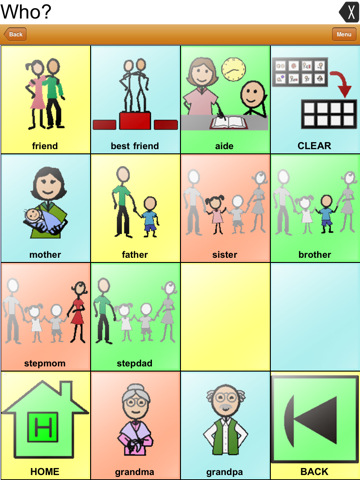
After a few years with the Dynavox,  We looked into other devices that would be more portable and less obtrusive. We ditched the “Brick” and moved to an iPod touch loaded with a program called Touch Chat.  Another popular program is called Proloquo2Go.  I like Touch Chat because you can upload your own pictures as well as using theirs. Both programs are excellent. The iPod is protected and enhanced with sound using a case with speakers- (iMainGo Speaker case.)

imaingo case

In essence, it is an electronic version of his PECS communication book.  He still needs a lot of practice using it properly without stimming on it.  The jury is still out on whether this will take over as his primary means to communicate.

Touch chat screen….

touch chat pic

Finding the means to help Nick’s communicate continues to be a work in progress. If he is on the phone with you he might say hi and your name if he recognizes your voice.  But mostly he will smile and wave.

photo (118)

He continues to use some verbal speech,  sign language, Pecs picture book and the iPod Touch Chat.  It’s like walking down the stairs.  Sometimes you need to hold onto the handrail and sometimes you don’t.   All of these communication methods are his handrail that support and facilitate his speech.

I have learned that there is no perfect way to help with speech.  All of these serve him and have their drawbacks.  It’s always good to have the backup PECS book in case the batteries die or the device goes for an unexpected dip in the pool. I hope this gives you some insight into the evolution of Nick’s way of talking through the years.  That’s what is in my noggin this week.

~Teresa 🙂
Posted in Government/Legal Matters Related to Special Needs

Blog #44~Who’s in Control?

Blog #44~ Who’s in Control?

Last Thursday a longtime friend that I worked with at the Austin YMCA posted a question on Facebook.  Jim P. has been on a spiritual journey and asked how everyone deals with control?   Ironically, I could not have been in any less control than that moment.  Not having control is scary.  It means you have to leave things in the hands of others.  It requires you to have faith that God will take care of you and the problem at hand.  Nick has been receiving state funding through a child based waiver under the umbrella of Medicaid.  The funds are used for respite care which allows me to still teach my classes and go out and have a life on occasion.  The Department of Human Services (DHS) had sent out a renewal form that I filled out and sent certified mail weeks ago.   Bases covered, I was on top of my game.  Not so fast…..

I called DHS the day before the end of the month to check on the status of the renewal.

“The lady I talked to a few weeks ago said she would change my son from child to adult waiver in the system pending the renewal form being sent in.”

DHS operator replied, “No she can’t do that for you.  A new form must be submitted.”

Oh crap, I am going to lose the home based waiver and have to get back in the queue*.  This could take months. Last time it took 9 months to process, I am F’d!

I hung up the phone, confused and wondered why I had not been informed about this.  I immediately contacted my friend Nancy Wilson that I’ve known through The National Association for Down syndrome (NADS.) She has a consulting business called A New Ray of Hope, www.anewrayofhope.com.  She knows her stuff on health advocacy, education advocacy and is a resource specialist. Her son, Jeremy has a dual diagnosis of Down syndrome and autism and is close to Nick’s age.  Nancy laid out the facts for me clearly and succinctly:

1.  DHS is a big umbrella with many programs under it.  

2.  Medicaid/Medical Health Benefits is a program through HFS – Healthcare and Family Services.  

3.  Medicaid is a requirement for any DD (Developmental Disability) services.

4.  SSI (Social Security Income) is NOT a requirement for DD services

5.  Medicaid is redetermined when a child reaches the age of 19

6.  The respite hours is Home Based Waiver funding under the DHS Umbrella, it is a Medicaid Waiver program through the DD Division (Division of Developmental Disabilities) for which you work with a PAS agency.

7.  For HFS/Medicaid you go through your local HFS office.  This is COMPLETELY separate from Home Based Waiver Services through DD and also COMPLETELY separate from SSI which is through the Social Security Office. 

8.  Medicaid is much easier to get if you have already been approved for SSI because SSI does a thorough redetermination of benefit eligibility for developmental disabilities

9.  That said, you do not have to have SSI to get the Home Based Waiver

10.  Who is telling you that he will be dropped?  Pact?  Little City?  Medicaid?

I was caught in the tangled web of government bureaucracy.  It was the end of the month, and the home based waiver was ending.   I had to scramble.  Nancy sent me the link to fill out the application for adult Medicaid.  I made a big pot of coffee, rolled up my sleeves and got to work.  My only hope was to hand deliver the application into the DHS office that day so it would be stamped before his child based waiver expired. I entered the crowded, dingy office.  It was jammed with over a hundred down trodden people whose glazed faces exhibited despair sitting slumped in plastic chairs. I followed the Pakistani gentleman in his native dress and waited behind him in the line. The lady in front of him held a baby and had two small children clinging to her.  She was in desperate need for food stamps but was turned away.  My problem seemed trite in that moment.

I stepped up and the clerk informed me that I probably wouldn’t get the adult home based waiver anytime soon since Nick didn’t have SSI income.  What, that’s not what Nancy told me, again the mixed messages, WTF?   She took my paperwork and looked somewhat surprised that they were in good order and fully completed with all copies attached (Nick’s birth certificate, SSI card, insurance card, checking account information and his state ID card.  No he doesn’t have a driver’s license imagine that.🙂  She stamped the date February 28, 2013 and put it on top of one of the many foot high stacks of applications.  I said a quick prayer as she set it on top of the pile.  Please God, let this go through quickly.

Adversity can test our limits but it also teaches us lessons.  What did I learn?  When you feel like you aren’t getting the answers you need reach out for help.  Nancy has been a mentor and resource that has helped me navigate Nick’s path filled with its cobwebs of confusion. The red tape is daunting as your special needs child becomes an adult. Moving forward we will be enlisting a special needs lawyer.  Secondly, when your child with special needs turns 18 years old run, don’t walk to fill out the SSI application.  I stalled having heard horror stories of the process. While I have filed for SSI just over a month ago I have no answers yet.  Last but not least, never assume! Back in college I worked at Super X Drugs. Rex, (or as I called him Super Rex) was my boss. He gave me this sage advice. “Never assume, it makes an ASS-out of U- and ME.” 

That evening Nick wasn’t feeling in control.  I had forgotten to run the dishwasher and he was unloading the dishes. As I took a dirty bowl out of the cabinet and put it back in the dishwasher he lunged at me pinching my hands hard until they bled.  He was mad that I was undoing his work. Later in an act of defiance he emptied out my red nail polish from the second floor.

photo (116)

Clearly Nick just like the rest of us wants to feel like he is in control.  The last day of February was one of the worst that I’ve had in a long time. Late in the evening, I sat on the couch by the fire with a glass of wine and managed to relax and feel a wave of comfort and peace.  Sometimes what you need most is to find those who can support you along with a nice glass of wine. Oh and a whole lot of cotton balls and nail polish remover.

photo (115)

Poor cotton balls lie there red and beaten like fallen soilders having done battle. 🙂
That’s what is in my noggin this week.  Until next Monday, cheers and let me know how you handle things when you are not in control.

~Teresa


Posted in Education and Special Needs

Blog #43~Taking the Next Step after High School

Blog #42~ Taking the Next Step after High School

In a few months, Nick will be walking across the stage to accept his high school diploma.  We are not doing the typical things you do for the senior year.  No need to reserve the tux or limo for prom.  It’s not in the cards to visit any college campuses.  And ten bucks says that the hat and tassel are going Frisbee air born as he crosses the stage at the NIU Convocation Center.  Question is….. What does someone who has Down syndrome and autism resulting in severe cognitive and speech delays plan to do after high school?

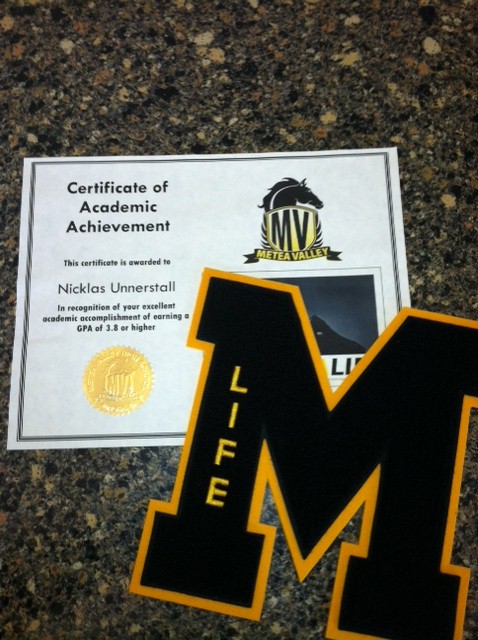
Actually, since Nick has not met the academic requirements needed for a diploma, he will receive a “certificate of completion” upon graduation.  He did letter in high school and a look at that GPA.🙂

photo (117)

Once the “certificate of completion” is put on the shelf, we move into the next phase for Nick.  The program is affiliated with the school district and called STEPS (Supported Training Experiences Post-Secondary).  Under the *IDEA law, a student with special needs may continue with high school or enter a transition program up until they turn 22 years old.  The decision for placement is based on the child’s individual needs.  Students with developmental delays may benefit more by having extra time to work on vocational, social/leisure, self-help skills along with their educational training.  Many students who are higher functioning academically may be able to take college courses and have paid jobs.  Last week we had the opportunity to visit the campus and get a closer look at the STEPS program.  Al attended the first session.  I followed up with Nick since we had to do a team tag with him and went to the second session geared for graduating seniors.  While we waited for the second meeting, Nick and I took a tour of the building. By the way, all but one fire alarm is not covered but I bet it will be soon.🙂  He loved the campus, especially the sensory room.

photo (116)

So here’s what I learned about the next phase for Nick.  The STEPS program is designed to build a bridge between school life and adult life.  The focus is to identify what services are needed and what linkages need to be made to help your child be successful in adult life.  The questions not to ponder are as follows:

1. What does Nick need to connect to the next level of adult life? 

2. When finished with public school, what type of work will Nick be involved in (paid job, volunteer work?) 

3. Will Nick participate in a vocational and/or life skills day training program or enroll in a degree-seeking program?  

4. Upon completion of public school what arrangements need to be made for independent living (community activities, living arrangements, sports and recreation, transportation, healthcare, financial support, emotional support)?  How do we plan to access them? What supports are needed?  

So the task at hand is to figure out what Nick is good at and also what he likes to do.  From there we work with the team to build a program with this in mind.  The three main areas are educational and vocational training along with building his independent living skills.  Each classroom has a function in the building.  There is a kitchen to work on cooking skills.  One classroom is built around vocational skills (with can crushers, shredders, work bins, and the campus micro-enterprise that includes making note cards and beaded jewelry.) A current STEPS student has her own business making beaded jewelry.  Check it out at http://www.specialsparkle.com!  Another room is for fitness and recreation filled with music, a Wii gaming system and comfy couches.  There is also a sensory room along with a few others that are used for academics and working on self-help skills (like time management, money handling, riding public transportation, etc…) Again, the program is centered on the individual their goals and getting them to that place by the exit date which is the day before their 22nd birthday.  I should add here that some students exit earlier if they reach a place where they are working independently at a paid job.

So Nick will have new jobs next fall and opportunities to do community service along with social functions (clubs, dances, bowling, etc…) It looks much like what he is already doing in high school but more laid back (no school bells, the students manage their own schedules.)  Looks like I will need to get an app for that.

photo (2)

I felt better after seeing the campus and visiting with the staff.  Amazing how the anxiety level goes down when you can actually get a visual of what lies ahead.  Now all I need to do is answer all those questions above, yikes!  Maybe I’ll go make a cup of tea and mull over it. I’ve got a few weeks until Nick’s IEP meeting. 🙂

photo (115)

That’s what is in my noggin this week, stay tuned maybe I’ll have some answers by mid-March!

~Teresa

*From Wikipedia: The Individuals with Disabilities Education Act (IDEA) is a United States federal law that governs how states and public agencies provide early intervention, special education, and related services to children with disabilities. It addresses the educational needs of children with disabilities from birth to age 18 or 21[1][2] in cases that involve 14 specified categories of disability.  In defining the purpose of special education, IDEA 2004 clarifies Congress’ intended outcome for each child with a disability: students must be provided a Free Appropriate Public Education (FAPE) that prepares them for further education, employment and independent living.[3]

Under IDEA 2004:

  • Special education and related services should be designed to meet the unique learning needs of eligible children with disabilities, preschool through age 21.
  • Students with disabilities should be prepared for further education, employment, and  independent living.
Posted in Fun Side of Nick

Blog #42~Love, Nick Style

Blog #42~ Love, Nick Style

Last week over Valentine’s Day I got to thinking about the ways in which Nick shows love, affection and compassion.  How can a person having both Down syndrome and autism do so without being able to use many words?  I threw the question out there to those who are closest to him.  I found some interesting responses along with a few similar, underlying themes about love, Nick style.

love america style

What a great show bordering on naughty for the 1970’s.  Anybody remember it? It was must see TV! 🙂

What is love?  According to Wikipedia, Love is an emotion of a strong affection and personal attachment.[1] Love is also said to be a virtue representing all of human kindness, compassion, and affection —”the unselfish loyal and benevolent concern for the good of another”.[2] Love may describe compassionate and affectionate actions towards other humans, one’s self or animals.[3]

The famous balcony scene from Romeo and Juliet. 1884 painting by Frank Bernard Dicksee. Courtesy of Wikipedia.….

RomeoandJuliet pic

As Nick’s mom, I feel his love freely with the kisses he gives me.  They are cute little pecks on my cheek or sometimes on my shoulder.  He gives those to his Dad and brother and even the cat sometimes. I see it in his eyes that gleam when he is happy.  I sense it when he offers up his neck for me to blow him some raspberries.  I know it when I come home from a long evening out and the icon strip has my picture on it. I see this time again with the picture icons.  He will hand me one with his Dad, grandparents, aunts, uncles, brother, teachers and former respite workers like Jess and Mr. T.  I know he misses them and wants to see them.  The day after my father passed away, he handed me the picture of my Dad on a gloomy, snowy morning in October.  I held it and gave him a hug.  As I looked out the window fighting back tears the sun’s rays began to peek out behind the clouds.

sun rays

Al’s parents noticed this too.  Here is what Jim and Theresa U. had to say about how Nick shows love. One thing comes to mind that, I think, is pretty specific.  I think when he puts his “icon” on your shoulder or lap, or wherever, it shows that he has trust that you will listen to his request for whatever the icon shows.  I also think that the fact he even picks us out in a crowd indicates that he likes us and knows that we like him too and are willing to honor his request.  It is a way of getting our attention and showing affection. I think “high-fives” and hugs are a definite sign of affection.  Also, he loves to be “kissed” on the side of his neck, too!  It’s really not a kiss that he wants but he does come to you for some affection…..in his own way.”

Nick with Gma Theresa…..

008

Nick’s teacher, Daina Hunt had some interesting insights from the school setting…

“I think Nick has many ways in which he shows his feelings of love, affection, and compassion.  Physically, he does a great job by sharing elbows, rubbing noses, high fives, etc. I think that Nick is very affectionate with adults with whom he has built strong relationships. I also feel like Nick’s sense of humor is something that he shares with those he is close to.   

I’ve also seen Nick have a “crush” on another student this year.  He often picks her when he has to take turns and often watches to see what is going on with her when we are in the classroom.  When she becomes upset, Nick will quickly look to her and raise his voice in protest too.  Now, I understand that Nick is not a fan of noise made by others, but his reaction to this student is unique.   

I’ve seen Nick’s compassion extend even farther to others.  He is good at mimicking others emotions, and pointing out emotions (think about the sad egg t-shirt). He also has a genuine side of compassion.  I have had staff tell me that Nick has cried after watching others cry. 

From my own personal experience, I can say nothing is better than when Nick asks for a raspberry, nose, or elbow.  The raspberries and noses may not be totally age appropriate, but it rocks to know he cares enough to share one with me.” 🙂 

The infamous “egg shirt”…….poor egg is so sad… 😦

photo (115)

Yes, Nick does like to bond with those he loves by offering his neck up to get some raspberries.  Aunt Ali had this to say, “We know how Nick and I bond with our hellos full of raspberries!!!  He enjoys receiving as many as I can give!  His tender hand touch is always there to say “hi” when we are together and hanging out.”   My friend KB agrees,I just wanted to lip blow in his neck.  It makes me laugh as much as he laughs. He loves that kind of affectionate connection! I can say his love is also expressed when saw Sadie or the cats.. Even when you brought him to Petsmart adoption center!”

His aide and respite worker Lara have a special bond,Nick will sometimes lay his head on my shoulder and then look up at me with a smile and a twinkle in his eyes.” 

Sometimes it’s a touch on the cheek like with Grandma Babs, or rubbing elbows or noses.  My brother and his daughter Courtney think the *Eskimo kisses are awesome!

 Nick with his cousin Courtney…….A new take on kissing cousins 🙂

photo (116)

Here with his Dad as he says, “nose!”

photo (115)

My sister, Aunt Laura has a unique bond that neither time or distance separates.  “Nick gives me special things like the “eyes” or Nick might decide that he wants to touch my nose or he will touch elbows with me then if he is in a really loving mood he will give me a very special belly flash.”

Oh yes, the belly flashes.  I don’t even know how that started but it did years ago when he was around 3 or 4 years old. There are only a select few that are in what we called “The Belly Flash Club.”  My friend Sally is an elite member and recalls it as a sure sign of approval and affection.  While cute then, we eventually had to try and wean him off that practice so he wouldn’t come off as a pervert.   Well, that was until recently. Here is what Brian his speech therapist had to say, I’m not sure if you were going to include in your blog Nick’s affinity for flashing his abs as a show of affection. Of course I don’t belong to this exclusive club, but the only two female grad students he has ever worked with are!” 

Let me add that these two grad students are young and very attractive. 🙂

So, that is love, Nick style.  Hope you enjoyed the unique perspectives.  For more about Nick and his special relationships check out Blog #6~ The Nick Connection which is located in the May archives.  That’s what is in my noggin this week.  Until next Monday, peace, love and belly flashes!

~Teresa

*Eskimo Kiss- According to Wikipedia…..

“In modern Western culture, an eskimo kiss is the act of pressing the tip of one’s nose against another’s. It is loosely based on a traditional Inuit greeting called a kunik.[1]

A kunik is a form of expressing affection, usually between family members and loved ones, that involves pressing the nose and upper lip against the skin (commonly the cheeks or forehead) and breathing in, causing the loved one’s skin or hair to be suctioned against the nose and upper lip.[2] A common misconception is that the practice arose so that Inuit could kiss without their mouths freezing together. In fact, it is a non-erotic form of greeting that serves as an intimate way of greeting one another for people who, when they meet, often have little except their nose and eyes exposed.”