Posted in Autism, Dual Diagnosis Down syndrome and autism, Feeding, Personal Hygiene, Toileting

Blog #170~Teaching Independent Living Skills

Blog #170~Teaching Independent Living Skills

Brushing your teeth, bathing, dressing, and doing household chores, are all a part of what a parent teaches their child.  But what if you are a parent of a child with special needs?  How do you teach these independent living skills?

Nick vacumming_Tabor Hills (3)

My son Nick is 23 years old and has a dual diagnosis of Down syndrome and autism.  He has learned many self-help skills, and assists around the house with several chores.  These independent living skills give him a sense of accomplishment and pride.  It also takes the burden off me as his mom.

So how do you get started?  First, identify areas that you want to work on with your child.  Pick just one skill, that your child can do with assistance.  This skill should have value and interest to them.  Take for instance the task of washing your hands.  This was something my son liked to do because he enjoys running the faucets. 😉  The next step is to break down the task into simple steps.  Take these simple steps and determine what supports are needed to teach this skill.  For a child that has autism, it helps greatly to provide visual supports.  This can be written instructions, using picture sequences, or video modeling.

Picture sequence for washing hands….

handwashing routine

When using picture sequences, determine with your child’s teacher, if it’s more effective to use the style above, or actual photographs of the sequence.  Each child is different in how they can understand pictures. You can find many picture sequences on Google Images, or ask your child’s support teacher to make you some.  Another option is to use an iPad, and download apps that show these sequences.  There are tons apps available, here is just one of many:

iPad App called iDo Hygiene (free app)….

iDo hygiene

Once the visual supports are in place, you can guide your child step by step, using “hand over hand technique” to teach the motor skills.  As your child develops these skills, begin to fade back, by point prompting to each picture.  Be sure to use lots of praise and cheer them on their successes.

Here are a few examples of other self-help skills that you can work on with your child around the house:

*Hygiene skills like brushing teeth, showering, washing face and hands, brushing hair, toileting, shaving.

*Recycling and can crushing

*Shredding

*Help with laundry

Nick laundry

*Unload the dishwasher

*Set the table

*Make the bed

*Fold and put away laundry

*Water plants
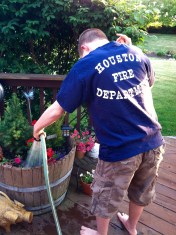
Nick watering plants

*Cleaning windows and countertops

*Dusting

*Unload groceries and put them away

Nick toilet paper

*Cooking

*Vacuuming

Many of these household chores provide great sensory input.  Push and pull activities like carrying laundry baskets and vacuuming, are excellent examples.  Heavy work provides proprioceptive input to the muscles & joints.  This can be very calming, organizing, and regulating, decreasing stress and anxiety.

Not all of the skills above are Nick’s favorites to do.  As a parent,  you can determine which activities are more motivating for your child.  Focus on those first.  Nick really enjoys vacuuming.  Another strength Nick has is matching, and remembering where things go.  So for him, unloading the dishwasher and putting groceries away were both easier and motivating for him to do.

Teaching your child independent living skills, will strengthen their abilities to hold a job in the future.

Nick doing volunteer work at GiGi’s Playhouse…

nick-cleaning-gigis

It also fosters a sense of fulfillment and gratification for them, as well.  So, pick one task, roll up your sleeves and get to work. That’s what is in my noggin this week!

~Teresa 🙂

Follow Nick:

Facebook and Pinterest @Down Syndrome With A Slice Of Autism

Instagram #nickdsautism

Twitter @tjunnerstall


Posted in Autism, Autism Spectrum Disorder (ASD), Dual Diagnosis Down syndrome and autism

Blog #169~ I’m Very Aware of Autism and More

Blog #169~ I’m Very Aware of Autism and More

autism ribbon

April is “Autism Awareness Month” – a time to promote awareness, acceptance and attention to those people who are diagnosed as being on the autism spectrum.

Yes, I’m very aware of autism, and more.  So is anyone, who has been around my son.  Nick is 23 years old, and has dual diagnosis of Down syndrome and autism, (DS-ASD).  He does a good job spreading awareness wherever he goes. 🙂  Honestly, it’s hard for me to get on board with the “Light it Up Blue” campaign.  Why is that?  Because my son doesn’t fit in with any of the support groups for autism, due to his is lack of speech, cognitive and developmental delays.

“Autism or Autism Spectrum Disorder (ASD), is a serious neurodevelopmental disorder that impairs a child’s ability to communicate and interact with others. It also includes restricted repetitive behaviors, interests and activities. These issues cause significant impairment in social, occupational and other areas of functioning.”

autism awareness 2016

Since my son has a dual diagnosis of DS-ASD, I’m going to put my focus on this area.  According to The National Down Syndrome Society (NDSS) http://www.ndss.org:

“Children who have ASD may or may not exhibit all of these characteristics at any one time nor will they consistently demonstrate their abilities across similar circumstances. Some of the variable characteristics of ASD we have commonly observed in children with DS-ASD include:

  • Unusual response to sensations (especially sounds, lights, touch or pain)
  • Food refusal (preferred textures or tastes)
  • Unusual play with toys and other objects
  • Difficulty with changes in routine or familiar surroundings
  • Little or no meaningful communication
  • Disruptive behaviors (aggression, throwing tantrums, or extreme non-compliance)
  • Hyperactivity, short attention, and impulsivity
  • Self-injurious behavior (skin picking, head hitting or banging, eye-poking, or biting)
  • Sleep disturbances
  • History of developmental regression (esp. language and social skills)”

NDSS_logo

My son Nick, certainly hits most of the bullet points listed above.  It’s a unique mix having a child with a dual diagnosis of DS-ASD.  For many years, I felt isolated from the local DS support group because my child had many of those characteristics.  Eventually, I was put in contact with a small group of parents that also had children with DS-ASD.  This was a group within The National Association for Down Syndrome (NADS), here is Chicago.  Finding this group, made all the difference.  These parents were in the same boat, sharing similar experiences, struggles, and yes funny stories, that I could relate to.  In addition to local support groups, there are many online groups for DS-ASD on Facebook.

photo (26)

During Autism Awareness Month, I would like to see the government and media focus   on more educational, behavioral supports and other treatment options.  What is going to happen to our kids when they age out of the school system?  There aren’t near enough employment opportunities, day programs or group homes for this rapidly growing population.  In addition, I’d like there to be an easier path to obtain funding through the government.

understanding

For the month of April, parents of a child with autism, or a dual diagnosis of DS-ASD, need understanding and support. Do you know a parent with a child who has autism?  Consider lending someone a hand, so they can run an errand.   We also need more compassion, and less judgment when we are out in public with our child.   And many of us, could use a good night’s sleep.

autism and sleep cartoon

You can also help by sharing information and stories, to raise awareness on social media. A better informed public will be more empathetic and supportive towards people with autism and a dual diagnosis of Down syndrome and autism.

That’s what is in my noggin this week. 🙂

~Teresa

Follow Nick:

Facebook and Pinterest- Down Syndrome With A Slice Of Autism

Instagram- #nickdsautism

Twitter- @tjunnerstall

Posted in Down syndrome, Down Syndrome Awareness

We Rocked the Socks!

We Rocked the Socks!

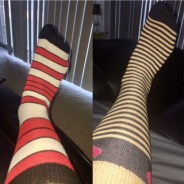
rock your socks

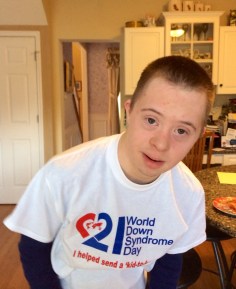
Just three weeks ago, I started a campaign centered around World Down Syndrome Day to raise awareness and funds for The National Association for Down Syndrome (NADS), which is our local support group here in Chicago.  I was approached by We Help Two, which sells these funky socks online.  With each pack purchased, We Help Two donates 60% to NADS.  On top of this, We Help Two also donates a pair of thermal socks which Nick and I will be taking to our local homeless shelter.  My son Nick is 23 years old, he has Down syndrome and autism.

IMG01

We have exciting news to share.  After just three weeks in this campaign, we raised $513.00 for The National Association for Down Syndrome!  In addition, 57 people will receive warm socks at our local homeless shelter. 🙂 🙂 🙂

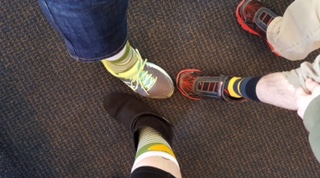
Look who’s rocking the socks……

Nick with his respite workers 🙂

nick jodi kelsey socks

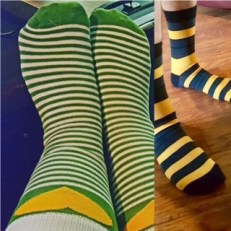
Me rocking the socks……

Me funky socks

Nick’s Aunt and Uncle in Texas 🙂

scott and laura socks

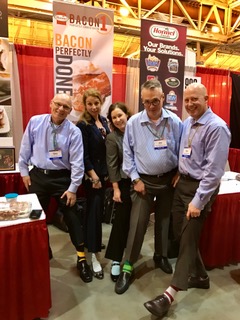
Nick’s Dad with Hormel Food Service group…

Hormel funky socks

My fitness class buddies 🙂

studio one socks

Nick’s respite caregiver, Miss R rocking the socks….

Miss R socks

Nick’s brother and his girlfriend….

hank socks

There’s still a few days left if you would like to order your 3 pack of funky socks, for $15 plus S&H click here:

Order Funky Socks:  https://my.wehelptwo.com/campaign?reset=1&id=373

A special thanks to We Help Two for a WONDERFUL campaign. It was super easy to set online, and the socks are shipped and at your door in two days!  I highly recommend this company.  We Help Two partners with schools, organizations, individuals and non-profits to make twice the difference.  They are truly making a difference by raising funds for organizations, and giving back to the community, with thermal sock donations to local homeless shelters.  What an impact they make, by helping two ways!

wehelptwo

For more information about We Help Two follow on Facebook and click here https:// www.wehelptwo.com

I want to thank everyone for being a part of this campaign, rocking those socks and supporting Down syndrome awareness by purchasing socks and promoting World Down Syndrome Day on social media. Stay tuned for a future blog, when Nick and I take the thermal socks to our local homeless shelter.

That’s what is in my noggin this week!

~Teresa 🙂

Follow Nick:

Down Syndrome With A Slice of Autism on Facebook and Pinterest

#nickdsautism on Instagram

@tjunnerstall on Twitter


Posted in Down syndrome, Down Syndrome Awareness

World Down Syndrome Day

world-down-syndrome-day

World Down Syndrome Day (WDSD), observed on 21 March every year, is a global awareness day which has been officially observed by the United Nations since 2012.  On this day, people with Down syndrome and those who live and work with them throughout the world organize and participate in activities and events to raise public awareness and create a single global voice for advocating for the rights, inclusion and well-being of people with Down syndrome. Many of these events are recorded on the official World Down Syndrome Day website.  The date for WDSD being the 21st day of the 3rd month, was selected to signify the uniqueness of the triplication (trisomy) of the 21st chromosome which causes Down syndrome.

DSAwarenessMagnet

WDSD 2017 Call to action is, #MyVoiceMyCommunity – Enabling people with Down syndrome to speak up, be heard and influence government policy and action, to be fully included in the community.  For more information visit: http://www.worlddownsyndromeday.org

My son Nick, is 23 years old and has Down syndrome and autism.  He participates fully in an adult day program, with enriching activities in the facility as well as the community, including volunteer jobs.

IMG01

We can all help to promote awareness on social media and spread a positive message for  people with Down syndrome.

Thank you to everyone who ordered funky socks from WeHelpTwo.  Our campaign helped to raise money for The National Association for Down Syndrome (NADS), http://www.nads.org, here in the Chicago area.  In addition, WeHelpTwo  is donating a pair of thermal socks for every pack we sold to our local homeless shelter.  The campaign ends at the end of this month.

warm-sock-photo

To order socks click here:  https://my.wehelptwo.com/campaign?=1&id=373

Nick and I can’t wait to see you all rock your funky socks, tomorrow.  Please post your pictures on our social media sites below!

Together, we can create a loud voice for better understanding, and advocating for rights, inclusion, and well-being for people having Down syndrome.  That’s what’s in my noggin this week.

wdsd2016

~Teresa 🙂

Follow Nick:

Down Syndrome With A Slice Of Autism on Facebook and Pinterest

#nickdsautism on Instagram

#tjunnerstall on Twitter


Posted in Down syndrome, Down Syndrome Awareness, Dual Diagnosis Down syndrome and autism

World Down Syndrome Day~ Rock Your Socks

funky-socks

World Down Syndrome Day~ Rock Your Socks

Mark your calendars for 3/21/17, that’s World Down Syndrome Day!

“World Down Syndrome Day is observed on March 21. On this day, people with Down syndrome and those who live and work with them throughout the world organize and participate in activities and events to raise public awareness and create a single global voice for advocating for the rights, inclusion and well-being of people with Down syndrome.”

world-down-syndrome-day

One of the trademarks of World Down Syndrome Day, is rocking your socks!  This year I have a partnership with We Help Two, to advocate,  raise money and awareness for Down syndrome.  It’s easy and fun way to help out by ordering some cool, funky socks. We Help Two, sent me sample packages of these socks.  They are really bright, fun and well made.

You can purchase these socks at $15.oo per 3-pack, and it will be mailed to you, using 2-day shipping.  A large portion of the proceeds from this campaign will go directly to the National Association for Syndrome, (NADS) http://www.nads.org.

nads-logo

AND ON TOP OF THAT for every pack of funky socks sold, We Help Two will give a pair of warm, thermal socks to donate to our local homeless shelter.

warm-sock-photo

Help Nick and I knock the socks off World Down Syndrome Day by raising awareness, along with buying and wearing some funky socks.  You’ll be supporting NADS and helping the homeless.  That’s a win win for everyone!

To ORDER your FUNKY SOCKS click here:  

https://my.wehelptwo.com/campaign?reset=1&id=373

Hurry and order yours today so you can rock your socks on 3/21 WDSD!  Thank you in advance for helping us, and spreading the word that Down syndrome rocks. That’s what is in my noggin this week.

~Teresa 🙂

Follow Nick:

IMG01

Facebook and Pinterest @Down Syndrome With A Slice Of Autism

Instagram #nickdsautism

Twitter @tjunnerstall


Posted in Down syndrome, Dual Diagnosis Down syndrome and autism, Parenting Special Needs, Uncategorized

Blog #167~Brittany’s Baskets of Hope

brittany-baskets

Blog #167~Brittany’s Baskets of Hope

“Just because you are born with a disability, it doesn’t mean you can’t do everything you want to do!”   This is the message that a young entrepreneur, Brittany Schiavone wants to share with the world.  Brittany’s Baskets of Hope, Inc. is a non-profit organization which creates and delivers welcome baskets full of resources, love and hope to new Down syndrome families across the country.

brittanys-basket-contents

Brittany’s Baskets of Hope’s mission, is to celebrate and support families with a new baby with Down syndrome. “We want all newborns of every ability to know that they can do anything!”

Currently, this non-profit organization has sent baskets to over 175 families in 42 states across the country!   Brittany has spoken at schools, colleges, and conferences across Long Island.  Her work has been featured on FOXBusiness.com, The Mighty, Ditch the Label, Elephant Journal, and News 12 Long Island, where she was selected as one of the news channel’s “12 Making a Difference in 2016.”

100% of the funds raised go to supporting families who have a new baby with Down syndrome.  These donations are used to purchase items for the welcome baskets and to mail them to families.  Each basket is put together personally by her, and includes resources and a variety of baby items.  Brittany wants to spread the word, “That no matter who you are or how you’re born, you can lead a full, joyful life!”

If you would like to request a basket to be sent to a new family having a baby with Down syndrome or make a donation to Brittany’s Baskets of Hope, click here:

http://www.brittanysbasketsofhope.org

 You can follow and support this organization on Facebook, Instagram and Twitter as well!

brittanys-baskets-of-hope-logo

My son Nick, was born with Down syndrome.  After speneding a week in the hospital ICU, he was released on Valentine’s day, 23 years ago.  I was sent home with only a couple of brochures about Down syndrome ,and nothing more.  Looking back it would have been wonderful to receive such a gift and the reassurance from an adult having Down syndrome like her.  I applaud Brittany for her generosity, positive spirit, and commitment to help other families.  Her baskets are filled with resources and special baby gifts for new babies with Down syndrome and given freely with her love.  And most importantly, she sends with each family a strong message of hope.  That’s something a new parent receiving a recent diagnosis of Down syndrome needs the most.

That’s what is in my noggin this week.

~Teresa

Follow Nick on Facebook & Pinterest @Down Syndrome With A Slice Of Autism, Instragram #nickdsautism, and on Twitter @tjunnerstall


Posted in Autism, Down syndrome, Dual Diagnosis Down syndrome and autism, Parenting Special Needs

Blog #166~ Lessons Learned on a Ski Slope

vail

Blog #166~ Lessons Learned on a Ski Slope

After a 27 year hiatus, I recently went on a ski trip to Vail, Colorado.  My older son, Hank had never skied before so we opted to take a lesson together.  Our instructor Brad, offered up many useful tips to help us navigate the slopes. Many of the things that Brad pointed out, can apply to raising a child with special needs.  My younger son, Nick is 22, and has Down syndrome and autism.  The daily challenges can weigh a parent down both physically and mentally.  That’s were the lessons I learned on a ski slope come in.

Lessons Learned on a Ski Slope…….

*If you point your ski’s too far uphill you are going to roll down…..

Over the years I’ve set goals for my son, Nick.  Many of these were aimed too high.  As a result, my expectations were not realistic, and Nick fell further back than I anticipated.  For example, during his elementary years Nick had a handwriting goal.  I was determined that he would be able to write his name and pushed hard for several year to keep it in his IEP.  This goal was my dream, but not Nick’s reality.  A pen or marker in Nick’s hands equals scribbling all over his skin and clothes.  I learned that you have to adjust your child’s goals to what is reasonable and attainable for them, and not for yourself.

*Don’t Fred Flintstone your feet…..

When you ski it’s important to shift the weight on your feet and apply the pressure at different points in order to make the turns.  If you dig in and “Fred Flintstone” your feet, the skiing becomes rigid and doesn’t glide naturally.  There has to be room for some give and take, when working with a child with special needs. It’s unfair to put pressure on your child to do everything you want, in a given day.  Sometimes you have to let that foot up and allow them to have room to understand, process, and do things in their own time. Take your foot off the brakes, otherwise, things will break down for your child.

fred-flintstone-feet

*Learn how to stop correctly…….

The day before our ski lesson, my son Hank went out with his Dad, Al, to try out skiing.  He came home very tired, cranky and discouraged due to going to fast, falling, and struggling to get back up.  During the ski lesson, he learned how to maneuver his body, and the proper ways to stop.  Afterwards, Hank had much more confidence and felt success.  If you push your child with special needs to do too much, they become frustrated as Hank did. This can lead to a risk of sensory  overload and potential meltdowns.  Recognize those signs of distress, and stop the activity before your child reaches a boiling point.

Hank and I with our ski instructor, Brad…..

vail-with-brad

*Relax and take in the scenery….

On the ski lift, our instructor Brad, encouraged me to put my ski’s up on the foot rest and relax.  He could sense that I was nervous about leaving the comfort of the bunny slope.  He reminded me to breathe, look around, and take in the beautiful scenery.  I think the same can be true in life with a child who has special needs.  The seamless schedule of doctor and therapy appointments, along with the pressure of working with them at home can get to be too much.   Nick had very low muscle tone, which is a trait of having Down syndrome.  I was constantly providing stimulating activities and exercises to get him stronger so he could roll over, crawl, sit up and walk.  Beyond gross motor skills, there was work to be done with feeding, speech and fine motor skills. The guilt of not feeling like you are doing enough for your child can burden a parent even more.  At some point, you have to just relax and not beat yourself up.  Take a breath and enjoy the beauty of your child for who they are.

My son, Nick……

nick-senior-alarm-pic

Skiing like many other sports offer lessons for us to learn in our lives.  That day on the slopes,  I was reminded about the importance of being flexible in what I expect from my son with Down syndrome and autism.  On the eve of his 23rd birthday, I reflect back on how far Nick has come.  I going to take a moment and breathe.  Like the backdrop of the blue sky against the snow covered Rocky Mountains,  I just want to take that in.  🙂 

That’s what is in my noggin this week.

~Teresa

happy-birthday-boys

Wishing both Nick and his Dad, Al a very Happy Birthday this week ……

al-and-nick-vail

Follow Nick on Instagram @nickdsautism, on Facebook and Pinterest @Down syndrome with a Slice of Autism and Twitter #tjunnerstall


Posted in Autism, Down syndrome, Dual Diagnosis Down syndrome and autism, Fun Side of Nick

Blog #165~ Betty White on Staying Positive

betty-white

Blog #165~ Betty White on Staying Positive

Betty White turned 95 last week, and beams with happiness and positivity!  She was interviewed by Katie Couric, who asked this American treasure, about the state of our country, and how divided it is.

Here is what Betty had to say……

“It’s not in the best place we’ve ever been, but I think that’s the time, to buckle down and really work positively as much as you can. Instead of saying, Oh this is terrible, oh he’s terrible, just think alright, there is nothing I can do about that right now. But I can do the best in my little circle.  So if I do that, maybe you’ll do your best, and we’ll get through.”

Katie Couric went on to state how hard it is for some people to be positive, with so much negativity with the barrage of politics and social media creating a toxic environment.  Betty, acknowledged this, and offered these thoughts…….  

So many people think negatively saying, you know what I hate, oh I hate this.  Instead of alright, I’ll get through this.  Then you start lifting up a bit.”

rise-by-lifting-others

“If you start with, you know what I hate, you’re going to go right down the tubes” 

Betty White is a positive thinker, in her words a “cockeyed optimist” and attributes that to staying happy all 95 years of her life.  I thought about this interview, when the sun came out after countless foggy, gray days here in Chicago. Earlier, I took a power walk soaking in the sunny, blue skies and mild 55 degrees. I could feel the sunshine lifting my spirits.  Not everyday starts with sunshine, especially in January.  But my day ALWAYS start with a smile, (and usually a fart and giggle), from my son, Nick.  He is 22 years old and has a dual diagnosis of Down syndrome and autism (DS-ASD).

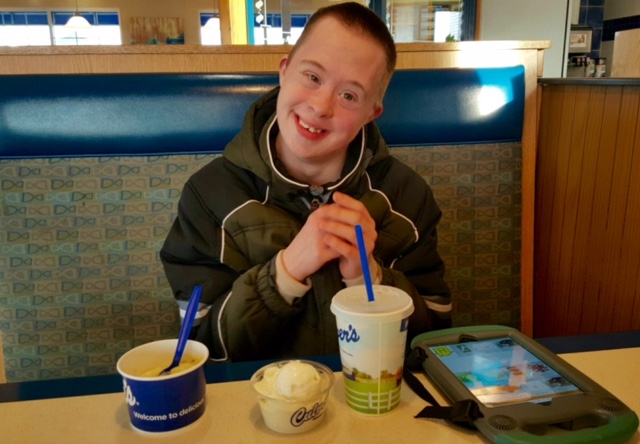
nick-culvers

It’s a great way to start each day.🙂  Nick’s smile is contagious, his attitude uplifting.  Anyone in Nick’s inner circle has witnessed his joy.  A treat at Culver’s brings on such happiness to big guy.  Nick does well finding pleasure in the simple things, being silly, and making people laugh. Yes, he has his moments of getting frustrated and upset like the rest of us.  But he shakes it off, I admire that.

Betty White and my son, Nick, have the right idea by entering each day with a positive attitude.  It will not only elevate your mood, but those around you.

It’s no wonder why Betty White looks and feels these way she does at age 95, with her words of wisdom…….. *Buckle down  *Think positive  *Do the best in your little circle *You got to get through this, one foot in front of the other.  

When the skies are grey, the temperatures are cold, and the world is divided maybe we should all focus on letting the sunshine come out in your heart and beam onto others. A positive spirit will ripple out of your own circle and expand to those around you.

That’s what is in my noggin this week. 🙂

~Teresa

water-circle

Follow Nick:

Facebook/Pinterest @Down Syndrome With A Slice Of Autism

Instagram #nickdsautism

Twitter @tjunnerstall

Posted in Autism, Down syndrome, Dual Diagnosis Down syndrome and autism, Fun Side of Nick

Nick’s World Update

 Nick’s World Update

Have you settled into 2017 yet, after the busy holiday season?  I’m so happy to be back to share Nick’s world with you!  Nick is 22 years old, and has Down syndrome and autism.  Here are some of the highlights of Big Guy’s holiday fun.

We spent the holidays at home, here in Chicago. Nick enjoyed seeing family.  He’s always happy to see his brother, Hank and share elbow bumps!

nick-and-bro-x-mas

Kibbie had a very “Meowy Christmas” 🙂

kibbie-stockings

Nick was excited to get a new iPad mini.  The new Big Grip case for the iPad mini is called the Big Grip Tweener.  It is much slimmer, more age appropriate in design, and best of all still protects as well as the original Big Grip case.

big-grip-tweener

Nick relishes a nice reflective bag almost as much, as his new iPad mini 🙂

nick-red-bag

Over the holidays, we entertained family and friends.  Nick is use to a certain schedule in the evenings.  It can be tricky to get him to stretch out the time, once the sun goes down. He was very patient and social during happy hour, and a leisurely dinner.  Inevitably, once the meal is over, he wastes no time.  He springs up, grabs his Little Debbie snack cakes and evening meds, then sets them on the kitchen island.  After dessert, he will beeline upstairs, strips off his clothes and is ready for a shower.

beelinne-pic

At the family gathering,  we tried stalling him while the desserts were being passed and the coffee was brewing.  I made the mistake of setting the Swiss Cake Rolls and meds off to the side for just a few more minutes.  Nick would have no part of this, and let it be known.  He took his iPad mini and did a huge karate chop right into the……

nick-pumpkin-pie

Nick was done!  We deflected the incident with an “uh-oh” comment and swiftly got his snack cakes back, to avoid a meltdown.  Sometimes, you have to compromise on your holiday schedule, and respect your child’s need to keep a consistent routine.

After the holidays, Al and I went on his company’s year in trip incentive to Costa Rica.  Nick was in very good hands with his respite care giver, Jodi. There was a good amount of logistics to do when leaving your child with a caregiver.  We put together temporary custody, child care and medical authorization agreements along with a detailed schedule.  In addition,  I prepared a social story so that he could see the change in routine and his schedule.  Here it is in part, below.  Social stories help to give the blueprint for understanding schedules and what each day will bring.  For more on using visual schedules, check out my last post, Blog #164~Why Use a Visual Schedule?

costa-rica-social-story

Nick had so much fun with Jodi going out to eat and hanging out at home. His other respite care giver, Miss R. also took him out over the weekend. We are blessed to have such caring, capable, and patient women to take such great care of Nick.

Want more pictures and videos of Nick?  Check out our social media sites. Follow Nick: Facebook @Down syndrome With a Slice of Autism, Instagram  #nickdsautism, Twitter @ #tjunnerstall

nick-taco-bell-new

All in all, the holidays and extended vacation afterwards went smoothly,  with only a dented pumpkin pie, and a few more attention seeking behaviors.  Most of these included higher incidences of dropping/ throwing things, turning water faucets on, and peeing on the floor next to the toilet.  Those behaviors are to be expected with busy holiday meal and house preparations,  a house full of company, and changes in routine.

Oh, one more thing, Nick managed to pull another fire alarm on  Friday the 13th. That is, the ultimate attention seeking behavior!  Tally count is now at 43 pulls since third grade. Hey, it’s Nick’s world, the rest of us are just trying to keep up.

Here’s to getting back to a regular routine and settling into 2017.  That’s what is in my noggin this week.

~Teresa


Posted in Autism, Down syndrome, Dual Diagnosis Down syndrome and autism, Education and Special Needs, Feeding, Personal Hygiene, Toileting, Parenting Special Needs, Resources for Special Needs

Blog #164~Why Use a Visual Schedule?

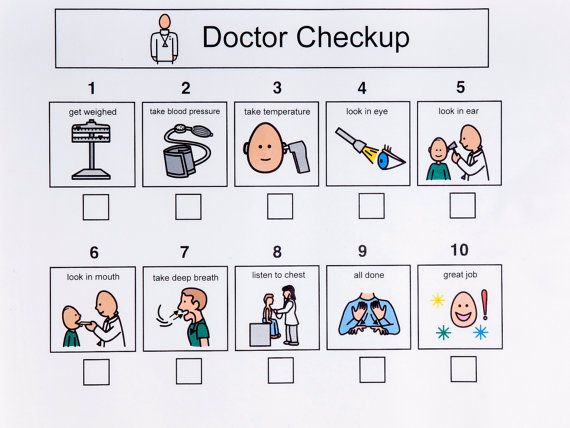
doctor-checkup

Blog #164~Why Use a Visual Schedule?

We all hate getting lost, it can be aggravating  and nervewracking. That’s why we use maps to help navigate our way.

mapquest

The same is true for a child with special needs who lacks verbal and cognitive skills.  Providing a visual schedule allows your child to see what is going to happen in their day. My son, Nick is 22 years old and has Down syndrome and autism. Visual schedules provide many benefits for him to travel smoothly, through his daily routine.

Nick fist bump AID

Benefits of Using a Visual Schedule:

*Provides structure and predictability by showing a child what is coming up next.  This greatly reduces anxiety and builds confidence.

*Helps with transitions from one activity to the next.

*Picture form is easier to understand than verbal instructions.  Children with autism often comprehend pictures and/or written directions easier than verbal cues alone.

*Helps to teach sequence of events especially when using words, “first”, “next”, and “last”.

*Expedites learning routines and fosters independence in self-help/hygiene skills and household/school jobs.

handwashing-routine

*Helps with time management and literacy development by reading through pictures and words associated with them.

*Improves conversation skills by giving a visual framework of what they did and what was their favorite part of the end of the day.

*Assists teachers and caregivers with routine changes, when things get out of sync.  It also helps to introduce a new and/or different activity.

dentist-checkup-visual

Visual schedules come in all shapes and forms and many are available in Google images.  You can adjust the length and type of images, (PECS-Picture Exchange System, photos, written words,  iPad/ smart phone apps) to what your child will most easily understand.

first-then-app

It’s best to start with a small routine and adapt the schedules based on your child’s needs and abilities. Try pairing a non-preferred activity (first) followed by a preferred choice (next).  Your child’s speech therapist can be of great help in creating picture sequences that would fit their needs.

Going through a visual schedule with your child, helps them understand what is going to happen, and what behavior you expect.

Here is one we use when going to the mall.  Note the visual below has going to the stores (first)  and Taco Bell (next) as the preferred activity.

IMG_3865

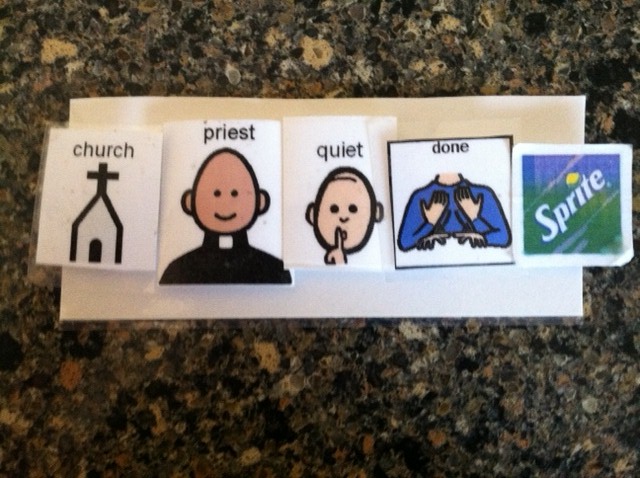
Sequence for going to church:

photo (106)

Full Day Schedule: ( Note, this could be broken up in separate pieces if this would be to overwhelming).

visual-schedule-for-a-day

Using visual schedules have been shown to be helpful for children and adults with special needs by giving them more control on what goes on in their daily lives.  It provides the road map to navigate for a smooth ride through their daily routines.  That’s what is in my noggin this week.

~Teresa 🙂

Follow Nick:

@Down Syndrome With A Slice Of Autism on Facebook and Pinterest

#nickdsautism on Instagram

@tjunnerstall on Twitter