Posted in Down syndrome, Down Syndrome Awareness, Dual Diagnosis Down syndrome and autism, Government/Legal Matters Related to Special Needs

Blog #194~ Firestarters

Blog #194~ Firestarters

What is the difference between those bold enough to pursue their dreams and others who never get comfortable enough to ignite their lives? The doers are “Firestarters” and, because of them, the world is a much different, and often, better place.

Recently, one of the co-authors of a new and powerfully motivating book, Paul Eder reached out to me to do an exclusive interview about Firestarters- How Innovators, Instigators and Initiators Can Inspire You To Ignite Your Life.

Firestarters

There is a big difference between people who MAKE things happen and those who only THINK about making an impact.  So many people have dreams, yet few are willing to take action.  The authors of Firestarters set out to find the “secret sauce” providing pragmatic advice for readers to ignite the qualities from successful entrepreneurs, CEO’s, organizational leaders, advocates and forward thinkers from a variety of professions.  Co-Authors Raoul Davis JR., Kathy Palokoff and Paul Eder did extensive research interviewing and studying hundreds of people who have all been a catalyst for change.

In my interview with co-author Paul Eder, he states that a Firestarter is someone who makes an impact, someone who presses forward in the face of challenges that would cause others to run the other way.

There are 3 types of Firestarters in the book:

*Innovators create things.

*Instigators disrupt things.

*Initiators start things.

All three types are bonded together by the great impact they have on other people and the world by creating, disrupting and starting things.  So, how do you know if you’re an Innovator, Instigator, or an Initiator?  The book provides a quiz that you can take, but the short answer is to investigate both what motivates you and how you interact with others.

*Do you like to explore new ideas for the sake of exploring them? Do you come up with your own pet theories of how the world works? You may be an Innovator.

*Do others always call you out for debating too much? Do you strive to be different and do things in a way no one has done? You may an Instigator.

*Are you constantly moving? Do you have the energy of 10 thoroughbreds and need to sleep only 4 hours a night to be fully effective? You may be an Initiator.

Firestarters aren’t constrained to one type. Different situations may require you to act more like an Innovator. Others require you to be an Initiator and just get things done. Firestarters are amazing in that they are flexible to tap into all three types as needed – when most people would be more likely to stick to their default type, according to Paul.

From early on, Paul Eder wanted the book to be inclusive. He has a 6-year old son, Brady who has Down syndrome and believes his potential is limitless.  The Firestarters concept  applies to CEOs of mega corporations as well as PTA moms. There are interviews John Sculley, a former CEO of Apple and present his profile at a similar level of prominence of David Egan, who has Down syndrome and is a self-advocate who has single-handedly re-defined the perceived capabilities of people with intellectual disabilities.

David Egan is the first person with an intellectual disability to be awarded a Joseph P. Kennedy JR. Public Policy Fellowship, he made history by working on Capitol Hill with the Ways and Means Social Security Subcommittee.

David-Egan-Capitol-Hill-2011

In my interview with David Egan, he showed great passion about being an advocate with an ongoing commitment that never ends. His dream is to help people with intellectual disabilities.  All of his jobs and activities have been very important. However, being  selected as the first person with intellectual disabilities to serve as a JP Kennedy JR. Public Policy fellow was an honor and a breakthrough.  Previous fellows were doctors, professors, parents, educators or with physical disabilities but David made history and is proud to follow in the vision of Eunice Shriver, the founder of Special Olympics. She believed that we belong and we have the same rights as any other citizen.

Paul Eder feels his 6-year old son Brady, who has Down syndrome will follow the path forged by David Egan, in not allowing a label to define his future. A diagnosis is not a destiny.  Down syndrome isn’t a determinant of his son’s potential.  This is a powerful message on never setting limits!  This message has resonated with me for the past 23 years in raising my son, Nick- who has a dual diagnosis of Down syndrome and autism.

Next week, I will share more of my interviews with Paul and David with their great insights on being a Firestarter.  Here is a review of this book from Forbes magazine: https://goo.gl/eznjQx  If you are looking for a way to set your goals in motion and take action for 2018, I highly suggest reading Firestarters!  

This book will be released tomorrow, January 9th, click here to learn more: 

https://goo.gl/4VmHKo

Fire

Is this the year you are going to MAKE things happen, or just think about it?  What things or people threaten to extinguish your fire?  Set your goals and be a Firestarter, that’s what is in my noggin this week.

~Teresa


Posted in Autism, Down syndrome, Dual Diagnosis Down syndrome and autism, Resources for Special Needs

Blog #192~Down syndrome-Autism: Green Monday Gift Ideas

Blog #192~Down syndrome-Autism:Green Monday Gift Ideas

green-monday

It’s green Monday and just two weeks until Christmas.  Here are some gift ideas for individuals having Down syndrome (or a dual diagnosis of Down syndrome and autism, or other special needs) along with their caregivers, teachers/aids, and therapists.

http://papercloudsapparel.com/  Order T-shirts, hats and totes designed by artists with special needs

My son Nick, wearing a Paper Clouds Apparel shirt designed by Justin Lundeen…

nick fire truck shirt

https://www.riverbendgalleries.com/  Features the beautiful photography of artist, Geoffrey Mikol prints, framed art, calendars, coaster sets and greeting cards are available for purchase online….

Geoffrey Mikol picture    Geoffrey Mikol

http://specialsparkle.com Kelly is a young entrepreneur who has Down syndrome.  She designs and makes fashionable jewelry you can order online….

special sparkle jewelry

http://www.christianroyalpottery.com/pages/about  Beautiful pottery (bowls, platters, plates, jewelry) by Christian Royal…..


One of the best gifts is an iPad and there are countless apps for learning and play.  If you are looking for a sturdy case, the Go Talk Rugged and Big Grip cases have held up the best…..  


If your child has sensory needs, and likes to do a lot of dropping, check out these toys:

vortx-dropping-coins  marble racemagic-tracks-mega-set-360-piece--A817AA38.zoom

Gifts ideas in located in the archives, type this in the search box: Blog #131~Christmas Ideas for a Child With Special Needs…..


Gift ideas for babies and toddlers with Down syndrome: http://www.cedarsstory.com/?s=Best+Gift+Ideas

Noah’s Dad- Down syndrome Awareness Top 10 gifts for a 7 year old: http://noahsdad.com/7-year-old-gift-ideas/

Books for caregivers and families, here are a few suggestions and there are more listed in this Blog #144~ Inspiring Books Related to Down syndrome located in the archives……


Gifts book cover    Book An Uncomplicated Life  down syndrome and autism intersect

Please feel free to share this, and any of my blogs with others and on social media.  Also, check out my Pinterest page for more gift recommendations and other helpful information. Do you have any gift suggestions? I’m always looking for unique gift ideas related to Down syndrome and autism to post on my website.  Nick and I wish you all the best as you are preparing to enjoy the holiday season.

That’s what is in my noggin this week. 🙂

~Teresa

Follow Nick on Social Media:

Facebook and Pinterest @Down Syndrome With A Slice Of Autism

Instagram #nickdsautism

Twitter @tjunnerstall


Posted in Adult Day Programs for Special Needs, Autism, Down syndrome, Dual Diagnosis Down syndrome and autism, Recreation/Leisure and Special Needs

Fall Update: Nick DS-ASD

Fall Update: Nick DS-ASD

Time flies when you are having fun, and Nick is having a blast this fall.  My son, Nick is 23 years old and has a dual diagnosis of Down syndrome and autism.  He attends an adult day program which provides a wide variety of activities.  Community outings this fall included volunteer jobs, bowling, visits to local parks, fire station, grocery shopping and going out to eat.  His group also works in-house doing gardening, cooking, skill along with communication building using their Augmentative Alternative Communication (AAC) devices.  Nick uses a program called Touch Chat on an iPad for communication.

Nick cooking at his day program…..

Nick cooking meatballs

Nick was very excited to visit the fire station 🙂  He wasted no time buckling up right away….

Nick fire truck

Outside his adult day program, Nick enjoys community visits to the library, mall, parks, shopping, the movies and eating out.  He continues to have “date nights” meeting up with his buddy, Christopher.  We are very grateful to have such caring respite workers, to take him out several times each week.

Fun at the Halloween Store…..

Nick crown

Buddy Up Tennis, see Blog #190 to read all about it @https://nickspecialneeds.com/?s=buddy+up

Nick buddy tennis 2

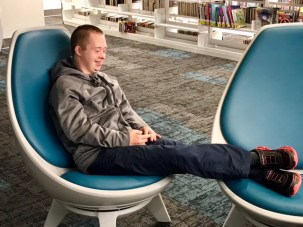
Nick relaxing at the library.  Make yourself at home there, Big Guy….. 🙂

Nick library

That’s Nick’s world and update for this fall.  I would like to take a moment to thank our respite workers, Lara, Jodi and Kelsey for all they do for Nick and our family.  My son has a full and rich life, and we are grateful to have these supports in place to make this possible.

That’s what is in my noggin this week. 🙂

~Teresa 🙂

Want to see more pictures of Nick?  We have a lot more on social media:

Facebook and Pinterest @Down Syndrome With A Slice Of Autism

Instagram #nickdsautism

Twitter @tjunnerstall


Posted in Autism, Behavior/ ABA, Dual Diagnosis Down syndrome and autism

Blog #191~Challenging Behaviors: Why is My Child Acting This Way?

Blog #191~Challenging Behaviors: Why is My Child Acting This Way?

behavior

Parents raising a child with a dual diagnosis of Down syndrome and autism experience challenging behaviors from their children.  A long holiday weekend can heighten these behaviors with changes in routine and family gatherings.  A child may feel lost in the mix and in need of attention.  They may also experience sensory overload.  These can be shown in a variety of ways, such as increased self-stimulatory/ repetitive behaviors (hand flapping, tapping, turning on water faucets, pushing buttons, shutting or slamming doors),  self-injury (head banging, biting, slapping self), attacking others and property destruction to name a few.  This week I want to focus on WHY a child may be acting out.  When you understand why this might be happening, you can put a better plan in place, in order to support your child.

The first step is to determine what the behavior means.  All behavior is communicating something.  This is where you have to do some detective work.

Detective-clipart-animation-free-images-2

Keeping a log of behaviors is a great tool to determine what purpose this is serving your child.  It’s helpful to use a Functional Behavior Assessment Form, such as this to gather data:

Functional Behavior Assessment

Data collection will assist you at home and the school IEP team on the who, what, where, when and why’s of the behavior.  What is this behavior trying to communicate?  What need is being expressed through these behaviors?  Is there a pattern of when these behaviors are occurring and what is triggering them?

Ultimately the Functional Behavior Assessment, (also known as a FBA) will reveal what the purpose this behavior serves for the child.  

Let’s put this to use with two behaviors often associated with a dual diagnosis of Down syndrome and autism:

*Self-stimulatory or Repetitive Behaviors

*Injurious Behaviors

In the case of self-stimulatory or repetitive behaviors, a child may:

  1. Need more stimulation
  2. Be trying to masking sensory overload
  3. Be upset, anxious or not busy enough

Observe your child, and maybe even try the behavior yourself in order to get an idea of why they are attracted to it.  Repetitive behaviors are often sensory based.  They help to calm and organize the nervous system by releasing stress chemicals.  This in turn can help to reduce anxiety.

My son, Nick is 23 years old and has a dual diagnosis of Down syndrome and autism.  He often uses tappers to help regulate his sensory needs.  Here he is at his adult day program:

Nick tappers AID

Bottom line, it’s important to respect these sensory needs and allow your child to have this time during the day.  Find a balance in building in these sensory breaks without letting them take over completely.  Self-stimulatory and repetitive behaviors should not  get in the way of learning, or in work jobs.  Keep in mind, especially around the holidays as you get busy with wrapping presents, cooking and cleaning the house that your child may be bored and feeling ignored.  It is necessary to provide some structured activities to reduce these behaviors.  I like to give my son jobs so he feels helpful, and rewarded for his appropriate behavior with lots of praise.  While I was getting the house ready for Thanksgiving, I had Nick vacuum for me, a job he enjoys doing.  It provides him with good sensory input using heavy work, which can be calming…

Nick vacumme thanksgiving

In the case of injurious behaviors a child may:

  1. Bang head, bite, slap themselves, attack others or destroy property
  2. Be frustrated, angry, experiencing discomfort, pain or sensory overload
  3. Communicate escaping and avoiding an unwanted task or event

Again, the Functional Behavior Assessment chart can help to determine if there is a certain activity, event or time of day which causes these behaviors to escalate.  As the detective, you want to uncover these triggers.  When you figure out these triggers, you can put supports in place to in essence, cut it off at the pass before your child goes into a full-blown meltdown.

Example- Family trip to the shopping mall:

The stimulus overload, especially around the holidays with added crowds,  more kiosks, noises, lights, and may be too much for a child with autism.  You many need to keep the trip short and provide visuals supports to help your child understand the sequence of events that will happen.

Task Strip for shopping mall trip….

task strip mall

Along with a visual schedule, you want to keep your eye open to any distress signals the child may exhibit in their body language.  My son will tend to pinch his cheeks when he is upset or stomp and say, “I’m mad”.  These signs are a cue to back off and lower the demands you are placing on your child.

In summation, you can support your child and prevent these injurious behaviors by:

  1. Recognizing distress signals and re-direct your child.
  2. Lowering or pulling away the demands that have been placed and causing your child to feel overwhelmed.
  3. Providing visual supports with task strips so they know the sequence of events.
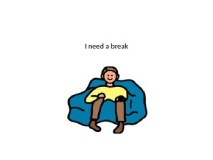
  4. Teaching alternative ways to escape and unwanted situation by using visual supports with icons such as, “Stop” “Help” “All Done” and “I Need A Break”:Break Icon
  5. Practice teaching appropriate ways to protest separately in mild stress situations. Use the icons above either with visuals or on a communication device using lots of praise.

Understanding the function of your child’s behavior and creating an environment to support them will lead to success in both home, school and in the community.  If your child has challenging behaviors, seek the help of a trained autism behavior specialist.  You should request that a Functional Behavior Analysis (FBA) be done.  Once this data is collected, a Behavior Support Plan (also known as a BSP) can be created and put in the IEP.   You and the school IEP team can brainstorm on what supports to put in place to help your child better succeed and express themselves more appropriately.

That’s what is in my noggin this week 🙂

~Teresa

Follow Nick:

Facebook and Pinterest @Down Syndrome With A Slice Of Autism

Instagram #nickdsautism

Twitter @tjunnnerstall


Posted in Down syndrome, Dual Diagnosis Down syndrome and autism, Recreation/Leisure and Special Needs

Blog #190~Nick & Buddy Up Tennis

Blog #190~ Nick & Buddy Up Tennis

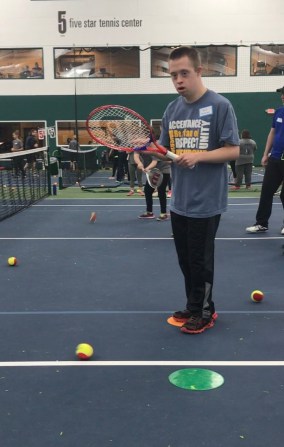
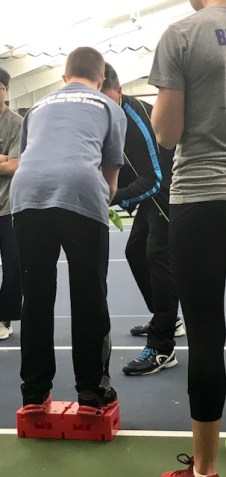
I took my son Nick, to the Buddy Up Tennis program over the weekend.  Buddy Up Tennis is a high-energy, adaptive tennis and fitness program for children and young adults with Down syndrome.  They provide fun and rewarding 90-minute clinics on a weekly basis.  The program currently serves 550 individuals ages five to young adults with Down syndrome across the country.  Honestly, I wasn’t sure how cooperative Nick would be given that he has a dual diagnosis of Down syndrome and autism.  I am happy to report that he participated and followed directions fairly well, for his first time out.

Nick buddy tennis 2

This 90 minute Buddy Up Tennis-Naperville clinic, is held at Five Star Tennis Center.  Athletes are paired with a buddy and start off with a warm up.  Each participant gets to toss the dice and perform a variety of calisthenic exercises like toe touches, push-ups, jumping jacks and sit ups.  Nick needed some prompting on these.  I had to laugh when everyone got down to do push ups and Nick was still standing.  Then about the time he got down on all fours, the rest of the group was up doing jumping jacks. 🙂

fitness dice                Buddy Up Tennis Logo

After the warm-up, the participants break up into groups.  The younger kids use modified equipment and balls on a separate court.  The teens and young adults move to circuit training.  Stations are set up focus on balance, agility, hand-eye coordination and upper body movements that mimic tennis strokes and serves.

Nick navigated each station with prompts, praise and elbow bumps, from his buddies and coaches.  He moved at a slower pace than his peers, and there were a few stations he was less interested in.  But overall, did a good job!

Nick Buddy Tennis balance

After circuit training, the athletes worked on volleys and ground strokes.  Nick needed more prompting and hand over hand assistance, to move through these drills.  But he remained patient and compliant.  It really helped to have a peer partner and the coaches cheering him on, as well as the other athletes modeling appropriate behavior.

Nick buddy tennis

Towards the end of the clinic, Nick did begin to lose interest in hitting tennis balls.  I grabbed a ball hopper, and he and his peer buddy collected balls.  Nick is good at putting things away, so this kept him perked him up and engaged.  For the last 10 minutes, all the groups come together, and play a few rounds of duck, duck, goose. Then, the coaches present certificates to the top awesome athletes for that week.  Nick was awarded one of these for working hard.  Yay Big Guy! 🙂

Overall, I feel the experience was a success for Nick.  I was a little nervous going in, because he can be loud and distracting with the stimming behaviors associated with autism.  However, these behaviors were quite diminished during the clinic.  It reminded me of when Nick was in a full inclusion classroom, when we first moved into the Chicago area, 15 years ago.  Positive peer role models is one of the benefits of placing your child in full inclusion classroom.  When Nick was in a full inclusion classroom, the loud noises, tapping and other stimming decreased.  That alone, makes it worthwhile to enroll him in the next session coming up in January.

I plan on making a few visuals of the calisthenic exercises, circuit stations and sequence of moving through the drills will help with transitioning.  For individuals with autism, it helps to have a picture schedule to assist them in understanding what is expected of them.  If they can see it, they can better understand it.

Buddy Up Tennis is a wonderful program, and I’d like to thank the coaches and volunteers for the opportunity to have Nick be a part of group.  For more information about Buddy Up Tennis, visit their website at http://buddyuptennis.com/

That’s what is in my noggin this week. 🙂

~Teresa

Follow Nick:

Facebook & Pinterest @Down Syndrome With A Slice Of Autism

Instagram #nickdsautism

Twitter @tjunnerstall


Posted in Down syndrome, Down Syndrome Awareness

Blog #188~Down syndrome Awareness Month-5 Takeaways

Blog #188~Down syndrome Awareness Month-5 Takeaways

DSAwarenessMagnet

As October and Down syndrome Awareness Month, comes to an end, I want to leave you with 5 things takeaways to keep in mind, and share with others about Down syndrome!

1. Babies with Down syndrome have low muscle tone (know as Hypotonia).  This effects motor and oral motor development.  It will take them a little longer to talk, walk, and eat the same foods as others.  Early intervention with physical, occupational and speech therapy play a big part in growth and progress in these milestones.

2. People with Down syndrome aren’t ‘always happy’.  They have feelings just like everyone else.

3. People with Down syndrome will share some common features.  A few of these include low muscle tone, smaller in stature, almond-shaped eyes, tiny white (Brushfield) spots in the iris, a crease running in the palm of their hand, a gap between big and second toe.  But they will more closely resemble their immediate family members.

My son, Nick has low muscle tone.  We propped him in the high chair supported by pillows…..

nick-low-tone-high-chair

4. People with Down syndrome can’t be ”more Downs’ than another.  As with everyone else, each person with Down syndrome has their own strengths, weaknesses, talents and abilities.

Nick loves swimming and even tried scuba diving.  He also has many jobs both at home and in his adult day program he attends……..

Diveheart 2013 336     Nick cleaning GiGi's

5. Please use ‘people first’ language, a person has or with Down syndrome. NOT a Down’s child or the Down syndrome kid. Down syndrome does not define who they are!

Actor and advocate, Chris Burke…..

Chris Burke quote

Spreading awareness and information helps others to become more understanding and accepting of individuals with Down syndrome, and their contributions to society.  That’s what is in my noggin this week!

~Teresa 🙂

Follow Nick:

Facebook and Pinterest @Down Syndrome With A Slice Of Autism

Instagram #nickdsautism

Twitter @tjunnerstall


Posted in Down syndrome, Down Syndrome Awareness, Dual Diagnosis Down syndrome and autism, Education and Special Needs

Blog #186~Down syndrome:How to Promote Inclusiveness in School

Blog #186~Down syndrome: How to Promote Inclusiveness in School

DSAwarenessMagnet     Peer Partners

October is Down syndrome Awareness Month.  This is an ideal time to promote inclusiveness in your child’s school.  Forming a partnership with your child’s education team is the key to a successful inclusion experience.

Here are a few resources and suggestions on how to advocate for inclusion in your child’s school environment and classroom:

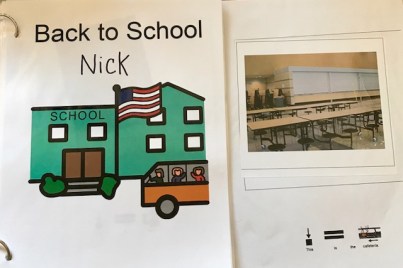
*Send an “All About Me” introduction about your child to the teacher.  There are many ideas, templates and apps that are available online.  This is especially helpful, if your child’s speech is limited or non-verbal.

all about me app

*Share inclusion resources with your child’s teacher:

  • Meaningful Inclusion for Students With Down Syndrome: A Resource for Elementary Educators. http://www.mdsc.org/infojustforyou/EdManual.cfm
  • The Inclusive Class: http://www.theinclusiveclass.com/
  • Inclusion in the Classroom-Tips and Resources: http://allbornin.org/wp-content/uploads/2012/11/Inclusion_Classroom_Tips.pdf
  • Donate books to the library and classroom:               I can Can you  Paint the Octopus Red  My Friend has DS

*Topics on Down Syndrome, that are helpful for teaching from Woodbine House Publishing: http://www.woodbinehouse.com/  Books related to Down syndrome are ON SALE during the month of October!

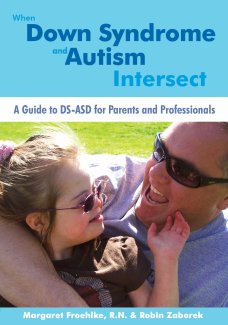
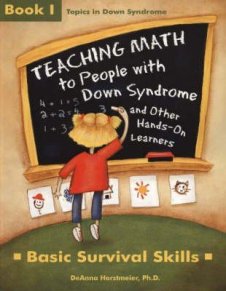
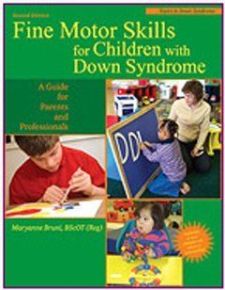
Whole Child Reading         Down syndrome and autism intersect2      Teaching Math to DS        fine motor skills and DS

Working with the school team to promote an understanding about Down syndrome, and a dual diagnosis of Down syndrome and autism has many benefits.  It will help students in general education classes feel less anxious and reduce misconceptions they may have had.  Building this bridge together, will lead to a meaningful learning experience for everyone in the school.  That’s what is in my noggin this week.

~Teresa 🙂
Follow Nick:

Facebook & Pinterest @Down Syndrome With A Slice Of Autism

Instgram@ #nickdsautism

Twitter @tjunnerstall


Posted in Down syndrome, Down Syndrome Awareness

October is Down Syndrome Awareness Month

October is Down syndrome Awareness Month

DS-Awareness-Month

October is Down syndrome Awareness Month.  I’ve had the privilege of raising my son,  for the past 23 years.  Nick has Down syndrome and autism. He has touched my life, and those of so many others along the way.

nick-senior-alarm-pic

Down syndrome awareness is about promoting acceptance and inclusion of all individuals with Down syndrome.

FACTS about Down syndrome from National Down Syndrome Society (NDSS):

*Down syndrome occurs when an individual has a full or partial extra copy of chromosome 21. This additional genetic material alters the course of development and causes the characteristics associated with Down syndrome.

*There are three types of Down syndrome: trisomy 21 (nondisjunction) accounts for 95 percent of cases, translocation accounts for about 4 percent and mosaicism accounts for about 1 percent.

*Down syndrome is the most commonly occurring chromosomal condition. One in every 691 babies in the United States is born with Down syndrome.

*There are more than 400,000 people living with Down syndrome in the United States.

*Down syndrome occurs in people of all races and economic levels.

*The incidence of births of children with Down syndrome increases with the age of the mother. But due to higher fertility rates in younger women, 80 percent of children with Down syndrome are born to women younger than 35.

*People with Down syndrome have an increased risk for certain medical conditions such as congenital heart defects, respiratory and hearing problems, Alzheimer’s disease, childhood leukemia and thyroid conditions. Many of these conditions are now treatable, so most people with Down syndrome lead healthy lives.

*A few of the common physical traits of Down syndrome are low muscle tone, small stature, an upward slant to the eyes and a single deep crease across the center of the palm. Every person with Down syndrome is a unique individual and may possess these characteristics to different degrees or not at all.

*Life expectancy for people with Down syndrome has increased dramatically in recent decades — from 25 years old in 1983 to 60 years old today.

*People with Down syndrome attend school, work and participate in decisions that affect them, and contribute to society in many wonderful ways.

*All people with Down syndrome experience cognitive delays, but the effect is usually mild to moderate and is not indicative of the many strengths and talents that each individual possesses.

*Quality educational programs, a stimulating home environment, good health care and positive support from family, friends and the community enable people with Down syndrome to develop their full potential and lead fulfilling lives.

More information @http://www.ndss.org/Down-Syndrome/What-Is-Down-Syndrome/

NDSS_logo

Here are a few simple ways to promote Down syndrome awareness:

*Post something about Down syndrome on social media

*Send updates, pictures and tell your story to your family doctor and OB-gyn.

*Many local Down syndrome support groups have promotional materials, like books and bookmarks that can be distributed at libraries and schools.

*Many local DS support groups have public speakers who can talk to schools, businesses, community groups, hospitals, and other organizations.

*Support or volunteer for local fundraisers like the Buddy Walk in your community @http://www.ndss.org/buddy-walk/

*Encourage your kids to volunteer for Special Olympics and Best Buddies programs through their school.

Down syndrome journey

Thank you for supporting Down syndrome awareness this month!  That’s what is in my noggin this week.

~Teresa 🙂


Posted in Autism, Behavior/ ABA, Dual Diagnosis Down syndrome and autism, Parenting Special Needs

Blog #180~Special Needs Moms,Let Go of the Guilt

Blog #180~Special Needs Moms, Let Go of the Guilt

No Guilt

Am I doing enough for my child?  Should I switch to a gluten-free diet?  Does my child need more ABA (Applied Behavioral Analysis) therapy?  Maybe I should be diffusing essential oils?  These and many other questions swirl constantly, in the mind of a parent having a special needs child.  I should know after 23 years of raising my son, Nick.  He has a dual diagnosis of Down syndrome and autism.  Over the years, I’ve allowed doubt to creep in.  You see other moms talking about intense ABA therapy, up to 20 hours a week.  You hear testimonials of how a gluten-free diet helped to increase speech and decrease problematic behaviors.  Then, there are the success stories and pictures plastered over social media groups.  Compelling accounts of children excelling in Special Olympics, summer camps, recreational programs and the latest programs sure to launch your child new heights.  There is a tremendous amount of pressure to do it all.  So, you begin to question yourself as a parent.  Am I doing everything I can to help my child with special needs?  This is when the guilt begins to seep in.  That’s, when you need to let go of the guilt.

Parenting is a balance act.  The responsibilities of running a household, taking care of children and their activities along with your own personal job and welfare, can be enormous.  At several points over the last 23 years, I’ve hit walls where the pressure is just too much.

At those junctures, it’s important to stop, take a breath, and re-evaluate what works for your child with special needs, and the entire family……

*RE-EVALUATE- Which treatments, therapies, and recreational programs are useful? Where are you seeing growth and enjoyment for your child?  Weigh the benefits against the disadvantages of each program, treatment, and therapies that you are considering.

*PRIORITIZE- What activities are essential for my child and any siblings?  Which of these activities are needs/must haves (like swimming lessons), and which are wants (like a recreational soccer program)?

*STRIP BACK- After you’ve re-evaluated and prioritized, create a new schedule that suits your family.  Listen to the cues of your child, (and yourself).  Is it stressful, time-consuming, expensive or sapping your energy?  Has it become a huge inconvenience and unfair to the rest of your family?

Right now is a perfect time, before school starts, to take a deep look at all the therapies and activities your child and siblings are involved in.  Are these programs enhancing their growth?  How much time are you spending in the car, commuting all over town for these therapies and other programs? Sometimes, it’s just TOO MUCH for you child and other family members.  Consider scaling back, and opt to incorporate learning activities at home. Ask your child’s therapists for suggestions on how to do this.  With their help, create learning (TEACCH) activities that can be done at home.  It really helped me to achieve better balance, when I scaled back, and incorporated a few of the TEACCH activities along with natural occurring jobs around the house, instead of driving all over town each day to therapies.  🙂

TEACCH (Treatment and Education of Autistic and Communication is an evidence-based service, training, and research program for individuals of all ages and skill levels with autism spectrum disorders.  

Here are some TEACCH bins we do in our home with Nick…..

Task Strip with a highly preferred reward to work towards. Nick picks out a reward  from his PECs (Picture Exchange Communication book) or AAC (Augmentative and Alternative Communication Device).  He usually chooses a Sprite….

Task Two Strip

Nick get’s handed the #1 and matches to the bin and completes the activity.  Once this is done he puts the #1 on the green task strip.  This is repeated for all four bins. The activities range from sorting, matching, assembly, folding, and fine motor.  Bins can be customized to fit the needs of an individual child.  These are just a few of many Nick does.  Be sure to mix in some that have a high success rate, with more challenging activities suitable for your child:

bins 1 and 2   Bins 3 and 4

Naturally occurring activities can also be added around the house throughout the day.  Examples include unloading the dishwasher, garbage/recycling, laundry, putting groceries away, cleaning counters, vacuuming, and gardening.

Nick watering plants

All these activities help to build new skill sets, confidence and independence.  The TEACCH activities are also implemented by respite caregivers, which we’ve hired with the help of state waiver funding.  These caregivers work on goals both in the home and out in the community. Respite workers can also help take your child to afterschool activities such as therapy, Special Olympics/ sports or swim lessons and social groups. Having respite care or hiring a babysitter, allows a parent to get a break and take time to get out and enjoy their own life.

It’s so easy to get bombarded with advice on treatments, diets, therapies and recreational programs related to special needs.  As a parent, you need to decide what is useful and stop feeling guilty about doing everything single therapy and program to help your child.  Do your research, weigh the pro’s and cons, and decide what works best for your child and family. Consider incorporating TEACCH activities at home, instead of running and around, and spending more time in multiple therapy clinics.  Don’t allow those guilty thoughts to rob your peace, or make you doubt your parenting skills.

relax boardwalk

That’s what is in my noggin this week.

~Teresa

Follow Nick:

Facebook and Pinterest @Down Syndrome With A Slice Of Autism

Instagram #nickdsautism

Twitter @tjunnerstall