Posted in Autism, Down syndrome, Dual Diagnosis Down syndrome and autism, Parenting Special Needs

Blog #228~DS-ASD and Managing Stress as a Parent

Blog #228~DS-ASD and Managing Stress as a Parent

Let’s face it, parenting is stressful with all the demands that are draining on a daily basis.  Raising a child with special needs compounds this even further.  A child with an intellectual or developmental disability such as autism, Down syndrome or a dual diagnosis of Down syndrome and autism (DS-ASD) has even more demands, with living skills, communication and behavior.  These additional needs means the parent has to work even harder.  This can drain parents both physically and emotionally.  I have been dealing with this stress for 24 years, as my son Nick has a dual diagnosis of DS-ASD.  Here is what the stress looks like for a parent of a child with special needs, and some coping mechanisms to combat it.

stress ball

So what does stress look like for parents raising a child with special needs?  Yes, there are the usual demands of running the household, carpools, extra curricular activities and homework of the child and any siblings, but there is much more.  There are often additional therapy and medical appointments on the calendar each week.  Balancing this with all the other activities can be tricky, with someone feeling short-changed in the family.  As I mentioned earlier, a child with special needs may need additional help with daily living skills, communication and behavior management.  If a child is non-verbal or limited in speech, the parent may have to play the guessing game on what the child needs. Deficits in communication skills can often lead to behavior problems.  Maladaptive behaviors may prevent the family from doing activities, attending outside family gatherings and special events together.  One parent may opt to stay home with the child, which over time, may impact the marital relationship.  This also creates a sense of isolation.  All of this can lead to feelings of guilt by the parent, which is one of the biggest internal stressors.

So, how can you manage stress as a parent of a child with DS-ASD or any other intellectual or developmental disability?  Ideally, a parent would schedule a vacation or spa weekend getaway, right?  But what if you don’t have the time or resources for such an elaborate indulgence?

spa getaway

Stress Management in my opinion, begins with mindfulness.  Carving out a few minutes for yourself is key.  Dedicate a time where you can meditate.  Free your mind of all distractions and breathe deeply.  This will allow the heart rate and blood pressure to lower and reduce stress.  Last week, I had lunch with my niece, who recently returned from a spiritual cycling journey and yoga retreat overseas.  We talked about the concept of truly being present in the moment.  The focus can be as simple as being aware of your senses……..

Step outside notice how the sun and warm breeze feel on your face. 

Quiet yourself and enjoy the texture and taste of each bit while you eat.  Take in the aroma and softness against your fingers, as you bite into the pita bread.

Listen and feel how the snow crunches under your feet, take in the cool air and watch as you exhale, seeing your breath rise up into the blue sky.

Sit silently, maybe with your child or pet, feel the softness and listen to your breaths.  Do nothing,  just be as one.

Put on your favorite music.  Focus on the beat, various musical instruments, vocal tones, and harmonies.  Note the meaning of the lyrics, and how it all  feels to your body, mind and soul.

Mindfulness is simply paying attention to the moment that you are in right now, and freeing yourself from worry.  Spending time in the present and focusing on your senses, will allow you to feel less tense.

Pairing mindfulness with gratitude cancels out negative thoughts and worries.  Some days can be challenging and exhausting.  In those times, remind yourself that there is always something or someone to be grateful for.  Showing gratitude can boost morale for  yourself and others.

Taking time to get physical activity in daily can greatly reduces the effects that stress can take on the body.  Even small bursts of exercise, taking a fitness class or a walk around the block can make a difference on how you feel.

It is also important to reach out and share what is going on with friends, family and support groups.  Isolation can be debilitating.  Sharing your struggles can give you a fresh perspective.  There is much to be gained in finding a support group of like-minded individuals who are on a similar path.  In the DS-ASD world, we share success stories, challenges of our child’s delays, and difficult behaviors.  We offer suggestions on how to find a better way to manage the unique challenges associated with our kids and applaud the milestones they hit.  When you share your struggles, (and do so with a dose of humor), you don’t feel alone anymore.  That can be a powerful thing.

Reducing stress doesn’t have to be a big, fancy trip or getaway.  Taking time to exercise mindfulness, gratitude, doing some type of physical activity, and opening yourself up to others, are all simple ways to reduce anxiety.  Allowing people to come in your life for support, will help make difficulties more manageable. Most of all, it’s essential to take some time and find ways to relax your mind. This allows you to re-charge and lessen the degree to which stress can affect the body and mind.

let yourself rest

That’s what is in my noggin this week. 🙂

~Teresa

Follow Nick on Social Media:

Facebook and Pinterest at Down Syndrome With A Slice Of Autism

Instagram #nickdsautism

Twitter @tjunnerstall


Posted in Autism, Down syndrome, Dual Diagnosis Down syndrome and autism, Parenting Special Needs

Blog #227~Ditch the New Year’s Resolutions:Here’s a Better Idea

Blog #227~Ditch the New Year’s Resolutions: Here’s a Better Idea

How many times have you made a new year’s resolution and failed to reach it?

new-year-resolutions-825x549

New Year’s resolutions can be daunting and difficult to keep.  This year, I am changing  my tune.  I’ve adopted a new principle personally and for my son, Nick who is 24 years old, and has a dual diagnosis of Down syndrome and autism (DS-ASD).  As a fitness professional for 35 years, my job is to motivate, challenge and inspire my clients.  Being fit and healthy isn’t just about eating right and exercising.  To feel your best, you must take care of the mind, body and spirit collectively.  As a parent of a child with special needs, there are more demands, that can wear on you both physically and emotionally.  It is essential to take care of your physical and mental needs to reduce stress and avoid burning yourself out. Bottom line, it’s about self-care so that you can be the best version of yourself and your family!

mind body spirit

I was listening to a Sirius XM radio interview with Teddi Mellencamp (yes the daughter of John Mellencamp). Teddi is an accountability coach. She gave a better alternative, instead of making new year’s resolutions.  Teddi suggested that you pick 3 things each day that will take care of you personally, and hold yourself accountable.  Write them down, and try it for just 5 days.  These should be centered around helping you to feel better, both physically and emotionally.  By doing this, you begin to create good habits, that leads to confidence, and ultimately changing your lifestyle.

So, I tried it by writing down 2 things each day (3 seemed too much with my busy schedule).  Here are a few things I did:

*Cleaner eating- Replace Sun Chips with almonds and make a chicken wrap with only avocado and lettuce.

*Relax, stretch and be mindful of breathing to relax and calm the body,

*Bump up home workout weights from 10 to 12 pounds.

*Be mindful of the gratitude you receive throughout the day

*Eat an extra piece of fruit.

*Turn off the TV and listen to music I enjoy.

*Be more kind and smile at the people you pass and encounter each day.

*Drink one less cup of coffee and replace with more water.

*Go upstairs, every time I needed something, instead of waiting until things have accumulated.  (This increased my steps significantly).

*Apply one of the principles of Feng Shui.  De-clutter home and clean 8+ years of dust off the high cabinets to increase the flow of chi energy.

*Pray more throughout the day.

*Shop on the outer edges of the grocery store as much as possible. (This is where the nutrient dense, clean and less processed foods are located).

*Respond, and don’t react when I get angry.

*Meditate for 10 minutes.

I have to say, there is a feeling of personal accomplishment when you hold yourself accountable, and do just 2 things a day to promote personal health both physically and emotionally.

relax

My quick and easy tips to get back into fitness:

As a fitness professional, here’s what I suggest on how to start a new fitness program.  Don’t set yourself up for failure. Replace the resolution of going to go to the gym 5 days a week with a more reasonable goal. Change the mindset to, doing some physical activity 3-5 days a week.  If you can’t make it to the gym, or you are too tired, then get out and walk or tone with weights or an exer-tube for just 10 minutes.  Add an extra minute to each workout.  It will all add up, and you will build confidence and feel less guilty.  Break it down to smaller pieces and you will set yourself up for success! 🙂

My plan to work a little more with my son Nick, who has DS-ASD:

This got me thinking that maybe I should apply this principle with my son, Nick who has Down syndrome and autism.  Being a parent, we often feel like we are not doing enough to help our child learn and develop skills.  Housework, our jobs, time schedules/demands, and just plain exhaustion gets in our way, which leads to feelings of guilt.  So, I am going to just focus on one thing that will help my son be more independent each day.

I started yesterday, by encouraging Nick to use his AAC (Augmentative and Alternative Communication) device.  Nick successfully used it to request breakfast and lunch, along with a few other highly preferred rewards he enjoys.

Today, I will continue to focus on Nick using his AAC device by requesting foods and after dinner getting him to ask to take a shower.  These are little steps, but they can add up and enable my son to realize the power of using his voice, via his talker.  I have to constantly remind myself to be disciplined with not only myself, but with my son.  Ultimately, our goal as parents is to guide our children to be as independent as possible and in the process, help them gain more confidence as individuals. There are many jobs around the home that can help your child gain more skills. Nick helps by unloading the dishwasher/groceries, vacuuming, recycling, rolling out garbage cans to the curb, and helps me carry and load the laundry. All of these jobs help to organize and regulate his sensory needs. Just try one thing at a time and give lots of praise for successes!

Nick vacumme thanksgiving

My final takeaways for self-care for the new year:

*Say goodbye to New Year’s resolutions, that are often impossible to keep for 365 days, feels liberating.

*Shift the mindset to smaller goals is more realistic.

*Little changes add up to building healthy habits.

*A little self-care will help you feel better physically and emotionally each day.  Plus, it’s attainable and a more reasonable approach to making positive changes.

*Break things down into smaller pieces builds success and confidence.

Take a few minutes each day for self-care and let go of the feelings of guilt that you aren’t doing enough. Try working in small steps to help your child become more independent and build their skillset around the house. I would love to hear your ideas 2-3 things you might add to improve your mind, body and spirit each day!

That’s what is in my noggin this week.

~Teresa 🙂

Follow Nick on Social Media:

Facebook and Pinterest @Down Syndrome With A Slice Of Autism

Instagram #nickdsautism

Twitter @tjunnerstall

Posted in Adult Day Programs for Special Needs, Autism, Behavior/ ABA, Down syndrome, Dual Diagnosis Down syndrome and autism, Fun Side of Nick

DS-ASD Fall Update

DS-ASD Fall Update

fall pumpkins

Here’s what Nick’s been up to this fall.  My son is 24 years old and has a dual diagnosis of Down syndrome and autism (DS-ASD).  He attends an adult developmental training program each day.  The program keeps him busy with many enrichment activities and developmental learning skills are incorporated throughout the day.  Outside this program, Nick enjoys spending time with his personal support respite workers out in the community.

Some of the highlights of Nick’s day program are community trips, including shopping, museums, bowling and going out to eat.  In house, communication, functional living skills, recreation, music, movies, gardening, crafts and cooking are all a part of the curriculum.

Here are some of the fun things Nick’s been up to this fall outside the day program……

NIU Football Game, with Dad. Go Huskies!

NIU football game

Pumpkin Patch with Miss R….

Nick loves eating out and date nights with his personal support workers, Miss R, Jodi and Kelsey.  The look on his face says it all!  I think he’s got the “smizing” down, Tyra Banks 🙂

Here in Chicago, the fall weather was less than desirable.  But, there were a handful of mild, sunny days in the chilly mix. At least the Chicago Bears are playing some great football this season.

Go Bears!

Nick Bears Jersey

Nick is 24 years old, but I’ve noticed that he continues to gain new skills and behaviors which are both good and challenging.  I am always seeking new ways to support him to make good choices and curtail the undesirable behaviors, like button, fire alarm pushing, throwing and dropping things.  I am happy to report that some of these behaviors have started to diminish since adding in two new social stories.  Social stories are great tools to teach new skills and behaviors.  Next week, I will share more about these two stories, and how they have been implemented both at home and at his day program.  How’s that for a teaser? 🙂

Life has been good this fall, in Nick’s world, and the rest of us are just trying to keep up.  That’s what is in my noggin this week.

~Teresa 🙂

Follow Nick:

Facebook and Pinterest @Down Syndrome With A Slice Of Autism

Instagram #nickdsautism

Twitter @tjunnerstall


Posted in Behavior/ ABA, Down syndrome, Dual Diagnosis Down syndrome and autism

Blog #223~When It’s More Than Just Down Syndrome

Blog #223~When It’s More Than Just Down Syndrome

Parents of a child with Down syndrome will post questions online, about the possibility of their child also having autism.  Their questions are, what are the signs and symptoms, and also what is the benefit of having a secondary diagnosis of autism with the primary diagnosis of Down syndrome (DS-ASD)?  Having navigated the path of a dual diagnosis of DS-ASD for 24 years and working as a dual diagnosis specialist and consultant, I can attest to the benefits of getting the secondary diagnosis of autism along with Down syndrome.

Do you suspect that your child, student or client with Down syndrome may also have autism?  Learn about this:

*The signs and symptoms of DS-ASD

*The benefits getting an evaluation and secondary diagnosis of autism related with Down syndrome

*What additional services are available to support a dual diagnosis of DS-ASD

*Resources and support related to having a dual diagnosis of DS-ASD

Click here to learn find out: @https://nickspecialneeds.com/2016/09/12/blog-155more-than-just-down-syndrome/

Getting the secondary diagnosis of autism along with Down syndrome was the key to unlocking the door for more specialized training, communication and behavior support, funding and respite care for my son, Nick.  It also lead me to find support groups that are dealing with tough issues that are unique to children and adults with a dual diagnosis of Down syndrome and autism.

magic key       down syndrome and autism intersect

Please feel free to share this blog post and any others that I’ve written.  My goal is to enlighten, educate and provide support for parents, families, professionals on navigating the path for children and adults, with special needs.  Message me if I can be of help, and be sure to check out our social media sites below.  That’s what is in my noggin this week.

~Teresa 🙂

Follow Nick:

Facebook and Pinterest @Down Syndrome With A Slice of Autism

Instagram @nickdsautism

Twitter @tjunnerstall


Posted in Autism, Down syndrome, Dual Diagnosis Down syndrome and autism, Parenting Special Needs

Blog #218~Special Needs Parents,What We Need From a Friend

Blog #218~Special Needs Parents, What We Need From A Friend

Parenting a child with special needs can be lonely.  Having a support system is crucial to maintain a positive well-being.  Uncomfortable situations, surrounded by raising a child with special needs, make it difficult for people to know how to help as a friend.  My son Nick is 24 years old and has a dual diagnosis of Down syndrome and autism.  My close friends keep me sane, make me laugh and understand what I go through.  As a parent of a child with special needs, here is what we need from a friend.

Friendship Beatles

We need a friend to understand.  Parenting a child with special needs is a constant battle with schools, doctors, insurance companies, and daily behavior challenges at home.  Add sleep deprivation to the mix, and you have one cranky parent at times.  Imagine starting your day off, washing sheets and cleaning excrement off the wall and carpet of your child’s bedroom.  In this code brown emergency, your child goes downstairs and dumps out your freshly brewed coffee all over the kitchen floor.  This is a page out of my story some 15 years ago.  It’s the story of so many parents dealing a child who has Down syndrome and/or autism.  We rely on our friends to listen without judgement, and to understand the pressure and challenges we deal with everyday.  The best of friends, roll up their sleeves and pitch in.

hands and heart pic

One vacation in New Braunfels, Texas, my son got hold of my make up bag and made a huge Picasso mess on the bed sheets in the rental house we shared with friends.  My friend Sally, poured us a glass of wine, and jumped right in scrubbing the stains with me as we laughed at the absurdity of the moment.

A good friend, says “Tell me what I can do” instead of “Call me if you need help”.

As special needs parents, we need our friends to listen and understand that sometimes our world is so complicated, that we may have to decline invitations or cancel at the last-minute.  But please, don’t stop inviting us, sometimes we just need more lead time in order to secure a caregiver for our child.  Other times, our child may be having a bad day or meltdown and we just can’t get out of the house.

babysitter for autism

As a parent of a child with special needs, we also crave normal conversations.  Sometimes we are stuck at home, with our kids.  Please, don’t worry so much about us being too busy.  A simple text goes a long way, as does dropping by for a cup of coffee or glass of wine.  Honestly, when I can focus on my friends problems and help them out, it makes me forget my own and feel much better.  I treasure the moments with my friends, when we can dish about everyday life and share a few laughs together.  Every Thursday, we power walking together.  We vent, cuss, laugh and have normal girl talk.  It restores our sanity! 🙂  

friends therapy

A parent of a child with special needs, relies on friends that stand with us!  They listen, understand and share together with us.  We can’t do it alone, and our friendships sustain and keep us strong.  That’s what is in my noggin this week.

~Teresa 🙂

Follow Nick:

Facebook and Pinterest @Down Syndrome With A Slice Of Autism

Instagram @nickdsautism

Twitter @tjunnerstall


Posted in Behavior/ ABA, Down syndrome, Dual Diagnosis Down syndrome and autism

Blog #217~DS-ASD: Why the Autism Label Matters?

Blog #217~ DS-ASD: Why the Autism Label Matters?

Over the years I’ve read countless stories of parents struggling to get an autism evaluation and diagnosis for their child who has Down syndrome.  IEP (Individual Education Plan) teams often tell parents that, there is no need to get an autism label, because they already have a primary diagnosis of Down syndrome that they can work with.  A doctor may dismiss the idea because the child makes good eye contact, and is highly social.  This is my story as well with my son, Nick who is 24 years old and has a dual diagnosis of DS-ASD.  So, why does the autism label matter?

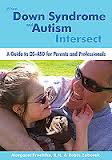
The book “When Down Syndrome and Autism Intersect, A Guide to DS-ASD Parents and Professionals” by Margaret Froehlke, and Robin Zaborek, states that:

“It’s only in  the past 10 to 20 years that we’ve learned that up to 18 percent of persons with Down syndrome will also have autism or ASD (autism spectrum disorder).  This is information that most healthcare professionals are not aware of and underscores the importance of this reference guide.”

Down syndrome and autism intersect2

Getting the secondary diagnosis of autism for an individual with Down syndrome will open up new doors for services to address the unique needs associated with DS-ASD.  For a parent, it validates what they have suspected for quite some time, and allows them to move forward to get services and support for their child.  Honestly, I was sad at first to receive the news of an autism diagnosis.  But eventually, I realized that this label explained the speech deficits, complex sensory, stimming and violent behaviors that Nick was exhibiting.  I rolled up my sleeves and sought help from the school IEP team and support groups to figure out how to help my son.  The secondary formal diagnosis of autism, enabled us to access the services from the district’s Autism Consultant.  This was the key to opening up new doors that helped in the areas of behavior and communication.

Behavior and communication go hand in hand.  As a child matures and approaches puberty, the behaviors can escalate to meltdowns that endanger themselves, family and school staff and peer students.  It is essential to determine the function of these behaviors and get a positive behavior support plan in place.  Evaluating the mode of communication is the second piece of the puzzle that must be addressed.  If a child is frustrated due to lack of speech or being non-verbal, they will often act out through their behaviors.  Individuals with DS-ASD may act out because they are trying to make sense of their world.  That is why a positive behavior support plan and mode of communication can enable a child to make their needs known, so they can get these wishes met.

autism-scrabble-letters-by-Jesper-Sehested

A BCBA Autism Consultant typically observes the child and takes data on behaviors by doing a Functional Behavior Analysis (FBA).  This detective work will uncover what is causing the behavior and lead to developing a behavior plan to support the child.

Frustrated icon   Detective-clipart-animation-free-images-2

Once the target behaviors have been identified, the Autism Consultant and IEP team members, along with the parents, can collaborate to find strategies to support the child.

For example if a child hits or pinches himself (Self-injurious behavior known as SIBS), or hurting others.  The Autism Consultant would determine possible causes and the setting in which it took place, and what the function of the behavior could be (avoidance, escape, boredom, etc..).  Possible antecedents might include:

*Diverted staff attention

*Unstructured/wait time

*Loud or crowded environment

*A change in activity to a non-preferred activity.

*Disrupted routine

*An object or activity is taken away

Supports can be put into place so that the child better understands what is expected.  A visual schedule, social stories, and communication mode (Picture Exchange Communication System knowns as PECS, or a higher tech, talker device) can be determined and put into place to allow the child to express their feelings, wants and needs.  The use of sensory diets and breaks, using noise cancelling headphones help the individual cope in stressful, crowded and loud environments, or regulation when the child is over or understimulated.

Providing behavior and communication support and strategies interventions for individuals with a dual diagnosis of DS-ASD will make a positive impact both at school and in the home setting.  In addition, the secondary diagnosis of autism opens up doors to more services and funding from state for respite care and behavior support at home. Having outside help with respite care, relieves the burden of stress on the family, and enables parents to continue to enjoy personal interests and taking a break outside the home.

Getting a proper and formal assessment and evaluation for a dual diagnosis of Down syndrome and autism is a game changer.  Individuals with DS-ASD experience the world differently than just having Down syndrome or autism alone.  Intervention and support strategies can be targeted to the individual to specifically address behavior, communication and sensory needs for the child.  Finally, the second label of autism, will open up doors to support groups and additional funding for waivers that provide in home support and respite care for weary families like mine.

That’s what is in my noggin this week. 🙂

~Teresa

Follow Nick on Social Media:

Facebook and Pinterest @Down Syndrome With A Slice Of Autism

Instagram #nickdsautism

Twitter @tjunnerstall


Posted in Adult Day Programs for Special Needs, Autism, Down syndrome, Dual Diagnosis Down syndrome and autism

Blog #216~Putting Social Stories Into Action

Blog #216~Putting Social Stories Into Action

Recently I had to take a page out of my own playbook.  I took both iPads and locked them up for an entire week.  My son, Nick repeatedly throws and drops his iPads when he is done or the battery dies.   Nick is 24 years old and has a dual diagnosis of Down syndrome and autism (DS-ASD).  During that week, I created a social story designed to teach him how to take care of his iPads.

A social story is a visual support that helps individuals understand new events, and reinforces a desired skill, task, or behavior. They are useful for individuals that have Down syndrome, autism or other intellectual/developmental disabilities. Over the years, we’ve used social stories to help Nick navigate new situations like starting back to school, doctors and dentist appointments, vacations, and independent living skills such as showering and brushing teeth. Social stories provide a blueprint as to what will occur and what is expected from a behavior standpoint. Knowing what will happen and what’s expected, will also help to reduce anxiety.

In this case, the social story was designed to help Nick understand what is expected of his behavior, and why it’s important to make good choices.  Here is Nick’s iPad social story:

iPad social story

In Blog #214 you can read how to make a social story, click here to view:

https://nickspecialneeds.com/2018/08/20/blog-214-how-to-make-a-social-story/

Social stories should be broken down into steps using visuals and succinct wording that depict the who, what, where, when, why and how an event or behavior needs to happen.  Review the social story several times with the child before the event, new routine or behavior is to occur.

After a week with no iPads, Nick was excited to get them back.  Before this occurred I read the social story several times.  Nick followed along and pointed to the basket that he needed to put his iPads in when he was finished using them.  I made sure to stay in close proximity when he was using his iPads, to redirect him in case he decided to drop or throw them.

So, did the social story work help to curb the iPad drops and throws?  Absolutely, it reduced the incidences by 80% in just one week.  That’s a huge improvement.  Nick returned his iPads to the basket frequently, and in some cases he at least set it on the table instead of chucking it.  This indicates that he has impulse control and able to make better choices.   He received lots of verbal praises and elbow bumps for making good choices.

happy choice sad choice

Each day,  I review the social story before Nick gets to use his iPads to reinforce making good choices.  In a few weeks, I will introduce a new social story to deal with another behavior area we struggle with around the house.  Many parents of children with a dual diagnosis of Down syndrome and autism have trouble with dropping, swiping and knocking over items.  Nick’s behavior in this area has increased over the last couple of months.  This will be a tough one to tackle, stay tuned…….

Cats Earth was flat

Remember that the goal in using a social story is to teach the behavior or outcome that you are expecting from the child.  Give them a script for success for making good choices.  Keep in mind, when introducing a social story, to use one at a time consistently, before adding more.

At my son’s  adult day program, they are using a social story with positive reinforcement for making good choices.  Nick has quite a rap sheet pulling fire alarms, with over 50 pulls since third grade.  Each day, the staff reviews the social story and walk the halls with him, encouraging him to “keep walking with hands to self”.  This story was developed by myself and the ABA therapist on staff at his day program.  The story reminds Nick (using visuals again), that it’s not nice to pull fire alarms, as it scares his friends,  hurts their ears, and that it is hard for some clients to move.  If he pulls an alarm, Nick must exit the building and go next door, so he doesn’t see or hear the fire trucks.  When he makes good choices, he earns a happy face and gets a reward at the end of the day:

nick social story sprite reward for fire alarms

Not to jinx things, but so far, the fire alarm social story is working well. 🙂

The happy face visuals have been effective for Nick, and  pairing it with the idea of making good choices.  Nick likes to please, but at the same time he craves attention, and will often get it with negative behaviors.  So the focus on targeting good behaviors with the icon will be carried thru to the dropping social story in the near future.

Social stories can help guide a child to understand what will happen, where and what is expected of their behavior. It’s a great visual tool for teaching new skills and routines.  They can help to guide your child to smooth and successful experiences both at home, school and in the community.  Do you have a child that likes to swipe, drop or throw things?  What’s the most expensive thing they have destroyed?  It’s not easy, navigating a child with a dual diagnosis of Down syndrome and autism.  Working with a BCBA certified behavior therapist to develop strategies and social stories can help improve behaviors significantly.  Your child is never to old to learn and improve their behaviors.

That’s what is in my noggin this week. 

~Teresa 🙂
Follow Nick:

Facebook and Pinterest @Down Syndrome With A Slice Of Autism
Instagram @nickdsautism
Twitter @tjunnerstall


Posted in Autism, Behavior/ ABA, Down syndrome, Dual Diagnosis Down syndrome and autism

Blog #212~DS-ASD Behavior Management

Blog #212~DS-ASD Behavior Management

Behavior problems are common for individuals having a dual diagnosis of Down syndrome and autism.  Speech deficits hinder a person’s ability to communicate wants and needs, leading to these challenging behavior problems.   As I’ve mentioned in previous blogs, every behavior even the bad ones, are an attempt to communicate something.  For the past 24 years, I have experienced this on the front lines with my son Nick, who has a dual diagnosis of Down syndrome and autism.  It’s important to get a clear picture of what is triggering the problem behavior.  To do this, try taking a step back and determine what is causing the behavior.

For individuals with a dual diagnosis of Down syndrome and autism, some challenging behaviors include property destruction (such as dropping, throwing, dumping things on the floor, and breaking objects).  Other behaviors might include elopement, dropping and plopping, stimming, yelling, repetitive movements and physical aggression to name a few.

There are 5 steps you can take to discover the causes of a problem behavior and prevent it from occurring.  It is important to mention here that, these steps should be taken with the support of a child’s IEP team and ideally using a Functional Behavior Assessment (FBA) with a Board Certified Behavior Analyst (BCBA).  It starts with doing a little detective work.

Detective-clipart-animation-free-images-2

1.What is the problem behavior, describe it?

2. Observe when the behavior occurs and when it doesn’t?  

3. Make a guess about what could be triggering the behavior and what might be reinforcing it.

4. Come up with a plan to prevent the behavior including supports that will help improve it in the future.

5. Track the behavior to see if the plan and supports are working.

Let’s put this into practice with the behavior of a child throwing, dropping, breaking and dumping out things around the house (property destruction):

1.”Billy” returns home from school and goes upstairs to his parents bedroom.  He turns on the water faucets full blast, and takes a photo frame and throws it down from the top of the stairwell where is shatters to pieces.

2. The behavior occurs after school, as his mom is unloading the backpack and reading the communication notebook.  It also occurs when parent’s attention are diverted, (doing chores, talking on the phone) and while the child has down time.

3. The antecedents are sensory seeking, lack of attention, unstructured down tome and boredom. Billy is reinforced by getting negative attention from his parents, who naturally get upset when something gets broken or a mess is made in the house.

4. The plan is for Billy to have a more structured routine during those down times when parents are busy working around the house:

-Create an afternoon visual schedule for Billy to put away the contents of his backpack and engage him in the chores with heavy work (a calming sensory activity).

-Replacement activities will include jumping on his mini trampoline, carrying laundry baskets to the washing machine and loading it, or vacuuming.

-Billy will be reinforced with high fives and praise, followed by a reward, upon completion of these replacement activities.  Rewards may include a choice of a favorite toy, iPad, movie, or snack.

-Billy will also be redirected to use his AAC device (talker) to express his needs.

-Parents are encouraged remain calm, matter of fact with little emotion, making minimal eye contact while using a soft voice, when the child engages property destruction.

5. Parent and teachers will keep a log to track this behavior both at home and in the school setting.

Sample ABC Chart used to do a Functional Behavior Analysis:

ABC chart

Before identifying the antecedent, behavior and consequence on the ABC chart, it is important to look at the setting prior to when the behavior occurred.  Note any changes in medications.  Is the child sleepy, overheated or too cold?  Are there any disruptions in staff or transportation to and from school? Is the environment to noisy or quiet?  These factors will attribute to more behavior problems.

The best behavior plans have proactive strategies and supports to encourage good behavior.  In my experience, the behavior plan must be revisited several times a year and tweaked accordingly. This will help to support positive behavior in a child with a dual diagnosis of Down syndrome and autism.  The key to behavior management is to step back and do the detective work, and come up with a plan to cut these behaviors off at the pass.  Working with the IEP team and a certified BCBA behaviorist to develop a behavior plan will lead to better responding thoughtfully to what the child is trying to communicate in their wants and needs.

That’s what is in my noggin this week.

~Teresa 🙂

Follow Nick:

Facebook and Pinterest @Down Syndrome With A Slice Of Autism

Instagram #nickdsautism

Twitter @tjunnerstall


Posted in Adult Day Programs for Special Needs, Autism, Down syndrome, Down Syndrome Awareness, Dual Diagnosis Down syndrome and autism

DS-ASD, Nick’s Spring Update

DS-ASD, Nick’s Spring Update

spring flowers

The trees and flowers are budding and blooming here in the Chicago area.  A long overdue, and highly anticipated spring has finally arrived.  Here is what my son, Nick has been up to this spring.  Nick is 24 years old and has a dual diagnosis of Down syndrome and autism.

Nick attends an adult day program which provides enrichment activities both in-house and out in the community.  The structured curriculum and schedule of this program serves Nick, and his fellow clients well.  Community trips to local parks, restaurants, shopping for the weekly cooking segment are integrated throughout the week.  They have also been doing gardening and working on craft projects that will be sold next week, at the Garden and Craft Sale.  Nick enjoys going to this program, and looks forward to going to it daily.

Outside of his adult day program, Nick likes to go to the movies, parks, library and out to eat with his personal support/respite caregivers.

It’s the middle of April and a jacket is still required……

nick swing neighborhood

Oh happy day 🙂

Nick taco bell outside

For the past couple of years, Nick and his respite caregiver Jodi, have joined up with Christopher and his caregiver for date night, each Thursday.  These two guys have a lot of laughs together at the library, and going out to eat afterwards.  His buddy is moving out-of-state, so it was a bittersweet final date night for the two of them…….

Nick and Christopher saying goodbye, it’s the end of an era…..

nick and christopher

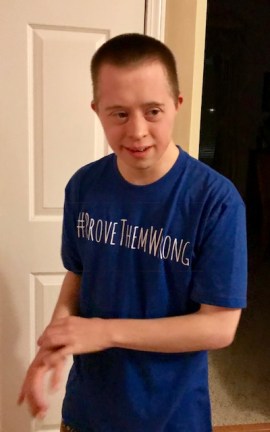
March is Down Syndrome Awareness Month, and 3/21 also being World Down Syndrome Day.  Nick and I spent this month doing advocacy and awareness about Down syndrome.  One campaign we were a part of was with Noah’s Dad, #provethemwrong which highlights the many awesome things that people with Down syndrome are doing in the world.  To follow Noah’s Dad and #provethemwrong click here for more information: http://noahsdad.com/prove-them-wrong-tee-shirt/

Nick Prove Them Wrong

Our family also supports The National Association for Down Syndrome (NADS) which is based in Chicago.  We are sponsors for the annual NADS Bowl-a-thon fundraiser.  Nick had a blast at the event :)……

Nick NADS bowlathon

Over the past weekend, we made a trip to Ohio to celebrate Nick’s cousin’s graduation from Bowling Green State University.  Nick is highly social, and loves spending time with his cousins, aunt, uncle, and grandparents.  Before the early 9am graduation ceremony began, in the crowded Stroh Center, Nick did his part to test a fire alarm cover.  The loud buzzer blared for a few seconds, before his Dad could close it back down.  It was a close call, but at least he didn’t pull the actual fire alarm.  He’s cheetah fast, and as I’ve said before, it’s Nick’s world, the rest of us are just trying to keep up.

Congratulations and elbow bumps to Nick’s cousin, Sam, well done!…….

Nick and Sam Graduation

Relaxing on the deck and enjoying a warm, spring day with his cousin, Anna….

Nick and Anna

Spring is a time of renewal, and taking in the beauty of nature coming back to life after a cold, harsh winter.  It feels so good to get outside and power walk again.  These walks are a time for me, to reflect on life’s blessings.  I feel very fortunate that my son is healthy, happy and enjoys his life as a young adult having Down syndrome and autism.  Yes, there are many challenges, and he certainly keeps us all on our toes.  But the joy and humor that Nick exudes, far outweighs the behavior challenges we incur daily.

It’s almost Mother’s Day, which is the official “green light” to plant flowers and vegetables here in the Chicago area.  I’m ready to fill up the clay pots with some color, on the empty pallet of the deck.  I can’t wait to put the tomato plants into the soil.  Gardening is my way of relaxing, and shaking off daily stress.  It’s so important to carve out time for yourself, and restore what can sometimes be taken away, by the demands of parenting a child with special needs.  Wishing all the moms on the front lines, a very Happy Mother’s Day.   My hope is that you make time to enjoy something on your own, that is fulfilling and relaxing each day.  That’s what is in my noggin this week.

Happy Spring everyone 🙂

~Teresa 

Follow Nick:

Facebook and Pinterest @Down Syndrome With A Slice of Autism

Instagram #nickdsautism

Twitter @tjunnerstall