Posted in Down syndrome, Health Issues and Special Needs Child, Physical Therapy and Special Needs, Speech and Occupational Therapy

Blog #127~So, Your Baby has Down syndrome

Blog #127~So, Your Baby has Down syndrome        

In October everything turns pink for Breast Cancer Awareness Month. But did you know it’s also Down Syndrome Awareness Month?

Twenty-one years ago I gave birth to my son Nick. The doctor detected several markers that he might have Down syndrome.  The next day, a hospital social worker handed me two brochures about Down syndrome. That is was what I had to work off of.

Here are the facts about Down syndrome courtesy of The National Down Syndrome Society, www.ndss.org:

  • Down syndrome occurs when an individual has a full or partial extra copy of chromosome 21. This additional genetic material alters the course of development and causes the characteristics associated with Down syndrome.
  • There are three types of Down syndrome: trisomy 21 (nondisjunction) accounts for 95 percent of cases, translocation accounts for about 4 percent and mosaicism accounts for about 1 percent.
  • Down syndrome is the most commonly occurring chromosomal condition. One in every 691 babies in the United States is born with Down syndrome.
  • There are more than 400,000 people living with Down syndrome in the United States.
  • Down syndrome occurs in people of all races and economic levels.
  • The incidence of births of children with Down syndrome increases with the age of the mother. But due to higher fertility rates in younger women, 80 percent of children with Down syndrome are born to women younger than 35.
  • People with Down syndrome have an increased risk for certain medical conditions such as congenital heart defects, respiratory and hearing problems, Alzheimer’s disease, childhood leukemia and thyroid conditions. Many of these conditions are now treatable, so most people with Down syndrome lead healthy lives.
  • A few of the common physical traits of Down syndrome are low muscle tone, small stature, an upward slant to the eyes and a single deep crease across the center of the palm. Every person with Down syndrome is a unique individual and may possess these characteristics to different degrees or not at all.
  • Life expectancy for people with Down syndrome has increased dramatically in recent decades — from 25 years old in 1983 to 60 years old today.
  • People with Down syndrome attend school, work and participate in decisions that affect them, and contribute to society in many wonderful ways.
  • All people with Down syndrome experience cognitive delays, but the effect is usually mild to moderate and is not indicative of the many strengths and talents that each individual possesses.
  • Quality educational programs, a stimulating home environment, good health care and positive support from family, friends and the community enable people with Down syndrome to develop their full potential and lead fulfilling lives.

I think back on that 33-year-old mom who was unsure of her future. What advice would I give her today?

Down syndrome journey

First, I would say that everything is going to be OK. The path will be different and move slower. But your child will work through the low muscle tone with the help of early intervention programs. The benchmarks like sitting up, crawling, walking and eating solid food will take longer to reach. Try to be patient and rest assured that your child will hit them.

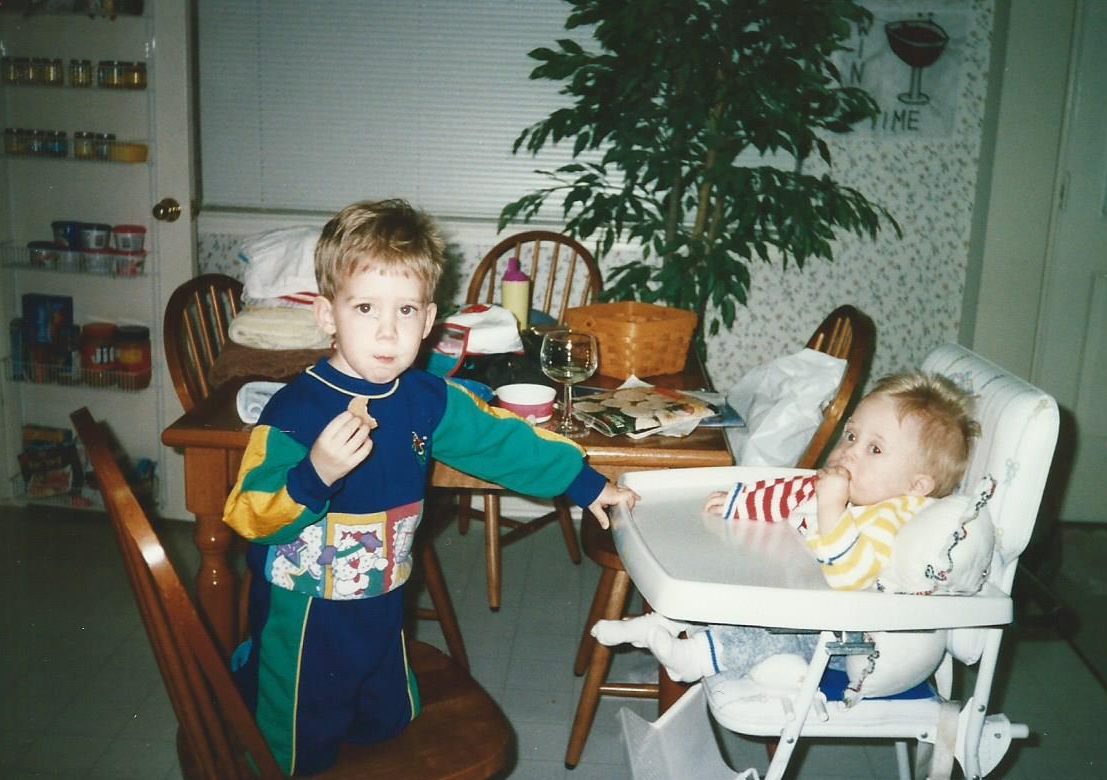
Nick, age one….
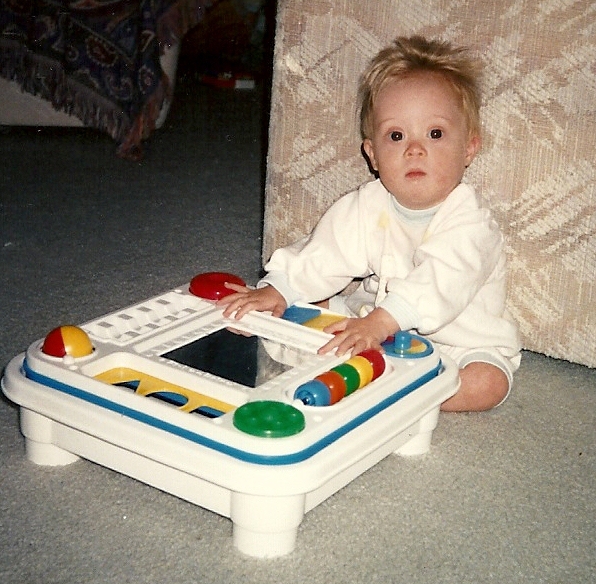
scan0009

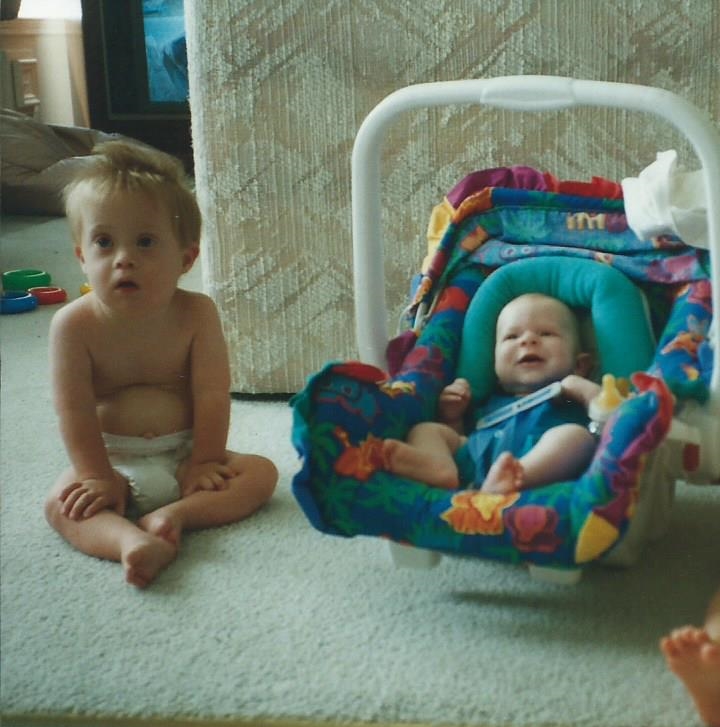
The next thing I would tell her is that there will be angels that light a path along the way. Embrace them and incorporate what you learn at home. The speech therapists will teach him how to blow bubbles, work on lip closure, feeding and to use sign language along with songs to communicate. The occupational and physical therapists will guide him in fine and gross motor skills. The teachers will hold the lantern and illuminate his mind. The social support groups will be your shoulders to lean on.

scan0016

Finally, I would share this message. Your baby was born with Down syndrome, but they are a person first. People with Down syndrome experience the same emotions that you and I do. Your life will change for the better as you savor the sweet victories. They will steal your heart and touch others in ways you can’t imagine. Your child will bring a unique perspective of seeing the best of the human spirit.
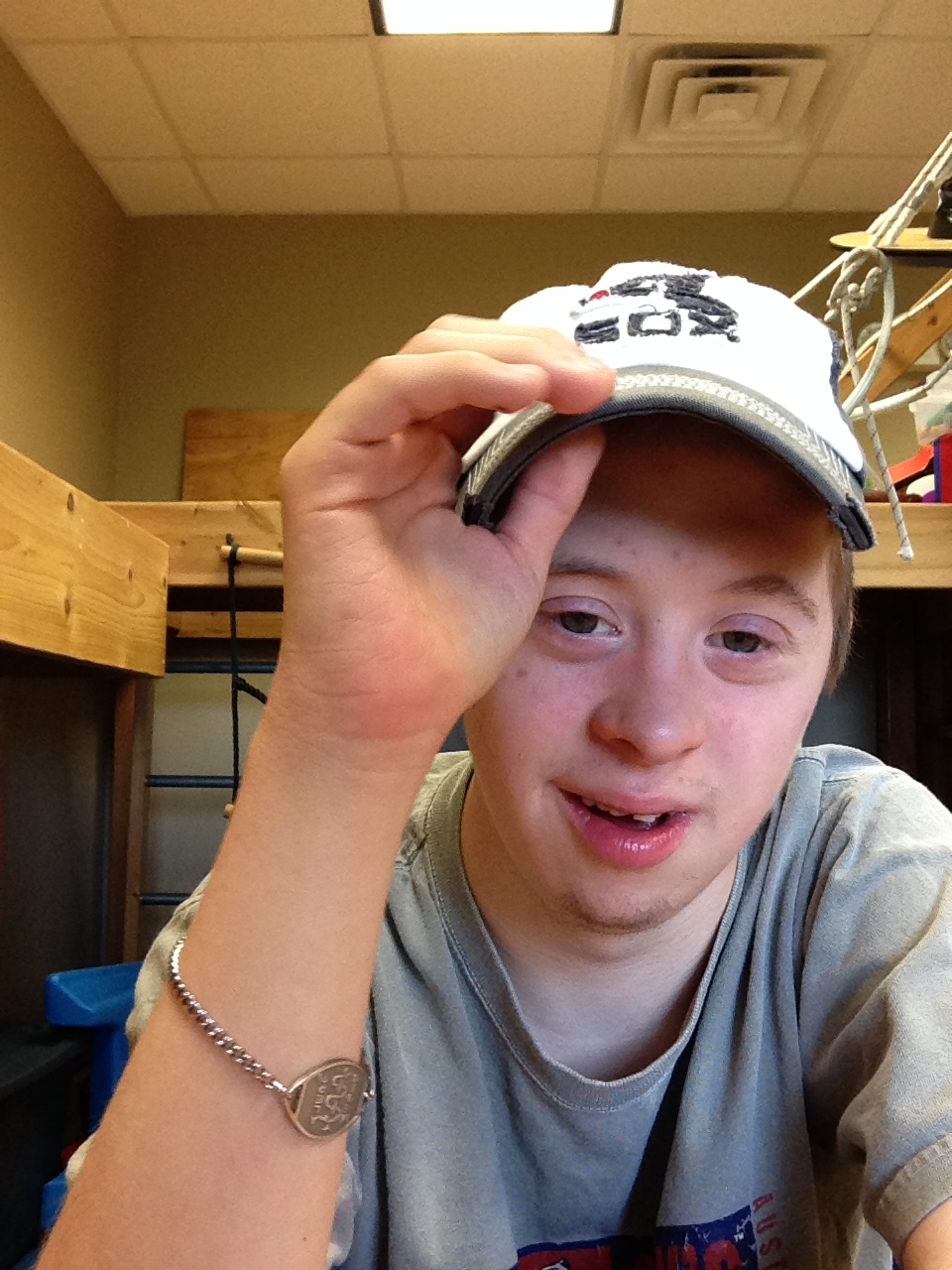
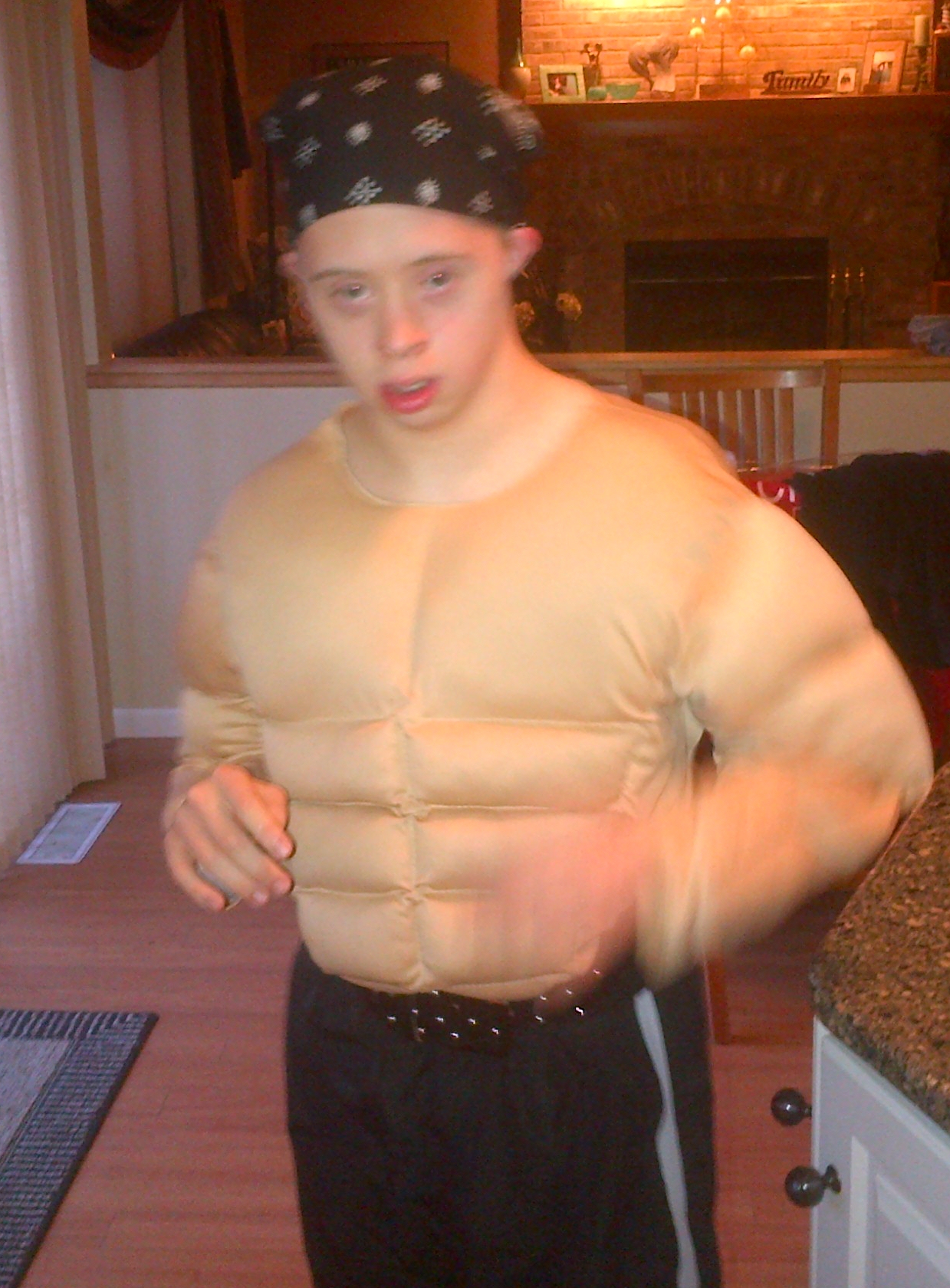
Nick in Sox hat

This is my advice to the young mother who just gave birth to a beautiful baby, who just happens to have Down syndrome. That’s what is in my noggin this week. 🙂

~Teresa
Posted in Uncategorized

October is Down syndrome Awareness Month

October is Down syndrome Awareness Month

Down syndrome awareness month

It’s hard to believe that September is winding down.  October starts this week and I want to kick it off by promoting Down syndrome Awareness Month.  How much do you know about Down syndrome?  Click on this week’s link to learn more about it, including facts and links promoting Down syndrome:

https://nickspecialneeds.wordpress.com/2012/10/15/blog-26-down-s…wareness-month/

The page will then show nothing found (something is wonky here this week).  Then type in:  “Blog #26 Down syndrome Awareness Month in the search box.  It should pop up. Sorry about the extra step.

Thank you for reading and sharing Nick’s world!  That’s what is in my noggin this week.

~Teresa 🙂

Posted in Down syndrome, Physical Therapy and Special Needs, Speech and Occupational Therapy

My Guest Blog~So Your Baby Has Down Syndrome

My Guest Blog~ So Your Baby Has Down Syndrome

Recently I was contacted by an associate editor at Social Work License Map, a guide to social work licensure that clarifies the steps needed to become a social worker in any state.  This social work site,  also focuses on specific social work advocacy. I am very excited to share that my website, “Down Syndrome With A Slice Of Autism” will be included here.  In addition, I did a guest blog spot which posted live last week.  The guest blog is entitled, “So Your Baby Has Down Syndrome.”  Just click below to view:

http://socialworklicensemap.com/guest-blog-so-your-baby-has-down-syndrome/

October is  Down syndrome Awareness Month and there are so many good stories in the news.  I will continue to post these on the Facebook page for you to enjoy.  Thank you for reading and sharing Nick’s world.  That’s what is in my noggin this week!

~Teresa 🙂

DSAwarenessMagnet


Posted in Down syndrome, Resources for Special Needs

Down Syndrome Awareness Month (Re-blog)


Down Syndrome Awareness Month!

Photo on 2011-06-12 at 18 01 #4

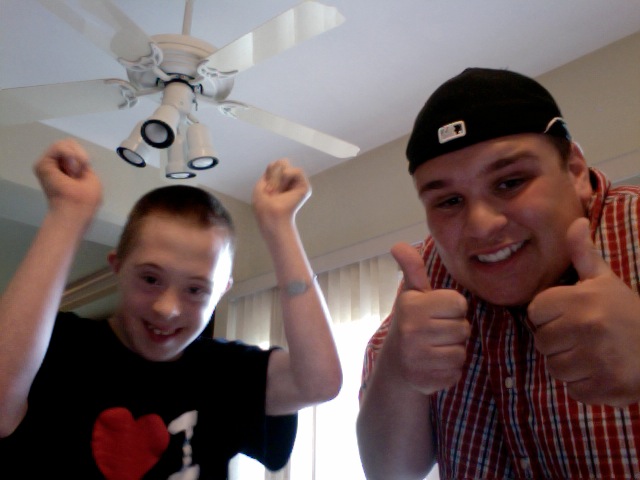
Nick says yay and thumbs up!  October is Down syndrome Awareness Month.  Here is a blog I did a few years ago that will open your eyes to Down syndrome @ https://nickspecialneeds.wordpress.com/2012/10/15/blog-26-down-s…wareness-month/

Thank you for reading and sharing Nick’s world.  That’s what is in my noggin this week.

~Teresa 🙂

Posted in Down syndrome, Government/Legal Matters Related to Special Needs

Blog #89~ World Down Syndrome Day

Blog #89~ World Down Syndrome Day

The United Nations official recognition of World Down Syndrome Day is March 21st. “Each year the voice of people with Down’s syndrome and those who live and work with them join together to focus attention on what it means to have Down syndrome and how those with the condition play a vital role in communities across the world.”  Click on the site below to view events to raise public awareness to create a single global voice @www.worlddownsyndromeday.org.

WDSD Socks

According to Wikipedia, “Down syndrome is a naturally occurring chromosomal arrangement that has always been a part of the human condition, being universally present across racial, gender or socio-economic lines, and affecting approximately 1 in 800 live births, although there is considerable variation worldwide. Down syndrome usually causes varying degrees of intellectual and physical disability and associated medical issues. The date for WDSD being the 21st day of the 3rd month, was selected to signify the uniqueness of the triplication (trisomy) of the 21st chromosome which causes Down syndrome.”

trisomy 21

The Secretary-General of the United Nations Ban Ki-moon said on 21 March 2012, “On this day, let us reaffirm that persons with Down syndrome are entitled to the full and effective enjoyment of all human rights and fundamental freedoms. Let us each do our part to enable children and persons with Down syndrome to participate fully in the development and life of their societies on an equal basis with others. Let us build an inclusive society for all.”

keep calm

World Down syndrome Day.org gives this message on it’s website, “People with Down syndrome face many challenges as children and adults which may prevent them enjoying their basic human rights. Many people often fail to understand that people with Down syndrome are people first, who may require additional support, but should be recognised by society on an equal basis with others, without discrimination on the basis of disability.”

Big Guy, Nick 🙂

IMG01

My son Nick, is a young adult who has Down syndrome.  He has so much to offer and has brought so much joy to the world.  He’s made me a better person in the process.  If you would like more specific information on Down syndrome click here @https://nickspecialneeds.wordpress.com/2012/10/15/blog-26-down-s…wareness-month/

Please help me spread the word about World Down Syndrome this week on social media.  That’s what is in my noggin this week. 🙂

~Teresa
Posted in Down syndrome

Blog #73~ Feeding Issues and Down Syndrome

Blog #73~ Feeding Issues and Down Syndrome

Last week I wrote about Down syndrome and low muscle tone.  Not only does it affect gross motor areas of development but also oral motor and speech as well.

There are studies that have suggested these factors contribute to feeding problems in infants with Down syndrome: 

“The problem lies in strength, mobility and range of motion of oral muscles.  (Kumin, Goodman & Councill, 1991) This can result in weak sucking, swallowing, lip closure, and tongue protrusion (Pilcher, 1998; Kumin, 1994), and gastroesophageal reflux (McCurtin, 1997). The combination of reduced oral space and limited control also contribute to feeding problems in infants with Down syndrome. Due to a small oral cavity and midfacial hypoplasia, the infant’s lips appear thin, the palate is usually flatter with a high arch in the midline and the nasal passages are narrowed. The combination of reduced oral space and low muscle tone can result in tongue protrusion.”  For more information: www.down-syndrome.org.

Development of oral motor skills improve the progression in feeding:

*Breast milk or formula

*Pureed foods

*Table Foods

*Skills for sucking a nipple

*Usage of utensils (straws, cups, spoons, forks)

Nick certainly had his own struggles in this area.  At three years old, he was still eating concoctions of pureed and mashed up vegetables, fruits and still blended in baby cereal that resembled gruel.  You didn’t dare introduce food with any lumps that he could gag or choke on.  We enlisted a speech pathologist that specialized in oral motor feeding that included an intense treatment to address these problems.

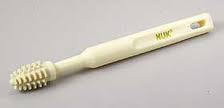
The technique used by the specialist was, “Beckman Oral Motor Intervention” http://www.beckmanoralmotor.comMake sure that you consult with a speech pathologist who specializes in oral motor therapy and has been trained in this area.  The essence of the program is to get the muscles firing both around the lips and inside the mouth. First, the muscles around the upper and lower lips were stretched.  This followed with gum massage to stimulate the mouth and stretches inside the cheeks.  All of this would wake up the mouth and move to the next step of resistive chewing.  Nick started with a Nuk Brush for this.

nuk brush

The specialist insisted on doing these techniques on me.  I was amazed at how alive and tingly my mouth felt afterwards.  She also taught me how to do them on Nick.  Consistency is the key to building strength when embarking on this program.

As I mentioned last week, Nick was very delayed in his gross motor development. Because his trunk was so weak, he sat slumped.  This affected his ability to chew and swallow.  A co-treatment plan of therapy helped to escalate Nick’s progress.  After Nick did the Beckman exercises, the occupational therapist would work  alongside placing a nubby rubber cushion under Nick to help build up his abdominal and back strength.

nubby therapy cushion

She placed her hands on his trunk manipulating his shoulders to maintain integrity while biting exercises were performed.  The feeding specialist pulled out all sorts of foods like Cheerios, goldfish, graham crackers, and sour gummy worms and wrapped them in gauze.  Then she placed them one at a time in his mouth, and he would bite down.  The gauze acted like a safety net to keep him from gagging or choking.  In less than a year, Nick was able to chew and swallow textured foods safely and his trunk became strong enough for him to be able to walk at age 3 ½.

I never thought I’d see the day when Nick could eat crunchy foods 🙂

Scan0014

Nick has come a long way since those days of sitting slump, gagging on food.  I am forever grateful to all of the therapists who have made him strong over the years and continue to help him grow.  He is a force to contend with in the world.  Last week he managed to pull yet another fire alarm at school.

Oh no, not again….. Tally now 30 alarm pulls…..

firelite-pull-station

October and Down Syndrome Awareness Month is almost over.  I hope you have gained some knowledge about Down syndrome in this month’s blogs.  It’s been one heck of a journey raising Nick, but all four burners are going now.  That’s what is in my noggin this week. 🙂

~Teresa
Big guy overcame low muscle tone!  More Halloween costume pictures over the years are located in the October 2012 archives. 🙂

IMG-20121027-00112

Posted in Down syndrome, Physical Therapy and Special Needs

Blog #72~Down Syndrome and Low Muscle Tone

Blog #72~Down Syndrome and Low Muscle Tone

October is Down Syndrome Awareness Month.  In Blog #26, located in the October 2012 archives, there is a complete overview about Down syndrome.

DSAwarenessMagnet

This week I want to put a lens on one of the physical traits of having Down syndrome.  Hypotonia, or low muscle tone is common in almost all babies with Down syndrome.  The appearance is floppy and the muscles are flaccid. As soon as I touched my son Nick after he was born, I could feel this.  He felt like a rag doll.

The good news is that hypotonia generally improves over time with early intervention and physical therapy.   Within eight weeks, we met with the early infant intervention team and began the work to confront his low muscle tone.  Right away, we were instructed to roll up blankets and stuff them on either side of Nick when he was sitting in his carrier.  Since the muscles are so floppy, there is a tendency for the limbs to dangle open.  We then started from the top and worked down.  The first step was to get the neck strong.  We incorporated a lot of tummy time providing lots of bright, colorful, and contrasting toys that would be stimulating.  His brother Hank helped out by pushing the buttons on musical toys so that Nick would lift his head up.  This would help develop more alertness as under arousal is typical for babies having Down syndrome.

Everything is ready for tummy time, look at that scrawny baby 🙂 …….

Scan0011

Once he was able to support his head, the early infant team began to work on building strength in his trunk.  At first he had to be held at the shoulders while sitting on a play ball.  The facilitator would lead the group with songs and blowing bubbles.  The babies would both track the bubbles and try to pop them with their fingers.  Gradually, the therapist was able to hold Nick at the chest, and after several months hold his waist while he worked on the ball. The physical therapist told us that Nick would not be able to pull up to stand or walk until his core was strong.  This meant when he could sit on the ball supported with her hands down on his hips. This took a very long time for Nick.

We propped up pillows in his high chair so he would flop over to the side. His brother Hank, keeping him entertained…….

Scan0010

A special chair was provided by the early infant intervention program.  Nick’s trunk was still weak and he had a lot of trouble sitting upright…….

Scan0008

Take a look at the average gross motor milestones:

Sitting alone-

Typical age 5-9 months

Down syndrome 6-30 months

Nick 22 months

Crawling-

Typical age 6-12 months

Down syndrome 8-22 months

Nick 28 months

Walking-

Typical age 9-18 months

Down syndrome 1-4 years old

Nick 3 ½ years old

As you can see, Nick’s low muscle tone affected his development in all of these gross motor areas.  After his first birthday, the physical therapist suggested we try doing horseback riding therapy with Nick. He was the youngest person they had ever tried at this facility.   We made the trek out to Tomball, Texas for these sessions for over a year.  Nick gained a lot of trunk strength during this time.  Keep in mind, not only were the muscles weak but also had less endurance.  Doing the sessions on the horse helped with increasing his endurance and the sensory input was very stimulating.

Giddy up Nick……

Scan0009

After a year of hard work, he finally sat on his own!  Nick with his cousin, Austin

Scan0012

Once Nick was able to sit up and crawl we began to find creative ways to get him up on his feet.  Hank would often dangle his favorite musical toy at the top of the bean bag chair.  As the music blared and lights flashed, Nick would climb up the makeshift mountain to reach the toy.  Around this time, I also began redecorating the living room.  I mounted several musical toys above the fire place so if he wanted to get to them, he had to pull up to stand.  His brother also enticed him, bouncing ping pong balls on the coffee table.  He would crawl over, pull up, play and laugh with Hank.

It was a long, slow rode to get him up and walking.  Nick had to work a lot harder to build his strength, endurance, alertness to defy the effects of low muscle tone and under arousal.  Hard work always pays off, and gets you to the top of the podium!

Nick in Middle School, brings home the gold 🙂

scan0011

That’s what is in my noggin this week!

~Teresa

Posted in Down syndrome

Blog #71~Down Syndrome Diagnosis…Have No Fear

Blog #71~ Down Syndrome Diagnosis….Have No Fear

October as everyone knows is Breast Cancer Awareness month.  It is also Down Syndrome Awareness Month.  Last year in Blog #26, located in the October 2012 archives, I did a full piece on Down syndrome awareness. Click here to check it out:  https://nickspecialneeds.wordpress.com/2012/10/15/blog-26-down-s…wareness-

This year I am taking a different route.  What happens to a parent when they find out that their child may have Down syndrome?  One feeling that evokes the mind immediately is fear.  The unknown tends arouse worry and anxiety.  Nineteen years ago when my son Nick was born the doctor told us he had several markers that suggested he might have Down syndrome.  Three days later, the chromosome test came back to confirm he did.  In 1994, there were no laptops or smart phones to quickly Google “Down syndrome” and great websites like http://noahsdad.com to ease my worries.   I was handed two brochures by the hospital administrator, that’s it.  There were so many questions in my mind.  How was my life going to change?  What would my son’s life look like?  I wonder what that crystal ball would have revealed?

crystal ball

Here are 5 things that I wish that crystal ball could have illuminated about having a child who has Down syndrome……….

1.  Don’t worry about giving up your life.  You will still be able to work, go out with your friends and take your son with you everywhere, even overseas vacations.

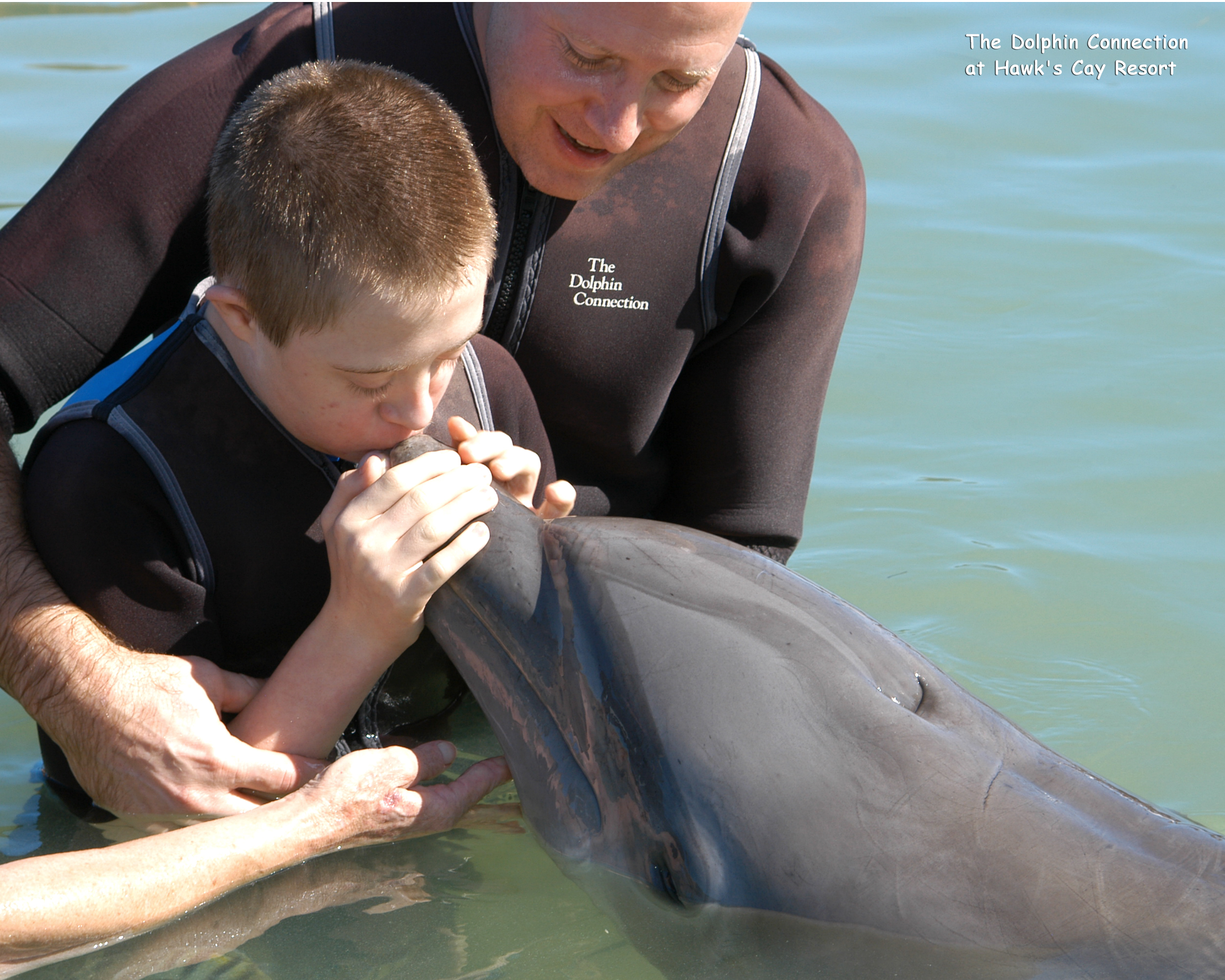
Nick Kiss

2.  You will meet many people who will show you how to navigate this new path and teach you about courage along the way. They will be educators, therapists, specialists, advocates and other parents who will light the lanterns and guide you and help your son learn and grow.

3.  Trust that all those milestones you are worried about like eating, talking, sitting up, crawling, walking and toileting will be met. Yes, eventually he will make it out of Pull-ups and Depends though this may test your limits. 🙂 Hitting these milestones may take a lot more time but when he does it will be glorious and sweetly savored.

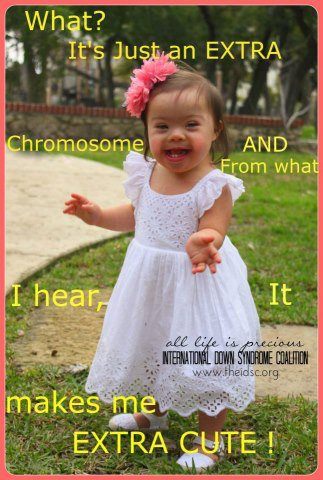
extra chromosome extra cute

4.  Your son will teach you what pure, unconditional love is.  He will wake you up with a light in his eyes each morning. He will share a great sense of humor that will warm your heart and the hearts of many.

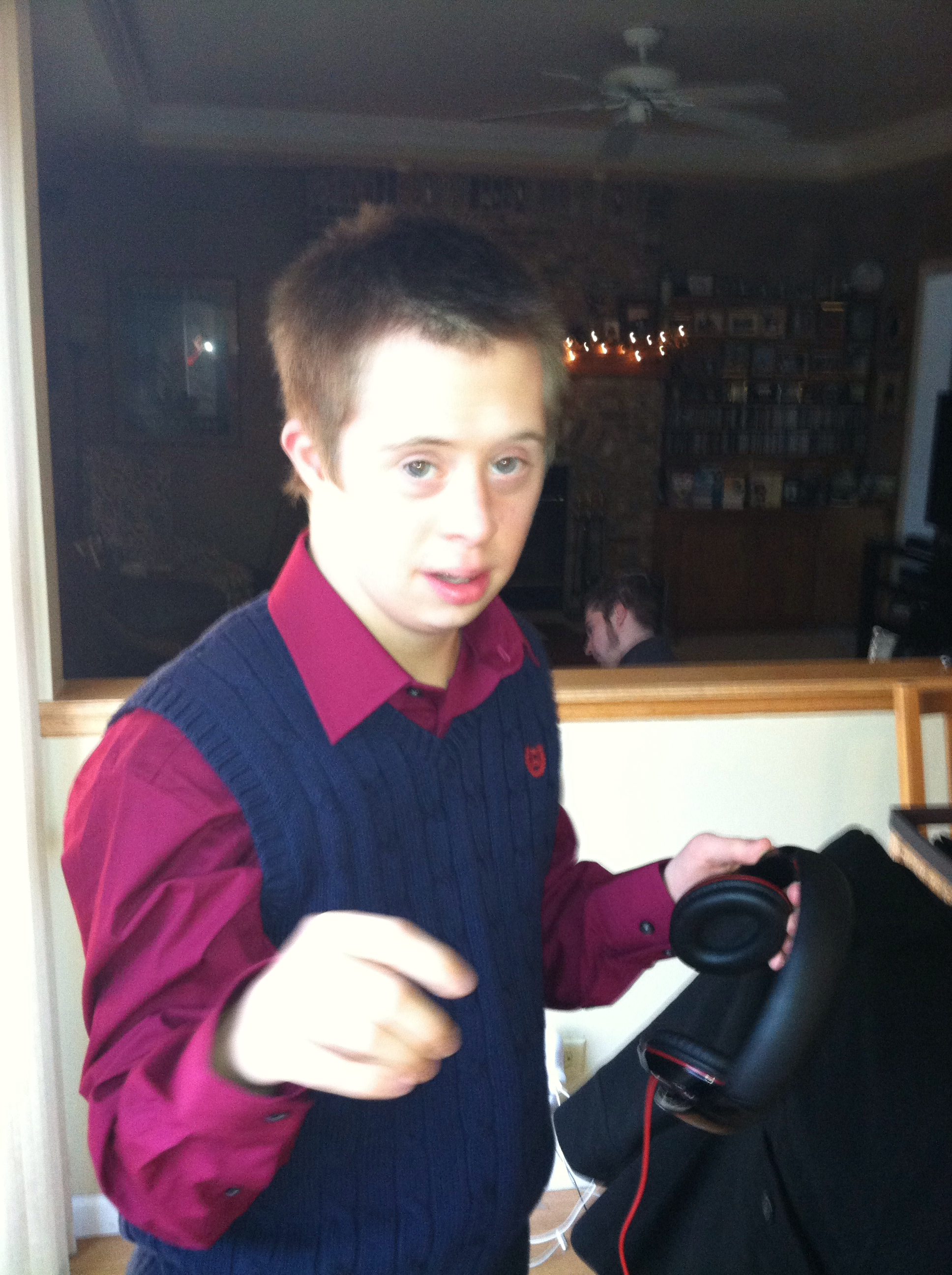
006

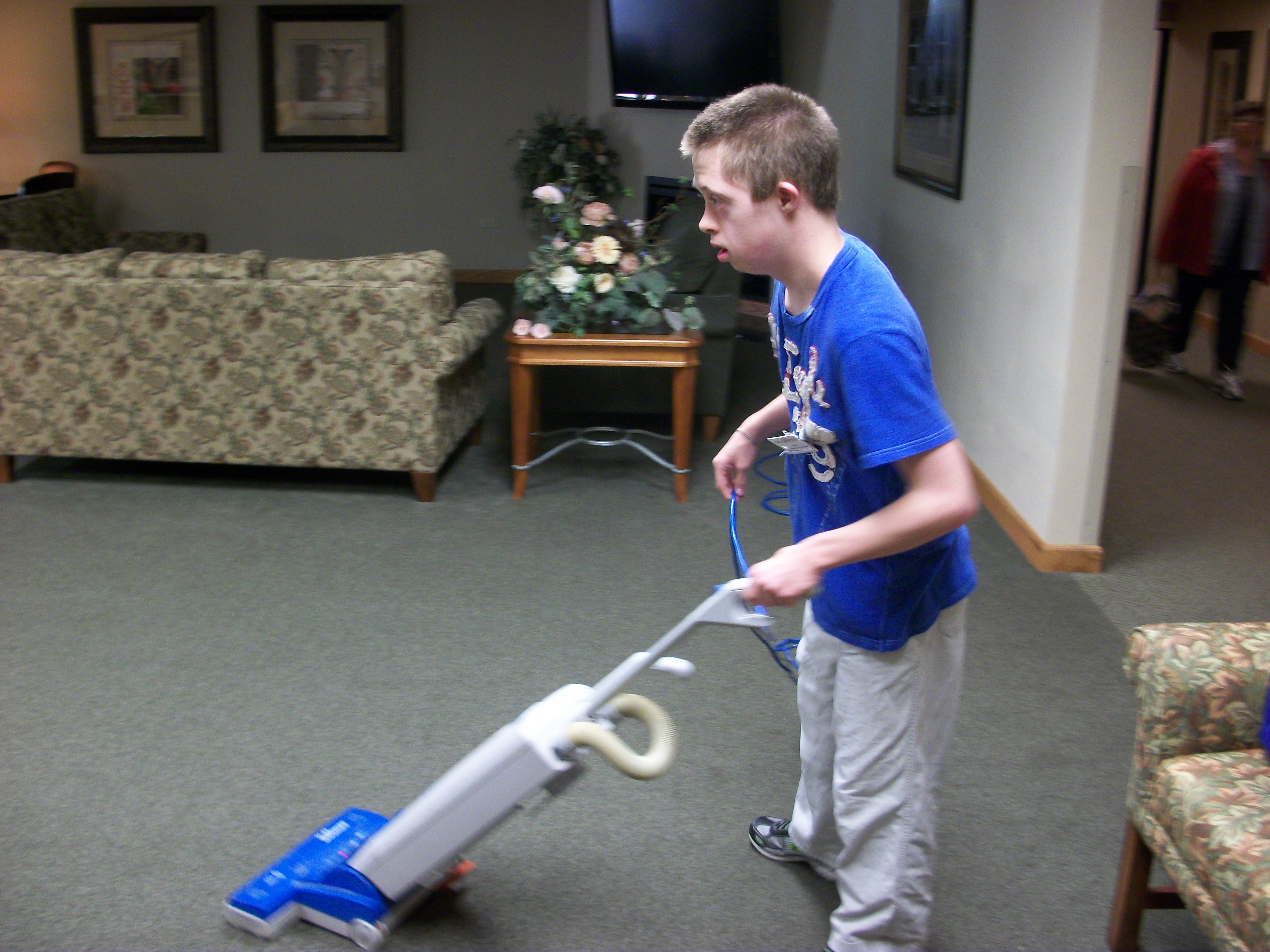
5.  One day your son will make you proud because he will be eager to work hard.  He will take great pride in the jobs he does both around the house and in the community. Unlike most of us he will enjoy vacuuming, laundry and unloading the dishwasher. 🙂  Yes, there will be some things he may not be able to do. But other times he will surprise you.  Just be patient and let God take him down the path that fits him.

Nick vacumming_Tabor Hills (3)

Those are the 5 things I wish that I’d known when faced with the diagnosis of my child having Down syndrome.   So, I tap all the moms on the shoulder that might be dealing with the birth of a child who has Down syndrome and say this…. “It’s going to be okay, relax and have no fear.”

keep calm extra chromosome

That’s what is in my noggin this week. 🙂

~Teresa

Posted in Down syndrome

Blog #26~ Down Syndrome Awareness Month!

Down syndrome awareness month

Blog #26~ October is Down Syndrome Awareness Month!

Each October everything turns pink for breast cancer awareness.  Even the NFL players and referees wear pink.  Everything is illuminated including the Tower of London, The White House, Eiffel Tower, Empire State Building and even Rio’s iconic Christ the Redeemer statue is glowing pink.

But did you know that October is also Down syndrome Awareness Month? How much do you know about Down syndrome? Here are a few facts about Down syndrome courtesy of The National Down Syndrome Society (NDSS):

  • Down syndrome occurs when an individual has a full or partial extra copy of chromosome 21. This additional genetic material alters the course of development and causes the characteristics associated with Down syndrome.
  • There are three types of Down syndrome: trisomy 21 (nondisjunction) accounts for 95% of cases, translocation accounts for about 4% and mosaicism accounts for about 1%.
  • Down syndrome is the most commonly occurring chromosomal condition. One in every 691 babies in the United States is born with Down syndrome.
  • There are more than 400,000 people living with Down syndrome in the United States.
  • Down syndrome occurs in people of all races and economic levels.
  • The incidence of births of children with Down syndrome increases with the age of the mother. But due to higher fertility rates in younger women, 80% of children with Down syndrome are born to women under 35 years of age.
  • People with Down syndrome have an increased risk for certain medical conditions such as congenital heart defects, respiratory and hearing problems, Alzheimer’s disease, childhood leukemia, and thyroid conditions. Many of these conditions are now treatable, so most people with Down syndrome lead healthy lives.
  • A few of the common physical traits of Down syndrome are low muscle tone, small stature, an upward slant to the eyes, and a single deep crease across the center of the palm. Every person with Down syndrome is a unique individual and may possess these characteristics to different degrees or not at all.
  • Life expectancy for people with Down syndrome has increased dramatically in recent decades – from 25 in 1983 to 60 today.
  • People with Down syndrome attend school, work and participate in decisions that affect them, and contribute to society in many wonderful ways.
  • All people with Down syndrome experience cognitive delays, but the effect is usually mild to moderate and is not indicative of the many strengths and talents that each individual possesses.
  • Quality educational programs, a stimulating home environment, good health care, and positive support from family, friends and the community enable people with Down syndrome to develop their full potential and lead fulfilling lives.

My boys, Hank and Nick 🙂

Hank Nick 001 (2)

Since this is about awareness, it is important to educate people on the appropriate language that should be used.  People with Down syndrome should always be referred to as people first. Do not say- “a Down syndrome child.” Instead say, “a child with Down syndrome.”  Here are three more improper phrases to avoid are “Down’s child” and describing the condition as “Down’s,” as in, “He has Down’s.”  Finally it should be said “Down” and not “Down’s.”  Down syndrome is named for the English physician John Langdon Down, who characterized the condition, but did not have it.

Down syndrome keep calm

Here are some great links promoting Down syndrome:

* NDSS Buddy Walks take place all over the country raising over 11 million to support local and national programs.

*Times Square jumbotron kicks off with a special Down syndrome awareness video.  Their website is at www.ndss.org.

*The National Down Syndrome Congress (NDSC) sponsors their campaign called, “More Alike than Different.”  Check out their website at www.ndsccenter.org.

*Here in the Chicagoland area, the National Association for Down Syndrome (NADS) provides bookmarks and posters that can be distributed in the community to schools, libraries, book stores and businesses.  This group is based in Chicago.  For more information go to  www.nads.org.

*GiGi’s Playhouse is another wonderful group that started in the suburbs of Chicago and has grown to expand around the country. GiGi’s Playhouses are Down syndrome awareness and educational centers that provide resources, specialized teaching, and support to individuals with Down syndrome, their families and the community.  They have a wonderful calendar and notecards available for purchase. More information is at www.gigisplayhouse.org.

*One of my favorite websites is www.noahsdad.com.  Noah is the cutest thing and his dad does a superior job of presenting his son in a positive light.

I hope this week provided some further insight and information about Down syndrome.  That’s what is in my noggin this week.  Most of us have been affected with or by breast cancer in some way.  I hope this month raises awareness and more funding for breast cancer and Down syndrome.  I would love to hear how a person with Down syndrome has touched your life.

My son, Nick rocks that extra chromosome! 🙂

best buddies dance

~Teresa 🙂