Posted in Dual Diagnosis Down syndrome and autism, Education and Special Needs, IEP (Indivdualized Education Plan), Parenting Special Needs

Blog #247~DS-ASD Back to School Tips

Blog #247~DS-ASD Back to School Tips

This week I have 10 back to school tips and strategies specifically geared to individuals with a dual diagnosis of Down syndrome and autism (DS-ASD) and their families. My name is Teresa Unnerstall, I am a DS-ASD parent, consultant and author of A New Course: A Mother’s Journey Navigating Down Syndrome and Autism. My son Nick is 28 years old and my passion is to help families, educators, therapists, medical professionals and anyone interested in supporting individuals with co-occurring DS-ASD.

Order your copy on Amazon at https://amzn.to/2W3Un6X

10 Back to School Tips for DS-ASD Families:

1. Prepare the student with a visual countdown calendar, and re-instate morning/evening routines.

2. Tour the school with your child. Then, create a social story or video social story of the school settings and staff that the student will be interacting with. Review this story regularly for the first few weeks of school.

3. At the tour, ask the teacher to show you the safety & hygiene precautions, accommodations and equipment that is listed in the IEP to make sure everything is in place.

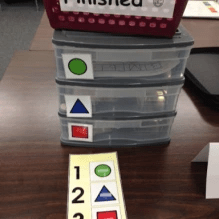
First Then Visual Accommodation
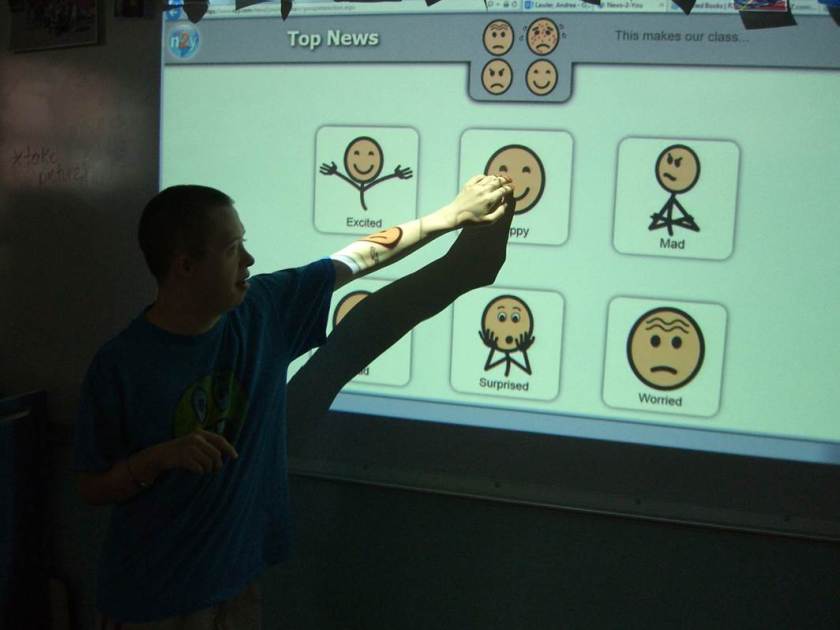
Teaching feelings visual accommodation
Nick using the Smart Board

4. Prepare a student “About Me” profile sheet. There are many templates available online that you can Google or try Canva for free. You can include different sections such as, Things I love, My Strengths, What Works Best for Me, How to best support me, What I struggle with and Interests. Make several copies to share with the staff.

5. Determine the modes of communication back and forth with the teacher and school staff. Examples include texting, email, communication logs/notebooks and daily report sheets. This is very important as many students with DS-ASD who have language deficits or may be non-verbal and unable to share how their day went.
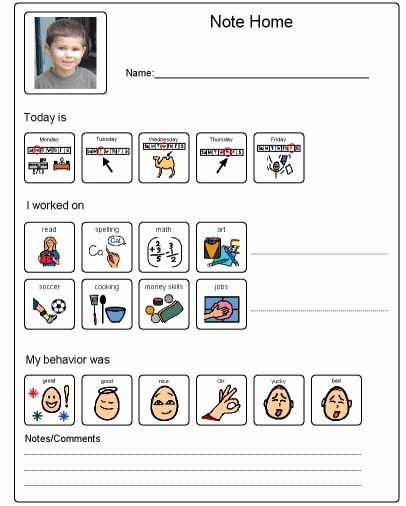
Daily Report Sheet

6. Review the child’s IEP to insure that all goals and accommodations are still relevant and meaningful. Note any additional needs or concerns you have coming off of the summer break and share these with the staff.

7. If the student has a behavior support plan (BSP), check to see if this has been shared with all staff and is ready to put in place on day one. Make a list of any new target behaviors that need to be addressed and added into the BSP.

8. If the student uses AAC (Augmentative and Alternative Communication) make sure the teacher and aides are familiar with how to use the program, whether it’s high tech or low tech like a picture exchange system (PECS). You can request a training for staff and parents on how to program devices, navigate tabs and get trained on how to utilize PECS with the school speech and language therapist or school district AAC specialists.

AAC Touch Chat Program

9. Students may have lost skills or experienced regression over the summer break. Evidenced-based practices help students regain lost skills and develop new ones. Some examples are using visuals, schedules, task strips, task analysis, first-then prompts, visual timers, choice boards and sensory breaks.

Sensory Break PECS IconIs there a sensory break area at your child’s school?
Time Timer App
Countdown Timer App
Choice Boards
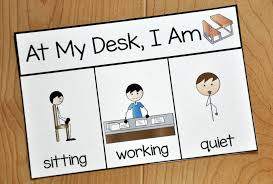
Work Station Accommodation

10. Show your commitment by staying on top of your child’s progress. Ask for data at each quarter. Data drives decision making for future conferences and IEP meetings. If possible, volunteer at school, (room parent, field trip chaperone, art awareness presenter, book fairs, picture day and assisting with making learning materials like laminating and making copies).

Being prepared and invested in your child’s needs will help them reach their full potential for the new school year. That’s what is in my noggin this week.

~Teresa 

Follow us on Facebook and Instagram for more ideas and stories:

Posted in Autism, Down syndrome, Dual Diagnosis Down syndrome and autism, Education and Special Needs

Blog #231~Special Needs Tips for Making Accommodations in the Classroom

Blog #231 Special Needs Tips for Making Accommodations in the Classroom

Last week, I focused on 5 back to school tips for special needs parents. For today’s post I want to put a lens on what accommodations look like and their importance in the classroom setting for a student with special needs.

Accommodations are changes that remove barriers and provide a student with equal access to learning. As a parent, it is essential to make sure that agreed upon accommodations and supports are written into your child’s IEP, and in place before the first day of school.

My son Nick is 25 years old and has a dual diagnosis of Down syndrome and autism (DS-ASD). Over the years he had many accommodations to support his learning and navigation in the school environment. Nick didn’t walk until age 3 1/2 years old due to low muscle tone (a trait of having Down syndrome). In pre-school, the IEP team made an accommodation to transport Nick from point A to B in the building, and in/out of the car line.  Accommodations can come in many forms to support intellectual and developmental disabilities.

visual support ring

Here are some examples of accommodations that can be used in the classroom:

*Communication Notebook and daily reports sent back and forth from school to home

*Classroom Schedule,  Individual Visual Schedules and Social Stories

Nick fist bump AID                   social story working desk

*Alternative Media Tools- Flash cards, board games, computer programs, learning apps/games, AAC (augmentative and alternative communication) and assistive technology devices, PECS (picture exchange communication), sign language, etc.

nick aac

*Sensory Tools help with self-regulation- Figits, stress balls, pencil toppers, tangle puzzles, weighted vests or lap pads, nubby sit cushions, stability balls, etc.

alternative seating

*Motor Breaks and Sensory/Quiet Corners– Build breaks into a student’s schedule. Some can be motor breaks or a sensory/quiet break depending on the need. Equip with items such as rocking or bean bag chairs, mini-trampolines, swings, weighted blankets, noise cancelling earphones, need a break icon etc.

*Visual aids, worksheets and paraprofessionals/aides to assist to accompany lesson objectives and test taking.

*Transition tools- Early hall passing before the bell rings, transition objects, visual schedules, visual timers, etc.

transition timer

*Choice boards to encourage decision making and independent learning skills.

*Work and Reward Charts:

working for chart   first then work

Building in accommodations and supports into your student’s IEP and classroom setting help enhance learning in a positive school environment. Often, individuals with autism and a dual diagnosis of DS-ASD, like my son, thrive with the use of visual prompts to navigate their days more smoothly. The right accommodations make it possible to have a successful learning environment that is less stressful.

That’s what is in my noggin this week. 🙂

~Teresa 

Follow Nick:

Facebook and Pinterest @Down syndrome With a Slice of Autism

Instagram #nickdsautism

Twitter @tjunnerstall