Posted in Autism, Down syndrome, Dual Diagnosis Down syndrome and autism, Education and Special Needs, IEP (Indivdualized Education Plan)

Blog #239~ Back to School Tips for DS-ASD Families in 2021

Blog #239~Back to School Tips for DS-ASD Families in 2021

As the 2021-2022 School year approaches after a lengthy Covid-19 lockdown, many families feel anxiety about returning to school. Families who have a child with a dual diagnosis of Down syndrome and autism (DS-ASD) have additional challenges and needs to consider.

My name is Teresa Unnerstall, I am a DS-ASD parent, consultant and author of A New Course: A Mother’s Journey Navigating Down Syndrome and Autism. My son Nick is 27 years old and my passion is to help families, educators, therapists, medical professionals and anyone interested in supporting individuals with co-occurring DS-ASD.

Order your copy on Amazon at https://amzn.to/2W3Un6X

This week, I want to offer some practical tips to help families ease back to school. Whether you are in person or remote, the goal should be a smooth transition for students.

Here are my 10 Back to School Tips:

1. Prepare the student with a visual countdown calendar, and re-instate morning/evening routines before school starts.

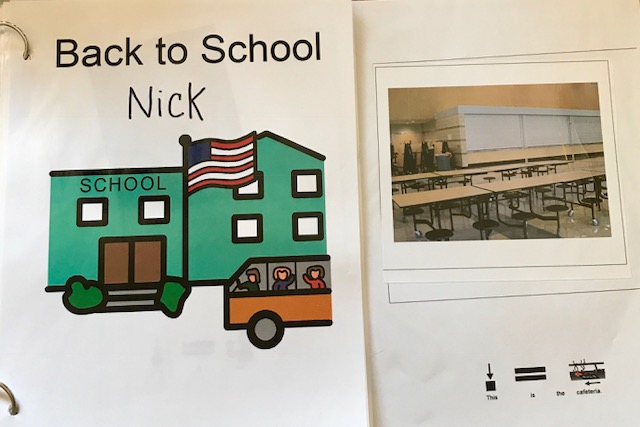
2. Tour the school with your child. Then, create a social story or video social story of the school settings and staff that the student will be interacting with. Review this several times before school starts.

3. At the tour, whether it’s in person or virtual, ask the teacher to show you the Covid-19 safety precautions, accommodations and equipment that is listed in the IEP to make sure everything is in place.

First Then Visuals

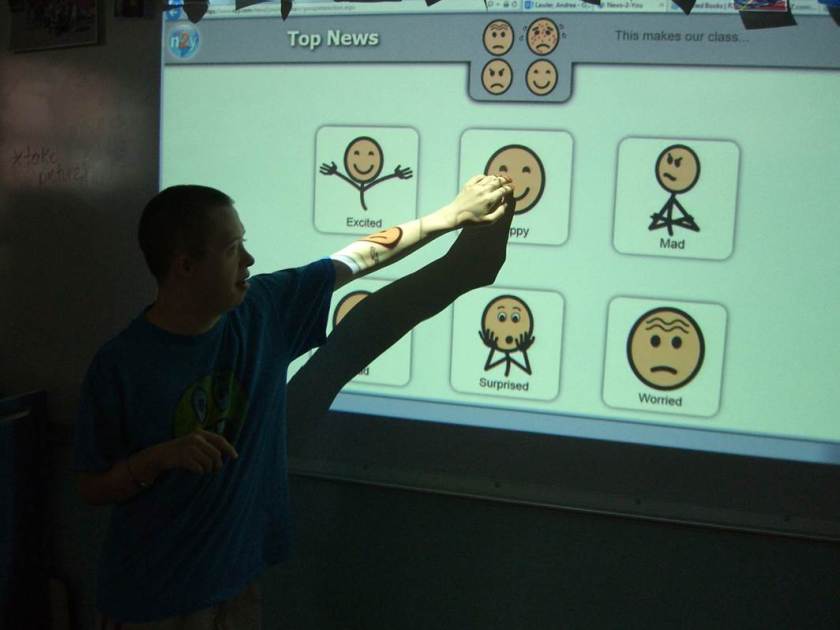
Nick using the Smart Board

4. Prepare a student “About Me” profile sheet. There are many templates available online. You can include different sections such as, Things I love, My Strengths, What Works Best for Me, How to best support me, What Doesn’t Work for Me, and Interests. Make several copies to share with the staff.

5. Determine the modes of communication back and forth with the teacher and school staff. Examples include texting, email, communication logs/notebooks and daily report sheets. This is very important as many students with DS-ASD who have language deficits or may be non-verbal.
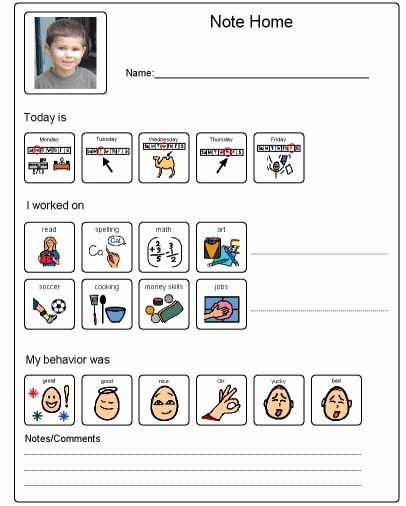
Daily Report Sheet

6. Review the child’s IEP to insure that all goals and accommodations are still relevant. Note any additional needs or concerns you have coming off of the summer break and remote learning. Share these with the staff at school.

7. If the student has a behavior support plan, check to see if this has been shared with all staff and is ready to put in place on day one. Make a list of any new target behaviors that may need to be addressed.

8. If the student uses AAC (Augmentative and Alternative Communication) make sure the teacher and aides are familiar with how to use the program, whether it’s high tech or low tech like a picture exchange system (PECS). You can request a training for staff and parents on how to program devices, navigate tabs and get trained on how to utilize PECS with the school speech and language therapist or school district AAC specialists.

AAC Touch Chat Program

9. Students may have lost skills or experienced regression due to summer break and remote learning due to the Covid-19 Pandemic. Evidenced-based practices help students regain lost skills and develop new ones. Some examples are using visuals, schedules, task strips, task analysis, first-then prompts, visual timers, choice boards and sensory breaks.

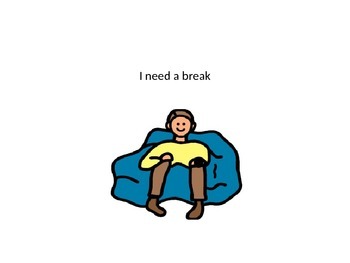
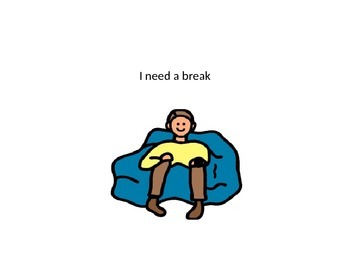
Sensory Break PECS Icon, Is there a sensory break area for students in your school?
Time Timer App
Choice Boards

10. Show your commitment by staying on top of your child’s progress. Ask for data within the first quarter. Data drives decision making for future conferences and IEP meetings. If possible, volunteer at school, (room parent, field trip chaperone, art awareness presenter, book fairs, picture day and assisting with making learning materials like laminating and making copies).

Being prepared, invested and aware of your child’s needs will help them reach their full potential for the new school year. As students re-enter school after a long break, let’s also remember to extend each other some grace, be flexible, and give time and space to establish the new normal, whether you are heading back into the classroom or working remotely.

That’s what is in my noggin this week.

~Teresa 🙂

Follow us on Social Media: Facebook, Instagram and Twitter

Posted in Autism, Behavior/ ABA, Down syndrome, Dual Diagnosis Down syndrome and autism

DS-ASD~Getting Additional Services and Support to Help Your Child

DS-ASD~Getting Additional Services and Support to Help Your Child

Are you a parent of a child with a dual diagnosis of Down syndrome and autism (DS-ASD)?  Or do you have a child that you suspect may have an additional diagnosis of autism along with Down syndrome?  My son, Nick is 25 years old and has a dual diagnosis of DS-ASD.  When we got the secondary diagnosis of autism, our son was able to receive additional support and services both in school and home.

This week, I want to share some of the additional services, support and resources that has helped us to navigate the dual diagnosis of DS-ASD with our son, Nick.

down syndrome and autism bracelet

Click on the following link to learn more: 

https://nickspecialneeds.com/2016/09/12/blog-155more-than-just-down-syndrome/

Navigating the path of a dual diagnosis of DS-ASD with your child has its challenges.  But there are many services, supports and resources that can enable parents and educators to help a child with DS-ASD.  Obtaining these services does take patience and tenacity, and it doesn’t happen overnight. (In fact, getting these services and supports took several years for us.)  But all of these tools will better equip you as a parent to take on the secondary diagnosis of autism, along with Down syndrome.

That’s what is in my noggin this week. 🙂

~Teresa

Follow Nick:

Facebook and Pinterest @Down Syndrome With A Slice Of Autism

Instagram #nickdsautism

Twitter @tjunnerstall


Posted in Adult Day Programs for Special Needs, Autism, Behavior/ ABA, Down syndrome, Dual Diagnosis Down syndrome and autism, Recreation/Leisure and Special Needs

Blog #229~DS-ASD Winter Update

Blog #229~DS-ASD Winter Update

Chicago winter 2019

This winter weather has been bitter and harsh, here in Chicago.  Fortunately, we missed the plummeting temperatures last week, while vacationing in Vail, Colorado.  My son, Nick is 24 years old and has a dual diagnosis of Down syndrome and autism (DS-ASD).  Here’s an update on what Nick’s been up to this winter and the highlights of our trip to Vail.

The weather in Vail was mild, with temperatures in the 35-40 degree range and plenty of sunshine.  There is something to be said about sunlight and how it can elevate your mood.  The clear blue skies, warm sun, fresh air, and beautiful mountain views, can do wonders for the soul.

Vail sunset 2019

Nick enjoyed his time with our friends in Vail.  The village is always a fun place to visit.  Here’s Nick at lunch and with his Dad, Al :)…..


The highlight of the week, for Nick was dog sledding.  This is the second year we’ve done this with Mountain Mushers, who offer the best dog sledding rides in the Vail Valley.  Nick was happy to see his buddy, Cameron who was our dog sled musher last year.  He always gets such a kick seeing all the happy dogs, who bark with excitement as the sleds loaded up.

All bundled up in the sled and ready to go, and guess what, he actually kept his hat and gloves on this time.  Yay Nick! 🙂


The scenic trail was packed with alot more snow this year, making the ride faster. His favorite part is when the sled goes over the bumps and flies down the hills. Nick is a thrill seeker, who always signs “more” when a roller coaster ride is over.  He also loves the Disney movie Snow Dogs, so this was a perfect blend of his favorite things.  Towards the end of the ride, his Dad got to try his hand at mushing.  Check out the Facebook, Instagram and Twitter links below to see videos of them dog sledding in action all this week. 🙂 

Today it’s a balmy 50 degrees here in Chicago, and Nick has returned to his adult developmental training day program.  It’s hard to believe the turn around in temperatures……

Chicago temp difference

As I’ve mentioned in previous blog posts, Nick attends a day program that he truly enjoys.  The adult developmental training program curriculum includes functional and academic work activities, crafts, exercise, cooking, entertainment, and community outings.  The staff reports that Nick has so much potential and does awesome at the learning centers and work choices.  They have a lot of fun, especially over the holidays. Activities included a big Christmas lunch, wearing ugly sweaters, listening to a local high school choir and making wreaths, gingerbread houses and pillows.

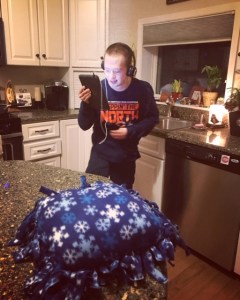
Here’ s a no sew pillow that Nick made…..

nick pillow

If you look closely in the picture above, you might notice a stop icon on the dishwasher.  There are many of these stop signs on the start buttons around our house.  Individuals with a diagnosis of autism can benefit from the use of icons, to better guide their days.  Nick has a thing for pushing buttons and fire alarms.  His behavior support plan (BSP) addresses the fire alarm pulling.  Twice each day, the staff at his day program take him on a walk down the hallways.  They encourage and cue him to “keep walking” with “hands to self”.  Before these walks, the staff reads his social story that contains pictures of how to  navigate these hall walks.  Upon successful completion, Nick earns a reward.

Click on this link to learn more about the BSP and his social story: https://nickspecialneeds.com/tag/social-stories/

That wraps up Nick’s world and what he’s been up to this winter.  Navigating a dual diagnosis of  DS-ASD has it’s good and bad days.  Fortunately, the good days now outweigh the bad.  I think it’s both maturity on Nick’s part, along with the wisdom and understanding gained from being his parent.  Big guy has a milestone birthday coming up, I look forward to sharing more with you next Monday!  What is one thing that Nick has taught you over the past 24+ years?  I’d love to hear your feedback. 🙂

That’s what is in my noggin this week.

~Teresa 

Follow Nick on Social Media to see more pics and videos:

Nick head shot in vail

Facebook and Pinterest @Down Syndrome With A Slice Of Autism

Instagram #nickdsautism and more on dog sledding #mountainmushers

Twitter @tjunnerstall


Posted in Autism, Behavior/ ABA, Dual Diagnosis Down syndrome and autism

Blog #191~Challenging Behaviors: Why is My Child Acting This Way?

Blog #191~Challenging Behaviors: Why is My Child Acting This Way?

behavior

Parents raising a child with a dual diagnosis of Down syndrome and autism experience challenging behaviors from their children.  A long holiday weekend can heighten these behaviors with changes in routine and family gatherings.  A child may feel lost in the mix and in need of attention.  They may also experience sensory overload.  These can be shown in a variety of ways, such as increased self-stimulatory/ repetitive behaviors (hand flapping, tapping, turning on water faucets, pushing buttons, shutting or slamming doors),  self-injury (head banging, biting, slapping self), attacking others and property destruction to name a few.  This week I want to focus on WHY a child may be acting out.  When you understand why this might be happening, you can put a better plan in place, in order to support your child.

The first step is to determine what the behavior means.  All behavior is communicating something.  This is where you have to do some detective work.

Detective-clipart-animation-free-images-2

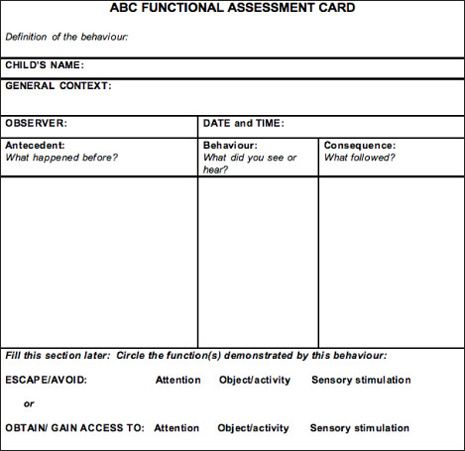
Keeping a log of behaviors is a great tool to determine what purpose this is serving your child.  It’s helpful to use a Functional Behavior Assessment Form, such as this to gather data:

Functional Behavior Assessment

Data collection will assist you at home and the school IEP team on the who, what, where, when and why’s of the behavior.  What is this behavior trying to communicate?  What need is being expressed through these behaviors?  Is there a pattern of when these behaviors are occurring and what is triggering them?

Ultimately the Functional Behavior Assessment, (also known as a FBA) will reveal what the purpose this behavior serves for the child.  

Let’s put this to use with two behaviors often associated with a dual diagnosis of Down syndrome and autism:

*Self-stimulatory or Repetitive Behaviors

*Injurious Behaviors

In the case of self-stimulatory or repetitive behaviors, a child may:

  1. Need more stimulation
  2. Be trying to masking sensory overload
  3. Be upset, anxious or not busy enough

Observe your child, and maybe even try the behavior yourself in order to get an idea of why they are attracted to it.  Repetitive behaviors are often sensory based.  They help to calm and organize the nervous system by releasing stress chemicals.  This in turn can help to reduce anxiety.

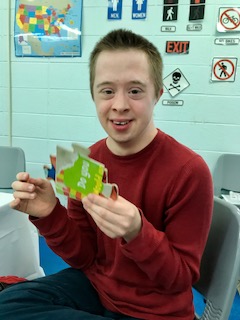
My son, Nick is 23 years old and has a dual diagnosis of Down syndrome and autism.  He often uses tappers to help regulate his sensory needs.  Here he is at his adult day program:

Nick tappers AID

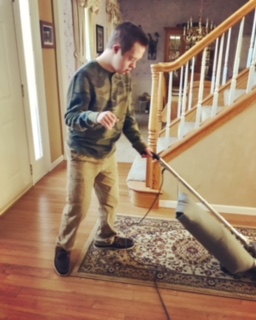
Bottom line, it’s important to respect these sensory needs and allow your child to have this time during the day.  Find a balance in building in these sensory breaks without letting them take over completely.  Self-stimulatory and repetitive behaviors should not  get in the way of learning, or in work jobs.  Keep in mind, especially around the holidays as you get busy with wrapping presents, cooking and cleaning the house that your child may be bored and feeling ignored.  It is necessary to provide some structured activities to reduce these behaviors.  I like to give my son jobs so he feels helpful, and rewarded for his appropriate behavior with lots of praise.  While I was getting the house ready for Thanksgiving, I had Nick vacuum for me, a job he enjoys doing.  It provides him with good sensory input using heavy work, which can be calming…

Nick vacumme thanksgiving

In the case of injurious behaviors a child may:

  1. Bang head, bite, slap themselves, attack others or destroy property
  2. Be frustrated, angry, experiencing discomfort, pain or sensory overload
  3. Communicate escaping and avoiding an unwanted task or event

Again, the Functional Behavior Assessment chart can help to determine if there is a certain activity, event or time of day which causes these behaviors to escalate.  As the detective, you want to uncover these triggers.  When you figure out these triggers, you can put supports in place to in essence, cut it off at the pass before your child goes into a full-blown meltdown.

Example- Family trip to the shopping mall:

The stimulus overload, especially around the holidays with added crowds,  more kiosks, noises, lights, and may be too much for a child with autism.  You many need to keep the trip short and provide visuals supports to help your child understand the sequence of events that will happen.

Task Strip for shopping mall trip….

task strip mall

Along with a visual schedule, you want to keep your eye open to any distress signals the child may exhibit in their body language.  My son will tend to pinch his cheeks when he is upset or stomp and say, “I’m mad”.  These signs are a cue to back off and lower the demands you are placing on your child.

In summation, you can support your child and prevent these injurious behaviors by:

  1. Recognizing distress signals and re-direct your child.
  2. Lowering or pulling away the demands that have been placed and causing your child to feel overwhelmed.
  3. Providing visual supports with task strips so they know the sequence of events.
  4. Teaching alternative ways to escape and unwanted situation by using visual supports with icons such as, “Stop” “Help” “All Done” and “I Need A Break”:Break Icon
  5. Practice teaching appropriate ways to protest separately in mild stress situations. Use the icons above either with visuals or on a communication device using lots of praise.

Understanding the function of your child’s behavior and creating an environment to support them will lead to success in both home, school and in the community.  If your child has challenging behaviors, seek the help of a trained autism behavior specialist.  You should request that a Functional Behavior Analysis (FBA) be done.  Once this data is collected, a Behavior Support Plan (also known as a BSP) can be created and put in the IEP.   You and the school IEP team can brainstorm on what supports to put in place to help your child better succeed and express themselves more appropriately.

That’s what is in my noggin this week 🙂

~Teresa

Follow Nick:

Facebook and Pinterest @Down Syndrome With A Slice Of Autism

Instagram #nickdsautism

Twitter @tjunnnerstall