Posted in Autism, Down syndrome, Dual Diagnosis Down syndrome and autism, Education and Special Needs, IEP (Indivdualized Education Plan)

Blog #239~ Back to School Tips for DS-ASD Families in 2021

Blog #239~Back to School Tips for DS-ASD Families in 2021

As the 2021-2022 School year approaches after a lengthy Covid-19 lockdown, many families feel anxiety about returning to school. Families who have a child with a dual diagnosis of Down syndrome and autism (DS-ASD) have additional challenges and needs to consider.

My name is Teresa Unnerstall, I am a DS-ASD parent, consultant and author of A New Course: A Mother’s Journey Navigating Down Syndrome and Autism. My son Nick is 27 years old and my passion is to help families, educators, therapists, medical professionals and anyone interested in supporting individuals with co-occurring DS-ASD.

Order your copy on Amazon at https://amzn.to/2W3Un6X

This week, I want to offer some practical tips to help families ease back to school. Whether you are in person or remote, the goal should be a smooth transition for students.

Here are my 10 Back to School Tips:

1. Prepare the student with a visual countdown calendar, and re-instate morning/evening routines before school starts.

2. Tour the school with your child. Then, create a social story or video social story of the school settings and staff that the student will be interacting with. Review this several times before school starts.

3. At the tour, whether it’s in person or virtual, ask the teacher to show you the Covid-19 safety precautions, accommodations and equipment that is listed in the IEP to make sure everything is in place.

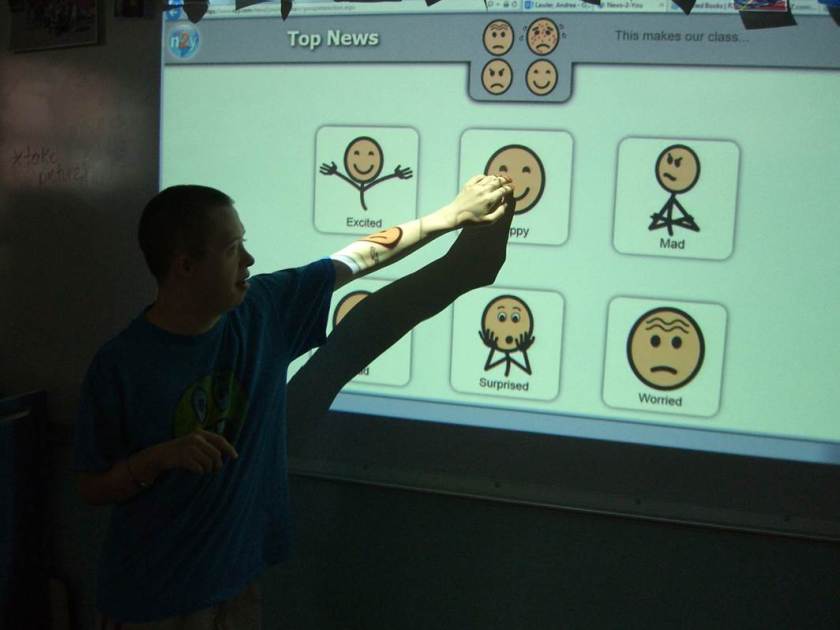
First Then Visuals

Nick using the Smart Board

4. Prepare a student “About Me” profile sheet. There are many templates available online. You can include different sections such as, Things I love, My Strengths, What Works Best for Me, How to best support me, What Doesn’t Work for Me, and Interests. Make several copies to share with the staff.

5. Determine the modes of communication back and forth with the teacher and school staff. Examples include texting, email, communication logs/notebooks and daily report sheets. This is very important as many students with DS-ASD who have language deficits or may be non-verbal.
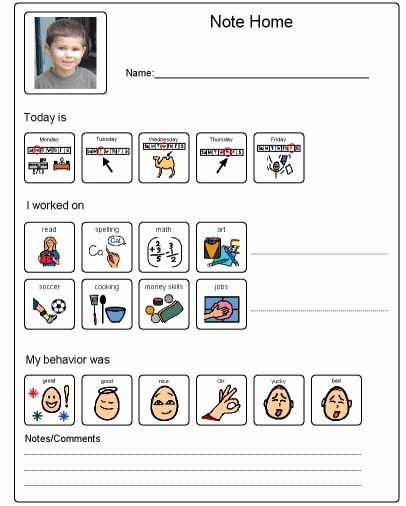
Daily Report Sheet

6. Review the child’s IEP to insure that all goals and accommodations are still relevant. Note any additional needs or concerns you have coming off of the summer break and remote learning. Share these with the staff at school.

7. If the student has a behavior support plan, check to see if this has been shared with all staff and is ready to put in place on day one. Make a list of any new target behaviors that may need to be addressed.

8. If the student uses AAC (Augmentative and Alternative Communication) make sure the teacher and aides are familiar with how to use the program, whether it’s high tech or low tech like a picture exchange system (PECS). You can request a training for staff and parents on how to program devices, navigate tabs and get trained on how to utilize PECS with the school speech and language therapist or school district AAC specialists.

AAC Touch Chat Program

9. Students may have lost skills or experienced regression due to summer break and remote learning due to the Covid-19 Pandemic. Evidenced-based practices help students regain lost skills and develop new ones. Some examples are using visuals, schedules, task strips, task analysis, first-then prompts, visual timers, choice boards and sensory breaks.

Sensory Break PECS Icon, Is there a sensory break area for students in your school?
Time Timer App
Choice Boards

10. Show your commitment by staying on top of your child’s progress. Ask for data within the first quarter. Data drives decision making for future conferences and IEP meetings. If possible, volunteer at school, (room parent, field trip chaperone, art awareness presenter, book fairs, picture day and assisting with making learning materials like laminating and making copies).

Being prepared, invested and aware of your child’s needs will help them reach their full potential for the new school year. As students re-enter school after a long break, let’s also remember to extend each other some grace, be flexible, and give time and space to establish the new normal, whether you are heading back into the classroom or working remotely.

That’s what is in my noggin this week.

~Teresa 🙂

Follow us on Social Media: Facebook, Instagram and Twitter

Posted in Autism, Down syndrome, Dual Diagnosis Down syndrome and autism, Education and Special Needs

Blog #231~Special Needs Tips for Making Accommodations in the Classroom

Blog #231 Special Needs Tips for Making Accommodations in the Classroom

Last week, I focused on 5 back to school tips for special needs parents. For today’s post I want to put a lens on what accommodations look like and their importance in the classroom setting for a student with special needs.

Accommodations are changes that remove barriers and provide a student with equal access to learning. As a parent, it is essential to make sure that agreed upon accommodations and supports are written into your child’s IEP, and in place before the first day of school.

My son Nick is 25 years old and has a dual diagnosis of Down syndrome and autism (DS-ASD). Over the years he had many accommodations to support his learning and navigation in the school environment. Nick didn’t walk until age 3 1/2 years old due to low muscle tone (a trait of having Down syndrome). In pre-school, the IEP team made an accommodation to transport Nick from point A to B in the building, and in/out of the car line.  Accommodations can come in many forms to support intellectual and developmental disabilities.

visual support ring

Here are some examples of accommodations that can be used in the classroom:

*Communication Notebook and daily reports sent back and forth from school to home

*Classroom Schedule,  Individual Visual Schedules and Social Stories

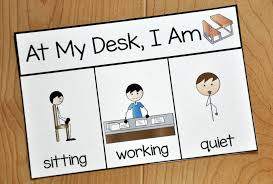
Nick fist bump AID                   social story working desk

*Alternative Media Tools- Flash cards, board games, computer programs, learning apps/games, AAC (augmentative and alternative communication) and assistive technology devices, PECS (picture exchange communication), sign language, etc.

nick aac

*Sensory Tools help with self-regulation- Figits, stress balls, pencil toppers, tangle puzzles, weighted vests or lap pads, nubby sit cushions, stability balls, etc.

alternative seating

*Motor Breaks and Sensory/Quiet Corners– Build breaks into a student’s schedule. Some can be motor breaks or a sensory/quiet break depending on the need. Equip with items such as rocking or bean bag chairs, mini-trampolines, swings, weighted blankets, noise cancelling earphones, need a break icon etc.

*Visual aids, worksheets and paraprofessionals/aides to assist to accompany lesson objectives and test taking.

*Transition tools- Early hall passing before the bell rings, transition objects, visual schedules, visual timers, etc.

transition timer

*Choice boards to encourage decision making and independent learning skills.

*Work and Reward Charts:

working for chart   first then work

Building in accommodations and supports into your student’s IEP and classroom setting help enhance learning in a positive school environment. Often, individuals with autism and a dual diagnosis of DS-ASD, like my son, thrive with the use of visual prompts to navigate their days more smoothly. The right accommodations make it possible to have a successful learning environment that is less stressful.

That’s what is in my noggin this week. 🙂

~Teresa 

Follow Nick:

Facebook and Pinterest @Down syndrome With a Slice of Autism

Instagram #nickdsautism

Twitter @tjunnerstall


Posted in Autism, Down syndrome, Education and Special Needs, IEP (Indivdualized Education Plan), Parenting Special Needs

Special Needs Back to School Tips

Special Needs Back to School Tips

backtoschool1

Kleenex, glue sticks, crayons, and more, are all jotted down on the shopping list.  It’s that time of year to get ready to go back to school.  But what should you be doing as a parent of a child with special needs?  I’ve got 5 great tips to get you started on the right track!

5 Back to School Tips for Special Needs Parents:

Click here to view these 5 tips- https://nickspecialneeds.com/2016/08/22/blog-153special-needs-back-to-school-tips/

Make it a great school year, that’s what is in my noggin this week!

~Teresa 🙂

Follow Nick:

Facebook and Pinterest @Down Syndrome With A Slice Of Autism

Instagram #nickdsautism

Twitter @tjunnerstall


Posted in Autism, Education and Special Needs, IEP (Indivdualized Education Plan)

Blog #153~Special Needs Back to School Tips

Blog #153~Special Needs Back to School Tips

For the first time in 22 years, I don’t have to buy school supplies for my son.  Nick is 22 years old and has Down syndrome and autism.  He aged out of school on his birthday last February.   He attends an adult day program, which he enjoys immensely.  After 22 years I’ve learned a few tricks for getting back to school smoothly with your child that has special needs:

Back to school helpful tips

 5 Special Needs Back to School Tips

1.Look over your child’s IEP (Individualized Education Plan) before school begins.  The IEP outlines academic and functional goals, supports needed, accommodations and services.  Reach out to your child’s case manager/IEP coordinator or Support Teacher, and ask specifically how these will be implemented, and how data will be tracked.

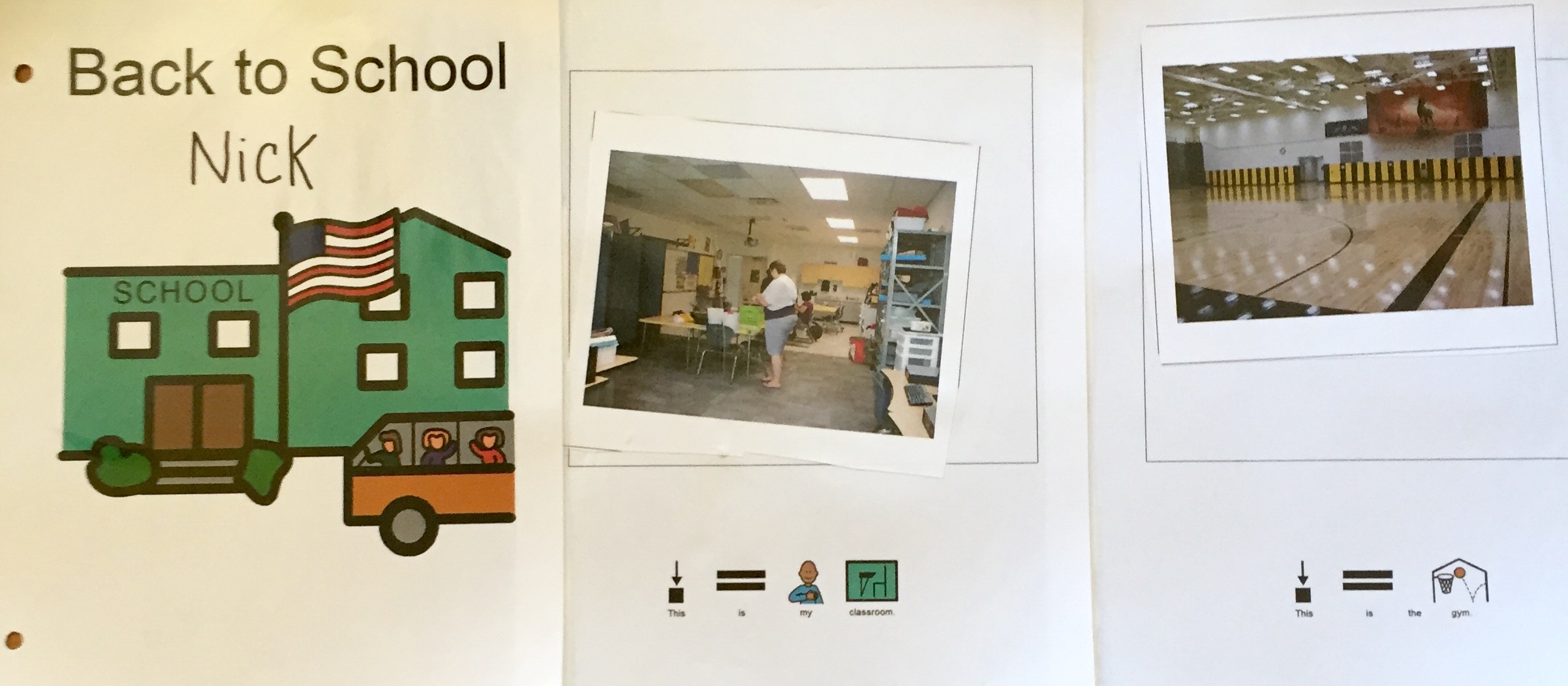
2. Arrange a visit to the classroom before school begins.  Request that a social story (pictures or video); be made of the settings that your child will be in at school, (classroom, lunch room, gym, sensory area, etc.).  If possible have the social story include pictures of support staff and classroom peers. If a child with autism can see it in picture and/or written form, they will better understand it.  This in turn, becomes their blueprint which; will lesson anxiety levels for your child.

Social Story for Back to School:

back to school Nick

3.During the classroom meet and greet, arrange a mode of communication with your child’s teacher.  In the past I have used both email and a communication notebook which goes back and forth.  Since my son is for the most part non-verbal, so this allowed me to share if Nick had a restless night or was maybe he was fixated on fire alarms. (By the way,  he’s been at it again. He pulled a few more alarms this summer, while staff was on vacation. Check the “About” Page for the current pull count).

Communication Book and Daily Activity Chart:

photo (117)

4.Start Early! Get school supplies, clothes and shoes shopping done and haircut at least a week before the start of school.  Having a child with special needs often means a lot of angst over haircuts.  For Nick the stress of getting one can affect him for several days after.  If you would like more tips on haircuts, hit the search box on the top right of this page.  Type in: Blog #18, A Cut Above. The night before school starts, have your child help lay out the clothes, organize the school supplies and pick out lunch/snack choices.  It’s all about having a smooth start to the day and this helps especially at six o’clock in the morning.  One thing that was NEVER EARLY; the school bus.  Make sure you have carved out your schedule accordingly and have something for your child to do while you wait.  On average, we’ve waited 30-45 minutes for the bus to get to our house the first few days of school.

photo (113)

5.Consider doing volunteer work at your child’s school.  It is fun and you can see firsthand how your child is doing in the classroom.

Here are a few school volunteer ideas:

*Holiday Parties

*Art Awareness Presenter

*Chaperone Field Trips

*Field Days

*Picture Day

*Work book fairs

*Library aid

*Special Olympics Practices

*Assist Case Manager/ Support Teacher- Making copies, laminating, helping to create classroom supports.

Nick and I wish you all the best as you start the new school year with your child that has special needs.  Be cognizant of what is in the IEP, follow-up with communication, layout the blueprint for your child and get organized.  That’s the recipe for a smooth start to the new school year.  Oh, and don’t forget to take that cute first day of school picture and post it on Facebook.  That’s what is in my noggin this week!

~Teresa

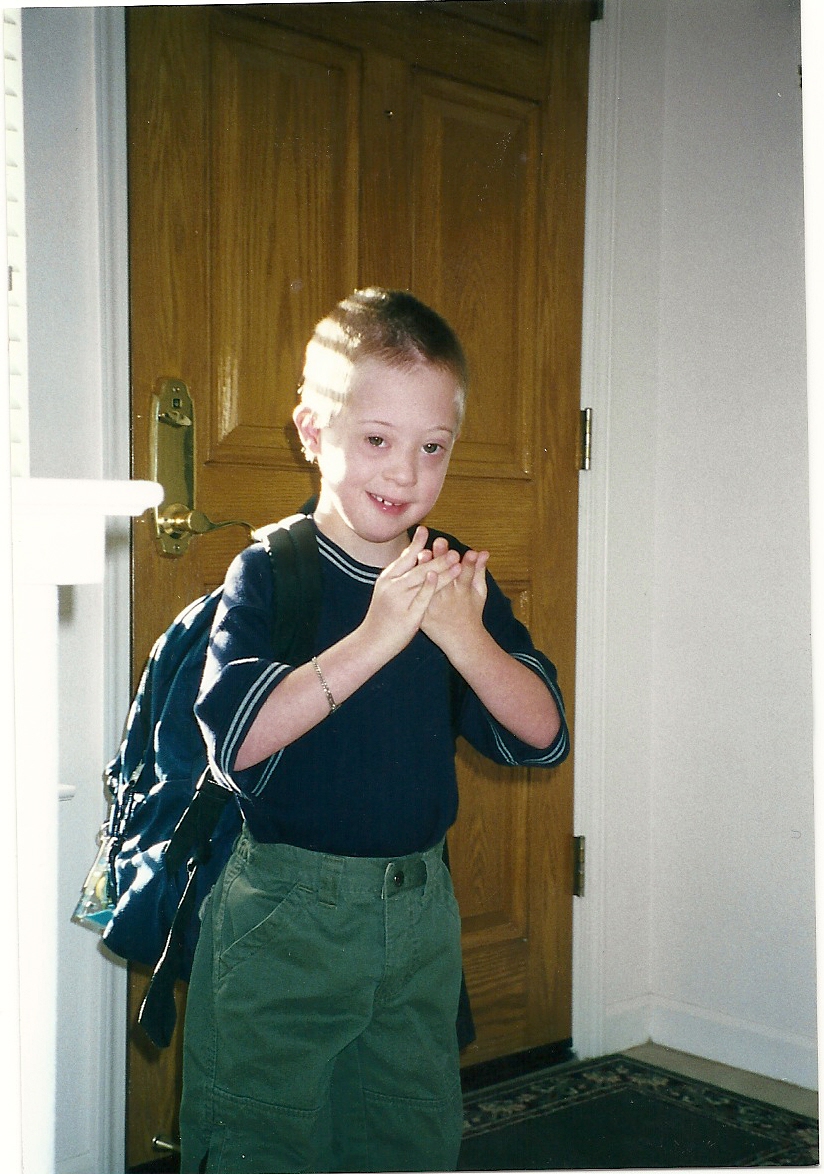
Nick’s First Day of Kindergarten, 1999……

scan0003

Follow Nick:

@Down Syndrome With A Slice of Autism on Facebook and Pinterest

#nickdsautism on Instagram 

@tjunnerstall on Twitter


Posted in Autism, Down syndrome, Education and Special Needs

Re-Post~ Back to School Tips and Your Special Needs Child

Re-Post~ Back to School Tips and Your Special Needs Child

Back to School Mom quote

This week’s blog was written as Nick was about to start his senior year of high school.  I am doing this re-post in case some of you missed it or might be new to Down Syndrome With a Slice of Autism.  You can click here to view @https://nickspecialneeds.wordpress.com/2012/08/27/blog-19-back-to-school/

That’s what is in my noggin this week.  Thank you for reading and sharing Nick’s world! 🙂

~Teresa