Posted in Autism, Down syndrome, Fun Side of Nick, Recreation/Leisure and Special Needs

Update~Nick’s World

Update~Nick’s World

I just got back from a routine doctor’s appointment for Nick.  He completely enjoyed imitating the coughing and throat clearing sounds the gentlemen next to us in the waiting room.  Since the morning has dwindled away, I am opting to give you and update on Nick’s world instead of pulling something out of my noggin to write.  Nick is 21 years old and has Down syndrome and autism.  Here’s a little slice of his world and what he’s been up to (besides imitating others hacking and sneezing)………

Nick attends a post-secondary transition program called STEPS.  His days are full of work jobs,  occupational and speech therapy, cooking, community trips and other school-related activities.  A big thank you to Jodi, who took many of these pictures of Nick’s world.

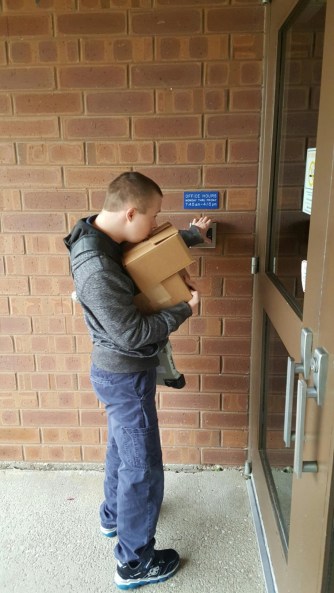
Nick helps to make ice packs which he delivers to the schools in our district….

Nick delivery

Ding dong, ding dong, ding dong, guess who’s here?

Nick delivery 2

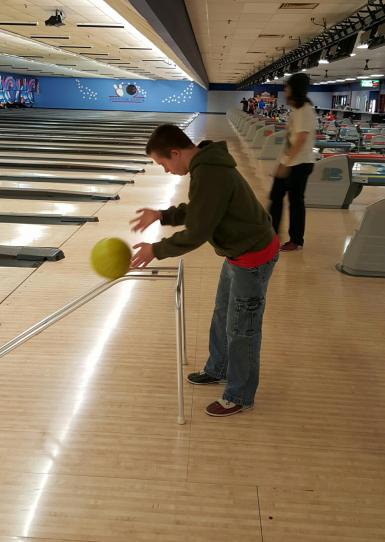
Community trip bowling…..

Nick bowling ramp

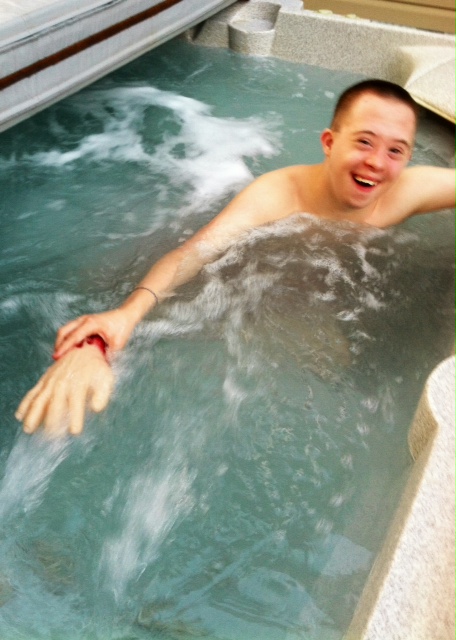
Sensory break time at school……

Nick relaxing.jpg

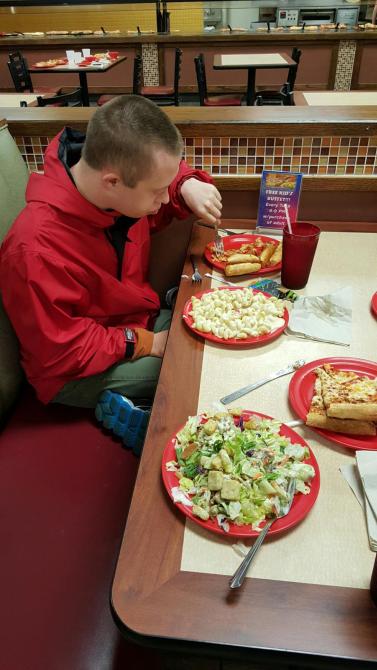
Dinner with his buddies at Ci Ci’s Pizza……

Nick Ci Ci's

Visit to WVHS Wrestling Team venue, he had to try on the headgear 🙂

Nick Wrestling

Nick dancing in Miss R’s (respite worker) boots….

Nick Dancing

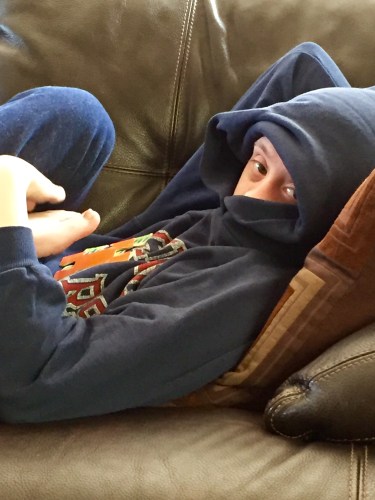
Nick the “winter ninja” relaxing at home…..

Nick Winter Ninja

As you can see, Nick has a very full life which he enjoys every day.  I have to thank his respite workers for taking such good care of him and getting him out into the community.  That’s a slice of Nick’s world and what’s in my noggin this week! 🙂

~Teresa


Posted in Autism, Down syndrome, Fun Side of Nick, Uncategorized

Happy Thanksgiving

In my noggin this week (besides the to-do list) is a post I wrote two years ago called, “5 Reasons I am Thankful for Nick”. Here’s the link:

https://nickspecialneeds.wordpress.com/2013/11/25/blog-755-reasons-i-am-thankful-for-nick/

Have a blessed Thanksgiving!  I am thankful for all your support and for reading & sharing Nick’s world.

~Teresa


Posted in Autism, Down syndrome, Education and Special Needs

Blog #129~ Communication Strategies and Autism

Blog #129~ Communication Strategies and Autism

Last week I attended a presentation given by Brian R. King (www.brianraymondking.com).  This was part of the Autism Expert Series at The College of DuPage.  The topic was “Speaking of Autism: Communication Strategies for Connection and Collaboration with Those on the Autism Spectrum”. Brian has firsthand experience in this area. He is a best selling author, speaker, trainer and life coach.  As a cancer survivor, adult with A.D.D., the father of three sons on the autism spectrum as well as someone who lives on the autism spectrum himself, he has learned something very critical:  “That success in life has nothing to do with circumstances, but everything to do with strategies”. ~Brian R. King

autism puzzle superman

In his presentation, Brian covered 6 main areas of needs and provided strategies specific to those on the autism spectrum:

  • Certainty:  What things can be put in place that that are predictable and consistent?  Meltdowns can happen when a need for certainty is not met.  So it is important to put a loop hole in daily plans.  Make sure you have “Plan A” and “Plan B” in place and explain both beforehand.  Plan A is golfing, but if it rains then go to Plan B a pre-set indoor activity.  If they can trust that there is a Plan B, there will be less anxiety and a willingness to be flexible. 
  • Variety:  As important as certainty is, there is a need to keep variety in the mix.  Life can’t always be about going to McDonalds for lunch. You’ve got to step off the curb.  Look up other restaurants on the web that have similar menu items with your child.  Together, come up with a plan to try a new spot. Be prepared to have an escape plan, if the trip doesn’t go as planned so the child can decompress.
  • Significance:  People on the autism spectrum need to know they matter.  What might appear to be attention seeking behavior (talking out of turn, not raising their hand to answer a question) may be an attempt to be noticed, validated and to be a part of the group. Another example is this; a child may not process the question as quickly as their peers.  They might just make up an answer or a lie when put on the spot.  One teacher tip would be to ask the question and say, “Johnny I’m going to come back to you in a couple of minutes”.  This allows the child to process the question and not just blurt out any answer.  Visuals can also help to process information.  Provide a tool to write down the assignment.

visual work board

  • Love and Connection:  Working with those on the autism spectrum requires patience and letting the child know that you hear them, understand them and have their back.  It is essential to pause, and avoid lecture or shame.  But rather teach that you want them learn from mistakes.  Be their cushion of safety so they feel cared for and loved.

understanding

  • Growth:  We all have a desire to make progress and see results of improvement.  What need is the child going toward?  Often there is a tendency to gravitate to certainty.  Look for ways to have the child excel in those places of certainty.  In contrast, keep in mind the child will tend to avoid areas where there are too many opportunities to fail. These are the places that will require more support.
  • Contribution:  When you have something of value to give, you feel more significant.  Look for those strengths and allow the child on the autism spectrum to shine.

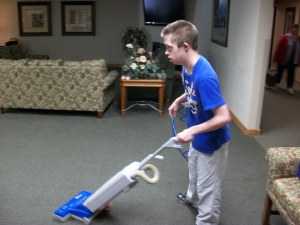
My son Nick working the vacuum at a community job……

Nick vacumming_Tabor Hills (3)

  Assessing these 6 areas of needs and putting strategies in place will set your child up for success. It will also help those on the autism spectrum feel secure, valued, and connected and a part of the group/community.   I am always looking for ways to help my son.  Nick is 21 years old and has Down syndrome and autism.  After attending this presentation I’ve identified some areas I need strengthen within these strategies.  This includes getting a “Plan B” more consistently, continue to stretch his boundaries, listen to him when he tries to get attention inappropriately, and allow him to shine in what he does the best. 

Thank you Brian R. King, for shining a light on how to better communicate with those on the autism spectrum and provide strategies to support them. That’s what is in my noggin this week.

~Teresa 

Posted in Autism, Down syndrome, Fun Side of Nick

Blog #128~ Lessons From Dick Van Dyke

Blog #128~ Lessons From Dick Van Dyke

I just finished reading Dick Van Dyke’s new book, Keep Moving and other Tips and Truths About Aging. In the book jacket it reads:

“Show-business legend Dick Van Dyke is living proof that life does get better the longer you live it. Who better to offer instruction, advice and humor than someone who’s entering his ninth decade with a jaunty two-step? Van Dyke isn’t just a born song-and-dance man; his irrepressible belief in embracing the moment and unleashing his inner child have proved to be the ultimate elixir of youth.”

Dick Van Dyke Keep Moving

It was a quick read packed with some good advice, tips and anecdotes. After I put the book down, it got me thinking about my son Nick, who is 21 years old and has Down syndrome and autism.  Many of the suggestions given are things that my son does every day.  Here are just a few of the many ideas Dick shares:

*Keep moving! If Dick Van Dyke is at the store and hears music playing he starts dancing. Work out regularly.  Van Dyke was on the treadmill humming.  A guy next to him asked, “Hey you’re humming! The rest of us are huffing and puffing and you’re humming.  How do you do that?”  Van Dyke replied, “Vocal cords are muscles too.  But also humming, as with a Buddhist chanting, singing or even an infant making noises as it discovers its voice, sets up a sympathetic frequency in your body that simply feels good.”

Dick Van Dyke at store

*You don’t have to act your age. You don’t even have to feel it. There is no way you have to behave. Be a goofball, have fun, and be silly.

IMG_0026

*Keep your sense of humor. Van Dyke writes, “I once heard someone say that if you can’t laugh at life, you’re missing the joke. I agree.  As far as I’m concerned, a sense of humor is the way we make sense out of nonsense.”

*Have a daily routine. Get up and get moving, make lists, work out, go shopping, learn new things, ask questions, take a nap, and always enjoy a nightly dessert.

*Don’t forget to smile. Don’t forget to make someone else smile 🙂

While these ideas are simple, what stands out to me is having the right attitude to approach each day. It’s the theme which threads through his book.  I see a lot of this in my son. He wakes up; usually cuts a fart and laughs.  If you’ve ever been around Nick, you know that he spends a great amount of time dancing and humming.   He also thrives on his daily routines aided by a picture sequence that serves as his list. And yes, his infectious smile will make your day!

photo (30)

Inside the Keep Moving book jacket really sums up the essence of my message this week. “Dick’s optimistic outlook is an invigorating tonic for anyone who needs a reminder that life should be lived with enthusiasm despite what the calendar says”.  My son Nick embraces this.  He is my daily prompt to live that way each day.  That is what’s in my noggin this week.

~Teresa 🙂

Posted in Autism, Down syndrome, Education and Special Needs, Fun Side of Nick

Blog #126~Nick and the Varsity Football Team

Blog #126~Nick and the Varsity Football Team

Recently Nick and his respite worker Jodi were taking a walk around the Waubonsie Lake trail. Suddenly, Nick took off running towards the high school.  Jodi scanned past the trail to figure out what Nick was going after.  His face lights up.  Oh no, it’s the “KEY TREE!”

key tree

The football players hang their car keys here.

Nick is 21 years old and has Down syndrome and autism. Long before the 34 fire alarms he has pulled since third grade, he discovered car remotes.  He sought them out feverishly.  He’d even fish them out of babysitter’s purses, run to the front door, and set off their car alarms.

Back to the key tree…… Nick is cheetah fast when it comes to setting off alarms.  Jodi had no intention of letting Nick disrupt football practice so she sacrificed her own remote to distract him.  Hey, I’ve said it before.  Its Nick’s world, the rest of us are just trying to keep up. 🙂

When football practice was over, Jodi took Nick over to say hi to the team. Her son, Tyler plays center for the Waubonsie Valley High School football team.  Nick is about half his size standing 5’2 and weighing barely 110 pounds soaking wet.

Nick with Tyler….

Nick and Tyler

On Thursday nights after practice, the players get treated to a pasta dinner. Nick helps set up and pour drinks for all the players.  He elbow bumped each player as they came through to get their food.

Nick loves his pasta!

Nick meatballs

He also assisted in cleaning up afterwards…..

Nick and Dan

After dinner Nick helped the coaches pass out the senior’s white jerseys. He kissed each jersey before he tossed them at the players.  They would laugh and elbow bump him as each passed through the line.

Nick has a way of livening things up. The Warrior football players are always excited to see him at practices and dinner.  They have named Nick their “Warrior Dude”.  As a mom, it makes me so happy to know that Nick is getting out in the world, meeting new friends and bringing smiles (and chuckles) along the way.  That’s what is in my noggin this week.  Go Warriors!

Nick and Football team

~Teresa 🙂

Posted in Autism, Down syndrome

Columbus Day

Columbus Day

Columbus Day

Nick is home today for Columbus Day holiday. I’ve decided enjoy the day with him instead of trying write.  Be sure and check our Facebook page, “Down Syndrome With A Slice Of Autism” for daily posts including informative articles, musings, fun pics and videos of Big Guy, Nick!

Have a great week!

Teresa and Nick 🙂

Posted in Augmentative and Alternative Communication (AAC), Autism, Down syndrome, Education and Special Needs, Tech Stuff/Apps and Video Based Instruction

Blog #125~Success Stories with the AAC Talker Device

Blog #125~Success Stories with the AAC Talker Device

Nick has been using his new talker for about 5 months now. People with severe speech or language problems often use an AAC (Augmentative and Alternative Communication) to supplement existing speech or replace speech that is not functional. In addition, picture symbols called PECS (Picture Exchange System) and sign language are used to help individuals express themselves.

Nick’s PECS Book…..

IMG01 (13)

During the spring, the staff at Nick’s school along with his private speech therapists met to look at what type of device would work best for him to communicate. Nick is 21 years old and has Down syndrome and autism. A series of 3 meetings were held to address the student’s abilities, gather data and consider options for appropriate inclusive technology products. This process is called the SETT Framework. SETT is an acronym for Student, Environment, Tasks and Tools. To read more about this process go to the archives and read Blog #113~Ready, SETT, Go and Blog #116~A New Talker for Nick.

Since the SETT meetings, Nick has been using an iPad with and iAdapter case. The program installed is called, Touch Chat. The initial update I gave on this device is in the archives posted on 5/18/15.   We had a few goals in mind. One was to be able to request items like food, movies, music, going out into the community. Secondly we wanted Nick to use the talker to gain attention appropriately. Finally, we hoped that Nick would be able to express his feelings (happy, angry, and frustrated).

Nick has been requesting food items very well along with items of interest to him like tennis balls, sprite, music, people he wants to see, tired etc.. on a consistent basis. In addition, he has been using it to gain attention. When he burps or farts he pushes the “excuse me” or “that’s gross”. If you try and find a certain button on his talker, he will hit “excuse me” as if to say, back off this device is mine. Last week he pushed the button with a keyboard on it. He wanted me to know he had played the keyboard at school that day.

Brian, his private speech therapists spends a lot of time working with Nick and his AAC device. The two go trolling around the speech clinic looking for ladies. Brian added a new button which Nick has been pushing, “You look pretty today, hubba-hubba!” That one has been a big hit 🙂

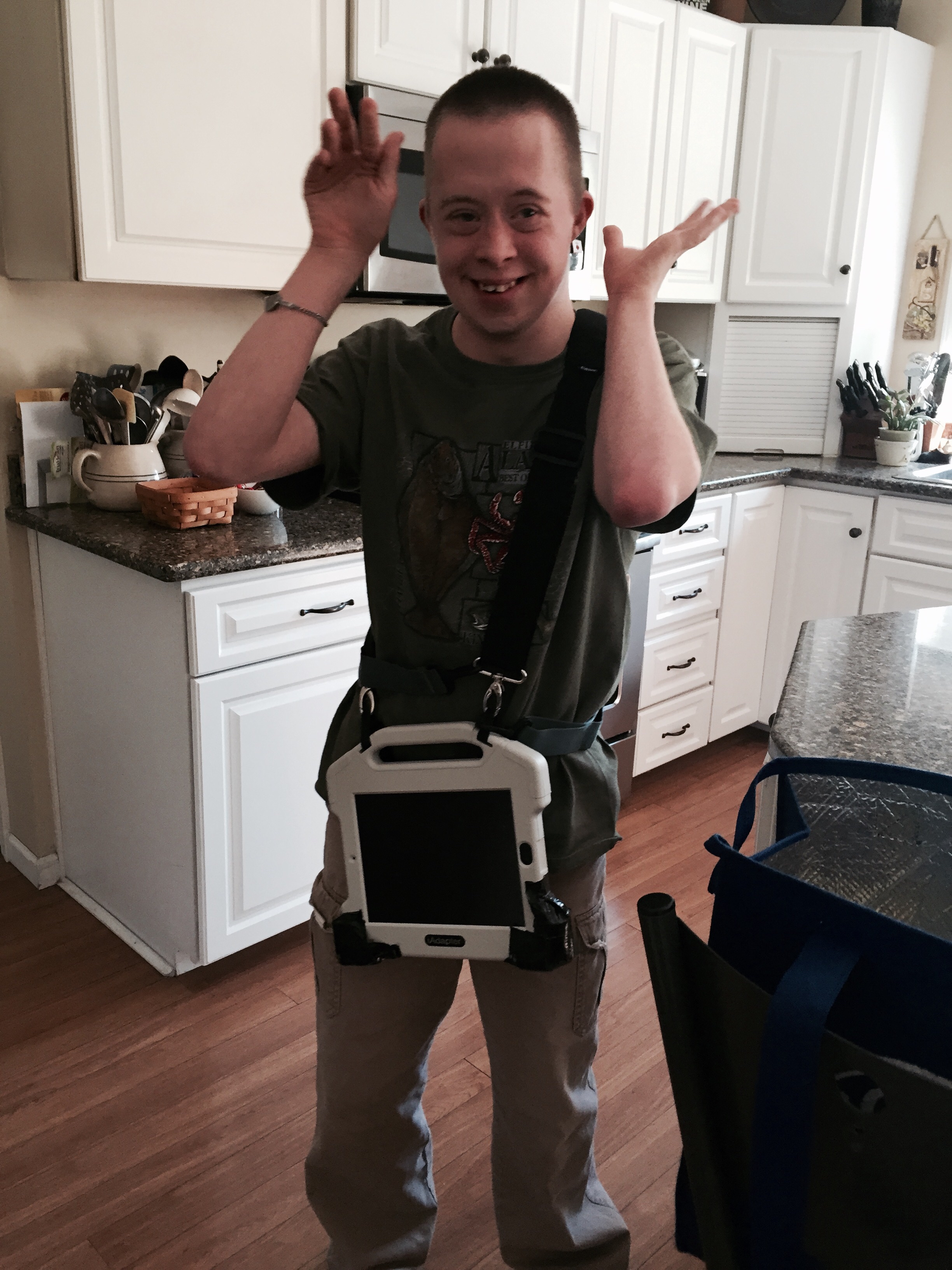
Nick’s talker, note the bumper pads the team installed.  Nick likes to send it airborne on occasion 🙂

IMG_5231

Last week, there was a major breakthrough with Nick using his talker. One trigger that often leads to a major meltdown for Nick is a crying baby or child. He will begin to pinch himself on his cheeks, followed by pinching anyone near him when this happens. This happened at an airport, leading to a severe meltdown the summer before last. While on a community trip at IHOP on Friday, a child began to cry at a table near them and Nick began to pinch himself. His teacher pointed to the talker instructing Nick to use it. Nick immediately took it and began to push the “stop” button. The first two times he hit the stop button the child stopped screaming. The look on Nick’s face was priceless. It might have been just a coincidence, but in that moment Nick realized using the talker really does work. His teacher cheered and praised him. He was so proud. It was as if he realized that he had power over the situation.

Yay Nick!!!

IMG_5116

It reminds me of many years ago, when the staff got trained to use PECS with Nick. His world of limited speech left him frustrated in those days during puberty. This resulted in many horrific meltdowns.  Using the PECS pictures gave him power; it gave him a voice (much like the talker is starting to do now). The key to the AAC device being successful will be getting everybody on board. Everyone that works with Nick needs to encourage him to use it (and praise him when he does). I look forward to sharing more of his successes with the talker and building on to this. I know he has much more to tell us all. That’s what is in my noggin this week.

~Teresa 🙂


Posted in Autism, Down syndrome, Recreation/Leisure and Special Needs

Blog #124~Sports and Your Special Needs Child

Blog #124~Sports and Your Special Needs Child

Having a child with special needs and finding sports and leisure activities that suit their level isn’t always easy. My son Nick is 21 years old and has Down syndrome and autism. Nick has participated in Special Olympics, Top Soccer, and Challenger League Baseball programs.  Today I want to highlight the baseball program (The Challenger Division).

Special Olympics (http//www.specialolympics.org)

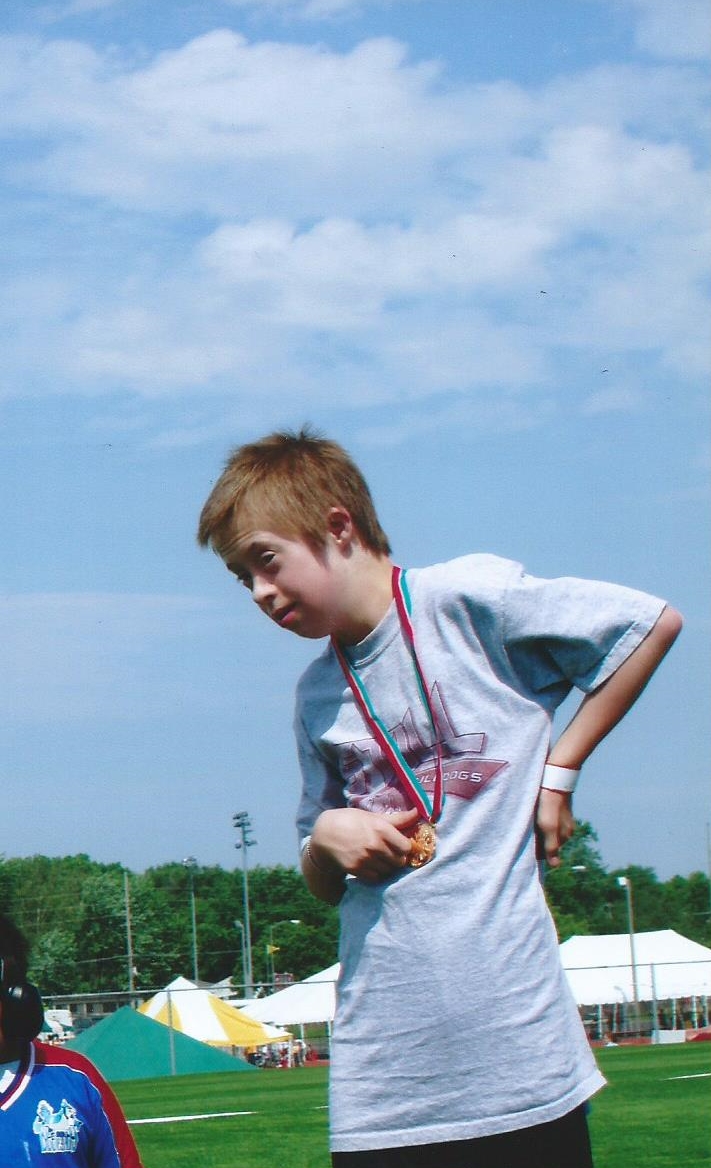
Nick stands on the top of the podium winning  the Illinois State Gold Medal in the softball throw….

Nick Special Olympics

Top Soccer (http//www.usyouthsoccer.org/programs/topsoccer)

Nick Top Soccer

Baseball-The Challenger Division http://www.littleleague.org/learn/about/divisions/challenger.htm

“The Challenger Division was established in 1989 as a separate division of Little League to enable boys and girls with physical and mental challenges, ages 4-18, or up to age 22 if still enrolled in high school, to enjoy the game of baseball along with the millions of other children who participate in this sport worldwide.  Today, more than 30,000 children participate in more than 900 Challenger Divisions worldwide.

Teams are set up according to abilities, rather than age, and can include as many as 15-20 players. Challenger games can be played as tee ball games, coach pitch, player pitch, or a combination of the three.

One of the benefits of having a Challenger Division is that it encourages the use of “buddies” for the Challenger players. The buddies assist the Challenger players on the field, but whenever possible, encourage the players to bat and make plays themselves. However, the buddy is always nearby to help when needed.”

Nick challenger league

Nick would hit off the tee and a volunteer buddy would help him around the bases. It was a great experience. Check out our Facebook page called “Down Syndrome With A Slice Of Autism” to view a wonderful video about The Challenge League. Or go to this link to see more @http://videos.littleleague.org/video/2015/09/09/What+the+Challenger+Game+means+to+Little-wzODBndzpy

I highly recommend looking into sports programs for your child with special needs. The Challenger League was a wonderful program to be involved in. Play ball, that’s what’s in my noggin.

~Teresa 🙂


Posted in Autism, Down syndrome, Fun Side of Nick

Happy Labor Day

Happy Labor Day

Happy Labor Day

I hope everyone is having a nice, relaxing Labor Day weekend.  I’m taking the day off and will press a new blog next week.  Until then, if you haven’t read “Stuff On My Cat, Part II”, kick your feet up and enjoy @https://nickspecialneeds.wordpress.com/2013/07/08/blog-62stuff-on-my-cat-part-ii/

~Teresa 🙂

Posted in Augmentative and Alternative Communication (AAC), Autism, Down syndrome, Speech and Occupational Therapy

Blog #123~UFC Rousey & Apraxia of Speech

Blog #123~UFC Rousey & Apraxia of Speech

Headline in ABC News last week, Ronda Rousey UFC champion fighter brings awareness to Apraxia of Speech! Take a look at the story featured on Good Morning America:

The lives of champion UFC fighter Ronda Rousey and speech pathologist and mom Laura Smith might seem worlds apart, but the two women share a unique connection.

Smith and her 5-year-old daughter, Ashlynn, met Rousey, 28, this spring at a book signing in Denver, Colorado, for Rousey’s autobiography, “My Fight/Your Fight.”

Smith told ABC News she was on a mission to meet Rousey in order to find out if the speech disorder she had as a child was the same condition that affected her daughter, Ashlynn, has.  

“I read probably everything she’s ever said about her speech impediment and the more I read I was like, ‘That was apraxia. This is apraxia,’” Smith recalled.

Childhood apraxia of speech is a motor speech disorder where the brain has problems coordinating with the body parts –- like lips, jaw and tongue -– needed for speech, according to the American Speech-Language Hearing Association.

“At first I was tested for deafness,” Rousey said of her own childhood struggle. “They thought maybe my pronunciation was off because I was hearing things differently.”  

“But it was really I had all these words perfectly arranged in my head, it’s just when they tried to come out of my mouth they sounded different,” she said. “It was kind of like there was a divide between my brain and my mouth.”  

Because apraxia was not a common diagnosis when Rousey was a child, no one suspected it was what was behind the fighter’s speech problems. That is, until Smith gave Rousey a brochure on apraxia at the book signing.  

“I threw the brochure and the bodyguards came in immediately to get it,” Smith said. “She [Rousey] picked it up and I was like, ‘If you did have it, would you say it in your interviews because it would mean so much for our kids.’”

Rousey says the information in the brochure struck her instantly.  

“I actually ended up reading through the whole thing that night and was like, ‘Oh my God, this is all exactly it. This is exactly what it was,’” Rousey said. “I didn’t know it was actually apraxia until that moment.”  

“She really taught me a lot about myself that day and I can’t thank her enough for it,” Rousey said of Smith.  

To thank Smith and her daughter, Rousey sent a special message, doing exactly what Smith asked her to do at the book signing, talking about apraxia.

“Hi Laura and Ashlynn,” Rousey said in the taped message. “I just wanted to say I’m so happy to hear everything that you’re doing to raise awareness of apraxia.”

“You definitely raised awareness in me and I just wish you all the best,” she said. “I know our paths will cross again someday at some point so I can’t wait to see you again.”

Ronda Rousey ABC news

So just what does apraxia look like?   The American Speech–Language–Hearing Association, describes childhood apraxia of speech (CAS) “is a motor speech disorder. Children with CAS have problems saying sounds, syllables, and words. This is not because of muscle weakness or paralysis. The brain has problems planning to move the body parts (e.g., lips, jaw, tongue) needed for speech. The messages from the brain to the mouth are disrupted, and the person cannot move his or her lips or tongue to the right place to say sounds correctly, even though the muscles are not weak.”

This hits home for me. My son Nick who is 21 years old and has Down syndrome and autism was given the diagnosis of apraxia when he was 6 years old. While his language skills have improved with speech therapy, he still struggles with articulating words. When he tries to imitate some words he gets stuck.  Nick continues to go to speech therapy, uses sign language, a picture exchange communication system (PECS) and has an AAC device with an app called Touch Chat to further facilitate his communication.

For more information including symptoms, causes, testing and treatment click on the on these links:

http://www.webmd.com/brain/apraxia-symptoms-causes-tests-treatments?page=3

http://www.apraxia-kids.org/

http://www.speakingofapraxia.com/  The first ever parent guide to childhood apraxia of speech, written by Leslie Lindsay

SOA_mock (2)

The meeting of Smith and Rousey at the book signing resulted in raising awareness of apraxia. Rousey posted the brochure on her Facebook page, which has been liked by nearly 7 million as of last week.

ronda-rousey-book

Here’s to Rousey who has won many fights in her life both in and outside the ring.  She has no doubt given inspiration to kids and their parents around the world. I hope this information helps parents and children who are struggling with speech difficulties. That’s what’s in my noggin this week.

~Teresa 🙂