Blog #256~Guest Blog: 10 Pillars of Independence Made Simple, by Steve Friedman
As National Family Caregiver Month comes to a close I want to highlight a great resource for families having a loved one with Down syndrome and DS-ASD. Steve Friedman has written an excellent book to help caregivers navigate future planning with an emphasis on helping your loved one become as indepedent as possible. As a parent to my son Nick who is 29 years old and has a dual diagnosis of Down syndrome and autism (DS-ASD), my concerns in the area of future planning are at an all time high. I found the information and book that Steve wrote very helpful.
10 Pillars of Independence Made Simple by Steve Friedman
It’s never too early nor too late to make a plan!
Whether your loved one with Down syndrome is 1 or 51, contemplating independence can be overwhelming.
*What does independence actually mean to you and your family?
*What are your options for independence pillars such as education, work, and housing?
*How much does independence cost and what benefits may help?
*How do we find out about all benefits and how do you apply for each?
*What are the important legal documents and how/when do I consider them?
*What health issues should be considered for your self-advocate’s future?
It’s a lot!

10 Important Pillars to Consider
1) Mindset – In the past, the shock of newborn parenting led to a world of limitations and protection. But now people with Down syndrome are working meaningful jobs, going to college, they’re having deep relationships, and living on their own. It is time to believe in the possibilities for our sons and daughters, for ourselves, and for our communities!
2) Independence Team – always put your loved one first. Insist they are at the ARD meetings. Be sure the doctor is talking TO them, not around them. This is important for their self-esteem and it’s their lives, after all.
YOU are the NEXT most important member of the team. You know your son or daughter best. Advocate for THEM – not for you – every day. Include others in your team that can provide support, challenge, and perspective like teachers, doctors, therapists, extended family, and those angels that somehow find us along the way.
3) Work is a great self-esteem booster. I’ll never forget Gwendolyn’s beaming face when she started her first job. She still lights up when talking about work with friends and family. Utilize government resources to find a job but if that fails, and it might, create a resume and march out and talk to friends and local businesses until you find the right fit. Remember, you are not offering a charity, you are offering a hardworking, energetic team player.
4) Keep learning…beyond high school. Our loved ones have a long runway of learning. But if they stop, if they go home and sit on the couch all day, they will stop learning. They’ll plateau and they’ll regress. Continuing education, whether through a quality day program, inclusive college program, or homeschooling-style exposure, is critical.
5) Know common health issues for adults with Down syndrome. In our book we talk about 7 – all of which people with Down syndrome are AT LEAST twice as likely to get as the general population and, in some cases, 7x more likely. These include sleep apnea, obesity, celiac disease, hypothyroidism, depression, Autism, and Alzheimer’s. Many of these are genetic and not preventative, but you can still be prepared. Others benefit from healthy habits from an early age. In all cases, the earlier you are aware of these and work with your doctors to diagnose and treat these, the better life you offer your loved one. Oftentimes, even the best doctors will attribute symptoms to Down syndrome without digging deeper to identify specific health issues they can treat. We need to be sure to educate ourselves and our doctors.
6) Benefits are perhaps the biggest mystery of all. Until now, there’s not been a place to find a full list, understand how to qualify and where to apply, and just as importantly, how to maintain eligibility. In my discussions with parents, it never failed that they were unfamiliar with at least one of these benefits. Independence is beautiful…and independence is expensive. Are you on a Medicaid waiver program or waitlist? Do you know about SNAP or HIPP? Be sure your son or daughter gets all the benefits they deserve.
7) Did you know your son or daughter with Down syndrome is due Social Security benefits whenever either parent is either disabled, retires, or passes away? These benefits can be significant and typically don’t compromise the parent’s benefits in any way. But you must be aware of your loved one’s income and asset limitations in order to maintain eligibility. A wrong step, even if unknowingly, can cost your family hundreds of thousands of dollars! These same limits can jeopardize their own SSI and Medicaid, so be aware!
8) Guardianship is a major topic when our loved ones reach 18. I know this can be a controversial issue. On the one hand, we want to provide responsibility and authority to our self-advocates so why spend the time and money in court to take guardianship away from them? On the other hand, if they don’t have a legal guardian, they may have to make all critical decisions themselves. That includes some of the complex financial decisions we just touched on as well as health decisions, often in times of illness. In those circumstances, they can ask for your advice, or they can choose not to, or be convinced by others not to consult the parents altogether. And if others don’t feel your loved one can make the best decisions in a time of need, they can bring the state in to counsel your loved one. These decisions are just too complex for any one person in our family. We want to make sure Gwendolyn’s health and financial well-being are best protected. We are sure to include her in meetings and decisions that affect her, but we maintain guardianship. If you haven’t considered guardianship in detail, it is never too late to do so.
9) There are other legal instruments you should be aware of to protect your loved one’s benefits, including Special Needs Trusts, ABLE accounts, and letters of intent. Look into each one of those.
10) Finally, consider your housing options. We never thought about it much. We assumed Gwendolyn would always live with us. We were a bit ashamed to even consider her not living at home. But then, we realized three critical items:
a. We recognize that the best way for Gwendolyn to learn and grow was to explore moving out from under our protective umbrella just as her brother and sister have done.
b. We found there is a wide variety of options from small to large, public to private, admittedly shady to absolutely awesome. We just had to invest the time in the process to find the RIGHT place for Gwendolyn.
c. Finally, we recognize we will not be able to provide Gwendolyn with the best environment as we age so rather than leave that to chance, we wanted to be part of her housing choices.
There are a wide variety of housing options today. We did a lot of research –visiting over 15 places across Texas before we found the right place for Gwendolyn. Our loved ones are living longer and wanting more. Consider your housing options today.

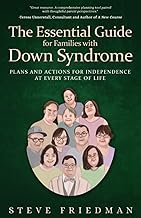
The Essential Guide for Families with Down Syndrome was created to remove the mystery.
“This book is essential for ALL parents, guardians, loved ones, and direct support professionals who care for a person with a disability.” -Tracy Keninger, Easterseals Iowa
“This is an excellent resource in navigating our own decisions to better support the goals and dreams of those we love.” -Tara Goodwin, Parent and DO, QuestCare Medical Clinic Dallas
“This practical guidebook lays out the critical steps for building independence. Steve Friedman provides comprehensive planning tools, paired with thoughtful parent perspectives. This is a great resource which covers all areas of life for individuals with Down syndrome along with their families.” -Teresa Unnerstall, DS-ASD Consultant and author of A New Course: A Mother’s Journey Navigating Down Syndrome and Autism

The Essential Guide provides step-by-step support to:
*Inspire mindset shifts toward one of independence and possibilities
*Foster independence building blocks from the earliest age
*Highlight health risks and financial resources every family must know
*Detail educationand work optionsto promote community inclusion
*Evaluate family-and community-based homeoptions includingsearch process
The Guide presents action items and worksheets to equip you with a clear timeline and path. The resources and references sections will save you time and money in your search for information and organizations that support your family’s journey.
“As parents, we are the experts of our loved ones, and this is an excellent resource in navigating our own decisions to better support the goals and dreams of those we love.” Tara Goodwin, D.O., Adult Down Syndrome Clinic, QuestCare Dallas
Friedman intersperses relatable and inspiring stories from a wide array of families. Insights from many experts in the fields of communications, education, health, and financial planning provide the confidence and guidance for you to navigate your family’s path toward independence.
GET YOUR SIGNED COPY with FREE SHIPPING HERE ! ONLY $20: https://www.beyonddownsyndrome.net/

Beyond Down Syndrome is proud to donate a portion of all book sales proceeds to LuMind IDSC to support Down syndrome research specifically focused on the link with Alzheimer’s disease. Did you know that 12% of the US population will be afflicted by Alzheimer’s but 95% of the Down syndrome community will have Alzheimer’s by the age of 65, often exhibiting first signs decades earlier. Together we can make a difference!

Steve Friedman BIO
The Friedman Family has always been tight-knit. Everyone supports each other including oldest daughter, Gwendolyn, and her quest for success. After Gwendolyn graduated high school, she became uber-focused on all facets of independence from continuing education, work, moving out, and self-advocacy. Over the past ten years Gwendolyn has achieved many of wishes and the family documented steps and resources along the way. Steve is a three-time award-winning author who loves to connect with families on his website and with podcasts and engaging workshops.
Thank you to Steve Friedman for the great information on this guest blog which will help many families and caregivers. For more information and to purchase a copy of his book click here: https://www.beyonddownsyndrome.net/
That’s what is in my noggin this week,
~Teresa 🙂





 Down Syndrome with a Slice of Autism