Posted in Adult Day Programs for Special Needs, Autism, Down syndrome, Dual Diagnosis Down syndrome and autism, Recreation/Leisure and Special Needs

Fall Update: Nick DS-ASD

Fall Update: Nick DS-ASD

Time flies when you are having fun, and Nick is having a blast this fall.  My son, Nick is 23 years old and has a dual diagnosis of Down syndrome and autism.  He attends an adult day program which provides a wide variety of activities.  Community outings this fall included volunteer jobs, bowling, visits to local parks, fire station, grocery shopping and going out to eat.  His group also works in-house doing gardening, cooking, skill along with communication building using their Augmentative Alternative Communication (AAC) devices.  Nick uses a program called Touch Chat on an iPad for communication.

Nick cooking at his day program…..

Nick cooking meatballs

Nick was very excited to visit the fire station 🙂  He wasted no time buckling up right away….

Nick fire truck

Outside his adult day program, Nick enjoys community visits to the library, mall, parks, shopping, the movies and eating out.  He continues to have “date nights” meeting up with his buddy, Christopher.  We are very grateful to have such caring respite workers, to take him out several times each week.

Fun at the Halloween Store…..

Nick crown

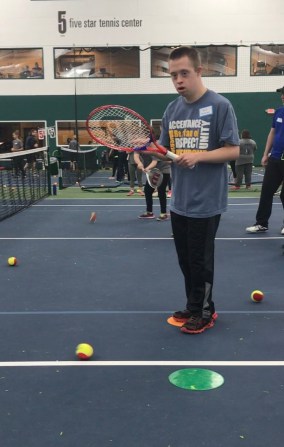
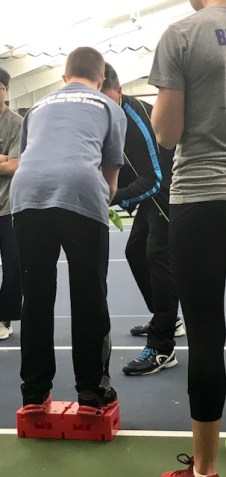
Buddy Up Tennis, see Blog #190 to read all about it @https://nickspecialneeds.com/?s=buddy+up

Nick buddy tennis 2

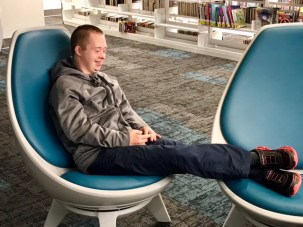
Nick relaxing at the library.  Make yourself at home there, Big Guy….. 🙂

Nick library

That’s Nick’s world and update for this fall.  I would like to take a moment to thank our respite workers, Lara, Jodi and Kelsey for all they do for Nick and our family.  My son has a full and rich life, and we are grateful to have these supports in place to make this possible.

That’s what is in my noggin this week. 🙂

~Teresa 🙂

Want to see more pictures of Nick?  We have a lot more on social media:

Facebook and Pinterest @Down Syndrome With A Slice Of Autism

Instagram #nickdsautism

Twitter @tjunnerstall


Posted in Down syndrome, Dual Diagnosis Down syndrome and autism, Recreation/Leisure and Special Needs

Blog #190~Nick & Buddy Up Tennis

Blog #190~ Nick & Buddy Up Tennis

I took my son Nick, to the Buddy Up Tennis program over the weekend.  Buddy Up Tennis is a high-energy, adaptive tennis and fitness program for children and young adults with Down syndrome.  They provide fun and rewarding 90-minute clinics on a weekly basis.  The program currently serves 550 individuals ages five to young adults with Down syndrome across the country.  Honestly, I wasn’t sure how cooperative Nick would be given that he has a dual diagnosis of Down syndrome and autism.  I am happy to report that he participated and followed directions fairly well, for his first time out.

Nick buddy tennis 2

This 90 minute Buddy Up Tennis-Naperville clinic, is held at Five Star Tennis Center.  Athletes are paired with a buddy and start off with a warm up.  Each participant gets to toss the dice and perform a variety of calisthenic exercises like toe touches, push-ups, jumping jacks and sit ups.  Nick needed some prompting on these.  I had to laugh when everyone got down to do push ups and Nick was still standing.  Then about the time he got down on all fours, the rest of the group was up doing jumping jacks. 🙂

fitness dice                Buddy Up Tennis Logo

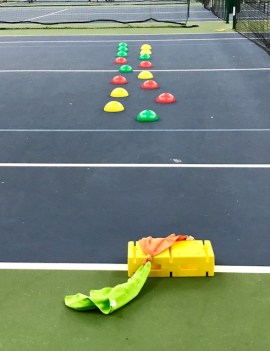
After the warm-up, the participants break up into groups.  The younger kids use modified equipment and balls on a separate court.  The teens and young adults move to circuit training.  Stations are set up focus on balance, agility, hand-eye coordination and upper body movements that mimic tennis strokes and serves.

Nick navigated each station with prompts, praise and elbow bumps, from his buddies and coaches.  He moved at a slower pace than his peers, and there were a few stations he was less interested in.  But overall, did a good job!

Nick Buddy Tennis balance

After circuit training, the athletes worked on volleys and ground strokes.  Nick needed more prompting and hand over hand assistance, to move through these drills.  But he remained patient and compliant.  It really helped to have a peer partner and the coaches cheering him on, as well as the other athletes modeling appropriate behavior.

Nick buddy tennis

Towards the end of the clinic, Nick did begin to lose interest in hitting tennis balls.  I grabbed a ball hopper, and he and his peer buddy collected balls.  Nick is good at putting things away, so this kept him perked him up and engaged.  For the last 10 minutes, all the groups come together, and play a few rounds of duck, duck, goose. Then, the coaches present certificates to the top awesome athletes for that week.  Nick was awarded one of these for working hard.  Yay Big Guy! 🙂

Overall, I feel the experience was a success for Nick.  I was a little nervous going in, because he can be loud and distracting with the stimming behaviors associated with autism.  However, these behaviors were quite diminished during the clinic.  It reminded me of when Nick was in a full inclusion classroom, when we first moved into the Chicago area, 15 years ago.  Positive peer role models is one of the benefits of placing your child in full inclusion classroom.  When Nick was in a full inclusion classroom, the loud noises, tapping and other stimming decreased.  That alone, makes it worthwhile to enroll him in the next session coming up in January.

I plan on making a few visuals of the calisthenic exercises, circuit stations and sequence of moving through the drills will help with transitioning.  For individuals with autism, it helps to have a picture schedule to assist them in understanding what is expected of them.  If they can see it, they can better understand it.

Buddy Up Tennis is a wonderful program, and I’d like to thank the coaches and volunteers for the opportunity to have Nick be a part of group.  For more information about Buddy Up Tennis, visit their website at http://buddyuptennis.com/

That’s what is in my noggin this week. 🙂

~Teresa

Follow Nick:

Facebook & Pinterest @Down Syndrome With A Slice Of Autism

Instagram #nickdsautism

Twitter @tjunnerstall


Posted in Down syndrome, Down Syndrome Awareness, Recreation/Leisure and Special Needs

Blog #189~Buddy Up Tennis

Blog #189~Buddy Up Tennis

Buddy Up Tennis Logo

I had the pleasure of observing the Buddy Up Tennis program over the past weekend. Buddy Up Tennis is a high-energy, adaptive tennis and fitness program for children and young adults with Down syndrome.  They provide fun and rewarding 90-minute clinics on a weekly basis.  The program currently serves 550 individuals ages five to young adults with Down syndrome across the country.

The program I visited was Buddy Up Tennis Naperville in Illinois, located at Five Star Tennis Center.  Athletes are divided into 3 groups according to age and ability.  They kick off the morning with a warmup and fitness component.  Each participant is paired with a volunteer buddy.  Everyone gets a chance to throw the dice and perform a variety of exercises together like toe touches, arm circles, sit-ups, jumping jacks and push-ups.

fitness dice

After the warm-up and calisthenics, the participants move to circuit training.  Stations are set up focus on balance, agility, hand-eye coordination and upper body movements that mimic tennis strokes and serves.

Balance Work Stations…..

Buddy Up Balance

The tennis serve motion is mimicked by throwing a football through the hoops.  Balls are thrown from the hip on both sides of the body into a basket to work on the forehand and backhand movements……

Buddy Up Hoops

Other stations include using an agility ladder, cones, balance beam and tug of war.  All of these work on each component of fitness, as related to playing tennis.

Following the fitness segment, the groups work on tennis strokes and games.  The younger players used smaller nets and foam transition balls which are easier to hit.

gamma-tennis-revolution-ball.jpg

The player’s ages 10 and up, worked on forehand and backhand volleys.  Coaches use the cues,  “Squash the bug”, No swinging” and “High five it” to teach proper form on volleys.  The athletes had fun trying to win a prize by hitting a target on the court.  After volleys, the group worked on overheads, with the coaches using cues like, “Point the left arm to the ball, and hit the ball at the highest point”.

It was wonderful to see the players working hard and enjoying the experience with their fellow teammates, buddies, and coaches.  The staff and volunteers were so encouraging and positive.  There were lots of high fives, smiles, cheering and laughter.  Buddy Up Tennis helps players build fitness, tennis skills, friendships, and cooperation.  These life skills are valuable both on and off the court.

For more information about Buddy Up Tennis visit their website: http://buddyuptennis.com/

tennis racket

I highly recommend this program and look forward to taking my son, Nick next week.  That’s what is in my noggin this week!

~Teresa 🙂

Follow Nick:

Facebook and Pinterest @Down Syndrome With A Slice of Autism

Instagram #nickdsautism

Twitter @tjunnerstall


Posted in Down syndrome, Down Syndrome Awareness

Blog #188~Down syndrome Awareness Month-5 Takeaways

Blog #188~Down syndrome Awareness Month-5 Takeaways

DSAwarenessMagnet

As October and Down syndrome Awareness Month, comes to an end, I want to leave you with 5 things takeaways to keep in mind, and share with others about Down syndrome!

1. Babies with Down syndrome have low muscle tone (know as Hypotonia).  This effects motor and oral motor development.  It will take them a little longer to talk, walk, and eat the same foods as others.  Early intervention with physical, occupational and speech therapy play a big part in growth and progress in these milestones.

2. People with Down syndrome aren’t ‘always happy’.  They have feelings just like everyone else.

3. People with Down syndrome will share some common features.  A few of these include low muscle tone, smaller in stature, almond-shaped eyes, tiny white (Brushfield) spots in the iris, a crease running in the palm of their hand, a gap between big and second toe.  But they will more closely resemble their immediate family members.

My son, Nick has low muscle tone.  We propped him in the high chair supported by pillows…..

nick-low-tone-high-chair

4. People with Down syndrome can’t be ”more Downs’ than another.  As with everyone else, each person with Down syndrome has their own strengths, weaknesses, talents and abilities.

Nick loves swimming and even tried scuba diving.  He also has many jobs both at home and in his adult day program he attends……..

Diveheart 2013 336     Nick cleaning GiGi's

5. Please use ‘people first’ language, a person has or with Down syndrome. NOT a Down’s child or the Down syndrome kid. Down syndrome does not define who they are!

Actor and advocate, Chris Burke…..

Chris Burke quote

Spreading awareness and information helps others to become more understanding and accepting of individuals with Down syndrome, and their contributions to society.  That’s what is in my noggin this week!

~Teresa 🙂

Follow Nick:

Facebook and Pinterest @Down Syndrome With A Slice Of Autism

Instagram #nickdsautism

Twitter @tjunnerstall


Posted in Down syndrome, Down Syndrome Awareness, Dual Diagnosis Down syndrome and autism, Education and Special Needs

Blog #186~Down syndrome:How to Promote Inclusiveness in School

Blog #186~Down syndrome: How to Promote Inclusiveness in School

DSAwarenessMagnet     Peer Partners

October is Down syndrome Awareness Month.  This is an ideal time to promote inclusiveness in your child’s school.  Forming a partnership with your child’s education team is the key to a successful inclusion experience.

Here are a few resources and suggestions on how to advocate for inclusion in your child’s school environment and classroom:

*Send an “All About Me” introduction about your child to the teacher.  There are many ideas, templates and apps that are available online.  This is especially helpful, if your child’s speech is limited or non-verbal.

all about me app

*Share inclusion resources with your child’s teacher:

  • Meaningful Inclusion for Students With Down Syndrome: A Resource for Elementary Educators. http://www.mdsc.org/infojustforyou/EdManual.cfm
  • The Inclusive Class: http://www.theinclusiveclass.com/
  • Inclusion in the Classroom-Tips and Resources: http://allbornin.org/wp-content/uploads/2012/11/Inclusion_Classroom_Tips.pdf
  • Donate books to the library and classroom:               I can Can you  Paint the Octopus Red  My Friend has DS

*Topics on Down Syndrome, that are helpful for teaching from Woodbine House Publishing: http://www.woodbinehouse.com/  Books related to Down syndrome are ON SALE during the month of October!

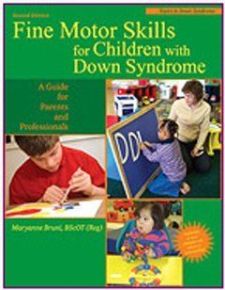
Whole Child Reading         Down syndrome and autism intersect2      Teaching Math to DS        fine motor skills and DS

Working with the school team to promote an understanding about Down syndrome, and a dual diagnosis of Down syndrome and autism has many benefits.  It will help students in general education classes feel less anxious and reduce misconceptions they may have had.  Building this bridge together, will lead to a meaningful learning experience for everyone in the school.  That’s what is in my noggin this week.

~Teresa 🙂

Follow Nick:

Facebook & Pinterest @Down Syndrome With A Slice Of Autism

Instgram@ #nickdsautism

Twitter @tjunnerstall


Posted in Autism Spectrum Disorder (ASD), Behavior/ ABA, Down syndrome, Dual Diagnosis Down syndrome and autism

Blog #184~ Addressing Problem Behaviors in Individuals with DS/ASD

Blog #184~Addressing Problem Behaviors in Individuals with DS/ASD

Problem behaviors in individuals with Down syndrome and autism (DS/ASD), are very common.  Speech deficits, make it difficult to communicate wants and needs.  Often individuals with DS/ASD, may exhibit problem behaviors to communicate something.  Last week I participated in a webinar about addressing such behaviors, led by Sam Towers (http://sam@towersbehavior.com), that was hosted by The Down Syndrome Association of Minnesota.  Here is a summary of this webinar on addressing problem behaviors in individuals with DS/ASD.

First of all, it is important to build rapport.   Establish a friendship with kindness, and positive activities that the individual enjoys.  This will provide the basis for teaching the person, that there are other ways, besides problem behavior, for achieving goals.  Sam suggested a 10:1 ratio of praising good behaviors.  Praise encourages the individual to do it again.

Why do people use problem behaviors?

1.Get attention

2.Get something

3.Escape or avoid something unpleasant

4.Get a pleasant sensation

All behaviors allow a person to achieve a goal, because the payoff is reinforcement.  You get what you pay more attention to.  The idea is to avoid letting problem behaviors have a payoff.  So, focus ALOT more on addressing the good behaviors.  This can be done by building skills, through teaching replacement behaviors.  If a child is throwing things to get attention, the replacement behavior could be to teach them to tap you on the shoulder or use their communication device.

My son Nick is 23 years old and has a dual diagnosis of DS/ASD.  He has many behaviors that are used to get attention or something, and provide a pleasant sensation.  Part of the autism piece is sensory related.  Flushing the toilet repeatedly, pushing the microwave fan or phone intercom buttons are ways that he stims, which is a form of self-entertainment.  One suggestion, for this would be to teach other ways for him to entertain himself.  Some supports that I recommend, are to use social stories, redirect to an AAC (Aumentative Alternative Communication) device, PECS (Picture Exchange Communication) book, or create a choice board.

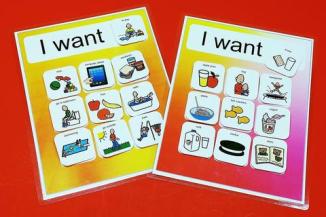
Choice Boards:

choice boards

If an individual is trying to get out of an activity, they may exhibit behaviors like self-injury, yelling, or stop-drop and plop.  In these cases, it’s important to provide supports like, a first-then charts, “take a break” card, noise cancelling headphones, a visual schedule, or a timed timer.

timer app    first then  1,2,3,4 Sprite

Bottom line, you can’t let the problem behavior become the payoff.  The single most effective way to get rid of a problem behavior, is to arrange things so that there is no payoff (reinforcement) for the behavior. Completely withholding reinforcement can be difficult, and often leads to an increase in the behavior.  This is called an extinction boost.  But if you stick to your guns, this will result in the behavior decreasing.  The key is to be consistent in not rewarding the undesirable behavior.  If it is reinforced intermittently, it will cause the behavior to be more long-lasting, because there is still some payoff for the individual.

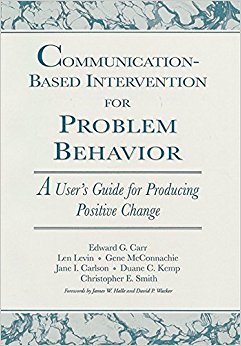
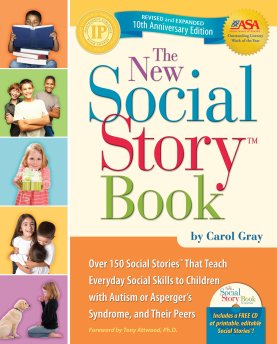
Understanding the reasons people use problem behaviors, building skills and supports to teach replacement behaviors, praising 10:1 good behaviors, and arranging things so that there is no payoff for the problem behavior are all great tools for addressing problem behaviors in individuals with DS/ASD.  Here are a few resources which may also help:

Edward Carr Book    Social Story Book  visual strategies book

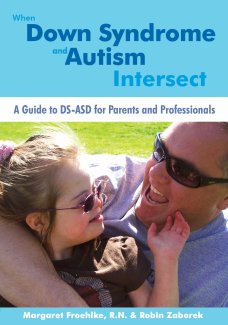
When Down Syndrome and Autism Intersect,
edited by Margaret Froehlke and Robin Zaborek:  

down syndrome and autism intersect

A special thank you to the Down Syndrome Association of Minnesota and Sam Towers of Towers Behavior Services for an informative webinar.  Now, it’s time to make a new choice board for Nick.  Have a great week, everyone.

That’s what is in my noggin this week! 🙂

~Teresa

Follow Nick:

Down Syndrome With A Slice Of Autism on Facebook and Pinterest

#nickdsautism on Instagram

@tjunnerstall on Twitter


Posted in Autism, Down syndrome, Dual Diagnosis Down syndrome and autism

Blog #182~Hurricane Harvey and the Texas Way

Blog #182~Hurricane Harvey and the Texas Way

Hurricane+Harvey+1280x720

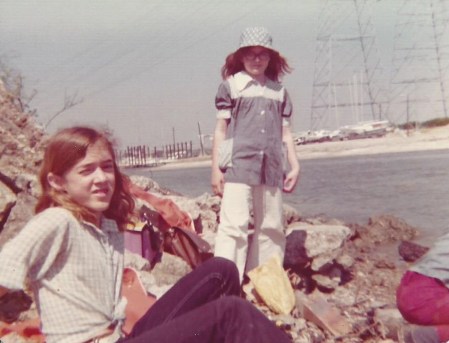
As a native Texan, I grew up just a few blocks from Galveston Bay.  This was our playground growing up.

Seabrook watching the boats come in, with my siblings in the early 70’s…..

3 investigators

I’ve ridden out my share of hurricanes and tropical storms over the years.  Hurricane Harvey has pounded the Texas Gulf Coast.  It continues to churn, with record rainfall that is causing catastrophic flooding.  I’ve been thinking a lot about my fellow Texans, and dealing with such disasters.  Much of what has giving me strength over the years of raising my son Nick, who is 23 years old, and has Down syndrome and autism, comes from the mentality of the “Texas way”.

The author, John Steinbeck wrote in part, that “Texas is a state of mind”:

“For all its enormous range of space, climate, and physical appearance, and for all the internal squabbles, contentions, and strivings, Texas has a tight cohesiveness perhaps stronger than any other section of America.”

Texans are incredibly proud of where they come from.  The people are friendly to one another, and will go out of their way, to help each other out.

I recall riding out Hurricane Alicia in our home, back in 1983.  The category 3 hurricane hit hard with winds up to 115 mph, during a long, pitch black night.  The next day, we crawled out from under the mattress propped up in the narrow hallway.  We found tree limbs and debris covering the yard and had no electricity.  Our neighbors banded together, bringing their chain saws to clear the rubbish.  We pulled up lawn chairs, and portable gas stoves, to cook up the food that was quickly thawing in the deep freezer.  We stood in long lines together, as comrades waiting to get ice bags, sharing stories together.  For two weeks, with the power lines down.  There was no electricity in the humid and unbearable August heat.  What I remember the most about this time, was the sense of camaraderie.  Everyone was pitching in, lending a hand, and working together.

Hurricane Alicia, 1983……

Hurricane Alicia 1983

Watching the news over the weekend, I again, was witness to this sense of community and teamwork.  The riveting images of civilian Samaritans bringing their boats, rafts, kayaks and canoes in to help with rescue efforts.  Volunteers coming in with high-profile pickups, and dumpster trucks being used to save other human beings.

Rescue efforts after Hurricane Harvey…….

Harvey rescue

I love this message from George and Barbara Bush, to their fellow Houstonians and Texans affected by Harvey, expresses the spirit of Texans: 

“We are praying for of our fellow Houstonians and Texans affected by Harvey, and truly inspired by the flotilla of volunteers–points of light all–who are answering the call to help their neighbors.  We salute them, the first responders and local elected officials for their grit and determination in the face of this extraordinary storm.  This we know: Houston and Texas, will come together and rebuild.”

That’s exactly what it is–coming together, and helping each other, and never backing down.  That’s the Texas way.  When you are down, you’re not out.  That’s when you pick yourself up by the bootstraps, brush off the dust and push through.

This road of raising my son with Down syndrome and autism has not always been an easy one.  The hurdles have been tough. Reaching milestones, the long process of toilet training and the intense meltdowns during puberty took their toll. I wouldn’t have survived, without reaching out for help. I found a community of parents who had children with a dual diagnosis of Down syndrome and autism.  This community saved me.  I know that my strong roots as a Texan, has kept me upright, in the process.  That grit and determination, has helped to push me through some of the roughest times.

The power of human spirit coming together can help to overcome the worst of adversities.  Jumping in and helping each other out, with a warm smile, IS the TEXAS WAY.  Texas will be drenched and soggy for a while, but they will never give up. Texans will pull together, become cohesive, and they will survive!

Please continue to pray, as the water continues to rise up the driveways, and into the homes, of my family and friends in Texas.  I know that they will come together, with resiliency, and get through this catastrophic event.

Here is a link if you would like to help and share on social media: The Houston Flood Relief Fund@ https://www.youcaring.com/victimsofhurricaneharvey-915053

That’s what is in my noggin this week.

~Teresa

Follow Nick:

Down syndrome with a slice of autism on Facebook and Pinterest

#nickdsautism on Instagram

@tjunnerstall on Twitter


Posted in Autism, Down syndrome, Education and Special Needs, IEP (Indivdualized Education Plan), Parenting Special Needs

Special Needs Back to School Tips

Special Needs Back to School Tips

backtoschool1

Kleenex, glue sticks, crayons, and more, are all jotted down on the shopping list.  It’s that time of year to get ready to go back to school.  But what should you be doing as a parent of a child with special needs?  I’ve got 5 great tips to get you started on the right track!

5 Back to School Tips for Special Needs Parents:

Click here to view these 5 tips- https://nickspecialneeds.com/2016/08/22/blog-153special-needs-back-to-school-tips/

Make it a great school year, that’s what is in my noggin this week!

~Teresa 🙂

Follow Nick:

Facebook and Pinterest @Down Syndrome With A Slice Of Autism

Instagram #nickdsautism

Twitter @tjunnerstall


Posted in Autism, Behavior/ ABA, Dual Diagnosis Down syndrome and autism, Parenting Special Needs

Blog #180~Special Needs Moms,Let Go of the Guilt

Blog #180~Special Needs Moms, Let Go of the Guilt

No Guilt

Am I doing enough for my child?  Should I switch to a gluten-free diet?  Does my child need more ABA (Applied Behavioral Analysis) therapy?  Maybe I should be diffusing essential oils?  These and many other questions swirl constantly, in the mind of a parent having a special needs child.  I should know after 23 years of raising my son, Nick.  He has a dual diagnosis of Down syndrome and autism.  Over the years, I’ve allowed doubt to creep in.  You see other moms talking about intense ABA therapy, up to 20 hours a week.  You hear testimonials of how a gluten-free diet helped to increase speech and decrease problematic behaviors.  Then, there are the success stories and pictures plastered over social media groups.  Compelling accounts of children excelling in Special Olympics, summer camps, recreational programs and the latest programs sure to launch your child new heights.  There is a tremendous amount of pressure to do it all.  So, you begin to question yourself as a parent.  Am I doing everything I can to help my child with special needs?  This is when the guilt begins to seep in.  That’s, when you need to let go of the guilt.

Parenting is a balance act.  The responsibilities of running a household, taking care of children and their activities along with your own personal job and welfare, can be enormous.  At several points over the last 23 years, I’ve hit walls where the pressure is just too much.

At those junctures, it’s important to stop, take a breath, and re-evaluate what works for your child with special needs, and the entire family……

*RE-EVALUATE- Which treatments, therapies, and recreational programs are useful? Where are you seeing growth and enjoyment for your child?  Weigh the benefits against the disadvantages of each program, treatment, and therapies that you are considering.

*PRIORITIZE- What activities are essential for my child and any siblings?  Which of these activities are needs/must haves (like swimming lessons), and which are wants (like a recreational soccer program)?

*STRIP BACK- After you’ve re-evaluated and prioritized, create a new schedule that suits your family.  Listen to the cues of your child, (and yourself).  Is it stressful, time-consuming, expensive or sapping your energy?  Has it become a huge inconvenience and unfair to the rest of your family?

Right now is a perfect time, before school starts, to take a deep look at all the therapies and activities your child and siblings are involved in.  Are these programs enhancing their growth?  How much time are you spending in the car, commuting all over town for these therapies and other programs? Sometimes, it’s just TOO MUCH for you child and other family members.  Consider scaling back, and opt to incorporate learning activities at home. Ask your child’s therapists for suggestions on how to do this.  With their help, create learning (TEACCH) activities that can be done at home.  It really helped me to achieve better balance, when I scaled back, and incorporated a few of the TEACCH activities along with natural occurring jobs around the house, instead of driving all over town each day to therapies.  🙂
TEACCH (Treatment and Education of Autistic and Communication is an evidence-based service, training, and research program for individuals of all ages and skill levels with autism spectrum disorders.  

Here are some TEACCH bins we do in our home with Nick…..

Task Strip with a highly preferred reward to work towards. Nick picks out a reward  from his PECs (Picture Exchange Communication book) or AAC (Augmentative and Alternative Communication Device).  He usually chooses a Sprite….

Task Two Strip

Nick get’s handed the #1 and matches to the bin and completes the activity.  Once this is done he puts the #1 on the green task strip.  This is repeated for all four bins. The activities range from sorting, matching, assembly, folding, and fine motor.  Bins can be customized to fit the needs of an individual child.  These are just a few of many Nick does.  Be sure to mix in some that have a high success rate, with more challenging activities suitable for your child:

bins 1 and 2   Bins 3 and 4

Naturally occurring activities can also be added around the house throughout the day.  Examples include unloading the dishwasher, garbage/recycling, laundry, putting groceries away, cleaning counters, vacuuming, and gardening.

Nick watering plants

All these activities help to build new skill sets, confidence and independence.  The TEACCH activities are also implemented by respite caregivers, which we’ve hired with the help of state waiver funding.  These caregivers work on goals both in the home and out in the community. Respite workers can also help take your child to afterschool activities such as therapy, Special Olympics/ sports or swim lessons and social groups. Having respite care or hiring a babysitter, allows a parent to get a break and take time to get out and enjoy their own life.

It’s so easy to get bombarded with advice on treatments, diets, therapies and recreational programs related to special needs.  As a parent, you need to decide what is useful and stop feeling guilty about doing everything single therapy and program to help your child.  Do your research, weigh the pro’s and cons, and decide what works best for your child and family. Consider incorporating TEACCH activities at home, instead of running and around, and spending more time in multiple therapy clinics.  Don’t allow those guilty thoughts to rob your peace, or make you doubt your parenting skills.

relax boardwalk

That’s what is in my noggin this week.

~Teresa

Follow Nick:

Facebook and Pinterest @Down Syndrome With A Slice Of Autism

Instagram #nickdsautism

Twitter @tjunnerstall