Posted in Autism, Behavior/ ABA, Education and Special Needs, Feeding, Personal Hygiene, Toileting, Tech Stuff/Apps and Video Based Instruction

Blog #52~ Tech Time

geek pic

Blog #52~Tech Time

A few weeks ago at the National Association for Down Syndrome (NADS) Retreat the guest speaker did a presentation on using video based instruction and mobile technologies to support learners with Down syndrome and other developmental disabilities.  Toni Van Laarhoven, an associate professor in the Department of Special and Early Education at Northern Illinois University (NIU) gave us some great information on how to implement it.

Video modeling for can be used for teaching a variety of social, academic, and functional skills.  In the April 2012 archives, Blog #5~Ready, Set, Action, I wrote about how effective these have been in teaching Nick a variety of job skills.  He learned how to unload the dishwasher, load the washing machine and how to use the vacuum cleaner.

Nick vacumming_Tabor Hills (5)

Before video modeling we used social stories.  Basically this is like a script that you want the child to follow.  With Nick also having autism, it helps him to see it in picture form so he can better understand.  Nick has a thing for sneezing right in your face on purpose.  His teacher made this social story, here is part of it…….. aaaaachoooooo 🙂

photo (115)

These visual supports were effective, but his interest level when reading social stories was nothing compared to when he started watching the video models.

Here are a few ideas  I came up with for video modeling:

Teach a job skill

Teach a fine motor skill (cutting food, buttoning a shirt, pour milk, handwriting)

Teach a gross motor skill (swimming strokes, riding a bike, yoga positions.)

Grooming routines (brushing teeth, washing face, dressing.)

Bedtime routine

Change in routine (picture day at school, new curriculum unit in P.E., new school)

Visit to doctor, dentist, blood draws, and haircuts

Trip to the zoo, baseball game, mall, movie theater

Appropriate leisure activities to do at home (watch a movie, computer/X-Box)

Teach social skills (playing games with peers, turn taking)

It’s best to choose one behavior or skill to work on at a time.  Have the child watch the movie before engaging in the activity on a consistent basis.  For a job skill, many students have a video on their hand held device (iPod) and can follow the prompts as they work.  Ultimately, using video models can foster greater independence.

Shooting the videos can be done using an adult or peer model going through the sequence.  Simple verbal prompts should be provided.  For example, for pouring milk you can script it like this.

  1. Go to cabinet and get a cup.
  2. Go to the refrigerator and get milk.
  3. Open cap and pour milk in cup.
  4. Put cap on milk.
  5. Put milk container back in the refrigerator.

Another way to use video modeling is to make a video resume.  Toni made one of her sister who has significant disabilities.  This video showed in detail her routine.  The narrator pointed out specific details, likes, dislikes that added clarity to how she navigates her day.  This would be extremely helpful for a new staff, teacher, and direct care provider.  A few years ago, Toni’s NIU students put together a video resume of Nick called Project MY VOICE.  Like Toni’s sister, his showed what he did at school, his likes (music, community outings, etc..) and pointed out things that might upset him (saying “no” to him, changes in schedule, etc…)  Nick was very proud to show the video at his IEP meeting that year. 🙂

There tons of programs and apps that are available for assisting persons with special needs.  Here are just a few that have been recommended to me:

*Follow a schedule with Picture Scheduler:

picture schedule app

*iPrompts- Visual support, schedules, picture prompting for autism and special education.

*Artiks Pics-Vocabulary flashcards, memory games

*www.autismspeaks.org/autism-apps

*First Then Visual Schedule:
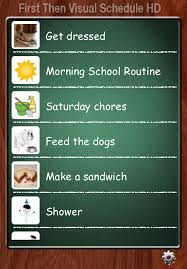
first then app

*ABA (Applied Behavior Analysis) and educational apps:

fruit app

happy sad app pic

Alphabet Tracing:

alphabet tracing

Sensory Fun, Light Box App:

light box app

Silly Fun, Talking Tom 2 (Nick’s going to love this one. Tom just cut one here, stinky) 🙂

talking tom

The list goes on and on, you get the idea.  There’s an app for just about everything.

Video based instruction, using mobile devices and prompting systems are effective tools in helping our kids navigate their world to become more independent. Put the power in their hands! That’s what is in my noggin this week.

~Teresa 🙂
Posted in Autism, Behavior/ ABA, Education and Special Needs

Blog #49~April is what?

Blog # 49~April is what? 

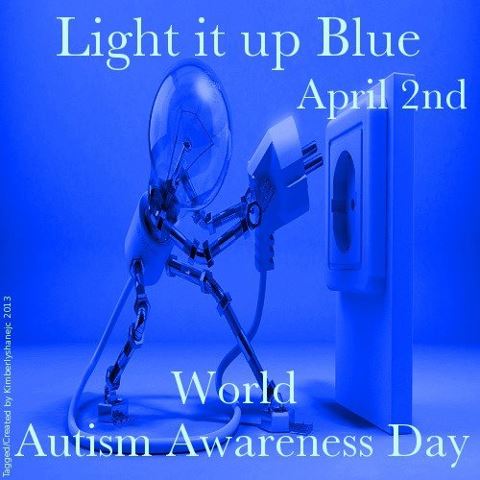
April 2nd was “Autism Awareness Day.”  Nick and I didn’t wear blue to show support or acceptance.  Quite frankly, I forgot.  I am down in the trenches trying to keep him from running the faucets full blast, pushing the popcorn button on the microwave and dumping out my cup of coffee all over the floor every single day.  Seems to me they should have kicked it off on April fool’s Day. 🙂

April and autism awareness…..

light it up blue

I applaud these gestures.  In the October archives (Blog #26~Down syndrome Awareness Month), I posted some pictures of iconic places lit up pink in support of breast cancer and shared some ways to support Down syndrome which is also during that month.

Here are a few light it up blue pictures…..

blue eiffel tower

Chicago lights it up blue…..

photo (119)

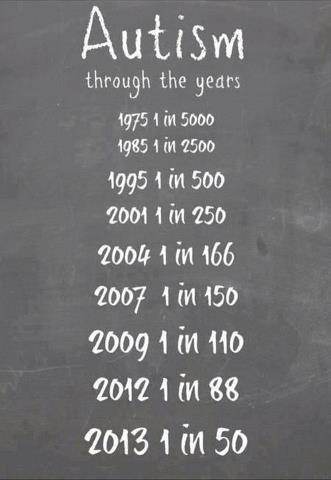
The CDC estimates that about 1 in 88 children has been identified with an autism spectrum disorder (ASD), and a study released just last week suggests that number may be even higher. In the Medical Daily article it stated: “A recent government survey as report of more than 95,000 parents in U.S. exceeds previously recorded accounts.  Now 1 in 50 schoolchildren between the ages of 6 and 17 are diagnosed with autism.  The CDC found that boys are four times likely to have autism than girls which has remained true since it was first discovered.”

An epidemic………

autism through the years

Personally I would like to see the focus on more educational, behavioral supports and other treatment options.  What is going to happen to our kids when they age out of the school system?  There aren’t near enough employment opportunities, day programs or group homes for this rapidly growing population.  In addition, I’d like there to be an easier path to obtain funding through the government.

I have spent the last year writing about Nick in this blog so that you can better understand the way he functions having Down syndrome and autism. I have crawled through the gutter like so many other parents.  What I think we all want most is support.  We also need understanding and compassion without judgment.  That along with a night of uninterrupted sleep. 🙂

autism and sleep cartoon

Yes my child is loud, try living with it 24/7…..

autism mute button saying

Yup…….

photo

No, I didn’t change the light bulbs to blue on the porch or add lawn decorations like this person…..

photo (115)

I didn’t go out and get a *puzzle piece manicure.  It wouldn’t last anyway with all the cleaning up of stuff Nick has dumped out… April archives, Blog #3~ Getting your Goat for the full list.

autism manicure

But I do have a salon appointment to cover the grays Nick has put in my hair this Friday. 🙂  That’s what is in my noggin this week.  I will leave the lighting up campaign for everyone else and Nick with his flashing blue stim toy and blue water bottle… while I try to keep up in his world.

photo (121)

Seeing the world in blue, cool ……

scan0007

~Teresa

autism ribbon

*The puzzle pieces are used to reflect the mystery and complexity of Autism Spectrum Disorder (ASD.)  It’s a puzzle that has yet to be solved.

Posted in Autism, Down syndrome, Education and Special Needs

Blog #46~A Day in the Life of Nick

Blog #46~A Day in the Life of Nick

This morning I am prepping for Nick’s IEP meeting to be held at 11:51 a.m.  I review all of the progress reports that I requested ahead of time. It is essential to get those reports early so you know what is going on.  Plus it saves time during the meeting.  I have more tips in Blog #24~Top Ten Things I have Learned While Navigating Nick through School, (located in the October archives). I want to give you a glimpse into the day in the life of Nick’s world at school.  What does someone like Nick who has Down syndrome and autism (lacking reading and writing skills) work on in school?

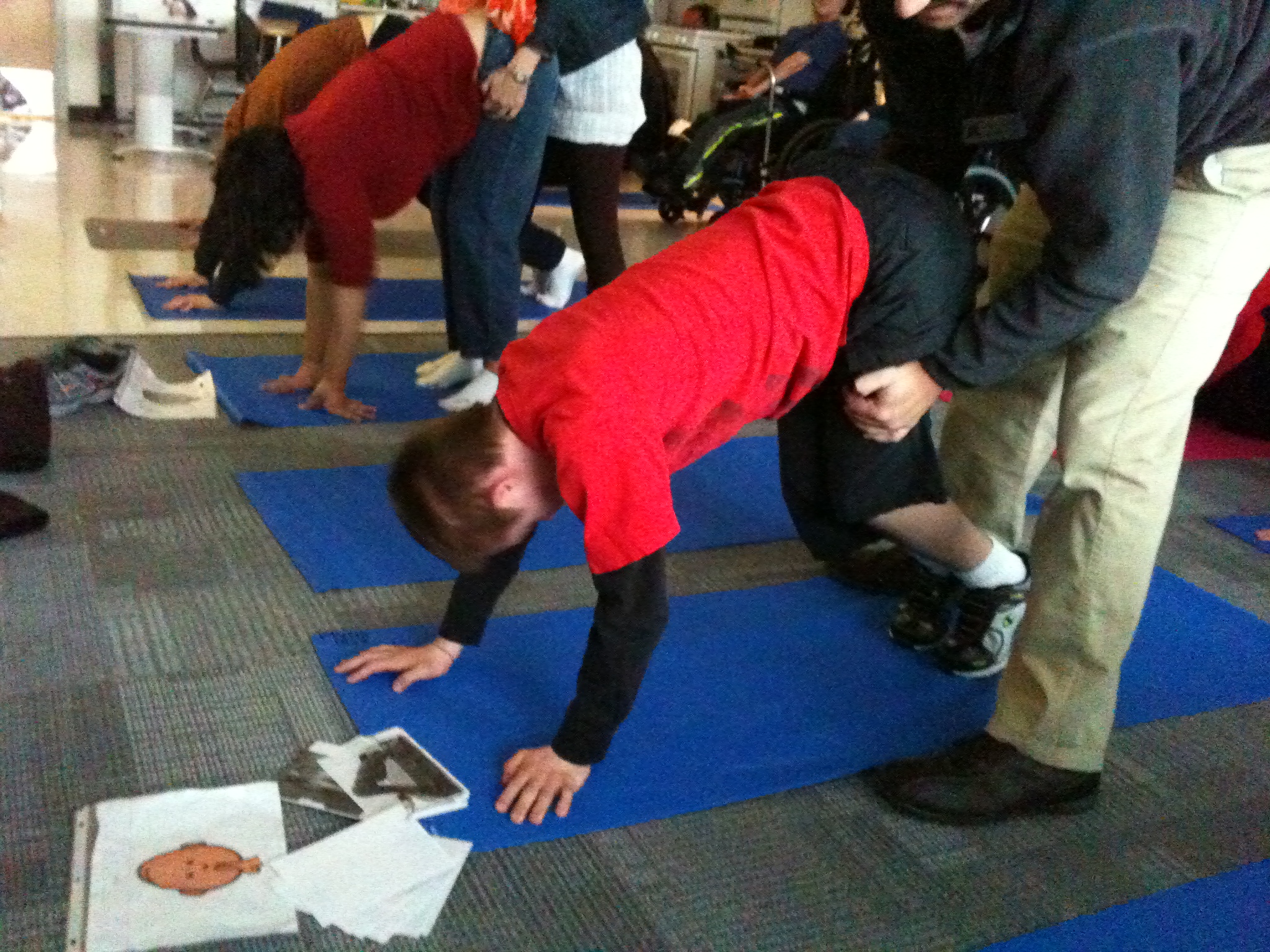
His day starts early, the skies are still dark when the bus rolls up at 6:30 a.m.  Most mornings Nick is dragging but when I mention it’s a community day he tends to perk up a little quicker.  The first two periods of Nick’s day are called “Life Skills.”  The class looks at the calendar, works on dates, upcoming events and the weather.  Nick enjoys telling others about the weather and is consistent in picking out the correct icon and working the weather page on his iPod Touch Chat program. After calendar, the students practice yoga.  They are following the “Get Ready to Learn Yoga Program.”

nick_yoga2

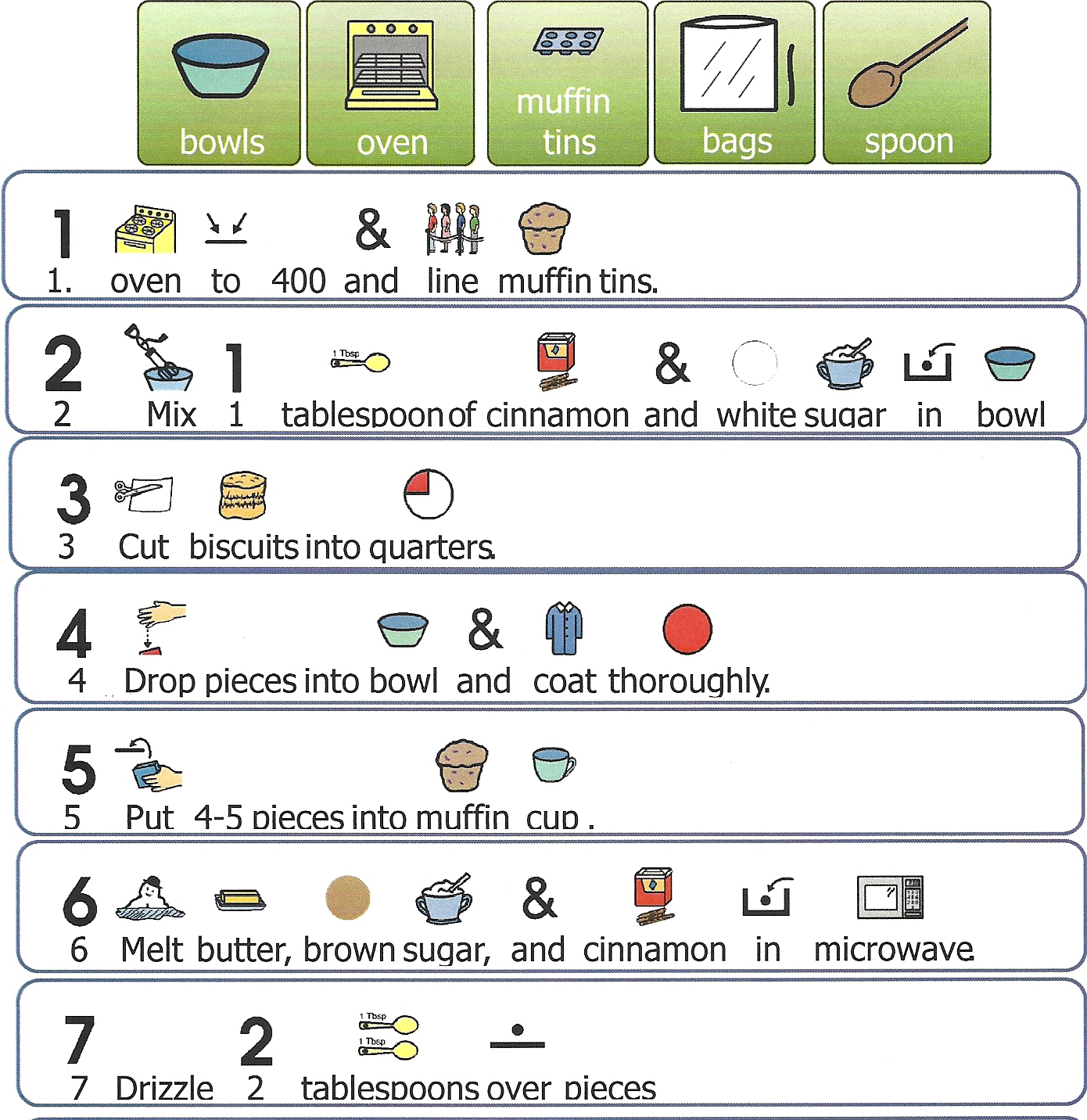
This is followed up with reading skills working on IEP goals of community safety words and pictures, computer programs and group news sharing session of current events.  On Thursdays there is a cooking unit.  Nick loves it and has tried several new foods this year including chili mac, waffles, pancakes, chocolate chip cookies and spaghetti tacos.  Now I am hungry! 🙂

Here’s an example of a recipe they use at school for monkey bread…….

scan0002

Third period is called “Home Maintenance.” During this time Nick prepares a simple snack.  He makes a choice using either his picture icons or iPod Touch Chat.  He likes Cheezits, pretzels, popcorn, salami and cheese. Here he is able to practice fine motor skills like cutting and opening packages with the occupational therapist.  He also works on hygiene skills, (brushing teeth, putting on deodorant and body spray, etc…).  For practical information and visual supports about hygiene and dressing be sure to read  Blog #22~Grooming 101 (located in the September archives).

Nick takes adapted physical education in fourth period.  Units include soccer, swimming, basketball, volleyball, badminton, kickball, adventure education and walking.  He really enjoys the interaction with peer buddies in class.  Period five is lunch time. 🙂

APE swimming 006 (4)

In the afternoon for periods six through eight, Nick has “Vocational and Community” skill building. Nick is working at job training sites three days a week.   These include Tabor Hills (retirement home) and Re-Store (Habitat for Humanity) where is responsible for vacuuming.

Nick vacumming_Tabor Hills (3)

His third job is at Adopt (animal shelter) where he removes leaflets from stacks of newspapers for cages.  On the other days he has school jobs which include shredding, work bins, rental laundry.  Wednesdays I have no problem getting Nick out of bed. It’s community day. 🙂 He enjoys it and is so happy being out and about.  The activities include dining out both at fast food and sit down restaurants, mall walking and shopping at Wal-Mart for groceries to use in the cooking unit.  Here he works on his goal to pay with a debit card.

Nick trying on sunglasses at the store…… He’s looking pretty fly!

018 (2)

He can manage a grocery cart (with reminders to not purposefully run into items or people)

Ramming speed ahead! You should see Nick barreling through Costco 🙂

grocery cart

That is the day in the life of Nick in high school.  His days are filled and structured during the week from 6:30 a.m. until 2:30 p.m. He loves going to school and enjoys the staff (and giving them a run for their money.) That’s what is in my noggin this week.

~Teresa

Posted in Education and Special Needs

Blog #43~Taking the Next Step after High School

Blog #42~ Taking the Next Step after High School

In a few months, Nick will be walking across the stage to accept his high school diploma.  We are not doing the typical things you do for the senior year.  No need to reserve the tux or limo for prom.  It’s not in the cards to visit any college campuses.  And ten bucks says that the hat and tassel are going Frisbee air born as he crosses the stage at the NIU Convocation Center.  Question is….. What does someone who has Down syndrome and autism resulting in severe cognitive and speech delays plan to do after high school?

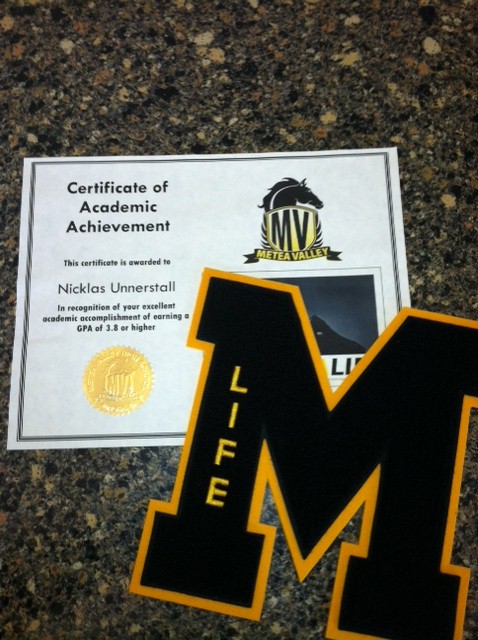
Actually, since Nick has not met the academic requirements needed for a diploma, he will receive a “certificate of completion” upon graduation.  He did letter in high school and a look at that GPA.🙂

photo (117)

Once the “certificate of completion” is put on the shelf, we move into the next phase for Nick.  The program is affiliated with the school district and called STEPS (Supported Training Experiences Post-Secondary).  Under the *IDEA law, a student with special needs may continue with high school or enter a transition program up until they turn 22 years old.  The decision for placement is based on the child’s individual needs.  Students with developmental delays may benefit more by having extra time to work on vocational, social/leisure, self-help skills along with their educational training.  Many students who are higher functioning academically may be able to take college courses and have paid jobs.  Last week we had the opportunity to visit the campus and get a closer look at the STEPS program.  Al attended the first session.  I followed up with Nick since we had to do a team tag with him and went to the second session geared for graduating seniors.  While we waited for the second meeting, Nick and I took a tour of the building. By the way, all but one fire alarm is not covered but I bet it will be soon.🙂  He loved the campus, especially the sensory room.

photo (116)

So here’s what I learned about the next phase for Nick.  The STEPS program is designed to build a bridge between school life and adult life.  The focus is to identify what services are needed and what linkages need to be made to help your child be successful in adult life.  The questions not to ponder are as follows:

1. What does Nick need to connect to the next level of adult life? 

2. When finished with public school, what type of work will Nick be involved in (paid job, volunteer work?) 

3. Will Nick participate in a vocational and/or life skills day training program or enroll in a degree-seeking program?  

4. Upon completion of public school what arrangements need to be made for independent living (community activities, living arrangements, sports and recreation, transportation, healthcare, financial support, emotional support)?  How do we plan to access them? What supports are needed?  

So the task at hand is to figure out what Nick is good at and also what he likes to do.  From there we work with the team to build a program with this in mind.  The three main areas are educational and vocational training along with building his independent living skills.  Each classroom has a function in the building.  There is a kitchen to work on cooking skills.  One classroom is built around vocational skills (with can crushers, shredders, work bins, and the campus micro-enterprise that includes making note cards and beaded jewelry.) A current STEPS student has her own business making beaded jewelry.  Check it out at http://www.specialsparkle.com!  Another room is for fitness and recreation filled with music, a Wii gaming system and comfy couches.  There is also a sensory room along with a few others that are used for academics and working on self-help skills (like time management, money handling, riding public transportation, etc…) Again, the program is centered on the individual their goals and getting them to that place by the exit date which is the day before their 22nd birthday.  I should add here that some students exit earlier if they reach a place where they are working independently at a paid job.

So Nick will have new jobs next fall and opportunities to do community service along with social functions (clubs, dances, bowling, etc…) It looks much like what he is already doing in high school but more laid back (no school bells, the students manage their own schedules.)  Looks like I will need to get an app for that.

photo (2)

I felt better after seeing the campus and visiting with the staff.  Amazing how the anxiety level goes down when you can actually get a visual of what lies ahead.  Now all I need to do is answer all those questions above, yikes!  Maybe I’ll go make a cup of tea and mull over it. I’ve got a few weeks until Nick’s IEP meeting. 🙂

photo (115)

That’s what is in my noggin this week, stay tuned maybe I’ll have some answers by mid-March!

~Teresa

*From Wikipedia: The Individuals with Disabilities Education Act (IDEA) is a United States federal law that governs how states and public agencies provide early intervention, special education, and related services to children with disabilities. It addresses the educational needs of children with disabilities from birth to age 18 or 21[1][2] in cases that involve 14 specified categories of disability.  In defining the purpose of special education, IDEA 2004 clarifies Congress’ intended outcome for each child with a disability: students must be provided a Free Appropriate Public Education (FAPE) that prepares them for further education, employment and independent living.[3]

Under IDEA 2004:

  • Special education and related services should be designed to meet the unique learning needs of eligible children with disabilities, preschool through age 21.
  • Students with disabilities should be prepared for further education, employment, and  independent living.
Posted in Autism, Down syndrome, Education and Special Needs

Blog # 24~Top 10 Things I Have Learned While Navigating Nick through School

Top 10 Things I Have Learned While Navigating Nick through School

This weekend I was prepping for a lecture called “A Parent Perspective” which I do at Aurora University.  For this semester there are two classes one undergrad and a graduate student class all who are/ or planning to become teachers.  Since Nick is a senior in high school I decided to include a top ten list of some things I have figured out over the years. While compiling this list I couldn’t help but think back to those early days. I was a novice and such a chicken when it came to IEP meetings.  I have a degree in teaching secondary education (Kinesiology and Health) but very little experience teaching special education.  I took a class similar to the one I am lecturing while at The University of Texas.  It gave a broad brush of special education and included an internship in a self- contained classroom and gym class. Beyond this I knew very little on how to take the helm and steer these uncharted waters.

Aurora University working with Elliott who leads the classes….

The early intervention program was easy (birth-three years old.)  The staff was nurturing and it was a *can of corn.  Once the cord was cut Nick entered the early childhood/ pre-school program things were more serious and the meetings took on a different tone.

Because Nick had very low muscle tone (a trait of Down syndrome see blog #7 Mama Mia, for more information on DS traits) he was delayed in gross motor activities.  He didn’t walk until age 3 ½ nor eat solid foods.  At age three during the transition from early intervention to early childhood/pre-school I enlisted a private speech therapist who specialized in feeding.  Amazing how one person can impact your life.  Pam opened up my eyes.  She got me thinking outside the box.  She also worked at a private school in Houston and suggested we look at putting Nick there.  The private school called The Arbor School had one opening three days a week.  It was an oasis, this all-inclusive resort with all of the speech, occupational and physical therapy right on campus working together.  They got their hands on Nick and worked magic. Nick attended The Arbor School three days a week and the public preschool program the other two days.  When the IEP came around at the public school, the whole Arbor School team came.   Our entourage sat down and matter of fact like made sure every attention to detail was addressed.  I was stunned.  What you can actually assert for yourself and get all kinds of services, equipment and therapy hours, I had no idea.

Nick at the Arbor School…..

The petting zoo came to the Arbor School during Go Texas Rodeo Week…

In California when Nick was in first grade I found my concerns of his need for a communication system going on deaf ears.  I brought in the Director of the Down Syndrome Connection support group.  The entire staff sat up straight as she advocated for my son.

Nick and I in Livermore, California…..

Much the same in middle school I enlisted the help from Little Friends Center for Autism.  I can’t say enough about the Arbor School, The Down Syndrome Connection and Little Friends.  What a gift they gave me as they showed me how to become an advocate for Nick.

So here is……….….The List!!!!!!

Top 10 Things I Have Learned While Navigating Nick through School

  1. Determine a method to communicate with the staff (communication notebook, email, daily reports.)
  2. Meet with the support teacher to discuss goals for the following year. Request all goals and reports from each department for review before the IEP meeting.
  3. Get everything down in writing in the IEP (from a 1:1 Aid to the chewy sensory toy.)
  4. I am not a bad parent because my child won’t keep gloves on/ or has a meltdown in school.
  5. Sometimes the parent has to be the one to rattle the cage.
  6. Get help when you need it (support groups, workshops, trainings, respite care, etc..)
  7. Know your rights, Read Wrightslaw.
  8. Don’t settle for just any solution if a problem
    doesn’t get better. There is always a better way.
  9. Sometimes as a parent you have to let go of your own dreams for your child so they can move down a different path.
  10. The parent is the biggest advocate for their child with special needs, trust in that.

Bringing support into IEP meeting does give a parent confidence.  But in most IEP’s my hand has been on the helm.  What I know for certain is that communication lines have to stay open.  I also learned to quit beating myself up because Nick had meltdowns (now we know that he was powerless because he couldn’t communicate his needs and it is not my bad parenting.)  Once the autism diagnosis was given, I had to reach out for help get more training and arm myself to fight the big fight.  I quit settling with the school staff and learned that I had to ask for more to help my son thrive. I wasn’t being a bitchy mom; I approached the problems in a matter of fact, but firm manner. And sometimes that means I have to be the one to rattle the cage to obtain services to support my son.  In addition, I found that just because I have a dream for Nick doesn’t mean he can fulfill it.  Facing the fork in the road that separated him from an academic curriculum to a functional curriculum enabled Nick to focus on what he was meant to do. Hello T, he just isn’t ever going to write his name, let go of that academic goal.

So here we are, Nick’s senior year and after riding some rough waves now the seas are relatively calm.  We survived and came out on the other side much wiser and stronger.  That’s what is in my noggin this week.  Until next week, I hope yours will be a *can of corn.

~Teresa

* According to Wiki Answers: The term “Can of Corn” is a phrase used to describe a softly hit baseball as it could easily be caught. The term originated as a customer would ask a grocery clerk for a can of corn the store clerk would grab a can from the top of a stack of cans, and would softly toss the can down to be caught without harm.


Posted in Autism, Down syndrome, Education and Special Needs

Blog #19~ Back to School Tips for Special Needs Kids

Back-to-School

Blog #19~ Back to School Tips for Special Needs Kids

I love scrolling the Facebook wall and seeing all of the first day of school pictures.  Kids all spiffed up in their new back to school clothes and shiny shoes.  Leaving the subdivision last Thursday, I glanced over at the bus stop filled with elementary kids and their parents all with cameras in hand.  As moms that is what we do, take that moment and freeze frame it.

I did my share of taking those pictures, Nick, age 6….


Spiffy!

It’s hard to believe that Nick is starting his senior in high school. He has Down syndrome and autism and is in a self contained classroom.   And yes, I did take a picture of him.

It’s a little blurry because he was rocking back and forth.

I never get sad when Nick goes back to school.  In fact I do the happy dance celebrating my regained independence, (not to mention actually being able to hear the sound of a pin drop after the bus takes him away).

A couple of things have changed over the years. I don’t feel the need to have everything so perfect anymore. Also, his school supplies are no longer the typical things like rulers, scissors, pencils or wide ruled notebook paper.  His curriculum in the self-contained classroom has shifted from academic to functional.

Nick’s school supplies….

In last week’s blog, I mentioned that age brings wisdom and an AARP card application in the mail every few months. With 11 grade school years under my belt, here are my top 5 back to school tips for your  child with special needs:

  Top 5 Back to School Tips_

1. Get the haircut early, at least a week before the start of school.  Having a child with special needs often means a lot of sensory issues and angst over haircuts.  For Nick the stress of getting one can affect him for several days after.  See Blog #18, “A Cut Above” in the archives for more haircut tips.

2. Arrange a time to take your child to the classroom before school starts.  Video or take pictures of the classroom set up (desk area, sensory area, restrooms, etc..) along with the lockers, lunch room, gym and of the teachers & aids.  I create a social story using these, much like a blueprint of what his day will be like. If a child with autism can see it in picture form, they will understand it. It will also help to keep the anxiety level down.

3. Have your child help lay out the clothes, organize the school supplies and pick out lunch/snack choices the night before.  They will feel more invested, and it makes for a smoother start to the day.

4. Arrange the mode of communication with the teacher ahead of time at the meet and greet. I found that e-mail is the best way to go. In addition, I use a communication notebook that goes back and forth to school.  I can jot down how Nick’s evening went and how he slept.   In addition, the teacher and I created a custom report in a visual form.  Nick is able to point to the icons and share what he did each day with me after school.

5. Consider doing volunteer work at your child’s school.  It’s fun and you can see firsthand how your child is doing and interacting with peers. Here are some volunteer activities I’ve done:

*Room mom helping with parties

*Chaperoning on field trips

*Art awareness presenter each month

*Working book fairs

*Making copies, laminating,  and putting together learning tools for the Case Manager/Support Teachers.

Getting organized, planning ahead, becoming involved in the classroom and communicating with the staff will help make this year a success for your child with special needs. Good luck with the new school year! That’s what is in my noggin this week. 🙂

~Teresa


Posted in Autism, Down syndrome, Education and Special Needs, Speech and Occupational Therapy

Blog #8~ Three Scary Letters: IEP

Blog #8~ Three Scary Letters: IEP

Who would think that the 3 letters IEP could evoke anxiety and trepidation in the hearts of many parents of children with special needs?  IEP stands for Individualized Education Plan.  I used to be one of those scared and frail kittens shaking as I walked into the doorway.  My son, Nick has Down syndrome and autism.  I’ve been through my share of IEP meetings and learned a great deal on how to handle them.  I heard my share of war stories:

“Watch out they will try and get away with cutting your service hours!”

“Why would they do that?”

“Oh the budget constraints and pressure from the school district, that’s why. They are going to say the teacher can address the issues and you don’t need the additional speech therapy hours.”

So enter the neophyte parents into the doorway to face the army of personnel from the school.  The IEP team usually consists of the classroom teacher, case manager, occupational therapist, speech therapist, adapted PE teacher, school counselor, social worker, school nurse and a student services representative. Oh and yes, the parents too. 🙂  I can recall many in the early days crammed in tightly around a table and feeling very clueless in the early days.   The IEP meeting is intended to be a team effort, but sometimes we couldn’t help but feel like it was them against us.

What an IEP exactly?  Here is some information from Wikipedia:

An IEP is designed to meet the unique educational needs of one child, who may have a disability, as defined by federal regulations. The IEP is intended to help children reach educational goals more easily than they otherwise would.  In all cases the IEP must be tailored to the individual student’s needs as identified by the IEP evaluation process, and must especially help teachers and related service providers (such as paraprofessional educators) understand the student’s disability and how the disability affects the learning process. 

The IDEA 2002 requires that an IEP must be written according to the needs of each student who meets eligibility guidelines under the IDEA and state regulations, and it must include the following:

  • The child’s present levels of academic and functional performance
  • Measurable annual goals, including academic and functional goals
  • How the child’s progress toward meeting the annual goals are to be measured and reported to the parents
  • Special education services, related services, and supplementary aids to be provided to the child
  • Schedule of services to be provided, including when the services are to begin, the frequency, duration and location for the provision of services
  • Program modifications or supports provided to school personnel on behalf of the child
  • Least Restrictive Environment data which includes calculations of the amount of time student will spend in regular education settings verses time spent in special education settings each day
  • Explanation of any time the child will not participate along with nondisabled children
  • Accommodations to be provided during state and district assessments that are necessary to the measuring child’s academic and functional performance
  • The student should attend when appropriate. If the student is over 14 they should be invited to be part of the IEP team.
  • Additionally, when the student is 16 years old, a statement of post-secondary goals and a plan for providing what the student needs to make a successful transition is required. This transition plan can be created at an earlier age if desired, but must be in place by the age of 16.

IEPs also include other pertinent information found necessary by the team, such as a health plan or a behavior plan for some students.

The IEP can be daunting on paper, or shall I say more like a ream of paper averaging for Nick around 50 pages total.  The biggest tip I can share is to request all of the reports and intended goals prior to the meeting for your review.  In addition, I suggest meeting with the case manager at least a month before the meeting to discuss proposed goals that will be in the education plan.  That way there are no surprises at the IEP meeting.  If the parent and teacher have a good communication system back and forth there shouldn’t be any.  (For additional support, go to the links and resource pages on this website and look under Wrightslaw, Bridges for Kids-IEP goals and Barb Bateman’s book, Better IEP’s.)

Over the years we have utilized outside advocacy when we felt like the needs of our son might be compromised.  Rewind to 1998 in Houston, when Nick was attending a public pre-school program twice a week and a private special needs pre-school three days a week.  (This was before we could get him in the private school full time). We brought an entourage of very strong women from the private school to advocate for Nick.  Our advocates dissected that IEP and insured that all supports were in place down to the last detail.  That being a nubby rubber cushion for Nick to sit on to keep his core activated and him alerted.  I was floored at the way they spoke up for our son.  I would have never known to boldly ask for these things.

Nick at The Arbor School in Houston, Texas……

The presence of an outside advocate walking in with you at an IEP meeting can certainly make the team members sit up and be on point.  Memorable meeting number two was in 2001 when lived in the east bay area of Northern California. Nick’s language was minimal and he was getting frustrated not being able to communicate verbally.   On this particular occasion we were being met with resistance with regards to the school providing a proper picture communication system and training of staff and parents.  Enter the Executive Director of The Down syndrome Connection by our side.  (DSC is the local Down syndrome support group)  The school’s Physical Therapist asked if she could report first as she had another meeting to attend.  The Social Worker raised her hand and asked if she could go second and then excuse herself.

Without blinking an eye,  the DSC Director calmly said, “Wait a minute, we are all here to discuss Nick’s future, right?  We only have this meeting once a year. The least you can do is stay and be a contributing member to this team.”

No one dared to leave that meeting.  Oh, and yes the communication specialist was immediately put in place to help with the picture communication system for Nick.

Nick in California

There is only one word for these advocates and the others that followed…..Rock Stars!

I have learned from the best.  The frail kitten morphed into a lion that can roar.  Why, because I have to fight for him because he has no voice. I know Nick the best and what works for him.  I don’t have to agree with the team.  In my matter of fact approach I simply state my parent concerns and have them put in writing in the IEP.  So parents, if you don’t agree, then push your chair back, state that you don’t agree and do not sign it. You may have to take it to the next level if you get a push back.  That’s when you use the two words that can evoke the most fear…Due Process!  (Thank you Kendra, Nick’s Private Occupational Therapist for giving me the courage to do these things.)

Nick at private occupational therapy with Kendra

More fun with Kendra

And please, do not call me “The Mom”, or “Nick’s Mom.”  The name is Mrs. Unnerstall.  Yes, IEP meetings can be scary.  But parents, don’t be fraidy cats.  Just get prepared!   Request those reports and goals ahead of time.  Schedule a meeting with the case manager before hand to make sure you are on the same page.  Communicate with the teacher so there are no surprises.  And finally if you don’t feel supported, then bring an advocate to the meeting.   That’s what is in my noggin this week.  Until next Monday, may you find the inner lion within you and fight the good fight!

~Teresa


Posted in Autism, Down syndrome, Dual Diagnosis Down syndrome and autism, Education and Special Needs, Tech Stuff/Apps and Video Based Instruction

Blog #5 Ready, Set, Action!

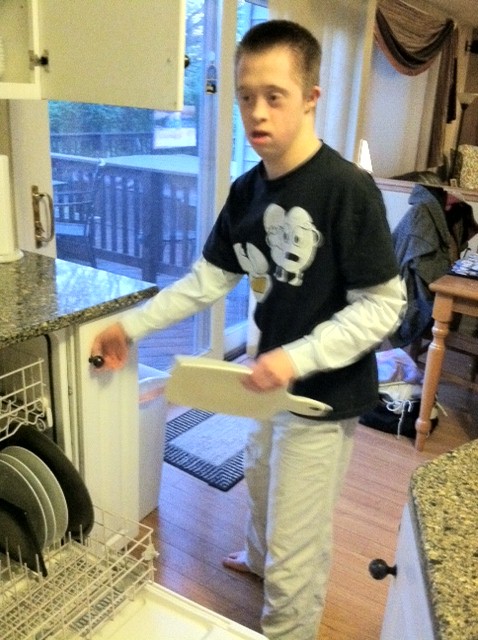
“Wash… wash…wash,” I hesitated going into the other room in fear of what Nick might be doing.  Would it be my fitness shoes in the sink under the faucets running full blast yet again?  To my surprise, I went into the laundry room to witness him taking the dirty clothes off floor and one by one plunking them into the washing machine and with each one saying the word wash!  It hasn’t just been the laundry either. For the past year, he has step up in other household chores.  Trying to get his brother, Hank to unload the dishwasher was like trying to pull teeth.  But Nick completely enjoys his role that he took over since his brother left for college last fall.  Everything has its place and his careful eye has taken note over the years.  He proudly puts every cup, plate, pot and pan along with the stemware carefully in the cupboards.

A few months ago I packed away the last of the Christmas ornaments and decorations and pulled out the vacuum to clean up all of the needles that had fallen on the carpet. I plugged the cord in and turned around to see Nick with his hand on the handle.  He was ready to take it on!  Much to my surprise, he not only navigated it but held the cord appropriately off to the side and did a nice job running the vacuum across the carpet.  I knew he was doing this for his school job at the elder care home but had no idea how well he was performing.

I have to give all of the credit to the staff at his high school.  Mrs. W brought in Northern Illinois University (NIU) to do a study that was done on six of her students last year.  The abstract was about maintaining vocational skills of individuals with autism and developmental disabilities through video modeling.  Research has shown that using video modeling helps to promote independent work-related behaviors and decrease the reliance on staff.  Video based supports often result in fostering independence and generalization of job related skills.  This means there is less reliance on job coaches and co-workers all for which are critical for sustaining competitive employment.  It is like a script in that breaks down the tasks that need to be performed.  These short videos are narrated in the background with short verbal prompts.  Nick watched them every day for two weeks and then each time before he was to perform a particular task. In the case of the NIU study the videos were for loading the dishwasher and washing machine.  What I noticed immediately is that Nick enjoyed watching them over and over again.  They are much more effective than any task strip that he has always used in the past. Here is an example of a task strip:

For me the proof is in the pudding*.  I noticed a significant increase in Nick initiative and accuracy in helping out around the house.  The videos did in fact increase his generalization to doing other chores besides these two.

While the jobs are pretty basic for most people, for Nick they mark a milestone.  His goals are no longer academic in nature for the most part they are all functional.  Functional goals are non-academic and generally understood to refer to skills used in the context of routine activities and daily living. Anything he can do independently gives him not only a better chance at getting a job upon graduation but also a placement into a group home someday.   Right now, he also has many other jobs at school including shredding, washing windows, loading the dishwasher, recycling and washing clothes for the PE department.  This week we have his annual IEP meeting to discuss his progress and goals for his senior year of high school.  As I look back it is amazing to see the progress he has made given his disabilities.  At this rate, I am going to be able to give him the reigns around the house while I sit back on the couch, prop my feet up and eat bon bons!  That is what’s in my noggin this week.

*Origin of Proof is in the Pudding

Proof in this case means “ultimate test.” To “prove” used to mean to test, a meaning which survives in a limited number of usages. This is one: it literally means you can show me a wonderful recipe, and tell me about your fine ingredients, but ultimately, the test is in the thing itself, the actual results.


Posted in Autism, Behavior/ ABA, Down syndrome, Education and Special Needs

Blog #3~DS-ASD, Getting Your Goat

Blog #3~DS-ASD, Getting Your Goat

  • Eggs
  • Celery
  • Balsamic vinegar
  • Olive Oil
  • Parsley
  • Fajita seasoning
  • Merlot
  • Penne pasta noodles
  • Laundry detergent
  • Acne wash
  • Fluoride rinse
  • Shaving cream
  • Whey protein powder
  • Shower gel
  • Hand lotion
  • Baby powder

That’s the short list and I don’t mean grocery list.  It is just some of the stuff that Nick has gotten his hands on and dumped out on the kitchen floor. I wish I could say that I am rewinding to back when Nick was age six.  But this is the here and now; the flavor of the week (or in this case for the last year or so.) Nick is 18 years old with a dual diagnosis of Down syndrome and autism.  This makes for an interesting mix of behaviors.

I have consulted teachers, therapists and behavior specialists in autism.  After they have a good laugh at the list, the conclusion is the same. First, it could be a sensory issue.  Nick seeks out many odd things to look through, tap and stim on and perhaps the act of dribbling out a tube of Mederma skin lotion from the second floor banister is satisfying some sensory need.   The second theory is that Nick is seeking attention and looking for a reaction. All I know that it is very hard to keep your cool when you see a full 64 ounce, Costco size container of olive oil emptied all over the floor. Fortunately I get my paper towels at Costco too. 🙂 I will say that the floor and my knees have a nice sheen to them.  Then there is our  poor cat, Miss Mellie sleeping innocently while Nick sprinkles a half bottle of fajita seasoning all over her gray fur.  Okay, I had to run into the other room and laugh on that one.

Freshly seasoned and washed cat…..

photo (113)

The dumping is just one facet.  Nick is like a toddler putting all kinds of things in the toilet.  A package of pens, my reader glasses, his iPod nano and his Dad’s watch are just a few of the things he’s submersed.  The newest trick is putting your shoes in the sink and running the water faucet full blast.  Here’s the thing.  He commits the crime, runs downstairs pointing up with a grin on his face and says “Uh oh.”  He is always looking to get a response.  It is not easy to keep a poker face during these episodes.  However I look at it like this, Nick is just trying to *”get my goat”.  The goat is a metaphor for a state of calm and peacefulness.  I grit my teeth, make absolutely no eye contact. On a shelf near the kitchen now stands a stack of permanently borrowed, white gym towels.   I point to the pile and he grabs a towel and cleans up.  No reinforcement is given to him.

Better put Mederma on the list…….

Not all the things he does are this messy.  Sometimes they are just plain funny, like a baby doll in the Pierogis….

So how can these inappropriate, attention seeking behaviors be managed?  First, the incidences are documented on what is called a Functional Behavior Assessment (FBA). On the form I record the date and time of the incident. Then follow the ABC’s:

Antecedent= What happened before the behavior

Behavior= The actual behavior and incident that occurred

Consequences= What happened after the incident

After looking at ABC ‘s, one can see if there is a common thread and determine why they might be doing the behavior.  As I mentioned in my very first blog entry, every behavior (even the bad ones) are trying to communicate something.  In some cases, it’s a sensory seeking reason.  Think about it- the sound of an object breaking or sight of a mess spilling or shattering all over the floor is exciting.  In the case of dumping, often it is when a parent is busy around the house, on the phone or trying to get ready to go to work.  It is clear that Nick is bored and seeking our attention while we are busy.  But mostly, I think it is a “control thing” for him.  It is something that HE has power over in his own life.

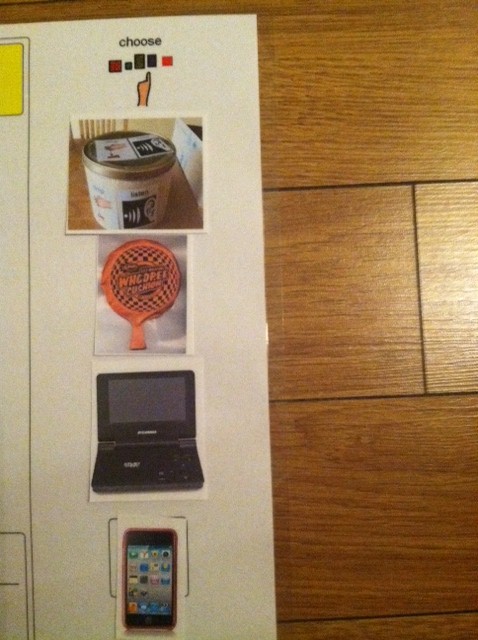
With this information a positive Behavior Support Plan (BSP) can be developed targeting undesirable behaviors.  Look at what possible replacement behaviors could be put in place instead.  This is where the “choice board” comes in.  This board has appropriate choices in the form of icons which he can pick from to better occupy his time. These choices should be highly preferred and stored away, so they are not accessible.  Below is a sample choice board.  The drop box is filled with fun things to throw and dump, followed by the woopie cushion, DVD player and iPod touch:

The final piece will be to add an icon to indicate that the behavior he did was wrong.  If he can see it in visual form, he will understand it.  This is to be done again without eye contact so as not to reinforce the attention he is craving.

Icon to show for inappropriate behaviors:

angry face

In the meantime, as I put the final touches on this piece, I turn around to see Nick unloading the dishwasher by himself.  This is a something he has complete control over (and is really adept at doing by himself).  I smother him with praise, “Good job big guy, I am so proud of you”.  Catch your child being good and reward them with the positive reinforcement.

Way to go Nick! 🙂

Show the icon for appropriate behavior:

happy face

All of these visual supports need to be done consistently across the board in every venue (home, school and community.) Hopefully with this plan in action, we can cut down on the dumping.  At this point in our lives we shouldn’t be dealing with this type of behavior or having to reinstall safety locks back on all the cabinet doors.  What can I say- It’s Nick’s world, the rest of us are just trying to keep up.  That’s what is in my noggin this week.

Here’s to not letting anyone get your goat*!

~Teresa 🙂

*The expression ‘to get your goat’ has its origins in horse racing. Race horses are very high-strung animals. Goats are often used as companion animals, to keep a horse calm. Someone wanting to fix a race would slip into the barn the night before the race, steal the goat, and then an upset, distracted horse would run a bad race. Hence, if you are upset and not at your best, it is said that ‘someone has gotten your goat.’

Nick age 5 with our next door neighbor goats in Northern California.

Follow Nick on Social Media:

Facebook and Pinterest @Down Syndrome With A Slice Of Autism

Instagram #nickdsautism

Twitter @tjunnerstall