Posted in Autism, Down syndrome, Dual Diagnosis Down syndrome and autism

Happy Thanksgiving

thankful

Happy Thanksgiving

It’s a busy week, so I’m keeping this brief.  Take time to count your blessings and enjoy the special time with loved ones, as you gather together.

I am grateful that Nick is happy, healthy, loving and yes, even mischievous, on this chilly Monday morning.  He kicked off the day in rare form.  In the 5 seconds it took to grab my purse, he rushed over and tossed my freshly brewed coffee all over the kitchen floor. Oh Nick, you do keep me on my toes, and for that I am thankful too.  Hey, it’s Nick’s world…. the rest of us are just trying to keep up.

That’s what is in my noggin this week.

Happy Thanksgiving!

~Teresa 🙂


Posted in Autism, Down syndrome, Dual Diagnosis Down syndrome and autism

Blog #162~ Horseback Riding Therapy

Blog #162~ Horseback Riding Therapy

nick-horseback-therapy

Horseback riding therapy, also known as Equine Assisted Therapy, involves interactions with horses for individuals with and without special needs, including those with physical, cognitive and emotional issues.  Hippotherapy is another term used by physical, speech, and occupational therapists to reach their patients on a personal level.

horseback-therapy

There are many benefits such as motor, emotional and sensory sensations that come with riding a horse. Horseback riding gently and rhythmically moves the rider’s body in a manner similar to a human gait, to improve  in flexibility, balance and muscle strength.

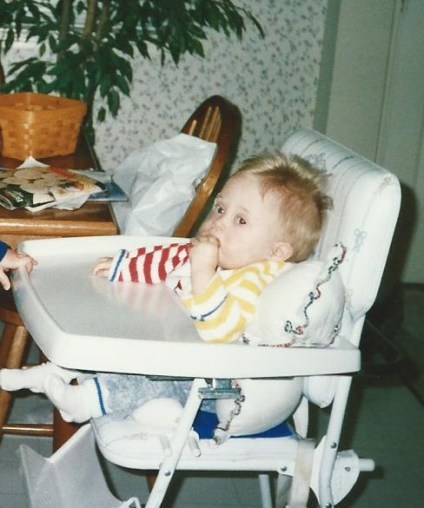
At age one, my son Nick was unable to sit up by himself due his low muscle tone, which is a trait of having Down syndrome.

Nick at age one…..

nick-low-tone-high-chair

We had to prop him up in the high chair, so he wouldn’t slide down or slump to either side.  Nick was receiving physical, occupational and speech therapy in his early intervention program.  Shortly after his first birthday, we enrolled him in a horseback riding therapy program.

Person’s having Down syndrome please note:

“Prior to considering hippotherapy as a treatment strategy for your child, it is important that they have current cervical x-rays to ensure the atlantoaxial joint (or C1-C2) is not at risk for dislocation.  Some people with Down Syndrome also may have a condition known as Atlantoaxial Instability — a misalignment of the top two vertebrae of the neck. This condition makes these individuals more prone to injury if they participate in activities that overextend or flex the neck. Parents are urged to have their child examined by a physician to determine whether or not their child should be restricted from sports and activities that place stress on the neck injury.”

In less than nine months, of incorporating the horseback riding therapy, we noticed a vast improvement in Nick’s posture both in strength and endurance.  At first he couldn’t tolerate a helmet as it weighed him down, (as you can see in the first picture of this post).  But soon, he not only wore a helmet, but was able to keep his head upright, along with and sitting up better.

Nick with his brother, Hank, taken nine months after starting horseback riding therapy…

nick-sitting-with-hank

We decided on horseback riding therapy, initially to help our son gain trunk strength.  However, we soon realized there were many additional benefits that came along with it.  Not only did Nick ride on top of the horse, he also learned how to care for the horse by feeding, patting and brushing them.  This helped to create an emotional bond and opened up new sensory experiences that he couldn’t get in a clinical setting.  Riding a horse helped to wake up the sensory preceptors, making for a fun and motivating experience for him.

Horseback riding therapy was a wonderful experience for our son with special needs. The horses were gentle friends that helped Nick get stronger, build relationships through unspoken communication, and taught him about responsibility.  That’s what is in my noggin this week!

~Teresa

Follow Nick:

Facebook and Pinterest @Down Syndrome With A Slice Of Autism

Instagram #nickdsautism

Twitter @tjunnerstall


Posted in Autism, Down syndrome, Dual Diagnosis Down syndrome and autism, Fun Side of Nick

Halloween Fun

Halloween Fun

This week, I’m sharing some of the fun costumes my son, Nick has worn over the years for Halloween.  Nick is 22, and has Down syndrome and autism.  It’s not always easy for a person with special needs to tolerate costumes, much less masks, face paint, or makeup. The sensory issues can get in the way of going, “all out” for Halloween.  Here is some that I’ve come up with over the year for him:

Referee Nick

scan0018

I put a spell on you!

scan0014

Spongebob Squarepants

scan0015

M&M Nick with his brother Hank

scan0012

What a cute slice of pizza he is….

scan0017

Army man Nick, and his brother Hank

scan0021

Toot Toot, this one was made for Nick!

scan0023

Pump, pump it up Nick!

IMG-20121027-00112

Yee Haw! My cute, little cowboys….

scan0010

Yo, what up Nick?

Nick gangsta

It’s possible to find, (or come up with), your own costumes for a child with special needs. We’ve had a lot of fun doing this over the years.  Nick and I wish you a safe, and Happy Halloween.  That’s what is in my noggin this week.

~Teresa

Follow Nick:

Facebook and Pinterest @Down Syndrome With A Slice Of Autism

Instagram @nickdsautism

Twitter @tjunnerstall


Posted in Autism, Down syndrome, Dual Diagnosis Down syndrome and autism

Down Syndrome With A Slice Of Autism got a facelift!

Nick’s world just got a facelift!  Take a peek at our fresh, new look and domain address @www.nickspecialneeds.com.

 Thank you so much  for reading and sharing Nick’s world.

~Teresa 🙂


Posted in Autism, Down syndrome, Dual Diagnosis Down syndrome and autism

Columbus Day

columbus-day

We are taking a break this week!   There are many topics of Nick’s world, in the archives to explore:

Safety/Wandering

Behavior/ABA

Down syndrome

Dual Diagnosis Down syndrome and autism

Education/IEP’s

Feeding/Hygiene

Government funding and legal issues

Health Issues and Down Syndrome

Special Needs Resources

Special Needs Parenting

Therapies (OT, Speech, and PT)

Recreation/Leisure

Tech/AAC (communication devices)

The Fun Side of Nick

Thank you for reading and sharing Nick’s World!  You can find us on Facebook and Pinterest @Down Syndrome With a Slice of Autism, on Instagram @ #nickdsautism, and Twitter @tjunnerstall.  See you next Monday for a fresh new blog!  That’s what is in my noggin this week.

~Teresa


Posted in Autism, Down syndrome, Dual Diagnosis Down syndrome and autism, Education and Special Needs, IEP (Indivdualized Education Plan)

Blog #157~Making Inclusion Work

Blog #157~Making Inclusion Work

Is inclusion right for your child?  That was the question I addressed in last week’s post.  Inclusion simply stated, means that a student is supported in the general education classroom setting with given supports outlined in the IEP.  The IEP is an Individualized Education Plan, is a document for special education students.  This document identifies how the student will learn, what services the school will provide, and how their progress is measured.  My son Nick, was in an inclusion classroom during his elementary school years. He has Down syndrome and autism, and benefited greatly from the experience.  How do you make the inclusion setting work for your child with special needs?

The Individuals With Disabilities Education Act (IDEA), amended version 2004, does not actually list the word inclusion. The law actually requires that children with disabilities be educated in the “least restrictive environment appropriate” to meet their “unique needs.” The “least restrictive environment” typically means placement in the regular education classroom which typically means ‘Inclusion’ when ever possible. (Source taken from about.com)

The IEP team works with the parents to determine the least restrictive environment and builds the placement around this concept.  What will the child need to be successful in a regular education classroom?   The IEP team and parents should collaborate to identify supports needed.

Classroom Supports:

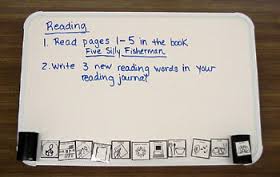
*Modified Curriculum:  (Regular education teacher and support/case manager) work together to adapt the current assignments for the child.  Make a plan to address what will be learned in the regular classroom, and how will the student will learn that similar information?

visual work board

*Staffing:  Does the child need a paraprofessional (classroom aide)?  What is the ratio? What additional training will be needed?

*Equipment:  Physical environment (modified desk, chair, adaptive equipment/school supplies, sensory supports)

*Assistive Technology:  Communication (Alternative Augmentative Communication “AAC” device, Picture Exchange Communication System “PECS”, Sign Language/Interpreter), or other devices using apps for to navigate schedules and assignments.

alphabet tracing  ipad-touch-chat

*Sensory Breaks: What space will be provided, is there a sensory area in the school?  How will the student request a break (need a break icon, button on AAC device)?  What equipment is needed, (noise cancelling head phones, figit toys, nubby cushion, music, weighted vest or blanket, bean bag chair, swing, trampoline)?

figit toys   nubby therapy cushion

In addition to identifying classroom supports, the team should address these questions at the IEP Meeting:

* What are the student’s strengths, and how do we build a plan around them?

*How does the student learn best?

*What behavior support is needed to help the student learn the best, and operate comfortably in the general education classroom?

Identifying supports needed and how to best accommodate the student will set a good foundation to success in the inclusion classroom setting.  The student will benefit by having access to the general curriculum and build social relationships in this community in the least restrictive, inclusion environment.  That’s what is in my noggin this week.

~Teresa

Follow Nick:

scan0016

Facebook and Pinterest @Down Syndrome With A Slice Of Autism

Instagram: #nickdsautism

Twitter: @tjunnerstall


Posted in Augmentative and Alternative Communication (AAC), Autism, Behavior/ ABA, Dual Diagnosis Down syndrome and autism

Blog #155~More Than Down Syndrome,DS-ASD

Blog #155~More Than Down Syndrome, DS-ASD

My son, Nick has Down syndrome. There came a point when I felt like we didn’t fit in with the Down syndrome support groups. We stopped going to the local support group holiday parties, play groups and other fundraising events. My son, Nick lacked speech and displayed unusual and repetitive behaviors. These stimming behaviors included tapping, shaking and throwing objects. Vocal stimming and yelling was another behavior that he exhibited. His speech delays and inability to communicate, resulted in frustration on his part, which led to behavior problems and meltdowns. It became apparent that this was more than just Down syndrome, when he hit puberty.

photo-26

We approached the elementary school IEP team about these outbursts, where he would throw things, trash the classroom along with pinching and scratching staff. It didn’t seem like any of us, could get a handle these problems both in school or at home. The school IEP team was reluctant about getting an autism evaluation done, as they stated; “We have a primary diagnosis of Down syndrome we can work from”. Rather than push the matter with the school, we chose to have an independent evaluation done and paid for it (with some help from our private insurance), out-of-pocket.

It was money well spent. Nick got the new diagnosis of Down syndrome and autism (DS-ASD). If you suspect that your child’s behaviors might be related to more than just Down syndrome, I would strongly suggest that you get a referral from your primary care physician to get an evaluation for autism.

The diagnosis of autism, was like getting the magic key, that unlocked the door to more services for our son...….

magic key

Here are the additional services we received with the secondary diagnosis of autism for our son Nick who also has Down syndrome. Obtaining these services took some time, but the effort to get them, has been well worth it. These services were provided in part, by the school district and outside agencies:

*Behavior Support was requested from the school district, A BCBA certified autism specialist did a Functional Behavior Assessment (FBA). This lead to the development of a Behavior Support Plan (BSP), specifically targeting all triggers, and how to prevent & handle crisis situations during meltdowns. BSP’s can also target skill development in a variety of areas like toilet training which is very challenging. After the BSP was put into the IEP, we collaborated as a team. We built in specific visual supports and sensory breaks into his day, which helped him to stay focused and regulated.

*Speech Support and training on how to properly implement a Picture Exchange System (PECS), along with an Alternative Augmentative Communication (AAC) device.

ipad touch chat.JPG         photo (123)

*Toilet Training and workshops for home support  This included coaching on how to develop and implement a timed toileting schedule and use visual supports to promote independent living skills inside the home.

*Additional State Funding (In-Home Family Support Child Based Waiver)  This is funding for respite care, behavior support and safety/ health equipment to support the child at home.

*Federal Funding (Supplemental Security Income-SSI)  A federal  income supplement program funded by general tax revenues (not Social Security taxes). It is designed to help aged, blind, and disabled people, who have little or no income; and it provides cash to meet basic needs for food, clothing, and shelter.

Getting the secondary diagnosis label of Down syndrome and autism (DS/ASD), helped the school staff, therapists, medical professionals, family and friends get a better understanding of Nick’s behaviors and additional needs. By getting access to these additional supports, we’ve been able to change the strategies needed to help Nick. It’s important to note that with co-occurring DS-ASD, the autism symptoms often supersede over those related to Down syndrome. Behaviors and additional needs associated with DS-ASD are complex.

DS-ASD Ribbon

As a result of obtaining these supports, Nick’s communication improved, allowing him to feel understood, respected and less frustrated. As a family, we felt better assisted with the training provided from the BCBA and our local autism center. Applying for the state waiver and securing the funding for respite staff took some of the burden off us.

If you suspect your child with Down syndrome may have autism, read this link by the National Down Syndrome Society for the signs and symptoms: https://www.ndss.org/resources/dual-diagnosis-syndrome-autism/

Additional resources for navigating a dual diagnosis of Down syndrome and autism:

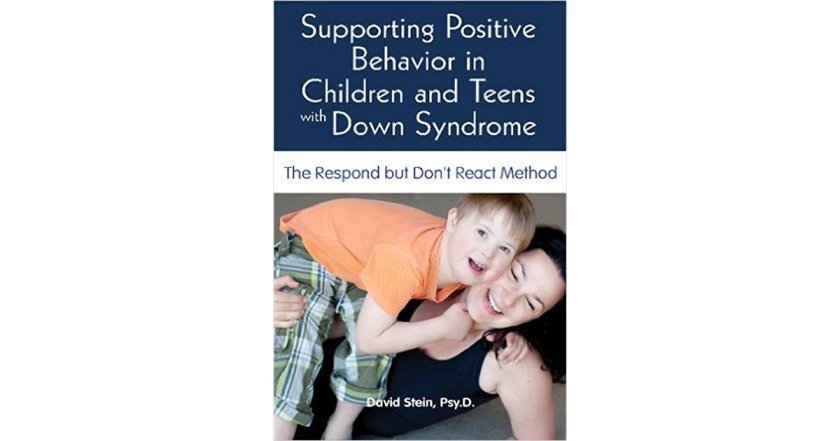
*When Down Syndrome and Autism Intersect-A Guide to DS/ASD for Parents and Professionals and Supporting Positive Behavior in Children and Teens with Down Syndrome books:
down-syndrome-and-autism-intersect

Book Supporting Positive Behavior DS

*The Kennedy Krieger Institute- https://www.kennedykrieger.org

*Down Syndrome Association (UK)- http://www.downs-syndrome.org.uk/for-families-and-careres/dual-diagnosis/

*National Association for Down Syndrome (NADS)http://www.nads.org/resources/down-syndrome-and-autism/

*Facebook Support Groups:

-Down Syndrome With A Slice Of Autism

-Autism Discussion Page (Bill Nason)

-The Down Syndrome-Autism Connection http://www.ds-asd-connection.org

The challenges of having a child with co-occurring Down syndrome and autism (DS-ASD) are unique. So many parents say that they no longer fit in with the Down syndrome support groups and can’t relate to the autism groups either; they feel isolated. You as the parent, know your child best.  If you suspect that your child with Down syndrome may have symptoms associated with autism, I strongly suggest that you take action to get a clinical, medical evaluation. The autism label doesn’t change who your child is as a person, it gives you a better understanding how to meet the child at their own level.

That’s what is in my noggin this week 🙂

~Teresa

Follow Nick:

Facebook, Instagram and Pinterest @Down Syndrome With A Slice Of Autism 

Twitter @tjunnerstall

Posted in Adult Day Programs for Special Needs, Augmentative and Alternative Communication (AAC), Autism, Down syndrome, Dual Diagnosis Down syndrome and autism, Recreation/Leisure and Special Needs

Blog #154~Adult Day Program 6 Month Update

Blog #154~Adult Day Program 6 Month Update

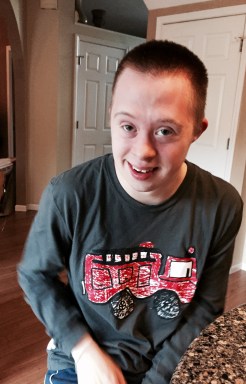
On my son’s 22nd birthday this past February, the little yellow bus stopped coming to the door.  My son, Nick has Down syndrome and autism and has aged out of school.  For the past 6 months,  Nick has been going to an adult day program.  This week I want to share some of the activities he’s been doing in this excellent program at the Keeler Center.

Nick’s adult day program is filled with many fulfilling activities each day.  Mondays are dedicated field trip days.

Here are some of the places Nick has visited in the community:

Shedd Aquarium

Library

Brookfield Zoo

Fabyan Park Japanese Garden

Fox Valley Park District Greenhouse

Phillips Park

Red Oak Nature Center

Art Studios

Fermi Lab

Local restaurants (Noodles & Company, Dunkin Doughnuts, Culvers, Colonial Café, etc..)

In the facility, Nick participates in a variety of activities:

Vocational jobs (cleaning and vacuuming sensory room, recycling, shredding, work  bins, gardening, menu planning, cooking, etc..)

nick vacumming aid

Social circle (News to You, greeting and using AAC devices)

Science projects

Table and bin work

Nick work aid

Arts and Crafts (for art fairs, mothers/father’s day, making cards, painting, etc..)

Recreational (gym activities, yoga, etc..)

Nick yoga AID

Fun Fridays (Holiday theme parties, dancing, karaoke, games, concerts, cookouts, movies, etc..)

Speech therapy (insurance private pay), to work on articulation and using his AAC device

Outside the facility, his group does community recycling, shopping for cooking day as well as volunteer jobs.  One of the sites is at a local church, (stuffing bulletins and cleaning the nursery).  The other workplace is at a food pantry, where they organize and stock inventory, like dried beans, cereal and peanut butter.

Nick recycling

Nick has a full life and rewarding activities in his adult day program. The staff is very dedicated, caring, welcoming and patient.  Yes, patient! Nick’s pulled several fire alarms the last few months.  The behaviorist on staff  has put a plan in  place, and met with the staff to curtail this ongoing problem. Hey, it’s Nick’s world, the rest of us are just trying to keep up. The current fire alarm pull count is now 40 pulls since 3rd grade.

While his speech is limited due to having a dual diagnosis of Down syndrome and autism, I can tell that he is very happy in this program.  How do I know?  When I wake him up in the morning he is excited to get dressed and out the door.  The other day I was driving him and his buddy Josh to the site.  Just before we crossed over the Fox River, Nick started saying “Keeler” with a big thumbs up.  It warms my heart knowing that Nick is happy and contributing to society. That’s what is in my noggin this week.

~Teresa

Follow Nick:

nick fire truck shirt

@Down Syndrome With A Slice Of Autism on:

Facebook  pintrest

#nickdsautism on:

instagram-logo

@tjunnerstall on:

twitter logo


Posted in Autism, Education and Special Needs, IEP (Indivdualized Education Plan)

Blog #153~Special Needs Back to School Tips

Blog #153~Special Needs Back to School Tips

For the first time in 22 years, I don’t have to buy school supplies for my son.  Nick is 22 years old and has Down syndrome and autism.  He aged out of school on his birthday last February.   He attends an adult day program, which he enjoys immensely.  After 22 years I’ve learned a few tricks for getting back to school smoothly with your child that has special needs:

Back to school helpful tips

 5 Special Needs Back to School Tips

1.Look over your child’s IEP (Individualized Education Plan) before school begins.  The IEP outlines academic and functional goals, supports needed, accommodations and services.  Reach out to your child’s case manager/IEP coordinator or Support Teacher, and ask specifically how these will be implemented, and how data will be tracked.

2. Arrange a visit to the classroom before school begins.  Request that a social story (pictures or video); be made of the settings that your child will be in at school, (classroom, lunch room, gym, sensory area, etc.).  If possible have the social story include pictures of support staff and classroom peers. If a child with autism can see it in picture and/or written form, they will better understand it.  This in turn, becomes their blueprint which; will lesson anxiety levels for your child.

Social Story for Back to School:

back to school Nick

3.During the classroom meet and greet, arrange a mode of communication with your child’s teacher.  In the past I have used both email and a communication notebook which goes back and forth.  Since my son is for the most part non-verbal, so this allowed me to share if Nick had a restless night or was maybe he was fixated on fire alarms. (By the way,  he’s been at it again. He pulled a few more alarms this summer, while staff was on vacation. Check the “About” Page for the current pull count).

Communication Book and Daily Activity Chart:

photo (117)

4.Start Early! Get school supplies, clothes and shoes shopping done and haircut at least a week before the start of school.  Having a child with special needs often means a lot of angst over haircuts.  For Nick the stress of getting one can affect him for several days after.  If you would like more tips on haircuts, hit the search box on the top right of this page.  Type in: Blog #18, A Cut Above. The night before school starts, have your child help lay out the clothes, organize the school supplies and pick out lunch/snack choices.  It’s all about having a smooth start to the day and this helps especially at six o’clock in the morning.  One thing that was NEVER EARLY; the school bus.  Make sure you have carved out your schedule accordingly and have something for your child to do while you wait.  On average, we’ve waited 30-45 minutes for the bus to get to our house the first few days of school.

photo (113)

5.Consider doing volunteer work at your child’s school.  It is fun and you can see firsthand how your child is doing in the classroom.

Here are a few school volunteer ideas:

*Holiday Parties

*Art Awareness Presenter

*Chaperone Field Trips

*Field Days

*Picture Day

*Work book fairs

*Library aid

*Special Olympics Practices

*Assist Case Manager/ Support Teacher- Making copies, laminating, helping to create classroom supports.

Nick and I wish you all the best as you start the new school year with your child that has special needs.  Be cognizant of what is in the IEP, follow-up with communication, layout the blueprint for your child and get organized.  That’s the recipe for a smooth start to the new school year.  Oh, and don’t forget to take that cute first day of school picture and post it on Facebook.  That’s what is in my noggin this week!

~Teresa

Nick’s First Day of Kindergarten, 1999……

scan0003

Follow Nick:

@Down Syndrome With A Slice of Autism on Facebook and Pinterest

#nickdsautism on Instagram 

@tjunnerstall on Twitter


Posted in Autism, Down syndrome, Dual Diagnosis Down syndrome and autism, IEP (Indivdualized Education Plan), Physical Therapy and Special Needs, Speech and Occupational Therapy

Blog #152~Lessons From Olympian Simone Biles

Blog #152~Lessons From Olympian Simone Biles

After winning individual gold in the women’s gymnastics all-around on Thursday, Simone Bile’s, in an interview, made a declaration. “I’m not the next Usain Bolt or Michael Phelps,” she said. “I’m the first Simone Biles.”

Simone Biles

Before going to teach spinning class last week, I was rushing around the house getting ready.  Out of the corner of my eye, I caught a glimpse of the Good Morning America interview featuring gold medalist, Simone Biles at the Rio 2016 Summer Olympics.  It struck me that this pint-sized, power house had 4 training tips that packed a lot of punch. I grabbed my coffee, pen and pad to jot down a few bullet points.

Having a child with special needs presents many obstacles in life.  I’ve had my share of them with my son Nick, for the past 22 years.  Nick has Down syndrome and autism.  The low muscle tone (a trait of having Down syndrome) delayed him from reaching gross motor milestones until much later than most babies.  He didn’t sit up until a year old, and he didn’t walk until he was 3 ½ years old.  Nick had to work a lot harder to hit those targets with years of physical therapy.  We’ve also spent 22 years going to speech and occupational therapy to help feeding, communication along with fine motor, sensory issues.

It has been quite a journey, which brings me back to those bullet points I scribbled down.  In the Good Morning America interview, Simone offered up some advice on her training regimen.  They are 4 simple lessons, and my take on they apply to raising a child with special needs:

  1. Enjoy the Ride

The journey isn’t always going to be easy.  It’s going to take a lot of hard work and shedding tears.  And that’s to be expected.  But, find a way to embrace the journey.  Have some fun as you go, and surround yourself with people who make you laugh.

  1. Never Give Up

There will be days, weeks and months where you see no progress.  Sometimes mistakes will be made.  That’s when you pick yourself up and trust that you can do it no matter what.

  1. Trust Your Squad

The fierce five huddled, cheered each other on, and believed in other.  When you have a child with special needs, you have to get a good squad together to help push them to succeed.  This includes the IEP team along with outside therapists.  Huddle in from time to time, and always keep the lines of communication open.  Make sure all the goals and dreams for your child are in sync.  Parents should have their own squad of friends and support groups you feel comfortable with.  Your squad understands the insurmountable pressure faced when raising a child with special needs.

Fab 5 Rio

4. Treat Yourself

After a competition, Simone (whether she wins or not) enjoys pepperoni pizza.  Parents of special needs kids spend a lot more time and energy helping their child reach goals.  It is beyond exhausting. Get a respite worker to watch your child.  Find the things that you enjoy and indulge.  Go out to lunch with girlfriends, get a manicure, go workout, take a trip to Target (alone), enjoy a nap, have a glass of wine.  Treat yourself, you deserve it.

That’s great advice from the 19-year-old Olympian champion.   Life will always have it ups and downs, twists and turns.  But if you can find a way to embrace the journey, you can hit the top of that podium and be the champion of your own life and your child’s.

Nick wins the gold for the softball throw at the State Special Olympics~2003

Nick Special Olympics


That’s what is in my noggin this week.

~Teresa

Follow Nick:

Facebook @Down Syndrome With A Slice Of Autism

instagram-logo#nickdsautism

pintrest@Down Syndrome With A Slice Of Autism

twitter logo@tjunnerstall