Posted in Autism, Down syndrome, Dual Diagnosis Down syndrome and autism, Parenting Special Needs

Blog #258~When Down Syndrome and Autism Intersect

Blog #258~When Down Syndrome and Autism Intersect

As Autism Acceptance Month winds down, I want to highlight a great new resource for families, medical professionals, clinicians, teachers and caregivers who are supporting an individual with a dual diagnosis of Down syndrome and autism. Did you know that research shows that about 16-18% of people with Down syndrome also have autism spectrum disorder (DS-ASD) (Autism Speaks: Richards et al., 2015). Navigating the DS-ASD journey is complex and challenging, I’ve been on this road with my son Nick, for 30 years. Thankfully, the top experts in the field have joined together to create this new resource that was just published: The second edition of When Down Syndrome and Autism Interesect: A Guide to DS-ASD for Parents and Professionals, by authors Margaret Froehlke, RN, BSN and Robin Sattell, MS.

Order here: https://a.co/d/fbIBv0z

UNLOCK THE WORLD OF DS-ASD

The first edition of When Down Syndrome and Autism Intersect was the first book to focus on the unique profile of a Down Syndrome-Autism Spectrum Disorder (DS-ASD) diagnosis. Now with this greatly expanded, updated second edition, it remains the only book for parents and professionals offering a comprehensive guide to supporting individuals with this complex dual diagnosis. Written by a large team of veteran parents and experts in the field, it covers every aspect of caring for children and adults with DS-ASD. Full of good will and respect for the DS-ASD community, this book offers sound information and resources steeped in research and clinical findings. It is also grounded in respect and concern for the parents’ need for specialized supports. Families will find a treasure trove of anecdotes and practical advice, discovering that they are not alone as they continue on their DS-ASD journey.

This new book is a game changer for the DS-ASD community. It compiles the most up-to-date, evidenced based research, best practices and strategies to support individuals with DS-ASD. I had the honor of being a contributor in chapter 10, “Understanding Communication, Behavior and Sensory Strategies”. When Down Syndrome and Autism Intersect is the essential guide to help understand, navigate and empathize this complex and often difficult journey. I look forward to sharing more about the contents of this book with you in future blogs.

That’s what is in my noggin this week.

~Teresa 🙂

Follow on Social Media:

Posted in Down syndrome, Down Syndrome Awareness, Dual Diagnosis Down syndrome and autism, Education and Special Needs, Resources for Special Needs

Blog #255~Down Syndrome Awareness Month:Extra Good Reads

Blog #255~Down Syndrome Awareness Month: Extra Good Reads

October is Down Syndrome Awareness Month. My son Nick is 29 years old and has a dual diagnosis of DS-ASD. I’ve been writing this blog since 2012, to help educate and inspire families and professionals.

Last week, in blog #254, I put the spotlight on many DS owned businesses check it out here: https://nickspecialneeds.com/2023/10/16/blog254down-syndrome-awareness-monthsupporting-down-syndrome-businesses/

This week I want to highlight some good reads related to Down syndrome. There are many books on Amazon available with a variety of topics related to Down syndrome. Here are a few books that I highly recommend, that will both educate and inspire you.

Extra Good Reads about Down Syndrome:

A New Course: A Mother’s Journey Navigating Down Syndrome and Autism by Teresa Unnerstall order here: https://amzn.to/2W3Un6X

TU_5-5x8-5_WPS_ebook

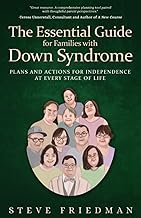
The Essential Guide for Families with Down Syndrome: Plan and Actions for Independence at Every Stage of Life by Steve Friedman Order your copy here: https://a.co/d/gMxuiU3

The Essential Guide for Families with Down Syndrome: Plans and Actions for Independence at Every Stage of Life

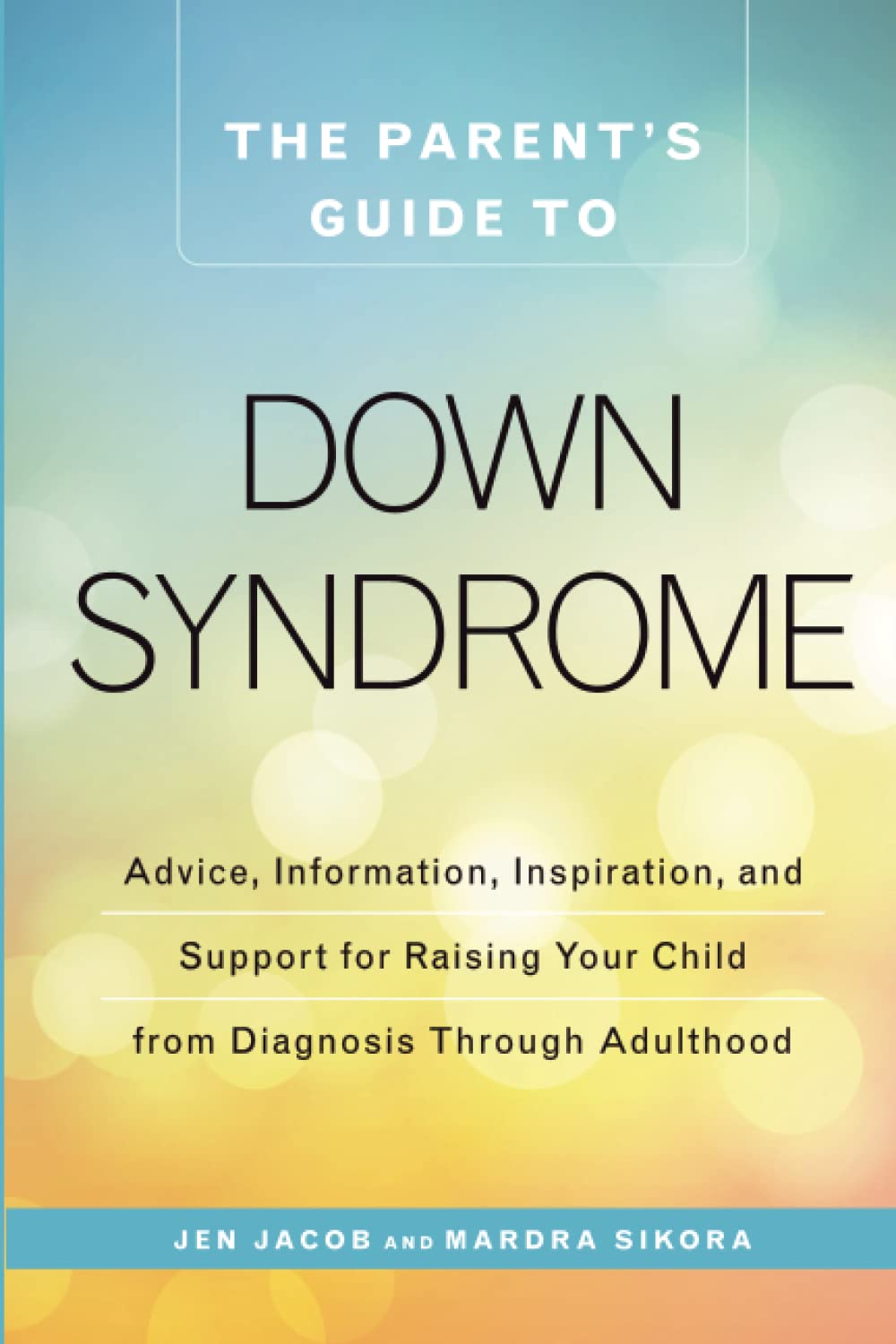
A Parent’s Guide to Down Syndrome, Advice, Information and Support to Raising Your Child from Diagnosis to Adulthood by Jen Jacob and Marda Sikora. Order here: https://a.co/d/5CRwU6R

Supporting Positive Behavior in Children and Teens with Down Syndrome, Revised Edition, The Respond, Don’t React Method by Dr. David Stein, Psy.D. Order here: https://a.co/d/8rlEeJG

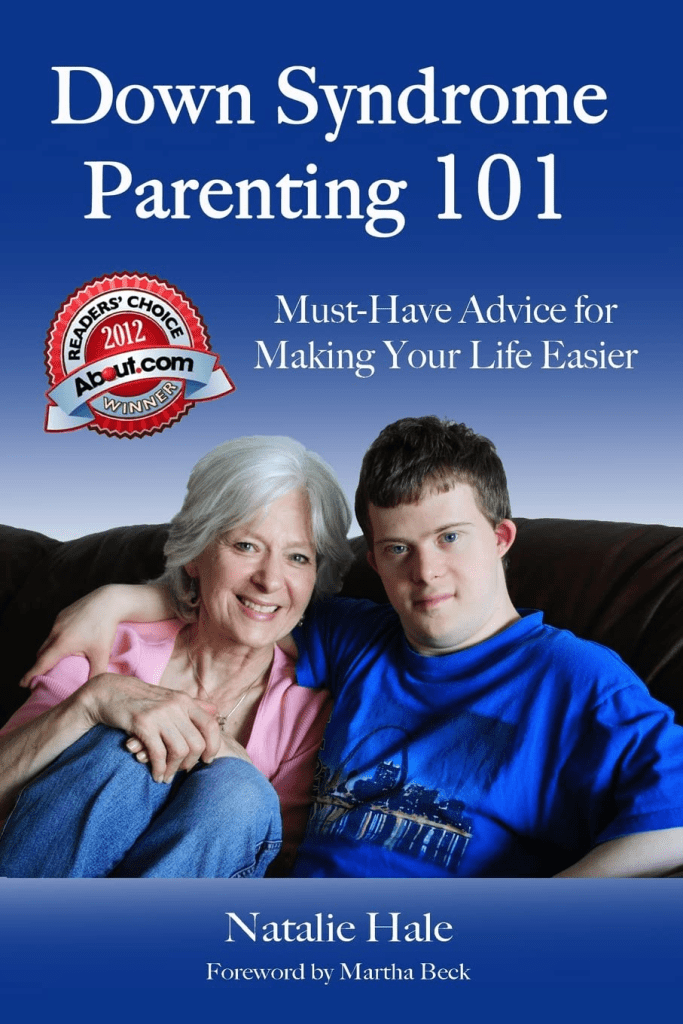
Down Syndrome Parenting 101: Must Have Advice for Making Your Life Easier by Natalie Hale order here: https://a.co/d/7LebF7H

Babies with Down Syndrome: A New Parent’s Guide, Edited by Susan J. Skallerup order here: https://a.co/d/bU6CyTv

Scoot Over and Make Some Room: Creating a Space Where Everyone Belongs by Heather Avis order here: https://a.co/d/3QMtl0w

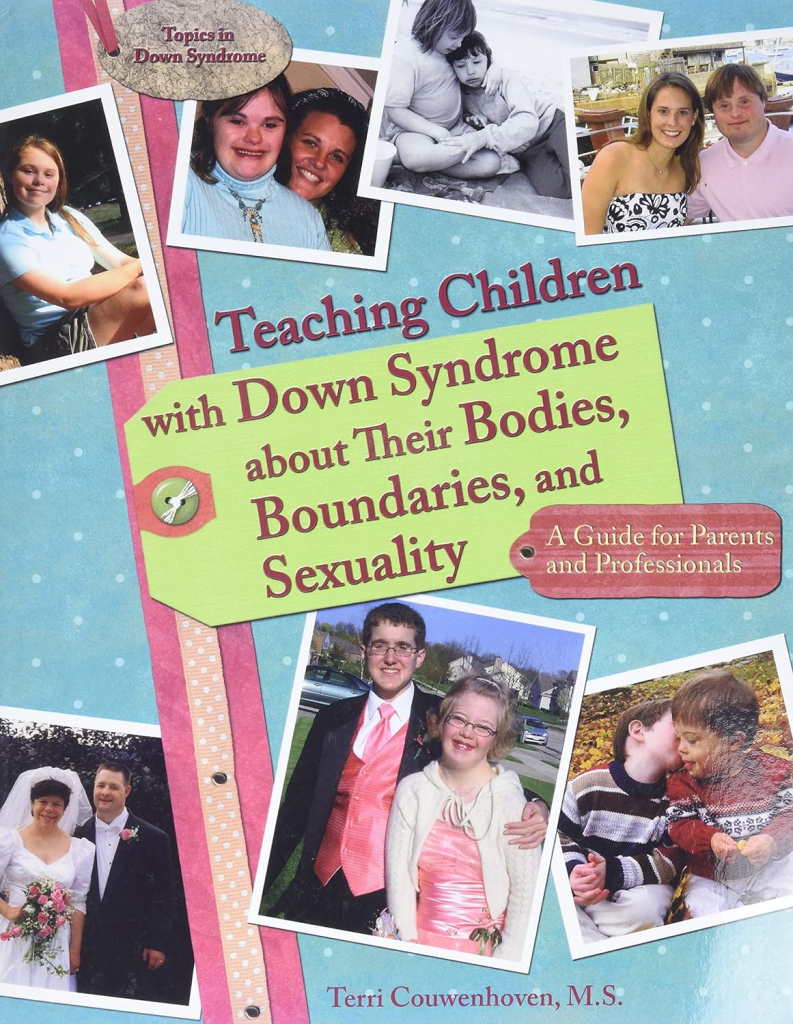
Teaching Children with Down Syndrome about Their Bodies, Boundaries and Sexuality by Terri Couwenhoven, M.S. order here: https://a.co/d/gARb2kE

Fine Motor Skills for Children with Down Syndrome, A Guide for Parents and Professionals (third edition) by Maryanne Bruni, BScOT (Reg) order here: https://a.co/d/8au2far

Gross Motor Skills in Children with Down Syndrome: A Guide for Parents and Professionals by Patricia C. Winders, P.T. order here: https://a.co/d/9F4DUV4

Gifts: Mother’s Reflect on How Children with Down Syndrome Enriched Their Lives, Edited by Kathryn Lynard, order here: https://a.co/d/fJ4ZgAj

Gifts 2: How People with Down Syndrome Enrich the World, Edited by Kathryn Lynard Soper, order here: https://a.co/d/5ltSrSH

Mental Wellness in Adults with Down Syndrome: A Guide to Emotional and Behavioral Strengths and Challenges by Dennis McGuire, Ph.D. and Brian Chicoine, M.D. order here: https://a.co/d/cbOhBLC

Different A Great Thing to Be by Heather Avis and Sarah Mensinga, order: https://a.co/d/3VL4z16

You Are Enough: A Book About Inclusion by Margaret O’Hair and inspired by Sophia Sanchez order: https://a.co/d/hRsKJAu

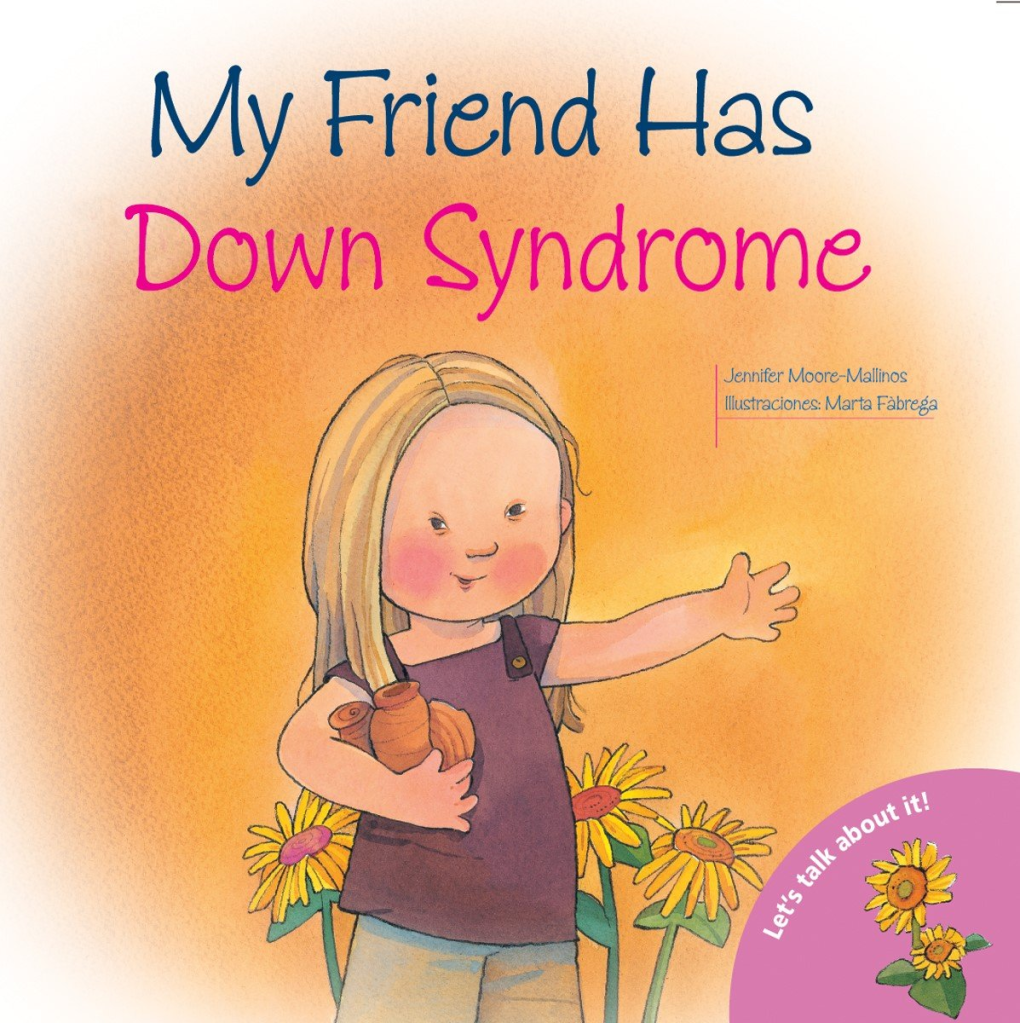
My Friend Has Down Syndrome by Jennifer Moore-Mallinos, order here: https://a.co/d/aSRCijS

These Down syndrome good reads are excellent resources for parents, families and professionals. Keep them in mind as gifts for the upcoming holiday season. In addition, many local Down syndrome support groups across the country provide lending libraries with these resources for families. Thank you for sharing and supporting us as we raise awareness and acceptance to celebrate Down Syndrome Awareness Month.

That’s what is in my noggin this week.

Teresa 🙂

Follow us on Facebook and Instagram at Down Syndrome with A Slice of Autism

Posted in Down syndrome, Dual Diagnosis Down syndrome and autism, Feeding, Personal Hygiene, Toileting, Independent living skills, Parenting Special Needs, Self-care for special needs parents

Blog #252~DS-ASD:Teaching Personal Hygiene and Independent Living Skills at Home

Blog #252~DS-ASD:Teaching Personal Hygiene and Independent Living Skills at Home

The importance of teaching personal hygiene and other independent living skills at home can’t be emphasized enough. Parents, caregivers, teachers and aides are all on the front lines to support individuals with a dual diagnosis of Down syndrome and autism (DS-ASD). My son Nick is 29 years old and has DS-ASD, and honestly one of the most challenging areas to teach is personal hygiene. One thing that I have learned over the years is that it is never to early or late to work on these skills. This week we will examine specific skills and strategies to teach your loved one with DS-ASD.

Personal Hygiene and Independent Living Skills at Home:

*Using the toilet

*Putting clothes in the hamper/ hanging up towel

*Picking out clothes to wear/ dressing skills

*Brushing Teeth/ flossing

*Washing hands & face

*Putting on deodorant

*Shaving

*Beauty Regimens

*Menstrual cycle cleanliness

*Bathing/ showering & drying off

*Brushing hair

*Blowing nose

*Clipping nails/ tolerating and desensitizing nail clipping

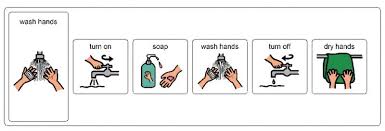
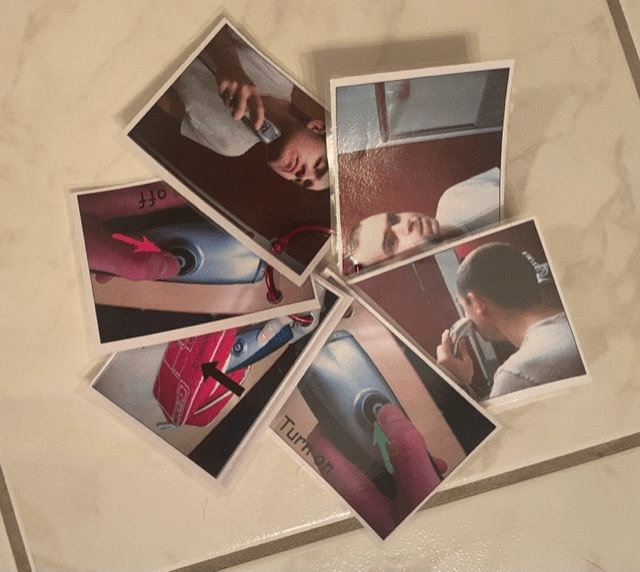
From the list above, consider the strengths of your child, start with a more preferred activity and build from there. Offer support using visuals or visual modeling with breakdown of the steps. Here are a few examples, many of which you can get from Google Images and YouTube. Consider whether the child responds better to understanding actual photographs, videos or Picture Exchange Communication(PECS) Symbols. Many speech and occupational therapists have visual supports that they can share with you. So, be sure to ask your child’s school or private therapists for these as well.

Washing Hands Routine:

Shaving Photo Visuals on a Key Ring:

Video Modeling of Brushing Teeth:

Over the years, we have used all of these visual supports and modeling techniques to teach these tasks. It can be very beneficial to work with a BCBA behaviorist who can help target skills, breakdown the steps and practice on a consistent basis. The BCBA can also build in schedules and rewards to help support and motivate your child.

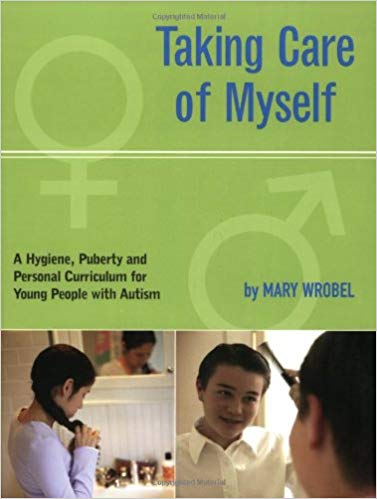
Here are some great resources for teaching personal hygiene and boundaries by author Mary Wrobel:

Independent living, hygiene and home management skills help to build confidence, a sense of ownership and belonging. Building these skills sets will give your child more jobs/day program and housing options when they become an adult.

To view more independent living skills click on the two previous blogs:

We hope that you have gained some insight and strategies for building independence from the past three blogs #250-252. Our goal and passion is to make this road of a dual diagnosis easier for other families. We also want to inspire you as a parent, teacher or caregiver to help your child reach their full potential. 🙂

For more information on navigating co-occurring DS-ASD in my book. Click here to order: https://amzn.to/2W3Un6X

That’s what is in my noggin this week.

~Teresa 🙂

Follow on Social Media:

Posted in Dual Diagnosis Down syndrome and autism, Education and Special Needs, IEP (Indivdualized Education Plan), Parenting Special Needs

Blog #247~DS-ASD Back to School Tips

Blog #247~DS-ASD Back to School Tips

This week I have 10 back to school tips and strategies specifically geared to individuals with a dual diagnosis of Down syndrome and autism (DS-ASD) and their families. My name is Teresa Unnerstall, I am a DS-ASD parent, consultant and author of A New Course: A Mother’s Journey Navigating Down Syndrome and Autism. My son Nick is 28 years old and my passion is to help families, educators, therapists, medical professionals and anyone interested in supporting individuals with co-occurring DS-ASD.

Order your copy on Amazon at https://amzn.to/2W3Un6X

10 Back to School Tips for DS-ASD Families:

1. Prepare the student with a visual countdown calendar, and re-instate morning/evening routines.

2. Tour the school with your child. Then, create a social story or video social story of the school settings and staff that the student will be interacting with. Review this story regularly for the first few weeks of school.

3. At the tour, ask the teacher to show you the safety & hygiene precautions, accommodations and equipment that is listed in the IEP to make sure everything is in place.

First Then Visual Accommodation
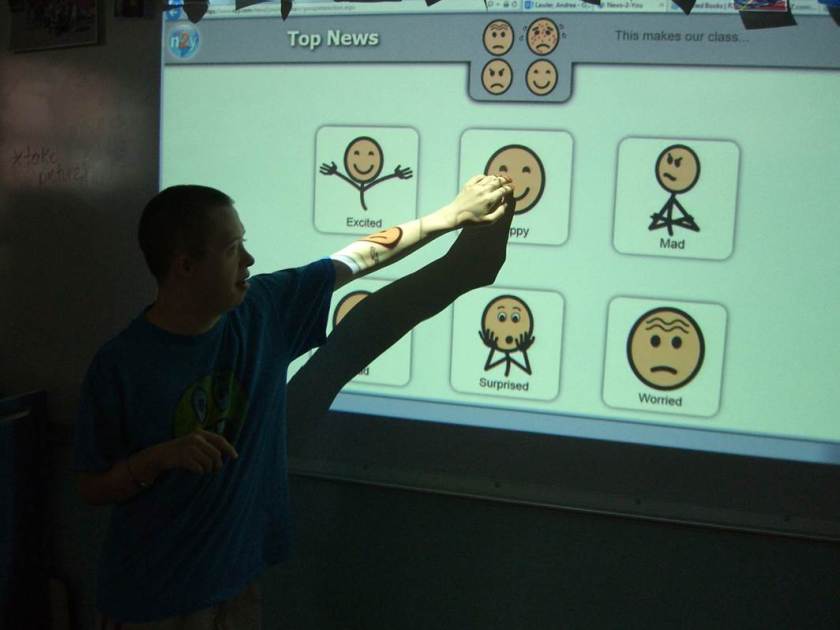
Teaching feelings visual accommodation
Nick using the Smart Board

4. Prepare a student “About Me” profile sheet. There are many templates available online that you can Google or try Canva for free. You can include different sections such as, Things I love, My Strengths, What Works Best for Me, How to best support me, What I struggle with and Interests. Make several copies to share with the staff.

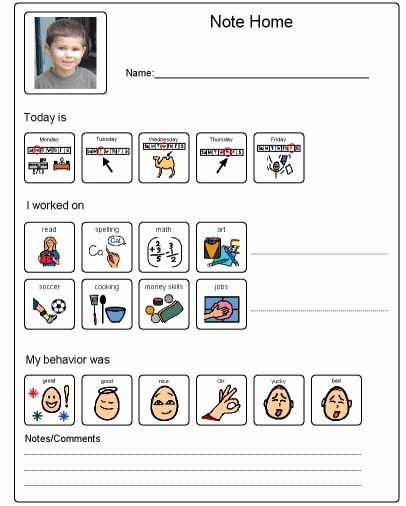
5. Determine the modes of communication back and forth with the teacher and school staff. Examples include texting, email, communication logs/notebooks and daily report sheets. This is very important as many students with DS-ASD who have language deficits or may be non-verbal and unable to share how their day went.

Daily Report Sheet

6. Review the child’s IEP to insure that all goals and accommodations are still relevant and meaningful. Note any additional needs or concerns you have coming off of the summer break and share these with the staff.

7. If the student has a behavior support plan (BSP), check to see if this has been shared with all staff and is ready to put in place on day one. Make a list of any new target behaviors that need to be addressed and added into the BSP.

8. If the student uses AAC (Augmentative and Alternative Communication) make sure the teacher and aides are familiar with how to use the program, whether it’s high tech or low tech like a picture exchange system (PECS). You can request a training for staff and parents on how to program devices, navigate tabs and get trained on how to utilize PECS with the school speech and language therapist or school district AAC specialists.

AAC Touch Chat Program

9. Students may have lost skills or experienced regression over the summer break. Evidenced-based practices help students regain lost skills and develop new ones. Some examples are using visuals, schedules, task strips, task analysis, first-then prompts, visual timers, choice boards and sensory breaks.

Sensory Break PECS IconIs there a sensory break area at your child’s school?
Time Timer App
Countdown Timer App
Choice Boards
Work Station Accommodation

10. Show your commitment by staying on top of your child’s progress. Ask for data at each quarter. Data drives decision making for future conferences and IEP meetings. If possible, volunteer at school, (room parent, field trip chaperone, art awareness presenter, book fairs, picture day and assisting with making learning materials like laminating and making copies).

Being prepared and invested in your child’s needs will help them reach their full potential for the new school year. That’s what is in my noggin this week.

~Teresa 

Follow us on Facebook and Instagram for more ideas and stories:

Posted in Autism, Down syndrome, Dual Diagnosis Down syndrome and autism, Resources for Special Needs

Blog #246~ DS-ASD at the NDSC Convention 2022

Blog #246~DS-ASD at the NDSC Convention 2022

Being a parent of a child with a dual diagnosis of Down syndrome and autism (DS-ASD), can often feel isolating. The complex needs of speech deficits, sensory and behavior concerns related to co-occurring DS-ASD make parents feel like they don’t fit into the Down syndrome or autism support groups. For the longest time I avoided going to the Down syndrome functions and conferences for this very reason. I know that other families have felt the same about not fitting into the DS groups. It is a lonely feeling. My son Nick is 28 years old and has DS-ASD. What I have since learned is that you have to align yourself with like minded individuals who truly understand this unique journey. In addition, it’s important to process the secondary diagnosis of autism with Down syndrome and get to a place of acceptance in your own time. While this path is different, there is both help and hope now available compared to 15+ years ago when Nick got the secondary diagnosis.

There was much to celebrate at the National Down Syndrome Congress 50th Annual Convention (NDSC) held in New Orleans last month in person. This week, I want to share this experience and why it was so important for DS-ASD families and those wanting to learn more about a dual diagnosis.

Since the publication of my book, A New Course: A Mother’s Journey Navigating Down Syndrome and Autism in 2020, I have been presenting information about my journey with Nick and providing strategies, tools and interventions to support individuals with DS-ASD.

Click here to order:  https://amzn.to/2W3Un6X

The Deep Dive presentation was a comprehensive presentation: Down Syndrome and Autism Spectrum Disorder Clinical Features and Treatment and Intervention Strategies, was led by physician Dr. Nicole Baumer, psychologist Dr. Lina Patel and myself.

This presentation provided valuable information on how to tease out signs and symptoms of what autism looks like in individuals with Down syndrome. In addition, we offered many strategies and interventions to support communication, behavior and sensory needs associated with co-occurring DS-ASD.

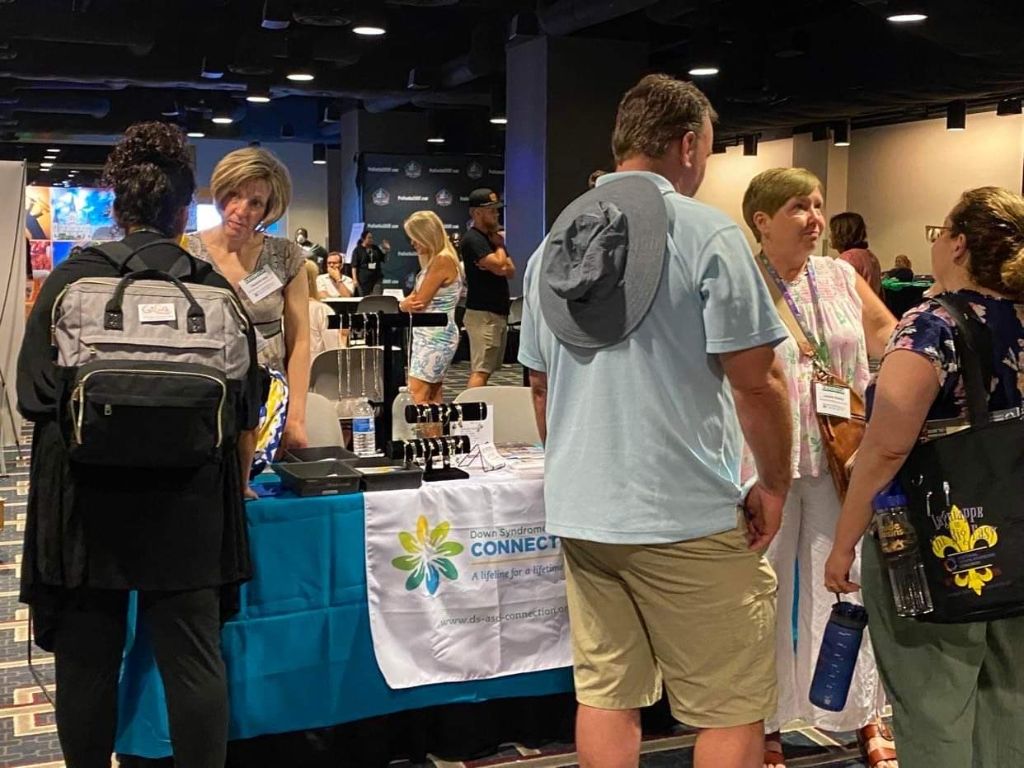
The NDSC exhibit hall was a high energy whirlwind of agencies and rock stars of the Down syndrome world. The Down Syndrome-Autism Connection booth was busy with our staff and board of directors answering questions, listening to stories and connecting with others wanting to know more about a dual diagnosis.

The Down Syndrome-Autism Connection: A Lifeline for a Lifetime more at http://ds-asd-connection.org/
The Down Syndrome-Autism Connection’s Rock Stars: Executive Director Charlotte Gray and President, Jeanne Doherty fielding questions and networking at the NDSC Exhibit Hall booth.

Some more of the Rock Stars of the Down Syndrome World at NDSC Convention 2022:

Heather Avis author, podcaster and advocate with The Lucky Few more at https://www.heatheravis.com/about
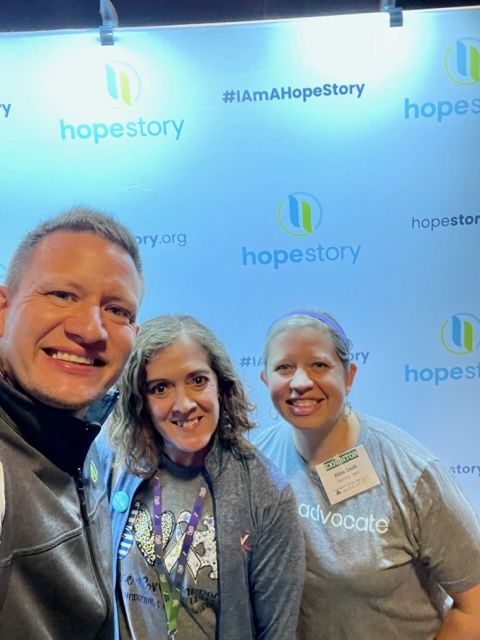
Noah’s Dad and Hope Story Advocates Rick and Abbie Smith more at https://hopestory.org
Advocate and author Tim Harris more at https://www.globaldownsyndrome.org/news-community/quincy-jones-exceptional-advocacy-award-recipients/tim-harris/

Sophia Sanchez, actress, model, author, advocate and influencer more at http://www.sofia-sanchez.com/bio
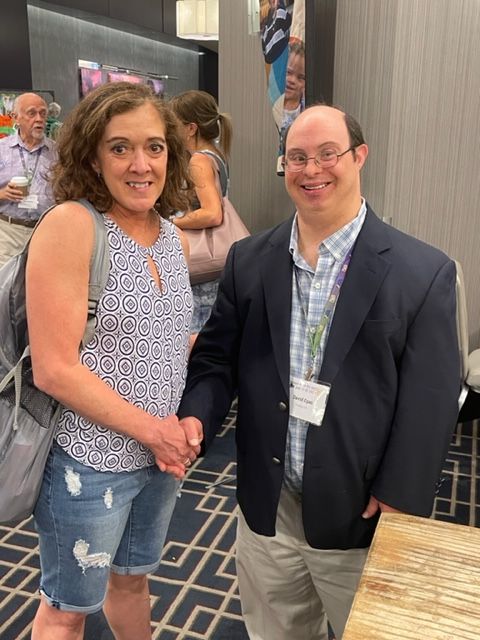
Trailblazer, advocate and author David Egan more at https://davideganadvocacy.com
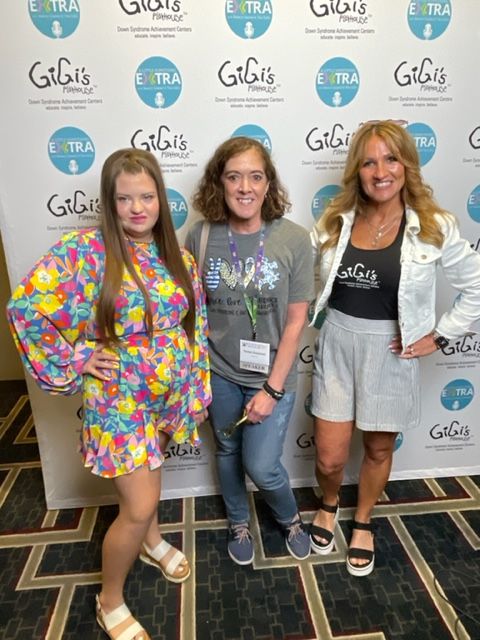
GiGi and Nancy Gianni of Gi’Gi’s Playhouse. More at https://www.gigisplayhouse.org/
Ruby’s Rainbow provides scholarships to individuals with DS for higher education. More at https://rubysrainbow.org/about/

The Down Syndrome-Autism Connection hosted a panel discussion, DS-ASD The Real Deal a Parent Panel, which provided a safe space to ask questions, share ideas and strategies. The Down Syndrome-Autism Connection is the gold standard, national organization serving the DS-ASD community since 2007. More at http://ds-asd-connection.org/

The Down Syndrome-Autism Connection Parent Panel at NDSC 2022

The final presentation that I gave was, a DS-ASD 3-21 Toolkit of Strategies which offered practical ideas, take home strategies and ways to support individuals with a dual diagnosis. These included the three areas impacted by autism in Down syndrome including communication, behavior and sensory needs. One example of a strategy that I suggested, is to teach your child the concept of time and having to wait. How do you teach this?

*Use visual supports like PECS icons/or a clock picture and non-verbal gesture of pointing to your wrist, indicating a wrist watch.

*Pair this with a timer app like Countdown Timer or Time Timer.

* Always introduce this concept by teaching first in low stress environments and build from there. Ex/ Low stress: Waiting for shower water to warm up: “Good waiting” and point to wrist. Then, build to higher stress: Child is hungry and there is extra long line at Taco Bell. You see that they are impatient and showing stress. Point to wrist and/or set the timer app, reinforce “Good listening Nick thank you for waiting, yay”!

This is just one of many ideas from my DS-ASD 3-21 toolkit. 🙂

Teresa Unnerstall, author, speaker and advocate at NDSC presentation

I would like to commend the National Down Syndrome Congress for including these important DS-ASD presentations at the NDSC convention. It is so critical for families and professionals to see what autism looks like in Down syndrome and how to effectively provide interventions, strategies and support for the additional challenges for DS-ASD individuals and their families.

Thank you NDSC for allowing me the opportunity to share information, help and inspire others who are on this journey. The DS-ASD community appreciates having a representation at the NDSC convention and in your organization.

That’s what is in my noggin this week. 🙂

~Teresa

Click above to follow on Facebook, Instagram and Twitter
Posted in Down syndrome, Down Syndrome Awareness, Dual Diagnosis Down syndrome and autism

World Down Syndrome Day 3/21/21

World Down Syndrome Day 3/21/21

World Down Syndrome Day is this Sunday, 3/21/21. “WDSD purpose is to raise awareness around the world of what Down syndrome is and the vital role people with Down syndrome play in our society. The day has been officially observed by the United Nations since 2012 and the date — always on the 21st day of the 3rd month — is meant to highlight the uniqueness of the triplication (trisomy) of the 21st chromosome, which is the cause of Down syndrome.”

World Down Syndrome Day is an opportunity for all of us to promote awareness, understanding, acceptance and inclusion.  Lack of knowledge and understanding can prevent people with Down syndrome from being accepted and included in society.  The message is simple, every individual is unique, we all have value, and everyone has the right to live a happy and fulfilling life.  I heard a great quote the other day, “Down syndrome is just another way that humanity presents itself”.  

My son Nick is 27 years old and has a dual diagnosis of Down syndrome and autism. He has taught me a multitude of life lessons. Our story has touched the lives of so many others:

Here are 3 easy ways to celebrate WDSD and promote acceptance and inclusion:

*Promote Down syndrome awareness on social media using the hashtags #wdsd #worlddownsyndromeday #downsyndromeawarness #t21 #downsyndromelove #downsyndrome #321 #abilities #inclusion #funkysocks #downsyndromerocks #downsyndromewithasliceofautsim 🙂 Don’t forget to rock those funky socks to show that different is beautiful and wonderful!

*Encourage the use of person first language.  This means saying, “a person or individual with Down syndrome”.

Do NOT say:
* “A Down syndrome baby, child or kid.”
* “Down’s baby, child or kid”
* “Down’s”
* “He or she has Downs

*Click here to: Take action – World Down Syndrome Day

Promoting WDSD on social media, encouraging the use of person first language and getting involved with WDSD events and fundraisers are wonderful ways you can be a part of of celebrating the uniqueness of individuals with Down syndrome. That’s what is in my noggin this week. Be sure and follow us on social media: Facebook and Instagram at Down Syndrome With a Slice of Autism to see how we will be celebrating!

~Teresa 🙂

Posted in Autism, Autism Spectrum Disorder (ASD), Behavior/ ABA, Down syndrome, Down Syndrome Awareness, Dual Diagnosis Down syndrome and autism, IEP (Indivdualized Education Plan)

Blog #226~Beyond Down Syndrome: A New Course

Blog #226~Beyond Down Syndrome: A New Course

World Down Syndrome Day is coming up on March 21st. This day 3/21 was chosen to represent Trisomy 21, where there are 3 copies of the 21st chromosome. WDSD highlights the importance of promoting awareness, understanding, inclusion and acceptance for individuals with Down syndrome. Next week, I will provide concrete ways that you can help promote WDSD.

But what if there is more beyond Down syndrome that families are facing? Did you know that approximately 18% of children with Down syndrome have a secondary diagnosis of autism? This dual diagnosis of Down syndrome and autism (DS-ASD), presents additional challenges with communication impairment that can lead to behavior problems.

Here are some of the signs and symptoms from the National Down Syndrome Society (NDSS) of a dual diagnosis of DS-ASD:

https://www.ndss.org/resources/dual-diagnosis-syndrome-autism/

My son Nick, is 26 years old and has a dual diagnosis of DS-ASD. Ten years ago, I started writing about my journey and this new course our lives took, when Nick got a secondary diagnosis of autism. I felt very alone. I found myself pulling away from our local Down syndrome support group activities, because my son no longer fit in. He did not engage like his peers with Down syndrome. His repetitive movements (rocking, hand flapping, unusual play with toys) and vocal humming sounds made him stand out from the crowd. This new course was different than the one I planned. Nick was very delayed in toilet training and his speech deficits lead to behavior problems. As he approached puberty, his lack of speech and understanding what was expected, led Nick to become very frustrated. My son had no voice and his actions led to dangerous meltdowns.

What I soon learned (when Nick was 10 years old), is that I dealing with way more beyond Down syndrome. There was no way that I could navigate this course alone. Once I sought guidance from experts, we were able to give Nick a voice using a picture exchange system (PECS). Together with the IEP team, we determined what behaviors to target and developed a positive behavior support plan (BSP). The two key components that helped Nick was giving him a voice and finding the triggers that were causing behavior problems. We sought help from the school district’s autism specialist. The IEP team then, put supports in place and we all received training to help support the secondary diagnosis of autism. It is critical to identify target behaviors, and make a game plan to support a child before they escalate to a boiling point and have a meltdown. It’s imperative to write in additional supports to address communication including visuals  into the IEP. A reoccurring theme in my blogs is the need to address speech and behavior collectively, as all behavior is a form of communication. Visuals are key for communication, but also for navigating daily life in the form of picture schedules, social stories and learning tasks. These visuals are the blueprint for your child to understand what is going on and what you are expecting from them, and in turn helps to reduce anxiety levels.

My mission for the past ten years has been to make this DS-ASD journey easier for families following a similar path, and to open the eyes for other’s to understand the complexities and challenges associated with DS-ASD. This path that I’ve been on with Nick has not been easy. Early Intervention after birth and over the years, was critical to helping Nick reach developmental milestones. Our family has weathered a lot of storms, but with each– the sun came back out and we learned a lot along the way. Now, I am ready to share my journey with you!

 I am pleased to announce my book and the journey beyond Down syndrome:
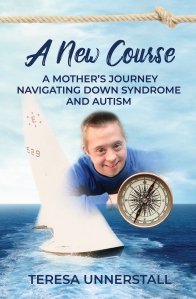
TU_5-5x8-5_WPS_ebook

A New Course: A Mother’s Journey Navigating Down Syndrome and Autism launches May 5, 2020 and takes a deep dive into the complexities of what many families face raising a child with a dual diagnosis of DS-ASD. None of us can escape life without challenges. We each have our own journeys and individuals with DS-ASD are unique and may not be as severe as what we experienced with Nick. Our struggles at times were unsurmountable. But if you are an avid reader of my blog– you know that I’ve guided you down a path and showed you how Nick has become the best version of himself given a dual diagnosis of DS-ASD. Each chapter concludes with a 3:2:1 (3 Lessons I learned, 2 takeaways to use in the future and 1 question or concern I had during that particular time). At the end of the book, I’ve included my version of an appendix, with the final lessons I’ve learned on this journey. These final lessons are taken from my blog entries, that I’ve been writing since 2012.  A New Course is available for pre-order now on Amazon!

My passion is helping other families navigate this new course beyond Down syndrome. As a DS-ASD consultant, I am determined to assist families to find resources, offer support and guidance to make their journeys smoother. I hope my story opens the reader’s eyes and starts a conversation of what it is like to raise a child with the unique challenges associated with DS-ASD. In doing so, perhaps the reader might gain better understanding, awareness and compassion for families dealing with DS-ASD and other complex special needs.

That’s what is in my noggin this week.

~Teresa 🙂

LOGO TRANSPARENCY (5)

Follow on Social Media:
Facebook, Instagram and Pinterest @Down Syndrome With a Slice of Autism

Join us on our new Facebook Page: A New Course Book Launch to get the more inside the scenes and exclusive tidbits about A New Course: A Mother’s Journey Navigating Down Syndrome and Autism.

Twitter @tjunnerstall