Posted in Autism, Behavior/ ABA, Down syndrome

Blog #70~When Down Syndrome and Autism Intersect

Blog #70~When Down Syndrome and Autism Intersect

 
I just finished reading the Woodbine House book, When Down Syndrome and Autism Intersect, A Guide to DS-ASD for Parents and Professionals. As always, Woodbine House delivers the goods. I only wish this book had been available fifteen years ago when I began to suspect that Nick had something more going on than just Down syndrome.

down syndrome and autism intersect

I started to notice little things at first. Around the age of five Nick started to bang objects and exhibit other odd behaviors. After doing some internet research I stumbled upon a sensory processing disorder checklist. Nick met many of the criteria which led me to believe this was the reason for those behaviors. When we attended the local Down syndrome support group functions I also felt that he didn’t speak as well as his peers.

Nick is more interested in his hand flapping than Santa 🙂
scan0032
So, I went to have an evaluation done to see if he might have autism. The results of this indicated that Nick did not have autism as he was highly social and his language deficits were a result of having verbal apraxia of speech. For more information on verbal apraxia of speech I would suggest reading this Woodbine House book, Speaking of Apraxia A Parent’s Guide to Childhood Apraxia of Speech:

SOA_mock (2)

Six years passed and as puberty was full on, Nick’s behavior and meltdowns became more violent and dangerous. The staff at his school struggled along as well. It was nagging at me. I brought up my concerns and the need for an evaluation for autism. The staff informed me that this was not necessary as there was already a primary evaluation of Down syndrome. We decided to have an independent evaluation done at Little Friends Center for Autism, http://www.littlefriendsinc.org. Getting the official diagnosis of autism confirmed my suspicions and gave me a sense of relief and validation. Most importantly, the formal diagnosis allowed for getting the services of the school district’s autism specialist. This specialist helped to identify what triggers set off meltdowns and was able to put a behavior plan in place along with a better picture communication system with proper training for the staff and myself.

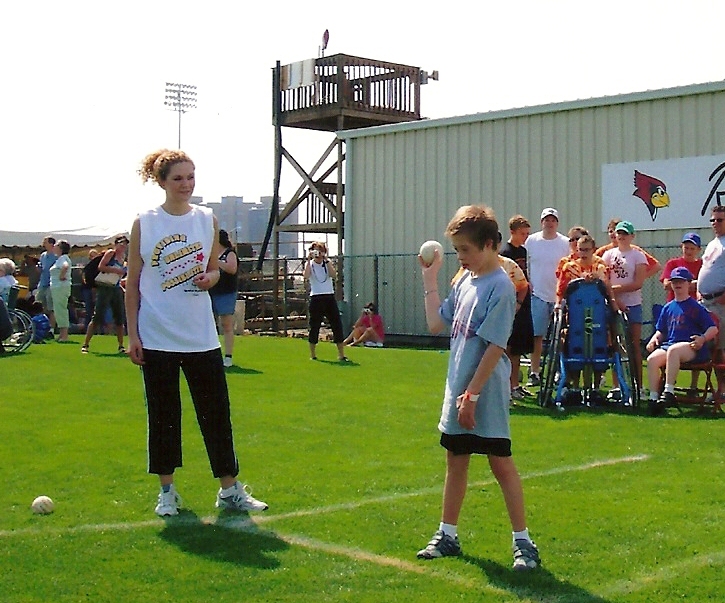
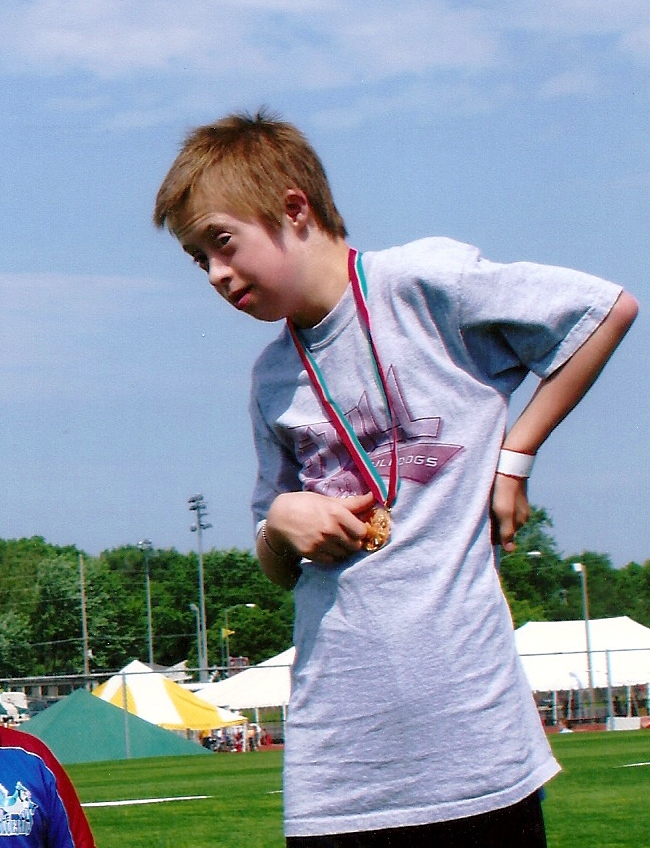
Nick age 12, proudly stands on the podium winning the state gold medal in the softball throw at the Special Olympics…

scan0011

 
According to the Kennedy Krieger Institute, http:// www.kennedykrieger.org,  around 10-15 percent of children with Down syndrome also have autism.

For an autism diagnosis there are three areas of development that a person must show significant difficulties:

1. Social Functioning
2. Non-verbal or difficulties with communication
3. Restricted interests and activities

Some of the symptoms and behavior shown with children having Down syndrome and autism are:

 
*Significant lack of social response
*Difficulties with communication and reported loss of verbal and expressive language.
*Repetitive behaviors like hand flapping, spinning or rocking, fixation on inanimate objects (strings, fans, mirrors, water, etc..)
*Sensory issues including the intensified sensitivity or need for more sensory input
*Behavioral challenges including frequent tantrums and physical violence

 
The book, When Down Syndrome and Autism Intersect contains a great deal of information on health issues and gives practical information on tackling the complex world of raising a child with Down syndrome and autism. My best advice is this, if you suspect that a child with Down syndrome has something else going on then run; don’t walk to get a firm diagnosis. There are more services that become available to help with challenging behaviors, communication and learning for our kids. That’s what is in my noggin this week! 🙂
~Teresa

Posted in Down syndrome, Physical Therapy and Special Needs

Blog #37~ Just Do It!

020

Blog #37~ Just Do It!

This week I want to hop on the fitness bandwagon.  I ‘m not really hopping on it.  2013 marks 30 years of teaching in the fitness industry.  The gym gets busy in January with folks coming in with their resolutions to get in shape.  Are there any trade secrets?  How can someone like Nick who has Down syndrome and autism keep fit?

Buff Nick is too cool by the pool….. 🙂

Nick 2 (2)

First of all there are physical attributes that are associated with Down syndrome which should be considered.  Here is what I pulled off the following website, Livestrong.com is a great resource for more than just its well known cancer support:

http://www.livestrong.com/article/367865-exercise-safety-tips-for-those-with-down-about…”syndrome/#ixzz2Hu6k2Yg3

“Injuries may be caused by many of the symptoms of Down syndrome, including an underdeveloped respiratory and cardiovascular system, poor balance, perceptual difficulties, hypotonicity — muscles that have the ability to stretch far beyond their normal limits — hypermobility of the joints, and ligamentous laxity, which is flexibility of the joints associated with an increased risk of dislocation, says the National Center on Physical Ability and Disability or NCPAD. In approximately 17 percent of people, there may be a severe cervical cord disorder known as atlantoaxial instability that is characterized by laxity between the first and second cervical vertebrae. This makes spinal cord injuries much more likely. If a physician allows exercise, strict monitoring is important to avoid injury to the spinal cord and other areas of the body.” 

Nick had a spinal x-ray which ruled out atlantoaxial instability.  This screening should be done before any exercise program is implemented.  Because of his low muscle tone he received physical therapy and early infant and childhood intervention programs which showed us how to incorporate exercises into his daily routine and play time.

Here are just a few things we put into place at home:

*Sit your child on a small ball and do music time and bubbles to build core strength.

*Create a mountain with a bean bag chair and blankets.  Put a preferred music toy at the top so your child will have to climb up it to reach it.

*Tack musical toys up so your child will have to pull up to stand to play with them.

*Push toys can sometimes be too light, so add some weights to them so it is easier for your child to be stable and push them.

*Bean bags work great to work on vocabulary.  Line up a few flash cards and have your child toss the bean bag to the word you want them to recognize and speak.

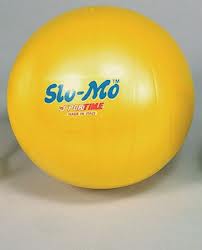
*Balls, balls, balls.  Get a mini basketball hoop, Slo Mo balls and nerf balls are easier to catch.  I use to have Hank bounce ping pong balls on the coffee table to entice Nick to pull up to stand.

slo mo ball

Now that he is older I have incorporated more household chores in his routine like vacuuming, taking laundry baskets up and down the stairs, and unloading the dishwasher.

1205001656

In school he takes P.E. and enjoys swimming, walking on the treadmill and even yoga.  Of course his favorite is dancing.  He slaps those headphones on and goes hard.  There are many programs through your local park district as well as Special Olympics that can enrich the lives of people who have special needs.

It’s all about consistency in having an active lifestyle, which should begin in childhood.   Increasing activity will help minimize obesity, decrease cardiovascular and type II diabetes risk factors. For aerobic and strength training, make sure adolescents participate in recreational and community activities.

What about the rest of us?  The same holds true about consistency in exercise and dietary intake.  It’s not rocket science.  Calories in and calories out is what it boils down to.  If you consume more than you burn then you are going to gain weight.

 Here’s my top 10 Tips…….

  1. Get medical clearance before starting any exercise and dietary program.
  2. It’s a good idea to enlist the help of a personal trainer who can help you set goals and a timeline. Be sure to ask about the FITT Principle when setting up your program (Frequency, Intensity, Time and Type of exercises.)
  3. Carve out a reasonable time of day that you can commit to and make it a part of your routine like brushing your teeth. (You wouldn’t skip brushing your teeth would you?)
  4. Pick activities that suit your interests and will keep you motivated.  Mix up your workouts so you incorporate all 5 components of fitness (Cardiovascular strength, muscular strength, muscular endurance, body composition and flexibility.)  Total fitness!
  5. Every little bit adds up.  Take the stairs, park further away, do some triceps dips while you wait for the shower to warm up, etc…
  6. Use it or lose it.  Did you know you start to lose training effects after just 48 hours of inactivity?
  7. Don’t obsess with the number on the scale. I always say your jeans don’t lie!
  8. Shop the outer aisles of the grocery store, fresh is best.  If you can’t pronounce the ingredients on a label it might be wise to leave it on the shelf.
  9. Have a support system in place.  Get some workout buddies that will hold you accountable.  There are also some great phone apps to help track and keep you motivated.  Check out the app called “My Fitness Pal.”
  10.  All in moderation, when it comes to eating.  Don’t deprive yourself of your favorite foods now and then.  If you know you are going out for a nice meal plan to eat lighter that day.  Watch those serving sizes too.  I love the visuals like one serving size of protein=a deck of cards, one serving size of pasta=a tennis ball, one ounce of chees=a pair of dice.  Check out sparkpeople.com and foodnetwork.com for more of these tips.

Finally let me borrow a slogan from Nike, “Just do it!” That’s what is in my noggin this week.  Cheers to feeling good and having fun while you’re at it.  Nick and I highly recommend putting on your favorite music and dancing it out!

photo (115)

~Teresa 🙂

Posted in Down syndrome

Blog #7 Mama Mia

Mother’s Day circa 1969, my brother Tom and younger sister Laura and I get up and make breakfast for our Mom.  It takes us at least 3 or 4 tries and subsequent tosses of undercooked and burnt pancakes into the trash. But finally we get the griddle just right and pull off a couple of edible ones.  The tray is prepared with orange juice, her favorite strawberries and a small, clear vase filled with bright orange pomegranate flowers from the tree on our backyard patio.  This year I had made a gift at school that I was especially proud of.  I found the most perfect brown conch seashell and stuffed the opening with cotton and covered it in red velvet to make a tiny pin cushion.  This was my favorite gift I had ever given my mom.  Oh how proud the three of us were for our accomplishment.

As a mother of two boys, I think back on what were my favorite presents.  Without a doubt it was the special gifts and handmade cards they each made at school over the years.  I still use the recipe box that Nick made in preschool with a picture of him clapping on the front of it. Hank handcrafted a colorful ceramic bowl that I treasure. Seeing their faces so proud is perhaps one of the greatest gifts of all.

Over the years I have been asked often on what it takes to be a mother of a child with special needs. In many ways it is the same as for a typical child but it takes a greater amount of time, energy and perseverance. Milestones are not met and checked off the chart at the yearly physicals like a typical child. A large chunk of the schedule is carved out for working with your child at home and taking them to physical, occupational and speech therapy. Having my son, Hank just 19 months older gave me a good idea of what the benchmarks were supposed to be.  However, I realized quickly that Nick was going to do things in his own time.  Nick’s time was much slower than a snail’s pace.

Nick ( 2 months old) with Grandma Babs

Let me pause and offer the quick facts about Down syndrome. Wikipedia  states that Down syndrome  also known as trisomy 21, is a chromosomal condition caused by the presence of all or part of an extra 21st chromosome It is named after John Langdon Down, the British physician who described the syndrome in 1866.  The incidence of Down syndrome is estimated at 4.6 per 10,000 births. Often Down syndrome is associated with a delay in cognitive ability and physical growth, and a particular set of facial characteristics. The average IQ of young adults with Down syndrome is around 50, compared to normal children with an IQ of 100. A large proportion of individuals with Down syndrome have a severe degree of intellectual disability.

Nick with his brother Hank, with his low muscle tone we constantly had to prop him up for pictures.

Individuals with Down syndrome may have some or all of the following physical characteristics: microgenia (an abnormally small chin)[ an unusually round face, macroglossi (protruding or oversized tongue), an almond shape to the eyes caused by an epicanthic fold of the eyelid, upslanting palpebral fissures (the separation between the upper and lower eyelids), shorter limbs, a single transverse palmar crease (a single instead of a double crease across one or both palms), poor muscle tone, and a larger than normal space between the big and second toes.

Brushfield spots are the tiny flecks that shine in the iris. One of the characteristics of  some individuals with Down syndrome. By the way Nick grabbed the camera and did his own self shot here 😉

Health concerns for individuals with Down syndrome include a higher risk for congenital heart defects, recurrent ear infections that may lead to hearing loss, obstructive sleep apnea, thyroid dysfunctions, and obesity.”

*************************************

Here is how Nick fit with his development:

Crawling- Average age= 14 months (range 9-19 months) / Nick= 24 months.

Sitting while supported with own arms- average age= 8 months (range 5-15 months) / Nick= 12 months.

Eating solids-Average age= 8 months (range 5-18 months) / Nick=40 months

Walking independently-Average=23 months (range 13-48 months) / Nick=40 months.

***********************************

Nick at age 9 months with Grandpa Jim. He still looks like a rag doll….

While Nick developed much slower than the averages above, he did hit the marks and this proud mama can still taste the sweet victories of each glorious triumph!

Yay, he is sitting up supporting himself with his arms at age 1!

Who would have ever predicted that the low tone boy with wobbly legs that didn’t take off walking until 3 ½ years would run like a cheetah and win a silver medal at the Special Olympics in the 100 yard dash. And the year before, in fifth grade he became a state gold medalist in the softball throw down in Bloomington.  Nick never got the significance of his medals.  He was more excited about standing on the podium and dancing side to side as they played the Special Olympics music theme on a portable jam box.  On the other hand, I was snapping photos like a crazed paparazzi photographer. 😉 He fought hard as we pushed him constantly for 12 years….. and look he won……Oh *Mama Mia!

State Special Olympics Gold Medalist!

Up on the top of the podium, taking a bow!

That’s what is in my noggin this week.  Until next week, may the milestones you strive for and meet be the sweetest of victories :).

~Teresa (aka Mama Teresa)

*Mamma mia (literally “my mother”) is an Italian interjection, used in situations denoting various kinds of emotions of surprise, fear, rejection, and joy.