Posted in Autism, Down syndrome, Dual Diagnosis Down syndrome and autism, Fun Side of Nick

Cyber Monday Update

cyber-monday

Cyber Monday Update

Hope you all had a wonderful Thanksgiving holiday.  Nick was very excited to see his brother, Hank and his grandparents.  As I was setting the dining room table the night before, he went to his PECS (Picture Exchange Communication System) book, and handed me this icon with his grandparents on it. Nick is 22 years old and has Down syndrome and autism.

nick-gma-gpa-icon

We enjoyed a nice Thanksgiving dinner and plenty of leftover mashed potatoes for big guy!  Nick was happy to see his Thomas the Tank engine ornament, while decorating the Christmas tree.

nick-ornament

Nick tried to make off with his brother’s new vacuum cleaner for himself.  He must have thought Christmas came early for him, instead of Hank. He managed to drag the box all the way into the living room.   He loves to vacuum and does a nice job at it.  This has been one of his community jobs for several years since high school.

nick-hanks-vacuum

It was a nice visit with family.  The leftovers are finished, the Christmas trees are up, now onto Cyber Monday.  I might have to add another Shark vacuum to the cart.  That’s what is in my noggin this week.

~Teresa 🙂

Follow Nick:

Facebook and Pinterest @Down Syndrome With A Slice Of Autism

Instagram @nickdsautism

Twitter #tjunnerstall


Posted in Autism, Down syndrome, Dual Diagnosis Down syndrome and autism, Education and Special Needs, IEP (Indivdualized Education Plan)

Blog #157~Making Inclusion Work

Blog #157~Making Inclusion Work

Is inclusion right for your child?  That was the question I addressed in last week’s post.  Inclusion simply stated, means that a student is supported in the general education classroom setting with given supports outlined in the IEP.  The IEP is an Individualized Education Plan, is a document for special education students.  This document identifies how the student will learn, what services the school will provide, and how their progress is measured.  My son Nick, was in an inclusion classroom during his elementary school years. He has Down syndrome and autism, and benefited greatly from the experience.  How do you make the inclusion setting work for your child with special needs?

The Individuals With Disabilities Education Act (IDEA), amended version 2004, does not actually list the word inclusion. The law actually requires that children with disabilities be educated in the “least restrictive environment appropriate” to meet their “unique needs.” The “least restrictive environment” typically means placement in the regular education classroom which typically means ‘Inclusion’ when ever possible. (Source taken from about.com)

The IEP team works with the parents to determine the least restrictive environment and builds the placement around this concept.  What will the child need to be successful in a regular education classroom?   The IEP team and parents should collaborate to identify supports needed.

Classroom Supports:

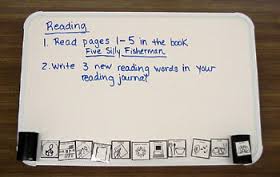
*Modified Curriculum:  (Regular education teacher and support/case manager) work together to adapt the current assignments for the child.  Make a plan to address what will be learned in the regular classroom, and how will the student will learn that similar information?

visual work board

*Staffing:  Does the child need a paraprofessional (classroom aide)?  What is the ratio? What additional training will be needed?

*Equipment:  Physical environment (modified desk, chair, adaptive equipment/school supplies, sensory supports)

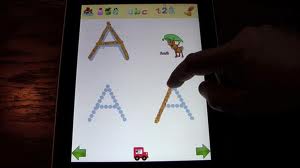
*Assistive Technology:  Communication (Alternative Augmentative Communication “AAC” device, Picture Exchange Communication System “PECS”, Sign Language/Interpreter), or other devices using apps for to navigate schedules and assignments.

alphabet tracing  ipad-touch-chat

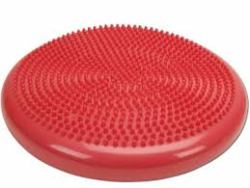
*Sensory Breaks: What space will be provided, is there a sensory area in the school?  How will the student request a break (need a break icon, button on AAC device)?  What equipment is needed, (noise cancelling head phones, figit toys, nubby cushion, music, weighted vest or blanket, bean bag chair, swing, trampoline)?

figit toys   nubby therapy cushion

In addition to identifying classroom supports, the team should address these questions at the IEP Meeting:

* What are the student’s strengths, and how do we build a plan around them?

*How does the student learn best?

*What behavior support is needed to help the student learn the best, and operate comfortably in the general education classroom?

Identifying supports needed and how to best accommodate the student will set a good foundation to success in the inclusion classroom setting.  The student will benefit by having access to the general curriculum and build social relationships in this community in the least restrictive, inclusion environment.  That’s what is in my noggin this week.

~Teresa

Follow Nick:

scan0016

Facebook and Pinterest @Down Syndrome With A Slice Of Autism

Instagram: #nickdsautism

Twitter: @tjunnerstall


Posted in Augmentative and Alternative Communication (AAC), Autism, Down syndrome, Speech and Occupational Therapy

Blog #123~UFC Rousey & Apraxia of Speech

Blog #123~UFC Rousey & Apraxia of Speech

Headline in ABC News last week, Ronda Rousey UFC champion fighter brings awareness to Apraxia of Speech! Take a look at the story featured on Good Morning America:

The lives of champion UFC fighter Ronda Rousey and speech pathologist and mom Laura Smith might seem worlds apart, but the two women share a unique connection.

Smith and her 5-year-old daughter, Ashlynn, met Rousey, 28, this spring at a book signing in Denver, Colorado, for Rousey’s autobiography, “My Fight/Your Fight.”

Smith told ABC News she was on a mission to meet Rousey in order to find out if the speech disorder she had as a child was the same condition that affected her daughter, Ashlynn, has.  

“I read probably everything she’s ever said about her speech impediment and the more I read I was like, ‘That was apraxia. This is apraxia,’” Smith recalled.

Childhood apraxia of speech is a motor speech disorder where the brain has problems coordinating with the body parts –- like lips, jaw and tongue -– needed for speech, according to the American Speech-Language Hearing Association.

“At first I was tested for deafness,” Rousey said of her own childhood struggle. “They thought maybe my pronunciation was off because I was hearing things differently.”  

“But it was really I had all these words perfectly arranged in my head, it’s just when they tried to come out of my mouth they sounded different,” she said. “It was kind of like there was a divide between my brain and my mouth.”  

Because apraxia was not a common diagnosis when Rousey was a child, no one suspected it was what was behind the fighter’s speech problems. That is, until Smith gave Rousey a brochure on apraxia at the book signing.  

“I threw the brochure and the bodyguards came in immediately to get it,” Smith said. “She [Rousey] picked it up and I was like, ‘If you did have it, would you say it in your interviews because it would mean so much for our kids.’”

Rousey says the information in the brochure struck her instantly.  

“I actually ended up reading through the whole thing that night and was like, ‘Oh my God, this is all exactly it. This is exactly what it was,’” Rousey said. “I didn’t know it was actually apraxia until that moment.”  

“She really taught me a lot about myself that day and I can’t thank her enough for it,” Rousey said of Smith.  

To thank Smith and her daughter, Rousey sent a special message, doing exactly what Smith asked her to do at the book signing, talking about apraxia.

“Hi Laura and Ashlynn,” Rousey said in the taped message. “I just wanted to say I’m so happy to hear everything that you’re doing to raise awareness of apraxia.”

“You definitely raised awareness in me and I just wish you all the best,” she said. “I know our paths will cross again someday at some point so I can’t wait to see you again.”

Ronda Rousey ABC news

So just what does apraxia look like?   The American Speech–Language–Hearing Association, describes childhood apraxia of speech (CAS) “is a motor speech disorder. Children with CAS have problems saying sounds, syllables, and words. This is not because of muscle weakness or paralysis. The brain has problems planning to move the body parts (e.g., lips, jaw, tongue) needed for speech. The messages from the brain to the mouth are disrupted, and the person cannot move his or her lips or tongue to the right place to say sounds correctly, even though the muscles are not weak.”

This hits home for me. My son Nick who is 21 years old and has Down syndrome and autism was given the diagnosis of apraxia when he was 6 years old. While his language skills have improved with speech therapy, he still struggles with articulating words. When he tries to imitate some words he gets stuck.  Nick continues to go to speech therapy, uses sign language, a picture exchange communication system (PECS) and has an AAC device with an app called Touch Chat to further facilitate his communication.

For more information including symptoms, causes, testing and treatment click on the on these links:

http://www.webmd.com/brain/apraxia-symptoms-causes-tests-treatments?page=3

http://www.apraxia-kids.org/

http://www.speakingofapraxia.com/  The first ever parent guide to childhood apraxia of speech, written by Leslie Lindsay

SOA_mock (2)

The meeting of Smith and Rousey at the book signing resulted in raising awareness of apraxia. Rousey posted the brochure on her Facebook page, which has been liked by nearly 7 million as of last week.

ronda-rousey-book

Here’s to Rousey who has won many fights in her life both in and outside the ring.  She has no doubt given inspiration to kids and their parents around the world. I hope this information helps parents and children who are struggling with speech difficulties. That’s what’s in my noggin this week.

~Teresa 🙂

Posted in Augmentative and Alternative Communication (AAC), Autism, Down syndrome, Education and Special Needs

Blog #115~SETT to Talk

Blog #115~SETT to Talk  

For the past few weeks, I’ve been writing about the SETT meeting process.  Recently, we did a SETT meeting at Nick’s school to re-evaluate the device he uses to communicate. This is called an Augmentative and Alternative Communication device (AAC). Nick is 21 years old and has Down syndrome and autism.

SETT is an acronym for Student, Environment, Task and Tools. The team gathered to ask key questions and get information that will help to pinpoint what technologies would best suit the student.

S= Student (abilities, learning styles, concerns)

E= Environment (What places will the talker be used and how)

T=Tasks (What type of work and learning will the student be doing?)

T=Tools (What tools are needed on the device to make it a success for Nick?)

photo (120)

In Blog #114, I covered Nick’s abilities, learning style, needs and concerns.  The last three areas we brainstormed on were the Nick’s environment, tasks that we wanted Nick to be able to do on the talker and what tools would be needed to make this a success. Take a look at what the team came up with in these areas: 

Environment: 

* Uses a “change” visual

* PECS book at home – items to request, pictures of people, task strips

* Private SLP services – 1:1 for speech and occupational therapy

* Video modeling strategy successful

* Attends ESY (Extended School Year-summer school)

* Bowling, mall, library, out to lunch

* Church

* Job: delivery run to CEC for STEPS

* Shopping at Meijer and Wal-Mart

* Goes to movies, lunch/breakfast, and the park

*Has a respite worker at home

* Production class: shredding, sorting, bagging, cleaning

*Visits to family – grandparents, aunt and uncle

*Older brother, Hank, attends NIU

*Cooking

* Functional reading and math

* Yoga

* Dance party Fridays

* Uses classroom leisure choice board independently

* Small group or 1:1 instruction, especially for unfamiliar tasks

* Adult supervision for safety

* Visual supports

* Cues to stay on task for jobs he knows

* Needs to know expectations, both visually and auditorally- what to do, how many to   do, how many are left

* Does visual schedule for the day

* Benefits from hand‐over‐hand and modeling for fine motor tasks

* Looks for peer models

* Task strip for hygiene routines, with point  prompts, at home

* Visual learner

* Flexible with symbol sets – familiar with PCS, SymbolStix, Proloquo2Go

* 15 buttons on current AAC home page

* Uses visual support to order at restaurants instead of his AAC device
Picture14

Tasks: 

*“That’s gross”

* “I like that”, “I don’t like that”

* “That’s crazy”

* Flirting

* Gain attention

*Need help

* “Stop”

* “I need a break”

* Emotions

* Preferred items and activities

* Requesting

* Sharing his humor

* Order at restaurants

* Communicate what’s bothering him

* Sensory vocabulary – “hot”, “loud”, “crowded”

* “Where is the fire alarm?”

* “I’m tired”

* “I’m mad”

* Ask questions

* Share personal information

*Basic needs – bathroom, drink/thirsty, hungry

* Greetings

* Age‐appropriate vocabulary

* Comments

* Weather and calendar vocabulary

* Names – People past and present

The team looked at what tools would be needed on the device that would work for Nick.  Each member could choose the top three most important aspects to focus on in particular (these have 3 *** by them):

IMG_4318

Tools:

* Portable

* Shoulder or waist strap

* Durable

* Waterproof

* Loud enough for all environments

* Ability to add vocabulary

* Combination of single words and phrases***

* Import photographs

* Easy to program

* Ability to program on the fly

* 7‐8” screen size

* Sturdy case (“bounceproof”)****

* Quick and consistent response from AAC device***

* Category‐based******

* 2‐3 hits to communicate message**

* Online tech support

*Cloud or USB backup

* Warranty

* Cost

*Dedicated communication device

* Ability to hide buttons

* 8‐12 buttons per page

* Keyboard‐sized buttons or larger

*Long battery life

* 1 charger for whole system

* No replacing batteries

The SETT process was enlightening.  The team covered a lot of ground in looking at many aspects of communication for Nick.   As you can see, there are so many things to consider when looking into a voice output device.  Nick just got his new AAC device last Thursday.  I can’t wait to share with you how he is navigating it!  That’s what is in my noggin this week!

~Teresa 🙂


Posted in Autism, Down syndrome, Fun Side of Nick

Blog #106~ Pets and Children with Special Needs

Blog #106~ Pets and Children with Special Needs

Having a pet in the home can be beneficial for a child with special needs. Pets can boost mental and physical health, alleviate stress, be soothing and reduce anxiety. For a child with special needs, a pet provides unconditional love and affection along with helping a child become more social. In addition, having a pet in the home can teach responsibility and empathy. Feeding and caring for a pet allows a child to shift the focus to a pet’s needs. 

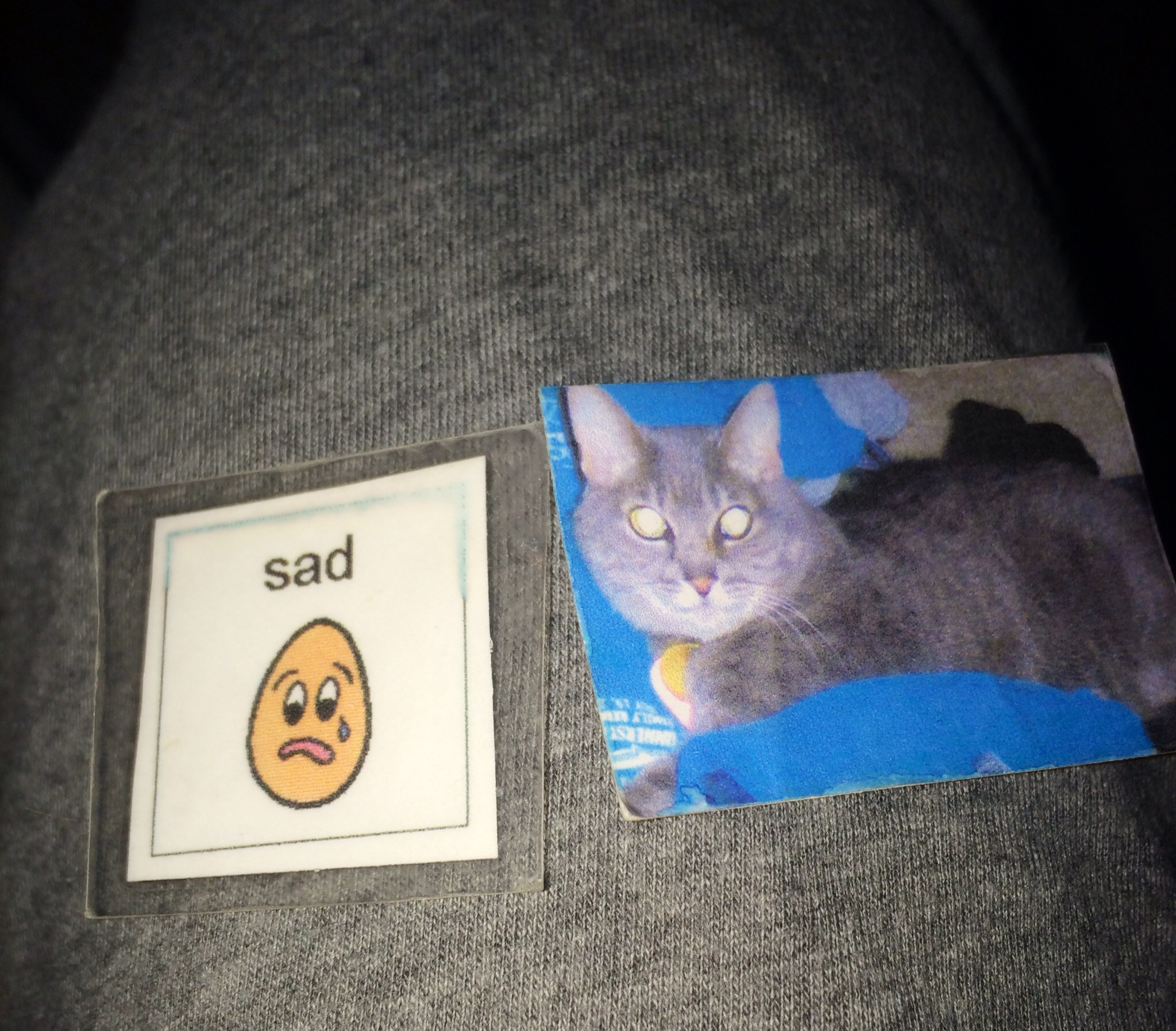
I witnessed this first hand with Nick. My 20 year old son has Down syndrome and autism.  His speech is limited. He uses a  picture book to communicate his wants, needs and feelings. On several occasions he has handed me these two icons:

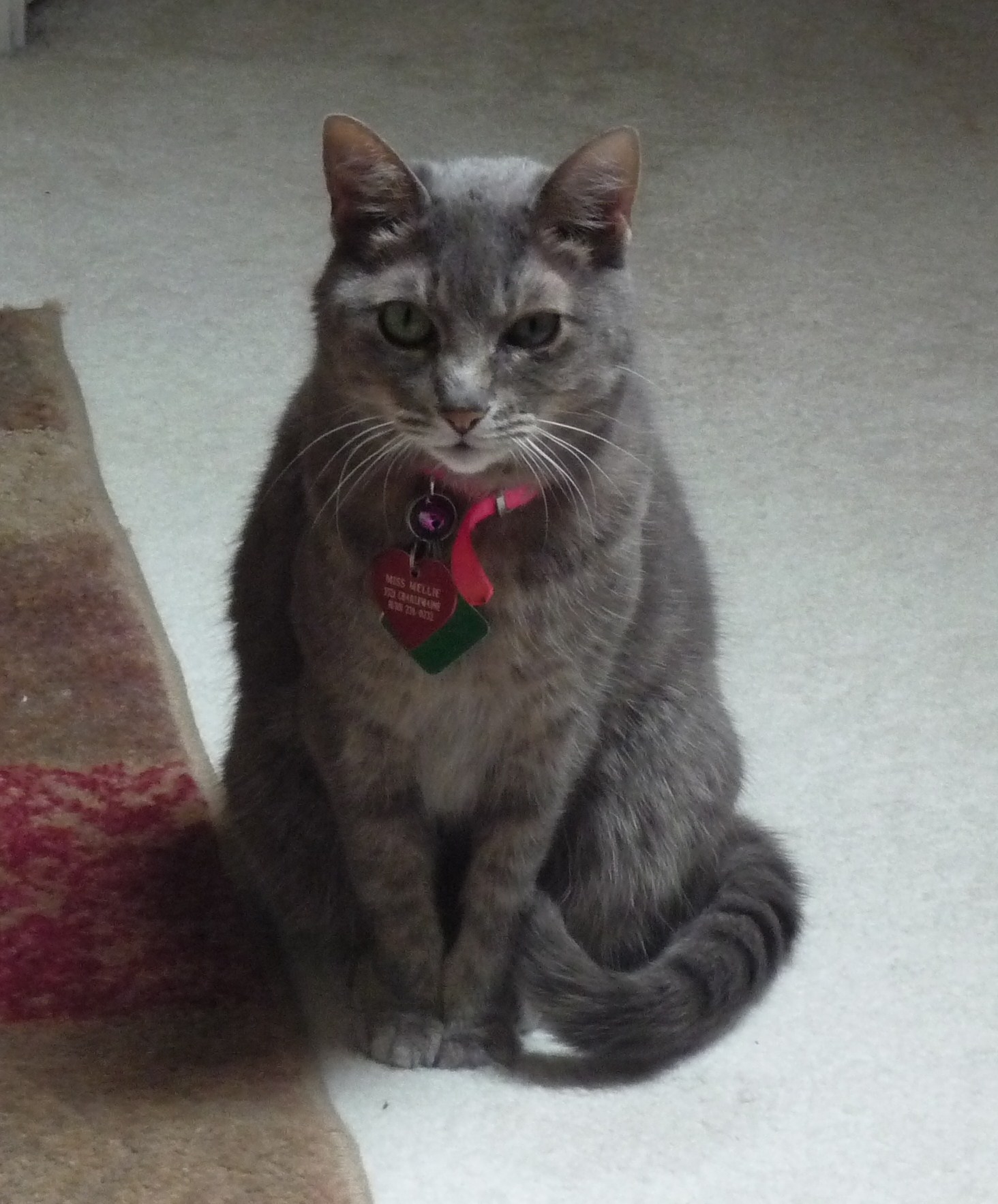
This is our cat Miss Mellie of 17 years that passed away…..

Mellie Sad Icons

For as long as I can remember, there has been a tabby cat in my life.

Me with Tiger back in the late 70’s……

Tiger and T

When Nick was first born, we took him to get screened for the early intervention program. One of the questions they asked was, “What other family members were there?” They were pleased to hear this included an older brother and a cat. Both of them would help Nick become alert and engaged in the world. His brother could shake toys to get him to look up. A cat with a bell on his collar would also get Nick’s attention. Each time he would look up it would strengthen his neck and trunk. This in turn, helped to fight the low muscle tone associated with having Down syndrome.

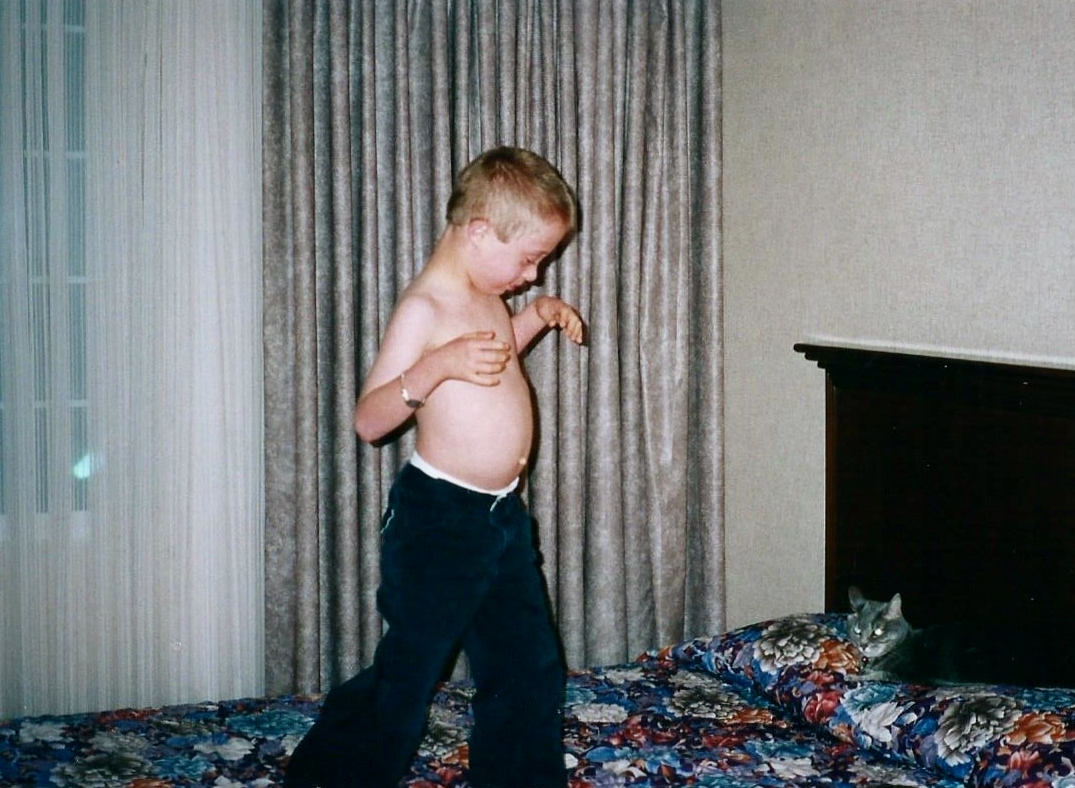
Nick, Hank and Woody our cat….. (You can see Nick’s low muscle tone as he is propped up against his brother)

Woody and the boys

Woody was my faithful friend since college and lived to be 17.  Several months later, we adopted Miss Mellie. You can read all about Nick and Miss Mellie’s relationship in the archives under the category, “The Fun Side of Nick”.

Nick thought she made a great task strip for his PECS icons…..

photo (117)

Now,  we are in a new chapter having recently adopted a new kitten from the shelter.  For more information click@ https://nickspecialneeds.wordpress.com/2014/09/29/blog-105-furry…needs-families   She has been here for a few weeks and is settling in well.

We decided to name her Kibbie……

Kibbie

Kibbie is a 5 month old tabby.  At first she was jumpy when Nick made his loud noises. But like the rest of us, those stimming sounds and yells are becoming white noise to Kibbie as well. (Well for the most part) 🙂  I am working on getting Nick to dangle the wands and throw cat toys for her to fetch.  He is also serving her food dish each evening.  My heart swells when Nick plants kisses on her head.  I posted a video last Friday on the Facebook Page (Down Syndrome With A Slice Of Autism).  There is also a video of the kitten playing fetch posted the week before.

It looks like the two of them are getting along nicely……… (yes we like taking sleeping photos in my family)

Kibbie and Nick

According to Brain Balance Centers, (http://www.brainbalancecenters.com), “The right family-friendly pet may be just what your child needs to better cope with daily stressors and other overwhelming sources of stimulation. Owning a pet may help ease these daily anxieties and help to better facilitate socialization and understanding. It may also benefit a child who struggles with sensory, social or behavioral issues.”  I look forward to sharing the new adventures of Nick and Kibbie with you.  Stay tuned for this and most likely a third installment of “Stuff On My Cat”.  Thank you for reading and sharing Nick’s world (and humoring me when I write about cats).  That’s what is in my noggin this week. 🙂


~Teresa

Posted in Autism, Down syndrome, Tech Stuff/Apps and Video Based Instruction

Blog #80~Getting Organized Along With My Autistic Child

Blog #80~ Getting Organized Along With My Autistic Child

Is it odd that I like to have all the labels turned straight in the food pantry and the towels stacked perfectly in the bathroom closet?  My hangers might just be color-coded (white=shirts, gray=pants, teal=capri length pants).  I wasn’t always so compulsive. 

I’ve touched on my theory about this in previous blog posts. Simply this, I need to feel in control in my home and creating order helps keep me grounded.  Having a child with Down syndrome and autism under your roof is not exactly a “Zen” environment.  Nick’s world can be chaotic.  Just go back to the April 2012 archives and read Blog #3~Getting your Goat for a little taste of crazy. 🙂

This is just one of many things Nick has dumped on the floor…..

photo (105)

So over the weekend, I got on a roll. Operation Re-boot 2014 inspired me to get organized.  First stop= Clean out the paper pile and mail that accumulated over the holidays and made my “to do list” for the week.  Next, Put away the Christmas gifts and stuff from the Florida trip that I stashed in the dining room…….

IMG01 (9)

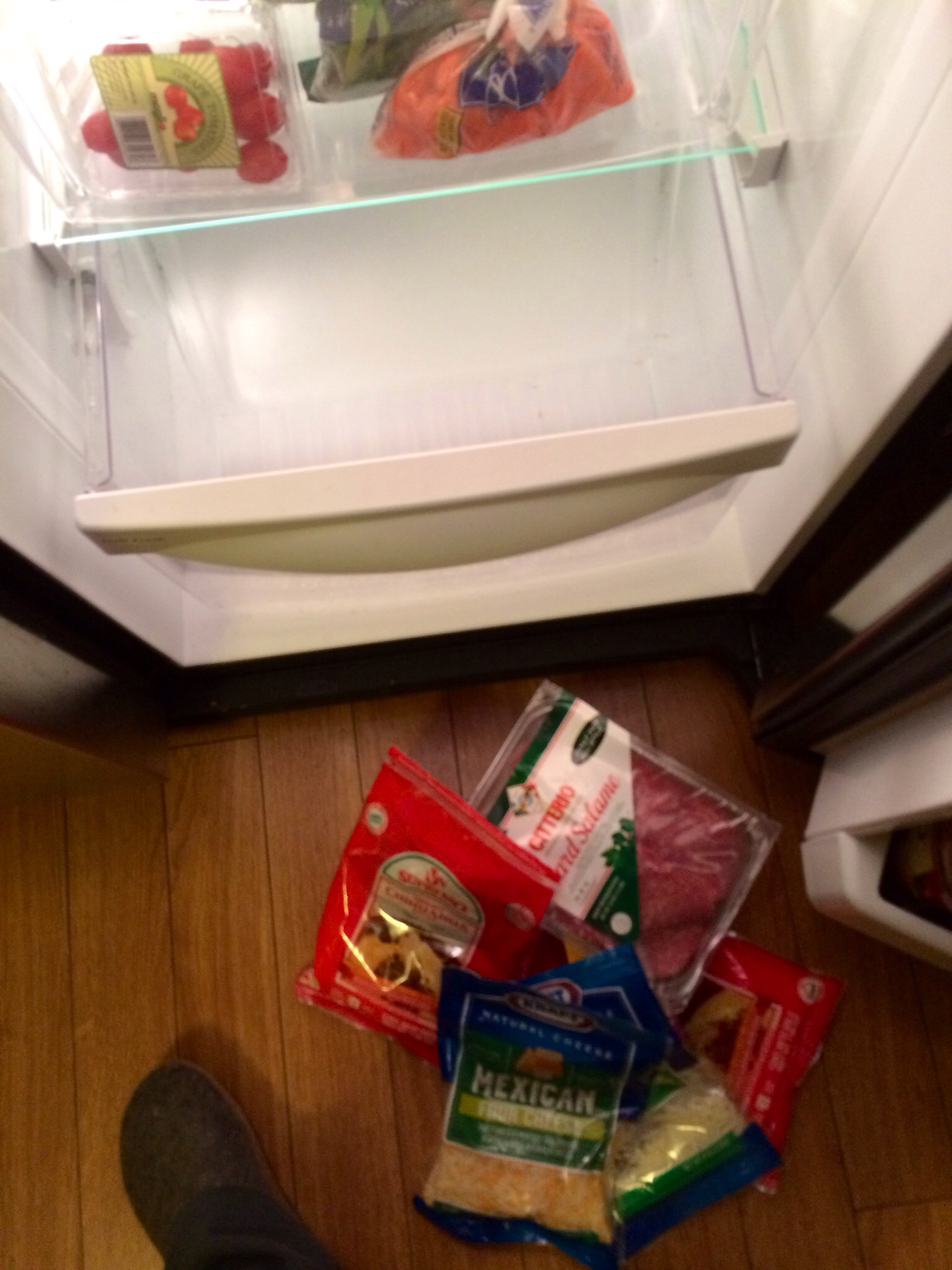
I opened the medicine cabinet to put the cold meds back (that had been sitting in the dining room for over a week).  Suddenly, an avalanche of allergy boxes spilled out and bonked me on the head.  Guess what the next stop was?

Wow, it’s been a long time since the medicine cabinet was cleaned out!  Nice expiration date…. 11/06 on the Tylenol bottle…..What the? 

IMG01 (2)

Voila, purged, organized and labeled!

IMG01 (10)

Next stop= The island of misfit socks. Maybe some will reunite with their mate…..

IMG01 (4)

Last stop= Clean out the fridge

IMG01 (11)

After a long day in full steam OCD mode, I felt lighter and more in control of my living space.  The chi energy was once again flowing freely~~~~~~~~ aaahhhh!

IMG01 (12)

Getting organized helps us to better plan daily activities and use our time more effectively.  It’s not easy for some people with Autism Spectrum Disorder (ASD).  The nervous system is not always in sync which makes things difficult to process sensory information.  This can lead to feelings of disorganization, agitation and being overwhelmed. According to the National Autistic Society, “Challenges are found in processing information, predicting consequences of an action, understanding the concept of time and executive function (focus on details instead of the whole picture).”

Most of us use certain strategies to help organize our day.  I use an old school calendar that is color-coded in the kitchen.  At a glance events are highlighted and easier to spot. Teaching fitness classes=green, appointments=pink, birthdays=orange, vacations=purple, etc…  Color coding and other strategies can also be equally as effective for people with an autism spectrum disorder (ASD). Here are some practical ways to teach and implement organization:

Visual supports

Social Stories give a blueprint for what is expected for behavior, what is on schedule and changes in routines.

Pictures (Picture Exchange System called PECS)

photo (106)

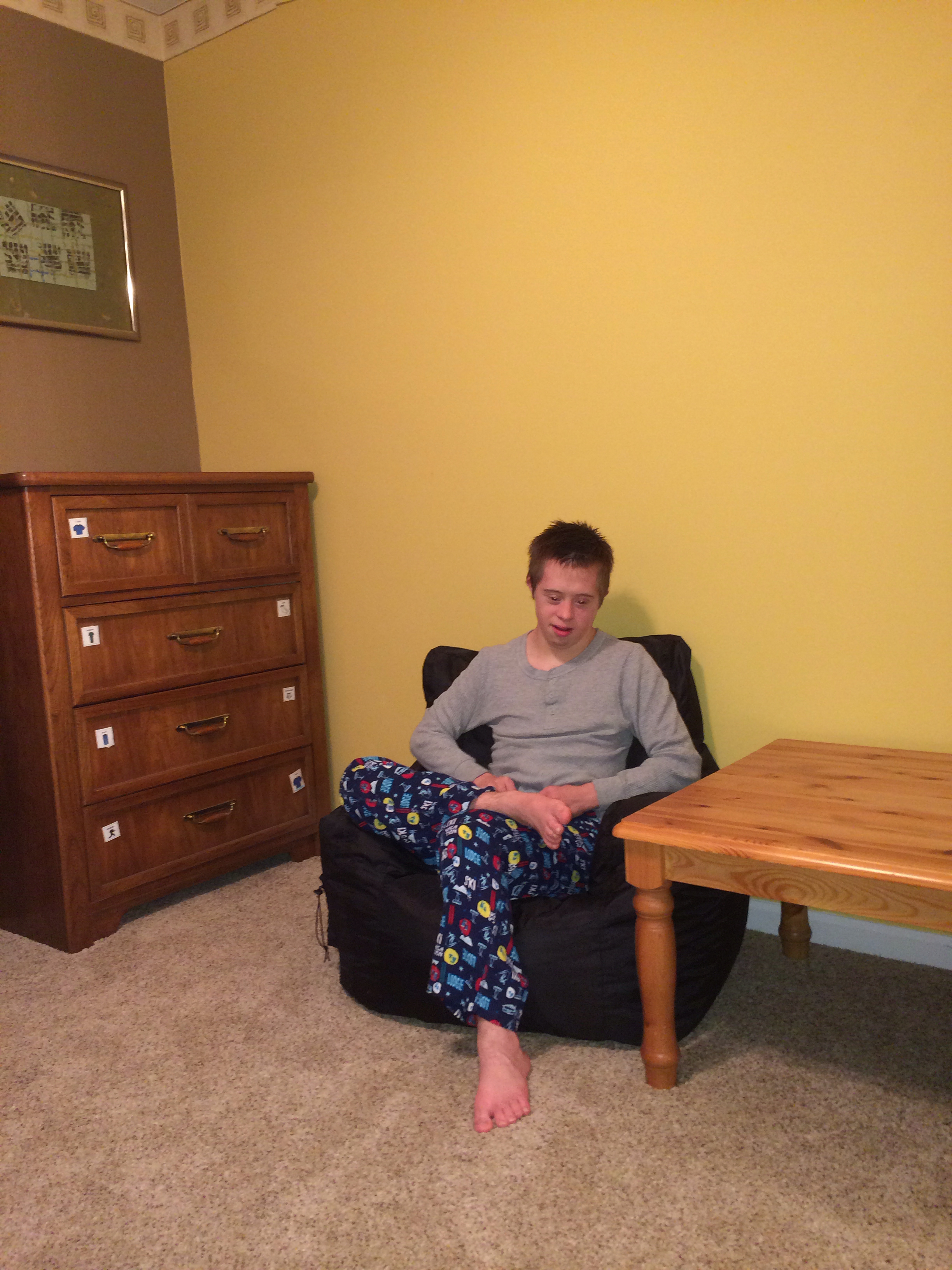
Note Nick’s room has pictures labeled on his dresser to help him find and put away his own clothes.  Teaching organizational skills to persons with autism fosters independence…

IMG01 (2)

Lists

Written or visual with pictures keep persons on task and also registers achievements.

Electronic Devices

Phone and iPod apps are available to make schedules, set alarms and timers and act as general reminders.  See Blog #52~Tech Time located in the April 2013 archives for specific suggestions. Here’s one…….

picture schedule app

Task boxes, envelopes and files

Store media devices, work bins and personal items in set places helps to teach responsibility.  Nick’s area includes his PECS Communication book, media storage box and theSTOP Box (which I hand him when it is time to surrender an item and transition).

IMG01 (13)

Nick’s work bins that he can retrieve and navigate independently….

IMG01 (14)

Getting things organized helps all of us feel more in control and makes for a more efficient use of our time.  Putting strategies in place to help persons having autism spectrum disorder can make a huge difference.  Their world becomes easier to navigate, which in turn lessons anxiety.  It’s all about staying in the Zen zone.  That’s what is in my noggin this week.

zen

~Teresa

Posted in Autism, Behavior/ ABA

Blog #77~Autism and Meltdowns

Blog#77~Autism and Meltdowns

I would rather write about anything else than what an autism meltdown looks like (even poop accidents).

poop icon

It’s a difficult subject, personal in nature and exposes a lot of vulnerability.  I am just one of so many dealing with these raging outbursts. My son Nick is 19 years old and has Down syndrome and autism.  So, for all of the warrior moms out there in the battlefield…. This one is for you!

When Nick was in the throes of puberty, his meltdowns were horrific.  He would destroy everything in his path.  His arms slung hard hitting, kicking, biting and drawing blood with his pinching.  These intense battles became so bad and frequent that I had to take action.  I was no longer able to control my own son.  Here is what I did……

Three things we did to get things under control:

1.  Nick was put on medication, Risperdal to help calm him down and be less agitated.

2.  I called an emergency IEP meeting and insisted that the school district’s autism specialist be brought in to help out. We tracked his behavior both at school and home to figure out what might be triggering his anger.  Then we came up with a behavior plan.  You see, every behavior communicates something.  In Nick’s case, he wasn’t being heard.

3.  The autism specialist determined that the staff, Nick and I needed to be properly trained to use the picture exchange system (PECS). The pictures gave Nick a voice that autism had robbed him of.  Finally, he felt in control.  The incidences of the teenage sized temper tantrum quickly diminished.

PECS Communication Book:

photo (123)

Fast forward to the present….. Nick has been unsettled.  He is expressing it by shoving us away.  It’s like he is saying, “Hey, I am 19 years old and coming into adult age.  Back the F#&K off!”  Nick had two serious meltdowns in the past week.  Each seemed to come out of nowhere.  But there is always something brewing inside. You just have to back track and figure out what might have been the trigger(s) to set him off.

Portrait of an Autism Meltdown: The Scenario, Triggers and Outcome

(Also known as the ABC’s: Antecedent-Behavior-Consequence) Here’s a sample form used to work on a Behavior Support Plan………

IMG01

Timeline of Nick’s Meltdown

A=Antecedents:

*Routine is off the past couple of weeks Nick’s Dad had shoulder surgery=added stress around the house.

*Nick has a runny nose and woke up way too early.

*Dinner at Nick’s Aunt & Uncle’s recently purchased home-new environment

*Al pulls into his brother’s driveway and has to back up a few times.  Nick hates it when you pull in and then have back up.  He thinks you aren’t going to stay so he panics, bangs on the window, pinches his cheeks and yells loudly.

*Nick’s bored and no one is paying attention to him.  He looks to stir things up. He sits down on the couch with his iPod, but doesn’t last there long.  He finds my purse and empties the contents it down the stairs. Then, he bonks poor Cali on the head with the can of tennis balls he is stimming on.

Poor Cali, retreats to the kitchen…….

IMG01 (2)

*Aunt Ali makes Nick’s favorite pasta dish, and has bought his favorite dessert. 🙂

little debbie cakes

*Oh no, I realize that once the Little Debbies are introduced Nick’s going to make a bee line to the shower. That’s his routine.

beelinne pic

*Sure enough, he strips down in the bathroom upstairs. The water doesn’t get as hot as Nick likes…. NOT GOOD, this is going to make him mad.

B=Behavior:

*He shivers and is pissed as I help him towel off.   I hand him his street clothes to put back on.  (I should have brought his pajamas.)  He flung them across the bathroom, then he proceeded to grab the tissue box, toothpaste, magazines, hand towel and hurl them as well. THIS IS IT…….

Point of no return

*I managed to contain him between the toilet and bathtub and shield myself as he lunges at me pinching, bruising and scratching my arms.  I use a towel much like a bullfighter does against a raging bull.  Only I am the one who becomes bloodied, not the bull.

bullfighter pic

*Nick is nearly my size.  There is no possible way to do *CPI Holds (see link below) on him anymore.  It’s more about getting him in a safe place and deflecting his blows.

calm down autistic child

It took 30+ minutes for Nick to de-compress from this meltdown, (most are 10-15 max these days).  I felt raw, defeated and exposed.  Nick started to work through his emotions.  He cursed, hit and pinched himself as if he was replaying the meltdown. My heart breaks a thousand times in these moments.

Consequence:

Eventually Nick showed remorse and said, “sorry”.   That’s when you know he has de-escalated.  He put on his clothes, said our apologies and drove home in silence.

THAT is a portrait of an autism meltdown!

The next morning, I brewed a K-cup and began to dissect what had happened to cause the meltdown.  Nick thrives best in a predictable environment and visual picture schedule that he can follow.

So, I go back to the ABC Functional Behavior form:

A=Antecedent (what happened before)? All the things listed above were building up inside him.

B=Behavior (Nick’s tired, confused, mad at the cold water and no pj’s, he lashes out.)

C=Consequence (After the meltdown, Nick de-escalates and apologizes and we go home.)

I’m still trying to figure out Nick’s world.  In retrospect, I should have increased his med dose before the dinner and made a visual schedule with pictures of their new home.  On the schedule put the following icons on:

“New house”

“Dinner”

“Dessert”

“All Done”

“Car”

“Home”

Or at the very least, just brought his pajamas.  So, I will re-boot and learn from this mistake just as I’ve done before.  Autism and meltdowns can be scary and brutal.  But they can also be prevented if you look ahead to the environment, and plan ahead for anything that might set your child off.

That’s what is in my noggin this week.

~Teresa

*CPI= “Crisis Prevention Institute offers trainings in “Nonviolent Crisis Intervention.”  The program is safe, nonharmful behavior management system designed to help humans service professionals provide the best possible care, welfare, safety and security of disruptive, assaultive and out-of control individuals even during their most violent moments”  For more Information: http://www.crisisprevention.com.

Posted in Augmentative and Alternative Communication (AAC), Autism, Down syndrome, Speech and Occupational Therapy

Blog #69~Down Syndrome, Autism and Speech

Blog #69~Down Syndrome, Autism and Speech

I am often asked about Nick’s ability to produce words given the fact that he has Down syndrome and autism.  He does have a vocabulary including a few expletives that he picked up from us somewhere along the way. I find it interesting how he can say those words pitch perfectly.  This week I have a very special guest blogger.  Brian Sabella is Nick’s speech therapist and shares his perspective on working with Nick at Suburban Pediatric Therapies:  

Speech-Language Therapy and Nick

By Brian Sabella, CCC-SLP

I have been providing clinic-based speech-language therapy for Nick for over four years now. I feel fortunate for the experience for a couple reasons. First and foremost, he absolutely cracks me up—every week. There’s something about his brand of adolescent, slapstick humor that just resonates with me as a fellow male. Additionally, Nick’s family and support system are a pleasure to work with. They hold very high expectations of his communication abilities and understand communication takes other forms besides the spoken word. Nick uses a multifaceted system that includes spoken words, printed pictures, and electronic devices to communicate throughout his day. And as a speech therapist, I love it. For Nick, progress in “speech” means being able to communicate more effectively; it isn’t just about talking!

For those curious about the speech Nick does work on, here is a sample of some words we have practiced and continue to practice: help, Sprite, plate, shower, taco, pasta. With many of these words, Nick is not expected to articulate them exactly as you or I would, but rather, to produce them in a way that a listener would be more likely to understand. The idea is that Nick will probably be handing his conversational partner a picture of a taco anyway, so the spoken word is meant to enhance the communicative exchange. With this specific word, Nick will often produce aco, omitting the t. During our drill practice, I will call attention to my mouth and ask Nick to say it like I do, annunciating that missing t  sound and providing a visual cue (such as pointing near the area of my mouth where the sound is produced). After a correct production is established, Nick is encouraged to say it again a total of five times. Performing a high number of repetitions is always the best way to learn a new movement pattern, whether that movement is a golf swing, a pencil stroke, or a spoken word. Admittedly, speech drill is not one of Nick’s favorite things to do, so his good efforts are always rewarded with a bit of praise or even a small morsel of food.  You know, just to stay on his good side.

Most of my time spent with Nick in therapy hasn’t actually been focused on improving his speech. Some of it has. But I’m actually more concerned with improving Nick’s ability to communicate through other means. The reason for this is because, like many other individuals on the autism spectrum, Nick shows a strong preference for pictures.  He also presents with apraxia of speech, which further complicates matters. This is why at home and at school, Nick’s uses a picture exchange system that helps him communicate during everyday activities.

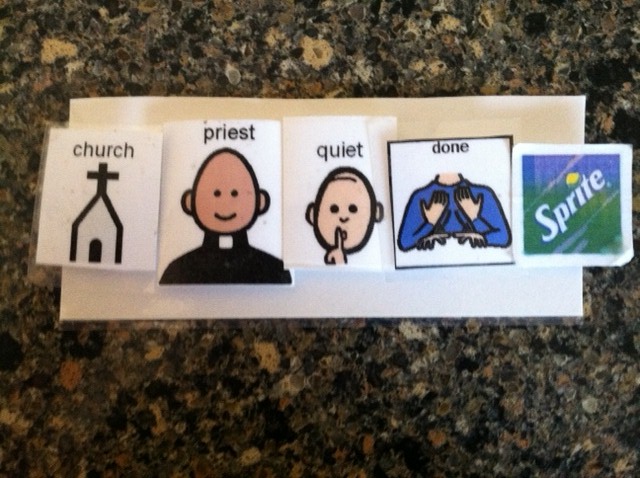
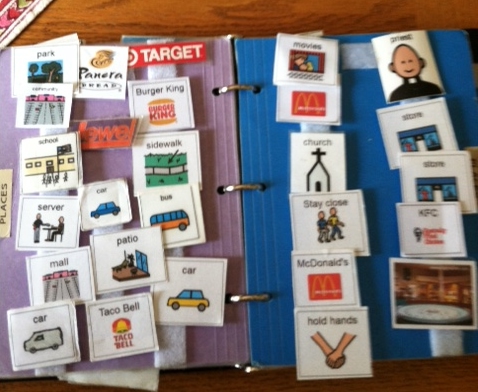
Teresa carries around with her a set of pictures of Nick’s favorite fast food restaurants.  When they are out running errands and it’s time for lunch, she shows Nick the pictures and he points to the logo of the restaurant he’s in the mood for. If he requests Taco Bell (which he usually does) he can then flip to a page that shows pictures of their menu items and he can indicate which ones he wants to order. Much of our time in speech therapy has been spent working on expanding his comprehension and use of these pictures.

photo (123)

Then there’s the Bored Board. As readers of this blog, you know that when Nick is bored, he finds ways of wreaking havoc in extremely creative ways. Picking up on these signs of boredom before Nick decides to dump fajita seasoning on the cat or spill an entire bottle of cooking oil on the floor will allow his parents to redirect these behaviors to something less destructive. The Board Bored shows Nick pictures of more appropriate objects and activities to request: DVDs, computer games, an iPod, a whoopee cushion, Flarp noise putty, a (fake) bloody Halloween hand, a sound effects toy that makes burping and glass-breaking sounds, etc.  Nick and I have spent hours working on requesting with the Bored Board so that he can more effectively use it in a time of need.

0916091611

Recently, our sessions have been focusing on having Nick formulate requests using “I want.”  We set up a board using an alternative-augmentative communication (AAC) iPad app called Proloquo2Go. It transforms the iPad, iPhone, or iPod Touch into a high-tech voice output device that helps a person communicate by typing or touching pictures. Nick’s screen displays a variety of preferred snacks and some phrases, including “I want.” Our goal was to have Nick indicate which snack he wanted by pressing “I want” then the snack item.  When he does this, the device speaks the sentence “I want popcorn;” I then reward him with some popcorn.  If Nick only touches the snack item without “I want” first, then I prompt him to press both.

Proloquo2Go

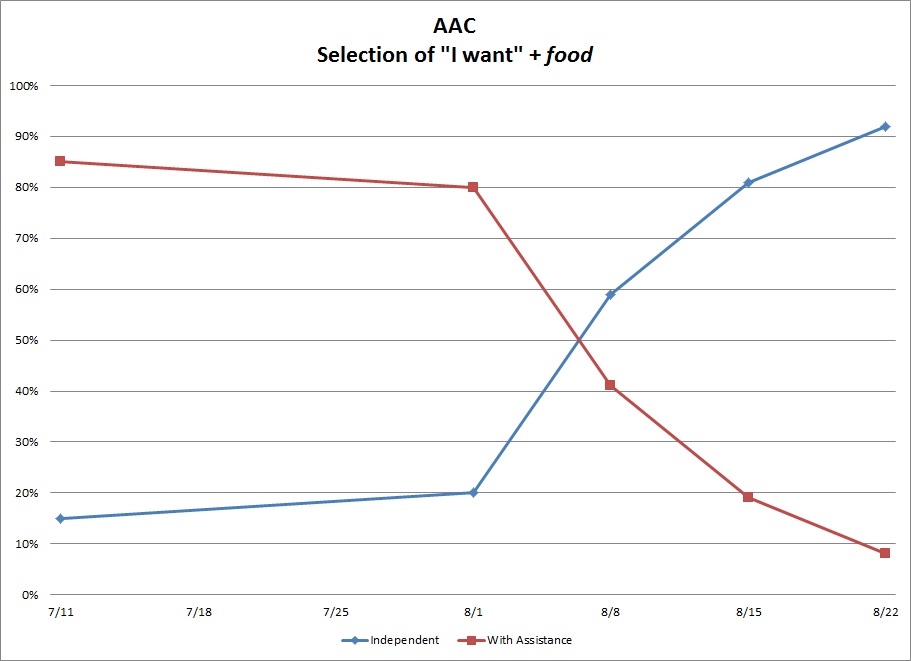
As you might imagine, producing these sentences was initially difficult for Nick.  But over time, he became very good at producing them.  This graph tracks his progress and shows that Nick went from almost always needing support to produce these “I want” requests to, after five sessions, almost always producing them independently.

Graph

As you can see, speech therapy is not always about speech.  For Nick, speech therapy is about helping him communicate effectively, even if it means doing so with pictures or electronic devices. With an alternative system of communication in place, Nick’s life is a little easier.  And his pets are a little safer, too.

Brian Sabella and Nick working at Suburban Pediatric Therapies 🙂 ……

Brian and Nick

Special thanks to Brian Sabella, CCC-SLP for sharing his insights this week.  For more about Suburban Pediatric Therapies check out their website at http://www.sptherapies.com.  As you can see there is much more to communication then just speaking words.  That’s what is in my noggin this week. 🙂

~Teresa

Follow Nick on Social Media:

Facebook and Pinterest @Down Syndrome With A Slice Of Autism

Instagram @nickdsautism

Twitter @tjunnerstall


Posted in Autism, Fun Side of Nick

Blog #63~Furry Family Members

Blog #63~Furry Family Members

It is with great sadness that I begin this piece by telling you that our cat of 17 years has passed away.  She has been such a part of our family history and will be dearly missed.

I posted this picture on Facebook last Saturday and received so many thoughtful sentiments.  I often post pictures and updates about Miss Mellie.  It appears she had quite a following……..

photo (115) (2)

I loved her from afar.”

“She warmed the hearts of many of us on Facebook too.”

“Miss Mellie stories have been endearing and a bright spot in my week.”

“We take in theses wonderful animals, love them, take care of them and they become part of our family. Part of our daily routine, part of our home and part of our life. When they are gone it is like an emptiness that is hard to explain to someone who doesn’t have a pet. But those of us who do…we understand your pain and wish we could help you. miss seeing her face.”

“So sad, I will miss the Mellie stories.”

“Oh, I am so sorry. A furry loss is a tough one.”

Our son, Nick who has Down syndrome and autism had a lot of fun with Miss Mellie over the years.  If you are a regular follower of the blog you know about a lot of the pranks he has pulled on her.  Nick’s antics have given me enough material to write two blogs, Stuff on My Cat (Blog #33 located in the December 2012 archives) and Stuff on My Cat, Part II (located in the July 2013 archives.)  Here are the last two things he put on our sweet, gray tabby 🙂

Oh no, looks like Miss Mellie is getting some deep pressure with the therapy ball….

photo (127)

Nick thought she might enjoy some music, rock on kitty……

photo (121)

Harold makes a rough landing into the cat food.  Hardy har har, Nick 🙂

photo (123)

On our cross country move from Livermore, California here to the Chicagoland area we stopped for the night in Reno. Six year old Nick decided to do a little “Magic Mike” action for Miss Mellie.  I don’t think she was too impressed……..

Scan0001

A sweet moment between Nick and our cat. By the way, he hasn’t handed me the icon picture of her out of his PECS communication book yet.  But I know he will soon.  That moment will be a tearful one for me 😦

photo (119)

She shared so much love with our family and friends. She adored being in Hank’s arms and seem to comfortably nestle there……

photo (116)

Snuggled in with Al, she was a good lap cat…..

IMG_0782

She insisted on being on my lap, helping me to write 🙂

photo (129)

I will miss so many things about our cat like how she follows the sun beams throughout the day and running into the kitchen whenever she heard the can opener, tuna!…….

photo (124)

photo (115)

How she parked herself in front of the fireplace during the winter months waiting for  the hearth to be prepared for her……

photo (122)

Most of all I will miss our lap time together, the sound of her purring, her warmth and the love that she gave all of us. Thank you KB (my cat loving friend), for framing this picture and giving it to me last Christmas.  I will cherish it always…….

0516091435

A younger and heavier Mellie that my sister, Laura gave me… Aaahh she’s so cute…..

Summer_Oct2009 027 (3)

My friend Jimmie P. shared this quote on my Facebook wall…..

There has never been a cat who couldn’t calm me down by walking slowly past my chair.”
~Rod McCuan

That’s what is in my noggin this week.  Rest in peace, Miss Mellie.

~Teresa

0604102354 (2)


Posted in Autism, Fun Side of Nick

Blog #61~Stuff On My Cat Part II

Blog #61~ Stuff on my Cat Part II

Stuff + Cats= Awesome

stuff on my cat book

That’s the motto for the internet phenomenon called “Stuff on my cat.”  Here’s what Amazon wrote about this book by Mario Garza:

“It began with a handful of digital photographs of office supplies, toys, and spare computer parts thoughtfully placed on Mario Garza’s snoozing cat, Love. Over time, the objects became bigger: remote controls, shoes, empty pizza boxes. And then cat owners everywhere were sucked into the Internet phenomenon that is defined by a simple motto: stuff + cats = awesome.  Culled from the thousands of outrageous photographs submitted by mischievous animal lovers, here are 200 of the most unbelievably entertaining images of cats with all manner of things on them: wigs, Easter eggs, dogs, cheeseburgers, cookware, gummi bears, action figures, tiaras, beer cans, pinecones, a statue of the Buddha, and much more. An introduction by the site’s creator explains the Stuff on My Cat philosophy, and playful illustrations and graphics are sprinkled throughout.”

In Blog #33~Stuff On My Cat (located in the December 2012 Archives), I wrote and shared numerous pictures of random objects we put on our cats over the years.  Why do we do this?  I have to embrace Mario Garza’s philosophy to answer this one.  Our cats rule the house.  Sleeping all day long wherever the sun radiates, claiming the fresh, warm laundry as their “personal paradise” and plopping on your lap even if you just want to sit down for a second.

God forbid you disturb them.  I have to contort my legs with bizarre yoga moves  slinking out of bed so as not to disturb her slumber. She wields her power at 5:00 a.m. letting out piercing cries and meows that sound as if you haven’t fed her in a week.  So, why put stuff on our cats?  Mario Garza is right on his philosophy:  “There is a very satisfying shift of power going on.  Now I’m in control when I sneak up behind her while she naps and put a pancake on top of her head-checkmate.” 🙂

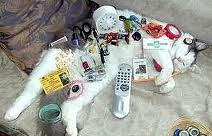
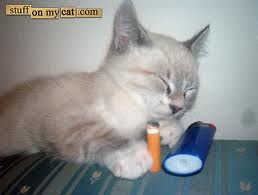
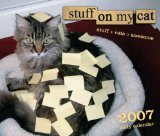
Check out a few from the website www.stuffonmycat.com……

stuff on my cat loaded

stuff on cat with cig

stuff on my cat glasses

stuff on my cat post its

Nick loves to do this too,  he is 19 and has Down syndrome and autism.  Here are some of the stunts he’s pulled on our 16+ year old  tabby……..

photo (121)

Mellie has some company, Nick’s plush animals and a Taco Bell dog….

photo (122)

Another deluge of toys along with a package of microwave popcorn…..

photo (128)

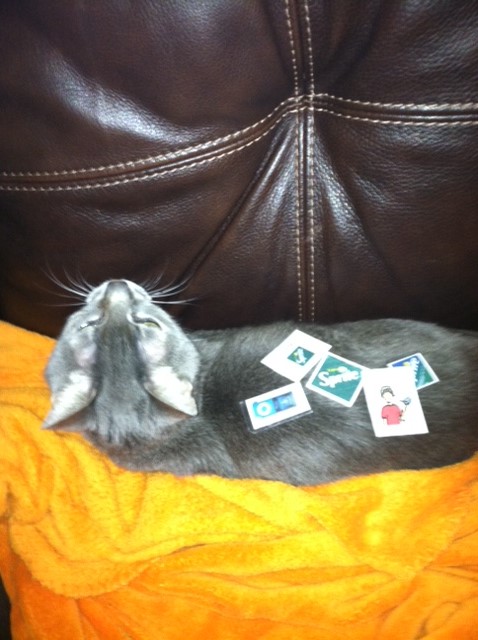
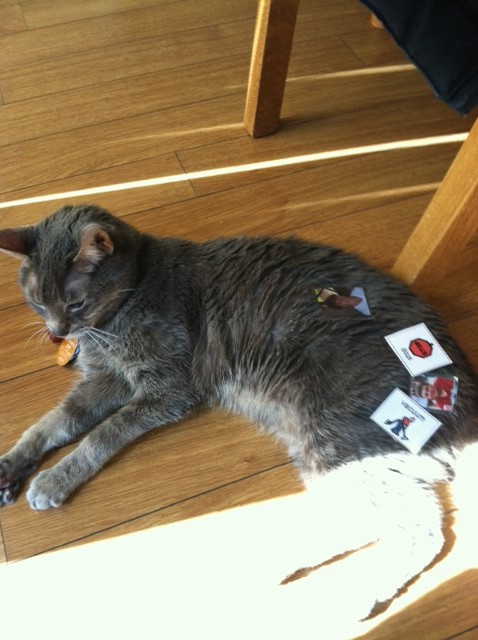
Mellie is trying to relax in her 1:00 p.m. sun spot.  Nick had other ideas his PECS icons, (Picture Exchange System.) I think he was communicating that he missed his brother, Hank and friend/respite worker, Bobby……

photo (123)

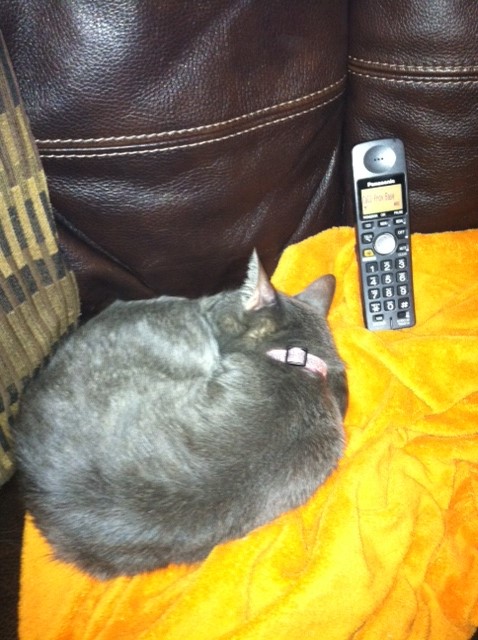
Apparently Nick thinks Mellie is expecting an important call…. 🙂

photo (119)

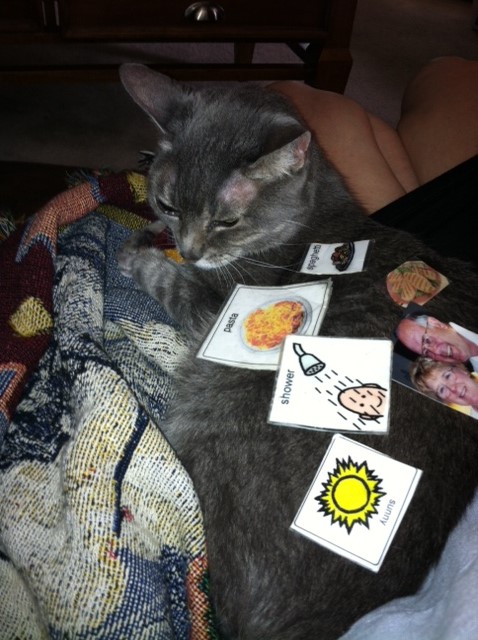
More fun with PECS icons….Nick mapped out his agenda last Friday…….

photo (124)

“Oh Kitty, go get me some Sprite please!”

photo (127)

I get a kick out of how creative Nick is and appreciate his mischievous side.  Here is one of Nick who had been “stimming” (a trait of autism) with my makeup mirror. He fell asleep next to the cat who had melded herself to a warm towel out of  the dryer…… apparently the cat doesn’t hold a grudge….. 🙂

IMG-20121123-00001

Speaking of being mischievous, here are a couple I did.  Oh I just can’t resist every once in awhile…. hee, hee, hee…… 🙂

Cinco de Mayo Mellie….. Ole!

photo (130)

“The Graduate”

photo (129)

Hope you enjoyed the second installment of stuff on my cat.  Next week I will get back to part two of “Wandering and Autism”.  Sometimes its fun to be mischievous. That’s what is in my noggin this week, meow!

~Teresa 🙂