Posted in Down syndrome, Dual Diagnosis Down syndrome and autism, Feeding, Personal Hygiene, Toileting, Independent living skills, Parenting Special Needs, Self-care for special needs parents

Blog #252~DS-ASD:Teaching Personal Hygiene and Independent Living Skills at Home

Blog #252~DS-ASD:Teaching Personal Hygiene and Independent Living Skills at Home

The importance of teaching personal hygiene and other independent living skills at home can’t be emphasized enough. Parents, caregivers, teachers and aides are all on the front lines to support individuals with a dual diagnosis of Down syndrome and autism (DS-ASD). My son Nick is 29 years old and has DS-ASD, and honestly one of the most challenging areas to teach is personal hygiene. One thing that I have learned over the years is that it is never to early or late to work on these skills. This week we will examine specific skills and strategies to teach your loved one with DS-ASD.

Personal Hygiene and Independent Living Skills at Home:

*Using the toilet

*Putting clothes in the hamper/ hanging up towel

*Picking out clothes to wear/ dressing skills

*Brushing Teeth/ flossing

*Washing hands & face

*Putting on deodorant

*Shaving

*Beauty Regimens

*Menstrual cycle cleanliness

*Bathing/ showering & drying off

*Brushing hair

*Blowing nose

*Clipping nails/ tolerating and desensitizing nail clipping

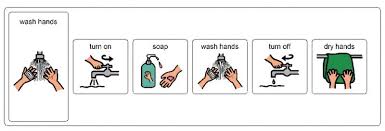
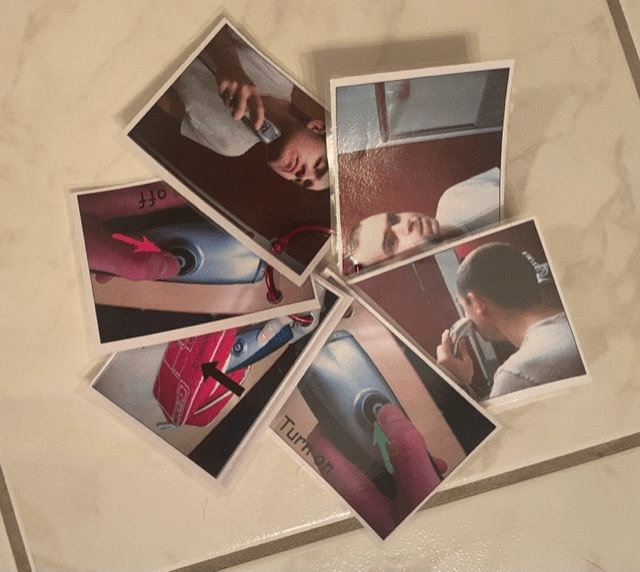
From the list above, consider the strengths of your child, start with a more preferred activity and build from there. Offer support using visuals or visual modeling with breakdown of the steps. Here are a few examples, many of which you can get from Google Images and YouTube. Consider whether the child responds better to understanding actual photographs, videos or Picture Exchange Communication(PECS) Symbols. Many speech and occupational therapists have visual supports that they can share with you. So, be sure to ask your child’s school or private therapists for these as well.

Washing Hands Routine:
Shaving Photo Visuals on a Key Ring:
Video Modeling of Brushing Teeth:

Over the years, we have used all of these visual supports and modeling techniques to teach these tasks. It can be very beneficial to work with a BCBA behaviorist who can help target skills, breakdown the steps and practice on a consistent basis. The BCBA can also build in schedules and rewards to help support and motivate your child.

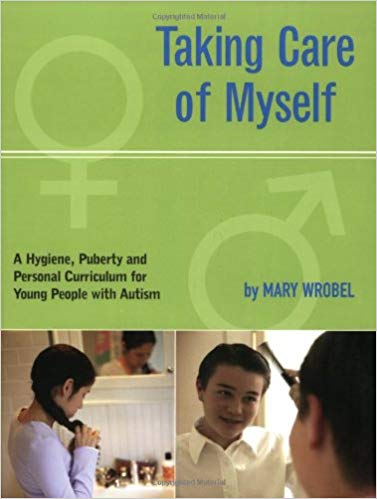
Here are some great resources for teaching personal hygiene and boundaries by author Mary Wrobel:
Independent living, hygiene and home management skills help to build confidence, a sense of ownership and belonging. Building these skills sets will give your child more jobs/day program and housing options when they become an adult.

To view more independent living skills click on the two previous blogs:
We hope that you have gained some insight and strategies for building independence from the past three blogs #250-252. Our goal and passion is to make this road of a dual diagnosis easier for other families. We also want to inspire you as a parent, teacher or caregiver to help your child reach their full potential. 🙂

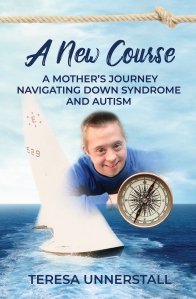
For more information on navigating co-occurring DS-ASD in my book. Click here to order: https://amzn.to/2W3Un6X

That’s what is in my noggin this week.

~Teresa 🙂

Follow on Social Media:

Posted in Autism, Down syndrome, Dual Diagnosis Down syndrome and autism, Education and Special Needs, Parenting Special Needs

Blog #227~Daily living skills you can work on at home with your kids during the COVID-19 Crisis

Blog #227~Daily living skills you can work on at home with your kids during the COVID-19 Crisis

So, your stuck at home with your kids during this COVID-19 crisis, now what? This is actually the perfect time to work on daily living skills with your kids. Why are these skills important to know?

Let’s go back to the purpose of the Individual Education Plan (IEP):   To promote further education, employment and independent living skills.

Often, in our busy lives it’s easier to skip over teaching daily living skills on a consistent basis with our kids. So now that time has slowed down, why not take a few of these skills and hone in on them? Not only will this help your child become more independent, it will also promote confidence, family teamwork and as a bonus– many skills provide sensory input. My son Nick is 26 years old and has a dual diagnosis of Down syndrome and autism (DS-ASD). Over the years we have built in many daily living skills into his routine at home.

Here are a few of the jobs that Nick does around the house and how they provide sensory input:

*Recycling (replacement behavior for throwing)
*Can crushing (sensory and motor activity and replacement behavior for throwing)
*Carry laundry basket and load washing machine (heavy work/ organizing)
*Put away groceries (organizing activity)
*Empty Dishwasher (organizing and sensory activity)
*Cleaning/ wiping down countertops and windows (organizing activity)
*Vacuuming (heavy work which is calming)


The following link below is a full list of daily living skills in the areas of self-care, personal hygiene, kitchen skills, home management skills, to name a few. Focus on one or two skills at a time. You can access visuals and task strips off of Google Images and videos on YouTube:

https://learningforapurpose.com/2019/09/01/the-best-functional-life-skill-resources-for-individuals-with-autism

This is a time of uncertainty and anxiety levels are running high for all of us. First of all breathe, our kids take cues from how we are reacting during this crisis. Next, cabin fever is a real thing, so try to enjoy each other and find ways to work together at home. This will benefit the whole family. Give you kids a sense of purpose and foster new skills to bolster their confidence. This will help them grow to become more independent. Be well and don’t forget to keep those iPads charged 🙂

My book A New Course: A Mother’s Journey Navigating Down Syndrome and Autism is packed with more strategies and story about navigating a dual diagnosis of DS-ASD @https://amzn.to/2W3Un6X

TU_5-5x8-5_WPS_ebook

One last thing– World Down Syndrome Day is this Saturday 3/21– Here are 3 easy ways that you can help promote awareness, acceptance and inclusion: https://nickspecialneeds.com/2018/03/19/blog-200world-down-syndrome-day/

That’s what is in my noggin this week,

Teresa 🙂

LOGO TRANSPARENCY (5)

Follow Nick to see even more daily living skill activities and videos:

Facebook, Instagram and Pinterest @Down Syndrome with a Slice of Autism

Twitter @tjunnerstall