Posted in Autism, Down syndrome, Dual Diagnosis Down syndrome and autism, Fun Side of Nick

Cyber Monday Update

cyber-monday

Cyber Monday Update

Hope you all had a wonderful Thanksgiving holiday.  Nick was very excited to see his brother, Hank and his grandparents.  As I was setting the dining room table the night before, he went to his PECS (Picture Exchange Communication System) book, and handed me this icon with his grandparents on it. Nick is 22 years old and has Down syndrome and autism.

nick-gma-gpa-icon

We enjoyed a nice Thanksgiving dinner and plenty of leftover mashed potatoes for big guy!  Nick was happy to see his Thomas the Tank engine ornament, while decorating the Christmas tree.

nick-ornament

Nick tried to make off with his brother’s new vacuum cleaner for himself.  He must have thought Christmas came early for him, instead of Hank. He managed to drag the box all the way into the living room.   He loves to vacuum and does a nice job at it.  This has been one of his community jobs for several years since high school.

nick-hanks-vacuum

It was a nice visit with family.  The leftovers are finished, the Christmas trees are up, now onto Cyber Monday.  I might have to add another Shark vacuum to the cart.  That’s what is in my noggin this week.

~Teresa 🙂

Follow Nick:

Facebook and Pinterest @Down Syndrome With A Slice Of Autism

Instagram @nickdsautism

Twitter #tjunnerstall


Posted in Autism, Down syndrome, Dual Diagnosis Down syndrome and autism

Happy Thanksgiving

thankful

Happy Thanksgiving

It’s a busy week, so I’m keeping this brief.  Take time to count your blessings and enjoy the special time with loved ones, as you gather together.

I am grateful that Nick is happy, healthy, loving and yes, even mischievous, on this chilly Monday morning.  He kicked off the day in rare form.  In the 5 seconds it took to grab my purse, he rushed over and tossed my freshly brewed coffee all over the kitchen floor. Oh Nick, you do keep me on my toes, and for that I am thankful too.  Hey, it’s Nick’s world…. the rest of us are just trying to keep up.

That’s what is in my noggin this week.

Happy Thanksgiving!

~Teresa 🙂


Posted in Autism, Down syndrome, Dual Diagnosis Down syndrome and autism

Blog #162~ Horseback Riding Therapy

Blog #162~ Horseback Riding Therapy

nick-horseback-therapy

Horseback riding therapy, also known as Equine Assisted Therapy, involves interactions with horses for individuals with and without special needs, including those with physical, cognitive and emotional issues.  Hippotherapy is another term used by physical, speech, and occupational therapists to reach their patients on a personal level.

horseback-therapy

There are many benefits such as motor, emotional and sensory sensations that come with riding a horse. Horseback riding gently and rhythmically moves the rider’s body in a manner similar to a human gait, to improve  in flexibility, balance and muscle strength.

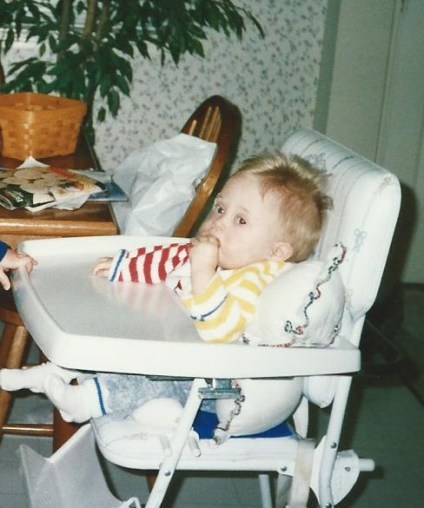
At age one, my son Nick was unable to sit up by himself due his low muscle tone, which is a trait of having Down syndrome.

Nick at age one…..

nick-low-tone-high-chair

We had to prop him up in the high chair, so he wouldn’t slide down or slump to either side.  Nick was receiving physical, occupational and speech therapy in his early intervention program.  Shortly after his first birthday, we enrolled him in a horseback riding therapy program.

Person’s having Down syndrome please note:

“Prior to considering hippotherapy as a treatment strategy for your child, it is important that they have current cervical x-rays to ensure the atlantoaxial joint (or C1-C2) is not at risk for dislocation.  Some people with Down Syndrome also may have a condition known as Atlantoaxial Instability — a misalignment of the top two vertebrae of the neck. This condition makes these individuals more prone to injury if they participate in activities that overextend or flex the neck. Parents are urged to have their child examined by a physician to determine whether or not their child should be restricted from sports and activities that place stress on the neck injury.”

In less than nine months, of incorporating the horseback riding therapy, we noticed a vast improvement in Nick’s posture both in strength and endurance.  At first he couldn’t tolerate a helmet as it weighed him down, (as you can see in the first picture of this post).  But soon, he not only wore a helmet, but was able to keep his head upright, along with and sitting up better.

Nick with his brother, Hank, taken nine months after starting horseback riding therapy…

nick-sitting-with-hank

We decided on horseback riding therapy, initially to help our son gain trunk strength.  However, we soon realized there were many additional benefits that came along with it.  Not only did Nick ride on top of the horse, he also learned how to care for the horse by feeding, patting and brushing them.  This helped to create an emotional bond and opened up new sensory experiences that he couldn’t get in a clinical setting.  Riding a horse helped to wake up the sensory preceptors, making for a fun and motivating experience for him.

Horseback riding therapy was a wonderful experience for our son with special needs. The horses were gentle friends that helped Nick get stronger, build relationships through unspoken communication, and taught him about responsibility.  That’s what is in my noggin this week!

~Teresa

Follow Nick:

Facebook and Pinterest @Down Syndrome With A Slice Of Autism

Instagram #nickdsautism

Twitter @tjunnerstall


Posted in Adult Day Programs for Special Needs, Dual Diagnosis Down syndrome and autism

Blog #161~Adult Day Program Update

Nick relaxing

Blog #161~Adult Day Program Update

Nick turned 22 years old in February and aged out of public school.  He now attends an adult developmental training day program.  The program has many enriching and structured activities.  The structure is essential for my son who has both Down syndrome and autism.  Here is an update on what big guy has been doing in this program.

Each week his group goes on several community trips.  This fall, they have gone to various parks, shopping, the library and pumpkin farm.  The group plans their grocery lists of items needed for cooking and goes shopping on Wednesdays.  Thursdays are cooking days along with gardening.  Each day includes instructional learning and recreational activities. Once a month, the association celebrates birthdays and holidays, with parties and luncheons.  On Fridays, he participates in volunteer jobs in the community.  These jobs include cleaning and stuffing church bulletins, organizing at a local food pantry, and recently working at GiGi’s Playhouse.

What is GiGi’s Playhouse?

GiGi’s Playhouse is a one-of-a-kind achievement center for individuals with Down syndrome, their families, and the community. GiGi’s Playhouse offers more than 25 therapeutic and educational programs that advance literacy, math skills, motor skills and more; all of which are free of charge. All programs are based on best practices for Down syndrome learning styles, and customized to ensure individual success. GiGi’s Playhouse actually serves infants through adults. GiGi’s Playhouse is headquartered in Hoffman Estates, IL; with 15 locations throughout the United States and Mexico, with more opening soon.

Nick participated in GiGi’s Playhouse activities when he was younger.  It’s nice to see that he has come full circle, by doing volunteer work here, as a young adult.  Check out the photos of Nick in action…….

Nick working at GiGi’s Playhouse, Fox Valley location…

nick-vacumme-gigis

nick-cleaning-gigis

nick-cleaning-two-gigis

Taking a snack break after working hard…..

nick-snack-gigis

Nick takes great pride in helping out in his community jobs, around the venue of his adult day program, and at home, as well.  He looks forward to going to his adult day program, that provides a safe environment, along with a warm and caring staff.  As Nick’s mom, that gives me great comfort knowing that he is contributing to society and happy in his young adult life.  That’s what is in my noggin this week.

~Teresa 🙂

Follow Nick:

Facebook and Pinterest @Down Syndrome With A Slice Of Autism

Instagram @#nickdsautism

Twitter @tjunnerstall


Posted in Down syndrome

Blog #160~Princess Diana’s Goddaughter

Blog #160~ Princess Diana’s Goddaughter

October is Down Syndrome Awareness Month.  I’ve been highlighting stories of inspiration and information about Down syndrome.  I ran across an article in People Magazine the other day about Princess Diana’s goddaughter.  Her close friend, Rosa Monckton gave birth to a daughter with Down syndrome back in 1995.  Princess Diana was the person who provided the ultimate support.

Princess Diana and Rosa’s daughter Domenica

diana-and-domenica

It was Diana who helped Rosa and her family, navigate their new path of having a baby with Down syndrome.  Diana introduced her to doctors, and came with her to all the appointments.  Diana told Rosa, You just have to believe in her, love her, and I be there with you every step of the way”. 

In the People magazine interview, Rosa shared this about Diana, “She  already had that vision of what  Domencia could be, which I simply couldn’t see”.  Fast forward to present, the vision is reality.  Domenica is thriving at age 21, who attended Chickenshed, a performing arts theatre in London. Diana had recommended would be a good fit, years ago to her.  In addition, Rosa set up “Team Domenica”, a charity that provides continuing education for young adults with learning disabilities to help them find jobs.

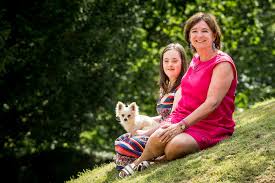
Rosa Monckton and daughter Domenica

rosa-and-domenica

This fall, “Team Domenica” opened a seaside café in Brighton, England where Domenica and other peers with special needs, are working. The jobs provide a variety of skill sets, so that every person can reach their full potential.  Domenica is trying everything by working various jobs at the café.  Rosa is certain that Princess Diana would be very proud of what she has achieved.

It didn’t surprise me that even after Princess Diana passed away in 1997 , she continue to inspire her friend, and so many others. I’m certain that Diana is up in heaven smiling down on all of us.  That’s what is in my noggin this week. Thank you People Magazine for publishing this article, (October 24, 2016 issue), and helping to support Down syndrome awareness!

~Teresa

Follow Nick on Facebook & Pinterest @Down Syndrome With A Slice Of Autism

Instgram #nickdsautism

Twitter @tjunnerstall


Posted in Autism, Down syndrome, Dual Diagnosis Down syndrome and autism

Down Syndrome With A Slice Of Autism got a facelift!

Nick’s world just got a facelift!  Take a peek at our fresh, new look and domain address @www.nickspecialneeds.com.

 Thank you so much  for reading and sharing Nick’s world.

~Teresa 🙂


Posted in Autism, Down syndrome, Dual Diagnosis Down syndrome and autism

Columbus Day

columbus-day

We are taking a break this week!   There are many topics of Nick’s world, in the archives to explore:

Safety/Wandering

Behavior/ABA

Down syndrome

Dual Diagnosis Down syndrome and autism

Education/IEP’s

Feeding/Hygiene

Government funding and legal issues

Health Issues and Down Syndrome

Special Needs Resources

Special Needs Parenting

Therapies (OT, Speech, and PT)

Recreation/Leisure

Tech/AAC (communication devices)

The Fun Side of Nick

Thank you for reading and sharing Nick’s World!  You can find us on Facebook and Pinterest @Down Syndrome With a Slice of Autism, on Instagram @ #nickdsautism, and Twitter @tjunnerstall.  See you next Monday for a fresh new blog!  That’s what is in my noggin this week.

~Teresa


Posted in Autism, Down syndrome, Dual Diagnosis Down syndrome and autism, Education and Special Needs, IEP (Indivdualized Education Plan)

Blog #157~Making Inclusion Work

Blog #157~Making Inclusion Work

Is inclusion right for your child?  That was the question I addressed in last week’s post.  Inclusion simply stated, means that a student is supported in the general education classroom setting with given supports outlined in the IEP.  The IEP is an Individualized Education Plan, is a document for special education students.  This document identifies how the student will learn, what services the school will provide, and how their progress is measured.  My son Nick, was in an inclusion classroom during his elementary school years. He has Down syndrome and autism, and benefited greatly from the experience.  How do you make the inclusion setting work for your child with special needs?

The Individuals With Disabilities Education Act (IDEA), amended version 2004, does not actually list the word inclusion. The law actually requires that children with disabilities be educated in the “least restrictive environment appropriate” to meet their “unique needs.” The “least restrictive environment” typically means placement in the regular education classroom which typically means ‘Inclusion’ when ever possible. (Source taken from about.com)

The IEP team works with the parents to determine the least restrictive environment and builds the placement around this concept.  What will the child need to be successful in a regular education classroom?   The IEP team and parents should collaborate to identify supports needed.

Classroom Supports:

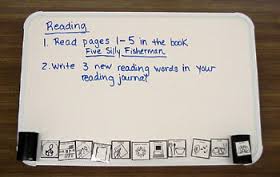
*Modified Curriculum:  (Regular education teacher and support/case manager) work together to adapt the current assignments for the child.  Make a plan to address what will be learned in the regular classroom, and how will the student will learn that similar information?

visual work board

*Staffing:  Does the child need a paraprofessional (classroom aide)?  What is the ratio? What additional training will be needed?

*Equipment:  Physical environment (modified desk, chair, adaptive equipment/school supplies, sensory supports)

*Assistive Technology:  Communication (Alternative Augmentative Communication “AAC” device, Picture Exchange Communication System “PECS”, Sign Language/Interpreter), or other devices using apps for to navigate schedules and assignments.

alphabet tracing  ipad-touch-chat

*Sensory Breaks: What space will be provided, is there a sensory area in the school?  How will the student request a break (need a break icon, button on AAC device)?  What equipment is needed, (noise cancelling head phones, figit toys, nubby cushion, music, weighted vest or blanket, bean bag chair, swing, trampoline)?

figit toys   nubby therapy cushion

In addition to identifying classroom supports, the team should address these questions at the IEP Meeting:

* What are the student’s strengths, and how do we build a plan around them?

*How does the student learn best?

*What behavior support is needed to help the student learn the best, and operate comfortably in the general education classroom?

Identifying supports needed and how to best accommodate the student will set a good foundation to success in the inclusion classroom setting.  The student will benefit by having access to the general curriculum and build social relationships in this community in the least restrictive, inclusion environment.  That’s what is in my noggin this week.

~Teresa

Follow Nick:

scan0016

Facebook and Pinterest @Down Syndrome With A Slice Of Autism

Instagram: #nickdsautism

Twitter: @tjunnerstall


Posted in Down syndrome, Dual Diagnosis Down syndrome and autism, Education and Special Needs

Blog #156~Is Inclusion For Your Child?

Blog #156~Is Inclusion For Your Child?

Are you raising or involved with educating a child with special needs within an inclusion setting?  Perhaps you are considering  an inclusion classroom for your child.  If so, then THIS is the book you need to read:

whos-the-slow-learner

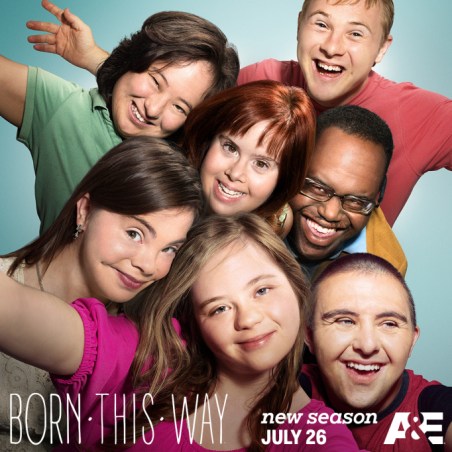
Who’s The Slow Learner? A Chronicle of Inclusion & Exclusion, written by Sandra Assimotos McElwee (Outskirts Press) is a great book and and resource on inclusion.   Her son Sean McElwee was born with Down syndrome.  Sean is now 22 years old and is one of the star cast members of the Emmy Award Winning series, Born This Way on A&E.  

Her goal for writing this book was to educate and inspire, while chronicling her son’s education experiences.  In Sandra’s words, “This is not a ‘How-to’ book, but a ‘How we did it’ book.”

What is inclusion?

Inclusion is a term which expresses commitment to educate each child, to the maximum extent appropriate, in the school and classroom he or she would otherwise attend.  It involves brining the support services to the child (rather than moving the child to the services) and requires only that the child will benefit from being in the class (rather than having to keep up with the other students).  Proponents of inclusion generally favor newer forms of education service delivery.

Full Inclusion means that all students, regardless of handicapping condition of severity, will be in a regular classroom/program full time.  All services must be taken to the child in that setting.  

(From Sandra’s book this information was taken from the Wisconsin Educational Council’s Website)

Inclusion not only benefits the special education student, but also the regular education students in class.  It can be highly successful with the right supports, accommodations, modifications and supportive school staff.  From my own experience, I found this to be the case with my son Nick, who is also 22 years old and has Down syndrome and autism.

Sandra offers a wealth of information in this book.  Each chapter begins with all Sean’s IEP goals for that school year.  The book is loaded with great ideas on how to navigate the school system and how/when to reach out for outside help using consultants to advocate for your child.  This was the case when Sean transitioned into intermediate school, where they determined a need to put a behavior support plan in the IEP.  Sandra provides this full behavior support plan in the book as well, which is very beneficial.  Getting outside support for communication and behavior also helped greatly during the adolescent years with my son, Nick. Keeping in the loop with staff and volunteering in the school and classroom is another great way to keep up with how your child is doing in school.

There are so many valuable lessons that Sandra learned and shares about her son’s educational journey.  Many of which I can relate to having gone through this with my son, Nick.  You are not always going to have a school team or some of the members supporting inclusion for your child.  Sometimes it’s the school staff that are the slow learners.  In this book, you can see how Sandra had to advocate even harder during the intermediate and high school years. Unfortunately this was not always a success. But these actions set the foundation, to make it easier for other families to follow.

The book not only contains a wealth of education information, but many funny and inspiring stories on how Sean touched so many lives.  In one story, Sandra gets out of the shower and noticed the unmistakable odor of popcorn being microwaved.  She fully expected to smell a burnt popcorn next, so she hustled quickly downstairs.  To her surprise, Sean had just opened a perfectly cooked bag of popcorn.  She asked Sean what number he pushed?  Sean looked at her like she was crazy, and pointed to the control panel and said “popcorn”.  It turned out that the all the site words Sean had been learning in first grade were working. Sandra didn’t even know there was a popcorn button on the panel.  In this case she, was the slow learner.

Who’s The Slow Learner? is not just for parents, but a great resource for educators, future regular & special education teachers, school administrators and advocates.  This is the first book that chronicles a student with special education needs from pre-school to high school graduation.  It’s a very instructive book that shows a mother’s determination to advocate for the best available resources in not always a cooperative educational system.

I’m sure this book will benefit many considering inclusion for their child with special needs, and the education team that will be providing for them. That’s what is in my noggin this week.

~Teresa

Catch Sean and his family on the Emmy Winning Series, A&E’s Born This Way, Tuesday nights at 9pm (8pm Central)!

Trump_Key_Art_Premiere_FIN.indd

Follow Nick:

scan0016

Facebook and Pinterest: @Down Syndrome With A Slice Of Autism

Instagram: #nickdsautism

Twitter: @tjunnerstall


Posted in Adult Day Programs for Special Needs, Augmentative and Alternative Communication (AAC), Autism, Down syndrome, Dual Diagnosis Down syndrome and autism, Recreation/Leisure and Special Needs

Blog #154~Adult Day Program 6 Month Update

Blog #154~Adult Day Program 6 Month Update

On my son’s 22nd birthday this past February, the little yellow bus stopped coming to the door.  My son, Nick has Down syndrome and autism and has aged out of school.  For the past 6 months,  Nick has been going to an adult day program.  This week I want to share some of the activities he’s been doing in this excellent program at the Keeler Center.

Nick’s adult day program is filled with many fulfilling activities each day.  Mondays are dedicated field trip days.

Here are some of the places Nick has visited in the community:

Shedd Aquarium

Library

Brookfield Zoo

Fabyan Park Japanese Garden

Fox Valley Park District Greenhouse

Phillips Park

Red Oak Nature Center

Art Studios

Fermi Lab

Local restaurants (Noodles & Company, Dunkin Doughnuts, Culvers, Colonial Café, etc..)

In the facility, Nick participates in a variety of activities:

Vocational jobs (cleaning and vacuuming sensory room, recycling, shredding, work  bins, gardening, menu planning, cooking, etc..)

nick vacumming aid

Social circle (News to You, greeting and using AAC devices)

Science projects

Table and bin work

Nick work aid

Arts and Crafts (for art fairs, mothers/father’s day, making cards, painting, etc..)

Recreational (gym activities, yoga, etc..)

Nick yoga AID

Fun Fridays (Holiday theme parties, dancing, karaoke, games, concerts, cookouts, movies, etc..)

Speech therapy (insurance private pay), to work on articulation and using his AAC device

Outside the facility, his group does community recycling, shopping for cooking day as well as volunteer jobs.  One of the sites is at a local church, (stuffing bulletins and cleaning the nursery).  The other workplace is at a food pantry, where they organize and stock inventory, like dried beans, cereal and peanut butter.

Nick recycling

Nick has a full life and rewarding activities in his adult day program. The staff is very dedicated, caring, welcoming and patient.  Yes, patient! Nick’s pulled several fire alarms the last few months.  The behaviorist on staff  has put a plan in  place, and met with the staff to curtail this ongoing problem. Hey, it’s Nick’s world, the rest of us are just trying to keep up. The current fire alarm pull count is now 40 pulls since 3rd grade.

While his speech is limited due to having a dual diagnosis of Down syndrome and autism, I can tell that he is very happy in this program.  How do I know?  When I wake him up in the morning he is excited to get dressed and out the door.  The other day I was driving him and his buddy Josh to the site.  Just before we crossed over the Fox River, Nick started saying “Keeler” with a big thumbs up.  It warms my heart knowing that Nick is happy and contributing to society. That’s what is in my noggin this week.

~Teresa

Follow Nick:
nick fire truck shirt

@Down Syndrome With A Slice Of Autism on:

Facebook  pintrest

#nickdsautism on:

instagram-logo

@tjunnerstall on:
twitter logo