Posted in Autism, Down syndrome, Education and Special Needs, Speech and Occupational Therapy

Blog #8~ Three Scary Letters: IEP

Blog #8~ Three Scary Letters: IEP

Who would think that the 3 letters IEP could evoke anxiety and trepidation in the hearts of many parents of children with special needs?  IEP stands for Individualized Education Plan.  I used to be one of those scared and frail kittens shaking as I walked into the doorway.  My son, Nick has Down syndrome and autism.  I’ve been through my share of IEP meetings and learned a great deal on how to handle them.  I heard my share of war stories:

“Watch out they will try and get away with cutting your service hours!”

“Why would they do that?”

“Oh the budget constraints and pressure from the school district, that’s why. They are going to say the teacher can address the issues and you don’t need the additional speech therapy hours.”

So enter the neophyte parents into the doorway to face the army of personnel from the school.  The IEP team usually consists of the classroom teacher, case manager, occupational therapist, speech therapist, adapted PE teacher, school counselor, social worker, school nurse and a student services representative. Oh and yes, the parents too. 🙂  I can recall many in the early days crammed in tightly around a table and feeling very clueless in the early days.   The IEP meeting is intended to be a team effort, but sometimes we couldn’t help but feel like it was them against us.

What an IEP exactly?  Here is some information from Wikipedia:

An IEP is designed to meet the unique educational needs of one child, who may have a disability, as defined by federal regulations. The IEP is intended to help children reach educational goals more easily than they otherwise would.  In all cases the IEP must be tailored to the individual student’s needs as identified by the IEP evaluation process, and must especially help teachers and related service providers (such as paraprofessional educators) understand the student’s disability and how the disability affects the learning process. 

The IDEA 2002 requires that an IEP must be written according to the needs of each student who meets eligibility guidelines under the IDEA and state regulations, and it must include the following:

  • The child’s present levels of academic and functional performance
  • Measurable annual goals, including academic and functional goals
  • How the child’s progress toward meeting the annual goals are to be measured and reported to the parents
  • Special education services, related services, and supplementary aids to be provided to the child
  • Schedule of services to be provided, including when the services are to begin, the frequency, duration and location for the provision of services
  • Program modifications or supports provided to school personnel on behalf of the child
  • Least Restrictive Environment data which includes calculations of the amount of time student will spend in regular education settings verses time spent in special education settings each day
  • Explanation of any time the child will not participate along with nondisabled children
  • Accommodations to be provided during state and district assessments that are necessary to the measuring child’s academic and functional performance
  • The student should attend when appropriate. If the student is over 14 they should be invited to be part of the IEP team.
  • Additionally, when the student is 16 years old, a statement of post-secondary goals and a plan for providing what the student needs to make a successful transition is required. This transition plan can be created at an earlier age if desired, but must be in place by the age of 16.

IEPs also include other pertinent information found necessary by the team, such as a health plan or a behavior plan for some students.

The IEP can be daunting on paper, or shall I say more like a ream of paper averaging for Nick around 50 pages total.  The biggest tip I can share is to request all of the reports and intended goals prior to the meeting for your review.  In addition, I suggest meeting with the case manager at least a month before the meeting to discuss proposed goals that will be in the education plan.  That way there are no surprises at the IEP meeting.  If the parent and teacher have a good communication system back and forth there shouldn’t be any.  (For additional support, go to the links and resource pages on this website and look under Wrightslaw, Bridges for Kids-IEP goals and Barb Bateman’s book, Better IEP’s.)

Over the years we have utilized outside advocacy when we felt like the needs of our son might be compromised.  Rewind to 1998 in Houston, when Nick was attending a public pre-school program twice a week and a private special needs pre-school three days a week.  (This was before we could get him in the private school full time). We brought an entourage of very strong women from the private school to advocate for Nick.  Our advocates dissected that IEP and insured that all supports were in place down to the last detail.  That being a nubby rubber cushion for Nick to sit on to keep his core activated and him alerted.  I was floored at the way they spoke up for our son.  I would have never known to boldly ask for these things.

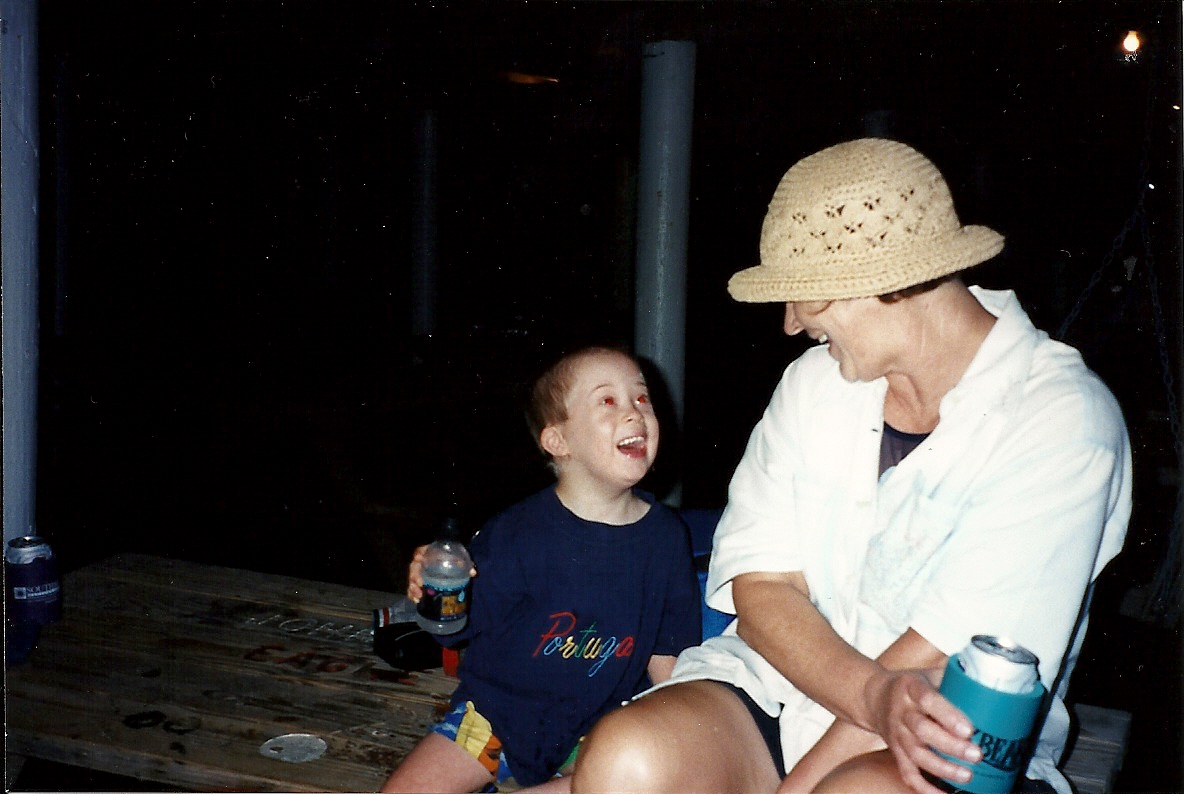
Nick at The Arbor School in Houston, Texas……

The presence of an outside advocate walking in with you at an IEP meeting can certainly make the team members sit up and be on point.  Memorable meeting number two was in 2001 when lived in the east bay area of Northern California. Nick’s language was minimal and he was getting frustrated not being able to communicate verbally.   On this particular occasion we were being met with resistance with regards to the school providing a proper picture communication system and training of staff and parents.  Enter the Executive Director of The Down syndrome Connection by our side.  (DSC is the local Down syndrome support group)  The school’s Physical Therapist asked if she could report first as she had another meeting to attend.  The Social Worker raised her hand and asked if she could go second and then excuse herself.

Without blinking an eye,  the DSC Director calmly said, “Wait a minute, we are all here to discuss Nick’s future, right?  We only have this meeting once a year. The least you can do is stay and be a contributing member to this team.”

No one dared to leave that meeting.  Oh, and yes the communication specialist was immediately put in place to help with the picture communication system for Nick.

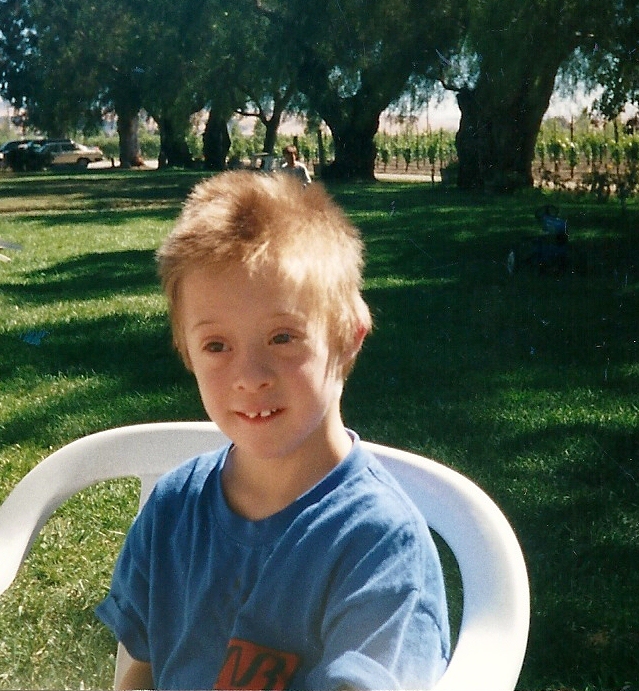
Nick in California
There is only one word for these advocates and the others that followed…..Rock Stars!

I have learned from the best.  The frail kitten morphed into a lion that can roar.  Why, because I have to fight for him because he has no voice. I know Nick the best and what works for him.  I don’t have to agree with the team.  In my matter of fact approach I simply state my parent concerns and have them put in writing in the IEP.  So parents, if you don’t agree, then push your chair back, state that you don’t agree and do not sign it. You may have to take it to the next level if you get a push back.  That’s when you use the two words that can evoke the most fear…Due Process!  (Thank you Kendra, Nick’s Private Occupational Therapist for giving me the courage to do these things.)

Nick at private occupational therapy with Kendra

More fun with Kendra

And please, do not call me “The Mom”, or “Nick’s Mom.”  The name is Mrs. Unnerstall.  Yes, IEP meetings can be scary.  But parents, don’t be fraidy cats.  Just get prepared!   Request those reports and goals ahead of time.  Schedule a meeting with the case manager before hand to make sure you are on the same page.  Communicate with the teacher so there are no surprises.  And finally if you don’t feel supported, then bring an advocate to the meeting.   That’s what is in my noggin this week.  Until next Monday, may you find the inner lion within you and fight the good fight!

~Teresa
 

Posted in Autism, Down syndrome, Speech and Occupational Therapy

Blog #6 The Nick Connection

Once upon a time, Nick only had Down syndrome.  I am unable to say with any certainty when the light switch flipped.  The symptoms of autism didn’t appear after any round of immunizations or before the age of 3.  In fact there were many symptoms that Nick didn’t have.

Autism is defined by the Mayo Clinic as, One of a group of serious developmental problems called autism spectrum disorders (ASD) that appear in early childhood — usually before age 3. Though symptoms and severity vary, all autism disorders affect a child’s ability to communicate and interact with others. Children with autism generally have problems in three crucial areas of development — social interaction, language and behavior. But because autism symptoms vary greatly, two children with the same diagnosis may act quite differently and have strikingly different skills. In most cases, though, severe autism is marked by a complete inability to communicate or interact with other people. Some children show signs of autism in early infancy. Other children may develop normally for the first few months or years of life but then suddenly become withdrawn, become aggressive or lose language skills they’ve already acquired.”

Nick has always found a way to connect with people.  Years ago, when he was around 2 years old, a woman approached me in the local Kroger supermarket.  She went out of her way to tell me how good Nick’s eye contact was and how engaging his personality was.  Countless doctors, therapists and teachers have made the same recognition over the years since then. He thrives around people and having fun with them.

Being silly pouring water on Grandma Babs

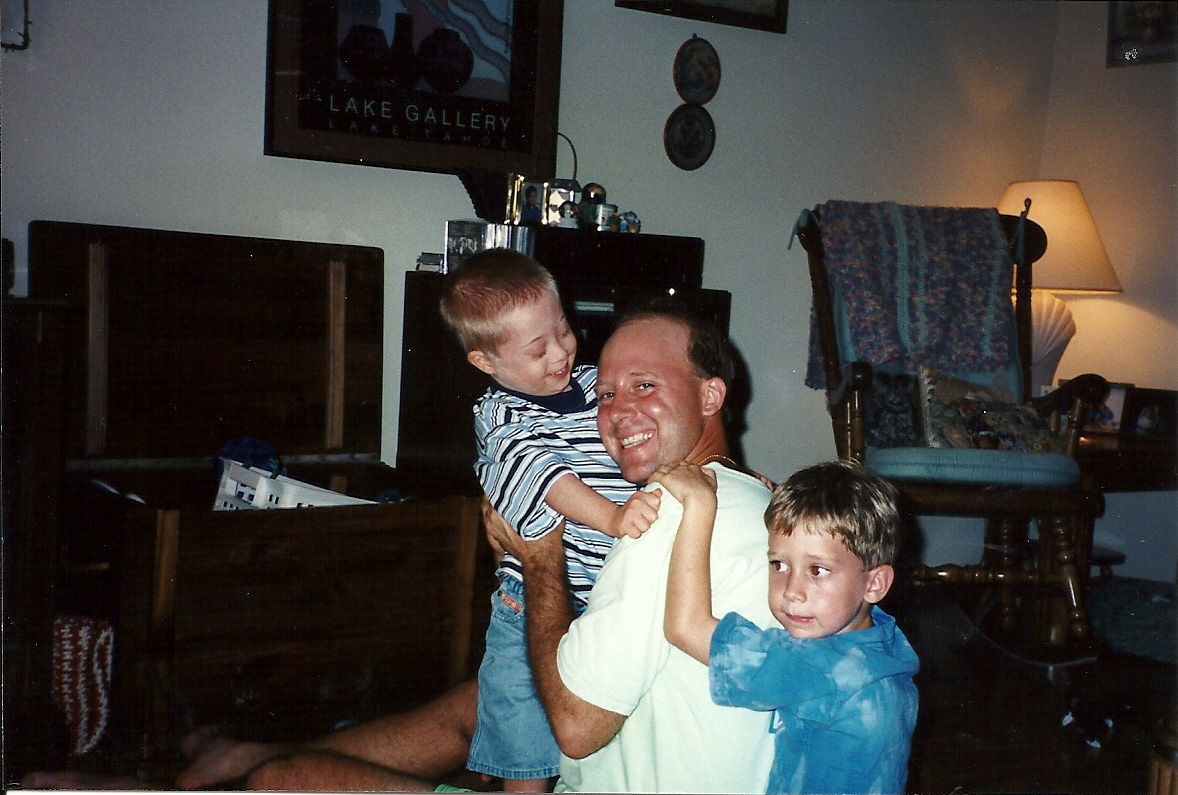
Fun with his Dad and brother, Hank

As I mentioned earlier, there was no flip of the switch.   A few things stood out around the age of 4. At the time, we lived in northern California. He started rocking more back and forth and became increasingly intolerant of having his hair cut.  Then there was the trip to Half Moon Bay where he began to pinch his cheeks hard as we walked across the coarse grain sandy beach. I suspected these behaviors were sensory related.  To make sure all the bases were covered I took him in to be evaluated for autism at age 5.  The Mayo clinic states that, “Though each child with autism is likely to have a unique pattern of behavior, these are some common autism symptoms:  

Social skills

  • Fails to respond to his or her name
  • Has poor eye contact
  • Appears not to hear you at times
  • Resists cuddling and holding
  • Appears unaware of others’ feelings
  • Seems to prefer playing alone — retreats into his or her “own world”

Language

  • Starts talking later than age 2, and has other developmental delays by 30 months
  • Loses previously acquired ability to say words or sentences
  • Doesn’t make eye contact when making requests
  • Speaks with an abnormal tone or rhythm — may use a singsong voice or robot-like speech
  • Can’t start a conversation or keep one going
  • May repeat words or phrases verbatim, but doesn’t understand how to use them

Behavior

  • Performs repetitive movements, such as rocking, spinning or hand-flapping
  • Develops specific routines or rituals
  • Becomes disturbed at the slightest change in routines or rituals
  • Moves constantly
  • May be fascinated by parts of an object, such as the spinning wheels of a toy car
  • May be unusually sensitive to light, sound and touch and yet oblivious to pain

Of the symptoms listed above, Nick displayed none in the social skills category.  The physician noted that his slow speech development was probably due to having Down syndrome and Verbal Apraxia (a neurologically based condition that is characterized by difficulties planning and producing the complex set of oral movements necessary for intelligible speech. For more information on Apraxia click on my favorites section, a new book, Speaking of Apraxia- A Parent’s Guide to Apraxia of Speech by Leslie Lindsay has just been published.  Regarding behavior, Nick did exhibit a few of the symptoms but never was fascinated with spinning any objects or sensitive to light or pain.  So cut to the chase, after the screening the conclusion was he did not have autism.

Fast forward 6 years later, his speech hadn’t improved and the behaviors were growing more severe.  Nick’s speech was limited.  Imagine someone putting duct tape across your mouth and trying to navigate the world.  With no voice he would get frustrated and turn to throwing such things as a chair across the room or breaking a glass across the floor.  Worse yet, he would have meltdowns that drew blood and bruises when he would pinch, kick and bite. At Gi Gi’s Playhouse group time (a local Down syndrome support group,) I began to notice that he was playing more by himself and primarily with any musical toy he could get his hands on dancing side to side.

This was more than just Down syndrome.  Next stop Little Friends Center for Autism.  The second screening was much more comprehensive and included a team of therapists who individually assessed him.  Voila, diagnosis confirmed.  I can say first hand that the evaluation methods had improved tenfold.  I suspect that is one of the reasons why the incidences of autism cases have risen so significantly over the past five years.

So back to the Nick connection, because he has always been highly social it was hard to see that somewhere in the midst autism had crept in.  The tapping, rocking, hand flapping, humming and the sounds of musical toys had become white noise to us like the dryer running in the background. We had become immune to them all. To us he was the guy who won over the hearts of everyone he touched.  He was the fun guy who can click with everyone. When he was much younger he had a belly flash club.  He wouldn’t see his Aunt Laura or my friend Sally for months and yet when he would reunite he greeted them by lifting his shirt up and flashing his belly.

Nick getting ready to belly flash!

He likes to give a high five, rub elbows, noses and he loves to get raspberries. Oh and let me not forget the burps, fake sneezes and what we like to call “force farting” to get your attention. For that I am grateful, well maybe not the force farting (Al’s term given for when Nick pushes out one to get a rise out of us) 😉 but I am glad he is so engaging.  And I have to say those who know Nick can attest to the fact that he can replicate exact sneezes after you do yours. Even Aunt Ali’s tiny, high pitched achoo!

Elbows… with his teacher, Rob

Noses…

The fact that he can make those connections warms my heart as his mother.  That’s what is in my noggin this week, until next Monday….May you find those special ways to connect with those around you!

~Teresa

Posted in Down syndrome, Speech and Occupational Therapy

Blog #2~ Language Barriers

Blog 2~Language Barriers

Rewinding this week back to when Nick was six years old.  At the time, Al’s brother and family (Ron & Ali along their kids Anna and Sam), lived in London.  For the second time we flew overseas to visit them.  Years ago, we had decided to never let Nick’s disabilities hold us back from getting out into the world.  Here is a little bit about the second trip over.

I love England; everybody gets what you are saying even if you pronounce it wrong.  “Where will you be staying?”  Asked the customs clerk with her proper English accent.

“Esh-er” I exclaimed like a true native Texan would say.

She followed up, “Oh you mean Eee-sher,” using a long “e” vowel sound. I didn’t mind that she corrected my phonetics. Everyone was so nice and accommodating.  The town of Esher was quaint, just outside of London with pubs a plenty.  Cheers to the pubs they are family friendly and the pints of beer go down smooth.

Then, we hit the “Chunnel” which is the train that travels undersea from London to France. There is a different feel in France.  They seemed very put off by us; the stupid Americans in our tennis shoes, jeans, ball caps and fanny packs.   First stop, the Eiffel tower. Al, Ron and Nick made it to the top. Nick is fearless that way, the rest of the kids were scared.  Ali, Anna, Sam and my older son, Hank and I had to stop halfway up.  There is a small café at the midpoint.  We each ordered a hotdog, well sort of.  The order came out with each of us receiving not one but two foot long hotdogs inside a thick, crusty baguette a piece.  What a spectacle we were.  We couldn’t help but laugh at each other while the crust exploded with each bite sending crumbs jettisoning all over us.  We were in over our heads.  This would be the first of many times that the language barrier would get in the way.

The next day was grand a tour of the Notre Dame Cathedral.  Up the narrow, spiraled staircase we made our way to the top to see the gargoyles.  About halfway up Nick started dragging his feet so Al and I took turns schlepping him on our backs like pack mules.  The sound of the chimes was resounding and felt deep in the soul.  Hank imagined the grotesque hunch-backed bellringer, Quasimodo dangling from the rope to sound the time.  One thing I would suggest to anyone touring in Europe, do not wear flip flops.  Not only is there a lot of walking, but those stony steps are centuries old, worn and slick.  My feet have never been the same since that trip up to see the gargoyles.  One by one, we checked off the sites off our bucket list.  Mine was to sit at a sidewalk café and sip champagne where the artists are lined up.  Cheers to a successful day two, with no surprises.

The river tour along the Seine lovely but with one exception, the guide spoke French.  Every meal was a mystery with surprises like a fried egg on top of a hamburger patty and negotiating at the shops and trying to get taxis was frustrating.  We found ourselves lost in translation.  A few days in Paris were enough for me.  I was ready to get back to England, and be understood again.

I think about my son Nick, who has a limited vocabulary.  He often gets frustrated in trying to communicate his needs much like I did in France.   It is a feeling of helplessness and of being lost in many respects.  For Nick and others who are on the autism spectrum, supports are needed to help them convey their needs.   We use a picture symbol system called “Picture Exchange Communication System” or “Pecs.”  If Nick can see it in picture form, he can understand it.  These supports are Nick’s voice.  It is the tool that has given him his power and ability to navigate in the world.  When he feels like he is control, he stays even keeled and less apt to have a meltdown.

We have utilized the resources of our local agencies and the school staff to train us on how to support Nick.  In addition, we use Google images and laminate additional icons which he recognizes.  The pictures not only allow Nick to connect but also help to set his schedule for the day.  He follows it pointing to each icon as if he were reading a script.  Which is exactly the intent, set up the scene for what is to come and in return the anxiety level stays low. For instance we are going to mass.  Here is how the icons are laid out:  Church-Priest-Quiet-All Done-Car-Home-Sprite (reward.)

When Nick wants to ask for something it is usually something like this:  I want-Car-Mall-Taco Bell- Tacos & Sprite. Here is a menu icon board for B-Dubs which allows him to make choices on his own:

In the last few months we have purchased a portable hand held device that has the icons built in called Touch Chat. More on this in future blog entries…stay tuned..

After that trip overseas,  I totally empathized with Nick.  Paris taught me about language barriers.  The need to feel understood and have ones needs be met is something that is essential for all of us. Speaking of expressing wants and needs please let me know of what other topics you would like to hear about… That’s what is in my noggin this week… until next Monday!

~Teresa