Just another WordPress.com site, Here to help you navigate co-occurring Down syndrome and autism. My son, Nick is 30 years old and living his best life as an adult with DS-ASD.
Blog #259~Nick’s Dual Diagnosis: Down Syndrome and Autism- Day Program Resumes
After nearly a 4 year hiatus, Nick is FINALLY back in his adult day program! The Covid-19 pandemic and subsequent staff shortages really halted these programs across the country. When these programs started back up, they did so cautiously. Many were hesitant to admit clients with higher needs. My son Nick is 30 years old and has a dual diagnosis of Down syndrome and autism (DS-ASD). I am thrilled to share with you how his transition went back to his day program.
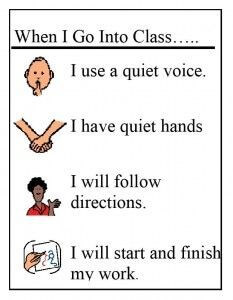
I will admit that I’ve been hesitant to write about Nick’s return to his program for fear of jinxing it. The transition back started as a trial run with Nick going half days, 3 times a week. We worked closely with the behaviorist (BCBA) to create a smooth transition. The BCBA sent questionaires to all of the personal support workers that have been working with Nick for the past few years to get their perspectives. Social stories, daily schedules and a communication book were created to help Nick understand and navigate his new routine. All of these tools are evidenced based practices that help indidivuals with autism and other disabilities to have smooth transitions.
The BCBA did observations and took data on behaviors which led to the creation of a behavior support plan. She fully expected that behaviors would occur when Nick started back. He did test the staff as she expected, with many attention seeking behaviors. Lisa, who is Nick’s personal support worker, reminded us that he’s had her 1:1 undivided attention for nearly 4 years here at home. The new ratio of the day program is 6 clients: 2 staff per room. The class sizes are much smaller than when Nick attended before the Covid-19 pandemic, which has proven to be easier to manage and safer.
Nick gradually expanded to 5 days a week and eventually went to full day hours. The staff was commited to making it a success and he settled into this new routine very well. One key to this success was having Nick’s personal support worker, Mireya work in the room with him for the first few weeks. Here they are making greeting cards for senior citizens:
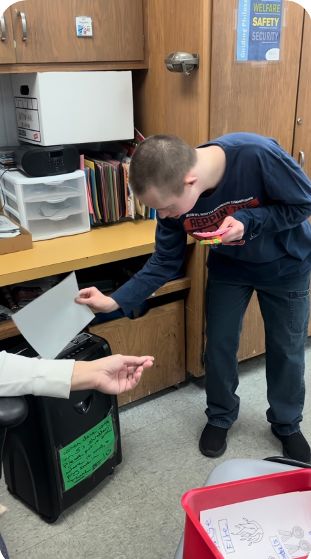
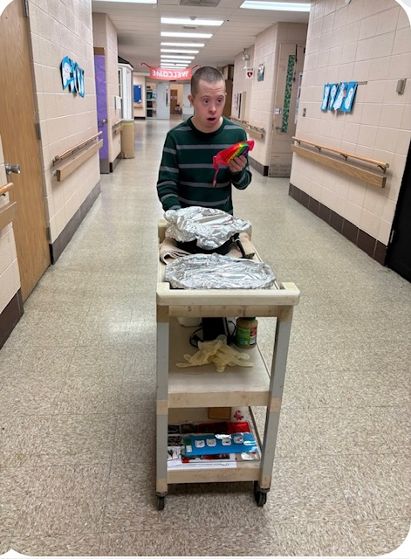
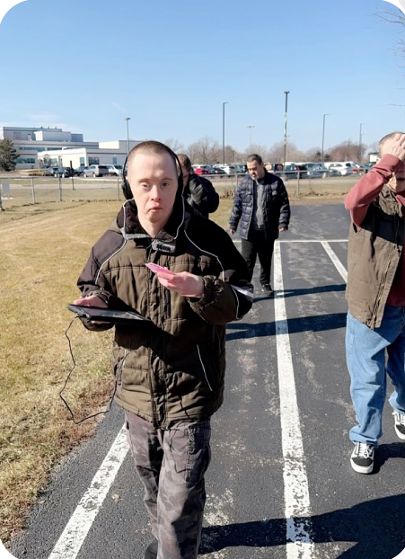
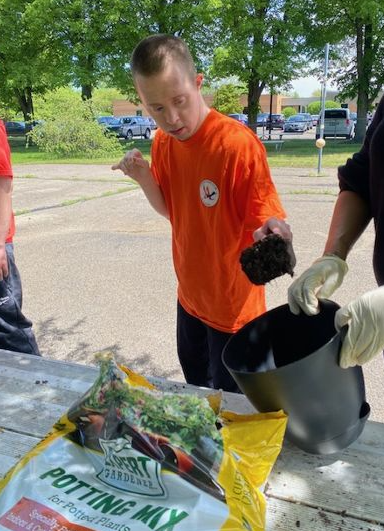
The adult day program provides a variety of activities for the clients. I sent in a few of the matching activities that Nick does at home so there was some familiarity and success with things that he is good at. Here are a few more photos of activites and jobs that he has been doing:
Nick shredding documents:
Nick pushing the cooking cart:
Nick in the gym:
Nick walking on the track:
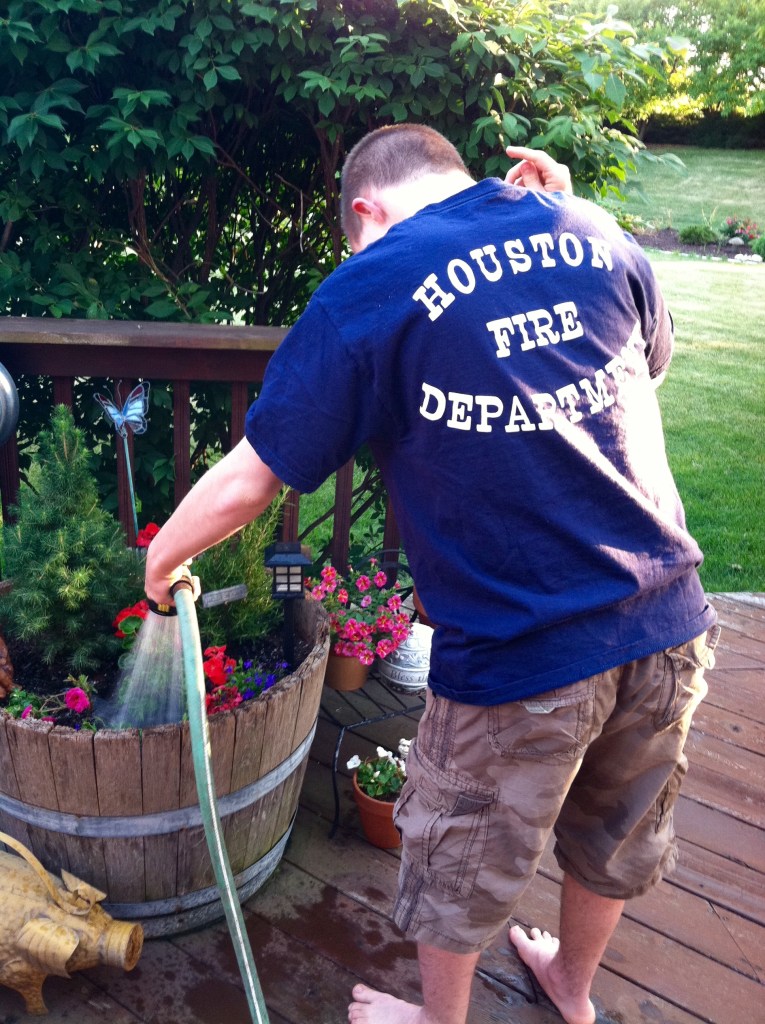
Nick gardening:
As you can see, Nick has a full day of fun and meaningful activities at his day program. He is always excited to go each day. We are so happy that this opportunity is available for Nick and the other clients who thrive with a routine and structure. I would like to express my deepest appreciation to Nick’ personal support workers, Lisa, Mireya, Lara and Jeannette for their hard work and commitment over the past few years. Having respite care allows families to be able to work outside the home and get a break to enjoy some personal time. I also want to thank my husband, Al for taking on the bulk of driving Nick to and from his program.
I look forward to sharing more about Nick’s return to his day program in future blogs and on social media. Be sure to follow us to see more pictures and videos of Nick in action on Facebook and Instagram at: Down Syndrome with a Slice of Autism. That’s what is in my noggin this week.
As Autism Acceptance Month winds down, I want to highlight a great new resource for families, medical professionals, clinicians, teachers and caregivers who are supporting an individual with a dual diagnosis of Down syndrome and autism. Did you know that research shows that about 16-18% of people with Down syndrome also have autism spectrum disorder (DS-ASD) (Autism Speaks: Richards et al., 2015). Navigating the DS-ASD journey is complex and challenging, I’ve been on this road with my son Nick, for 30 years. Thankfully, the top experts in the field have joined together to create this new resource that was just published: The second edition of When Down Syndrome and Autism Interesect: A Guide to DS-ASD for Parents and Professionals, by authors Margaret Froehlke, RN, BSN and Robin Sattell, MS.
“The first edition of When Down Syndrome and Autism Intersect was the first book to focus on the unique profile of a Down Syndrome-Autism Spectrum Disorder (DS-ASD) diagnosis. Now with this greatly expanded, updated second edition, it remains the only book for parents and professionals offering a comprehensive guide to supporting individuals with this complex dual diagnosis. Written by a large team of veteran parents and experts in the field, it covers every aspect of caring for children and adults with DS-ASD. Full of good will and respect for the DS-ASD community, this book offers sound information and resources steeped in research and clinical findings. It is also grounded in respect and concern for the parents’ need for specialized supports. Families will find a treasure trove of anecdotes and practical advice, discovering that they are not alone as they continue on their DS-ASD journey.“
This new book is a game changer for the DS-ASD community. It compiles the most up-to-date, evidenced based research, best practices and strategies to support individuals with DS-ASD. I had the honor of being a contributor in chapter 10, “Understanding Communication, Behavior and Sensory Strategies”. When Down Syndrome and Autism Intersect is the essential guide to help understand, navigate and empathize this complex and often difficult journey. I look forward to sharing more about the contents of this book with you in future blogs.
The challenges faced by individuals with co-occurring Down syndrome and autism (DS-ASD) are complex. These can include communication deficits, cognitive delays, sensory processing issues and rigidity. Transitions can be tough, moving from one activitiy to another, changing venues, staff and caregivers can all be stressful. Predictability and consistency are key components which help individuals with DS-ASD cope in a world that moves fast. My son Nick is 29 years old, and has co-occurring DS-ASD. Many of the families that I’ve worked with over the years find transitions to be hard to navigate. There are many evidenced based practices which can help support your child.
Here are 5 Tips for Taking on Transitions:
1. Figure out “the why”. Do a little detective work to determine what might be triggering the resisistance to moving forward. Possible antecedents might be sensory overload (loud noises, crowds, etc), changing from a preferred activity to a non-preferred activitiy, not understanding what comes next and not feeling in control. These are just a few examples of why they might be struggling. Once you determine the function of the behavior, then you can put some supports in place.
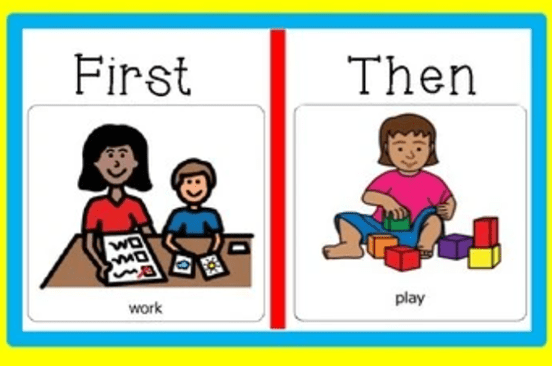
2. Use a visual schedule to help provide an effective cue to move to another activity or venue. There are many apps available as well including First-Then, Kids ToDo List, and Visuals2Go.
3. Allow for processing time. Give advance notice when an activity is coming to an end, and when it will be time to move to the next. Visual timers are great tools to help with transitions. Here are two of my favorite timer apps which include the Countdown Timer and Timed Timer:
4. Create a social story to help provide a clear and predictable framework for what will happen next, what to expect and how navigate a new experience. Use the social story like a pre-game rehearsal. This allows the individual to understand what to expect, how to behave and give them a “buy in” to the transition.
5. Give verbal and non-verbal praises and provide a reward such as a transition object to help motivate the child. “Good job walking and staying close”, thumbs up/smiley face icons, high fives can all reinforce successful transitions made throughout the day. Transition objects guide the child over the bridge that encourages moving from point A to point B. The object should be highly preferred, motivating and limited access so that it keeps their interest.
Providing support for individuals with DS-ASD to assist with transitions can ease stress by helping them understand what will be happening throughout the day. It also allows the child to feel more in control over their life. For more information and tips on navigating co-occurring Down syndrome and autism, scroll the archives of this blog and check out my book A New Course: A Mother’s Journey Navigating Down Syndrome and Autism click to order here: https://amzn.to/2W3Un6X
That’s what is in my noggin this week 🙂
~Teresa
Follow us on social media: #Down Syndrome with a Slice of Autism
Blog #256~Guest Blog: 10 Pillars of Independence Made Simple, by Steve Friedman
As National Family Caregiver Month comes to a close I want to highlight a great resource for families having a loved one with Down syndrome and DS-ASD. Steve Friedman has written an excellent book to help caregivers navigate future planning with an emphasis on helping your loved one become as indepedent as possible. As a parent to my son Nick who is 29 years old and has a dual diagnosis of Down syndrome and autism (DS-ASD), my concerns in the area of future planning are at an all time high. I found the information and book that Steve wrote very helpful.
10 Pillars of Independence Made Simple by Steve Friedman
It’s never too early nor too late to make a plan!
Whether your loved one with Down syndrome is 1 or 51, contemplating independence can be overwhelming.
*What does independence actually mean to you and your family?
*What are your options for independence pillars such as education, work, and housing?
*How much does independence cost and what benefits may help?
*How do we find out about all benefits and how do you apply for each?
*What are the important legal documents and how/when do I consider them?
*What health issues should be considered for your self-advocate’s future?
It’s a lot!
10 Important Pillars to Consider
1) Mindset – In the past, the shock of newborn parenting led to a world of limitations and protection. But now people with Down syndrome are working meaningful jobs, going to college, they’re having deep relationships, and living on their own. It is time to believe in the possibilities for our sons and daughters, for ourselves, and for our communities!
2) Independence Team – always put your loved one first. Insist they are at the ARD meetings. Be sure the doctor is talking TO them, not around them. This is important for their self-esteem and it’s their lives, after all.
YOU are the NEXT most important member of the team. You know your son or daughter best. Advocate for THEM – not for you – every day. Include others in your team that can provide support, challenge, and perspective like teachers, doctors, therapists, extended family, and those angels that somehow find us along the way.
3) Work is a great self-esteem booster. I’ll never forget Gwendolyn’s beaming face when she started her first job. She still lights up when talking about work with friends and family. Utilize government resources to find a job but if that fails, and it might, create a resume and march out and talk to friends and local businesses until you find the right fit. Remember, you are not offering a charity, you are offering a hardworking, energetic team player.
4) Keep learning…beyond high school. Our loved ones have a long runway of learning. But if they stop, if they go home and sit on the couch all day, they will stop learning. They’ll plateau and they’ll regress. Continuing education, whether through a quality day program, inclusive college program, or homeschooling-style exposure, is critical.
5) Know common health issues for adults with Down syndrome. In our book we talk about 7 – all of which people with Down syndrome are AT LEAST twice as likely to get as the general population and, in some cases, 7x more likely. These include sleep apnea, obesity, celiac disease, hypothyroidism, depression, Autism, and Alzheimer’s. Many of these are genetic and not preventative, but you can still be prepared. Others benefit from healthy habits from an early age. In all cases, the earlier you are aware of these and work with your doctors to diagnose and treat these, the better life you offer your loved one. Oftentimes, even the best doctors will attribute symptoms to Down syndrome without digging deeper to identify specific health issues they can treat. We need to be sure to educate ourselves and our doctors.
6) Benefits are perhaps the biggest mystery of all. Until now, there’s not been a place to find a full list, understand how to qualify and where to apply, and just as importantly, how to maintain eligibility. In my discussions with parents, it never failed that they were unfamiliar with at least one of these benefits. Independence is beautiful…and independence is expensive. Are you on a Medicaid waiver program or waitlist? Do you know about SNAP or HIPP? Be sure your son or daughter gets all the benefits they deserve.
7) Did you know your son or daughter with Down syndrome is due Social Security benefits whenever either parent is either disabled, retires, or passes away? These benefits can be significant and typically don’t compromise the parent’s benefits in any way. But you must be aware of your loved one’s income and asset limitations in order to maintain eligibility. A wrong step, even if unknowingly, can cost your family hundreds of thousands of dollars! These same limits can jeopardize their own SSI and Medicaid, so be aware!
8) Guardianship is a major topic when our loved ones reach 18. I know this can be a controversial issue. On the one hand, we want to provide responsibility and authority to our self-advocates so why spend the time and money in court to take guardianship away from them? On the other hand, if they don’t have a legal guardian, they may have to make all critical decisions themselves. That includes some of the complex financial decisions we just touched on as well as health decisions, often in times of illness. In those circumstances, they can ask for your advice, or they can choose not to, or be convinced by others not to consult the parents altogether. And if others don’t feel your loved one can make the best decisions in a time of need, they can bring the state in to counsel your loved one. These decisions are just too complex for any one person in our family. We want to make sure Gwendolyn’s health and financial well-being are best protected. We are sure to include her in meetings and decisions that affect her, but we maintain guardianship. If you haven’t considered guardianship in detail, it is never too late to do so.
9) There are other legal instruments you should be aware of to protect your loved one’s benefits, including Special Needs Trusts, ABLE accounts, and letters of intent. Look into each one of those.
10) Finally, consider your housing options. We never thought about it much. We assumed Gwendolyn would always live with us. We were a bit ashamed to even consider her not living at home. But then, we realized three critical items:
a. We recognize that the best way for Gwendolyn to learn and grow was to explore moving out from under our protective umbrella just as her brother and sister have done.
b. We found there is a wide variety of options from small to large, public to private, admittedly shady to absolutely awesome. We just had to invest the time in the process to find the RIGHT place for Gwendolyn.
c. Finally, we recognize we will not be able to provide Gwendolyn with the best environment as we age so rather than leave that to chance, we wanted to be part of her housing choices.
There are a wide variety of housing options today. We did a lot of research –visiting over 15 places across Texas before we found the right place for Gwendolyn. Our loved ones are living longer and wanting more. Consider your housing options today.
The Essential Guide for Families with Down Syndrome was created to remove the mystery.
“This book is essential for ALL parents, guardians, loved ones, and direct support professionals who care for a person with a disability.” -Tracy Keninger, Easterseals Iowa
“This is an excellent resource in navigating our own decisions to better support the goals and dreams of those we love.” -Tara Goodwin, Parent and DO, QuestCare Medical Clinic Dallas
“This practical guidebook lays out the critical steps for building independence. Steve Friedman provides comprehensive planning tools, paired with thoughtful parent perspectives. This is a great resource which covers all areas of life for individuals with Down syndrome along with their families.” -Teresa Unnerstall, DS-ASD Consultant and author of A New Course: A Mother’s Journey Navigating Down Syndrome and Autism
The Essential Guide provides step-by-step support to:
*Inspire mindset shifts toward one of independence and possibilities
*Foster independence building blocks from the earliest age
*Highlight health risks and financial resources every family must know
*Detail educationand work optionsto promote community inclusion
*Evaluate family-and community-based homeoptions includingsearch process
The Guide presents action items and worksheets to equip you with a clear timeline and path. The resources and references sections will save you time and money in your search for information and organizations that support your family’s journey.
“As parents, we are the experts of our loved ones, and this is an excellent resource in navigating our own decisions to better support the goals and dreams of those we love.” Tara Goodwin, D.O., Adult Down Syndrome Clinic, QuestCare Dallas
Friedman intersperses relatable and inspiring stories from a wide array of families. Insights from many experts in the fields of communications, education, health, and financial planning provide the confidence and guidance for you to navigate your family’s path toward independence.
Beyond Down Syndrome is proud to donate a portion of all book sales proceeds to LuMind IDSC to support Down syndrome research specifically focused on the link with Alzheimer’s disease. Did you know that 12% of the US population will be afflicted by Alzheimer’s but 95% of the Down syndrome community will have Alzheimer’s by the age of 65, often exhibiting first signs decades earlier. Together we can make a difference!
Steve Friedman BIO
The Friedman Family has always been tight-knit. Everyone supports each other including oldest daughter, Gwendolyn, and her quest for success. After Gwendolyn graduated high school, she became uber-focused on all facets of independence from continuing education, work, moving out, and self-advocacy. Over the past ten years Gwendolyn has achieved many of wishes and the family documented steps and resources along the way. Steve is a three-time award-winning author who loves to connect with families on his website and with podcasts and engaging workshops.
Thank you to Steve Friedman for the great information on this guest blog which will help many families and caregivers. For more information and to purchase a copy of his book click here: https://www.beyonddownsyndrome.net/
Blog #255~Down Syndrome Awareness Month: Extra Good Reads
October is Down Syndrome Awareness Month. My son Nick is 29 years old and has a dual diagnosis of DS-ASD. I’ve been writing this blog since 2012, to help educate and inspire families and professionals.
This week I want to highlight some good reads related to Down syndrome. There are many books on Amazon available with a variety of topics related to Down syndrome. Here are a few books that I highly recommend, that will both educate and inspire you.
Extra Good Reads about Down Syndrome:
A New Course: A Mother’s Journey Navigating Down Syndrome and Autism by Teresa Unnerstall order here: https://amzn.to/2W3Un6X
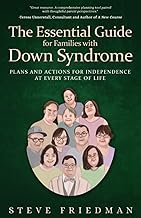
The Essential Guide for Families with Down Syndrome: Plan and Actions for Independence at Every Stage of Life by Steve Friedman Order your copy here: https://a.co/d/gMxuiU3
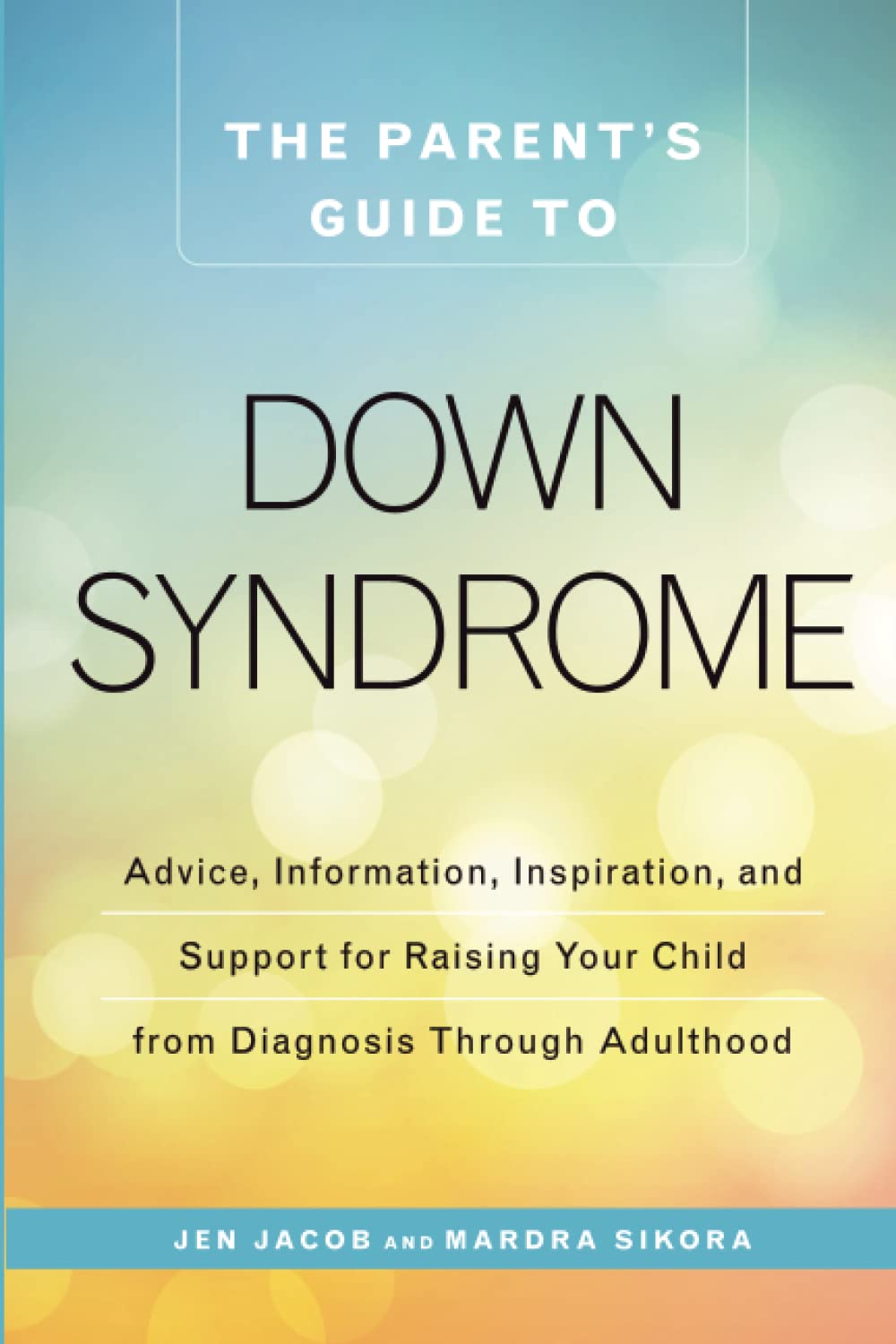
A Parent’s Guide to Down Syndrome, Advice, Information and Support to Raising Your Child from Diagnosis to Adulthood by Jen Jacob and Marda Sikora. Order here: https://a.co/d/5CRwU6R
Supporting Positive Behavior in Children and Teens with Down Syndrome, Revised Edition, The Respond, Don’t React Method by Dr. David Stein, Psy.D. Order here: https://a.co/d/8rlEeJG
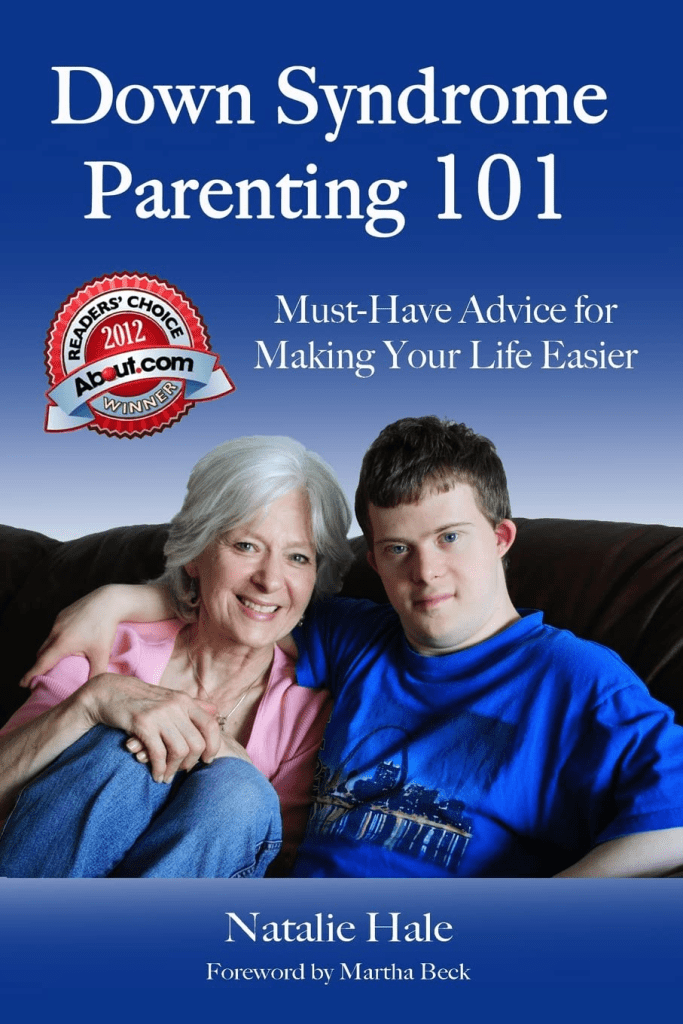
Down Syndrome Parenting 101: Must Have Advice for Making Your Life Easier by Natalie Hale order here: https://a.co/d/7LebF7H
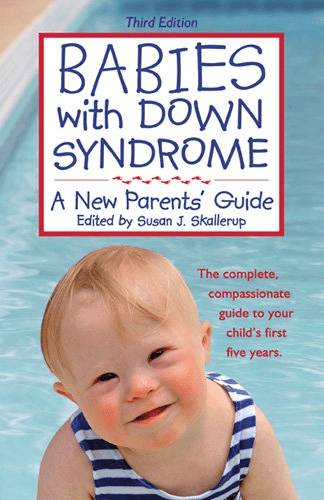
Babies with Down Syndrome: A New Parent’s Guide, Edited by Susan J. Skallerup order here:https://a.co/d/bU6CyTv
Scoot Over and Make Some Room: Creating a Space Where Everyone Belongs by Heather Avis order here: https://a.co/d/3QMtl0w
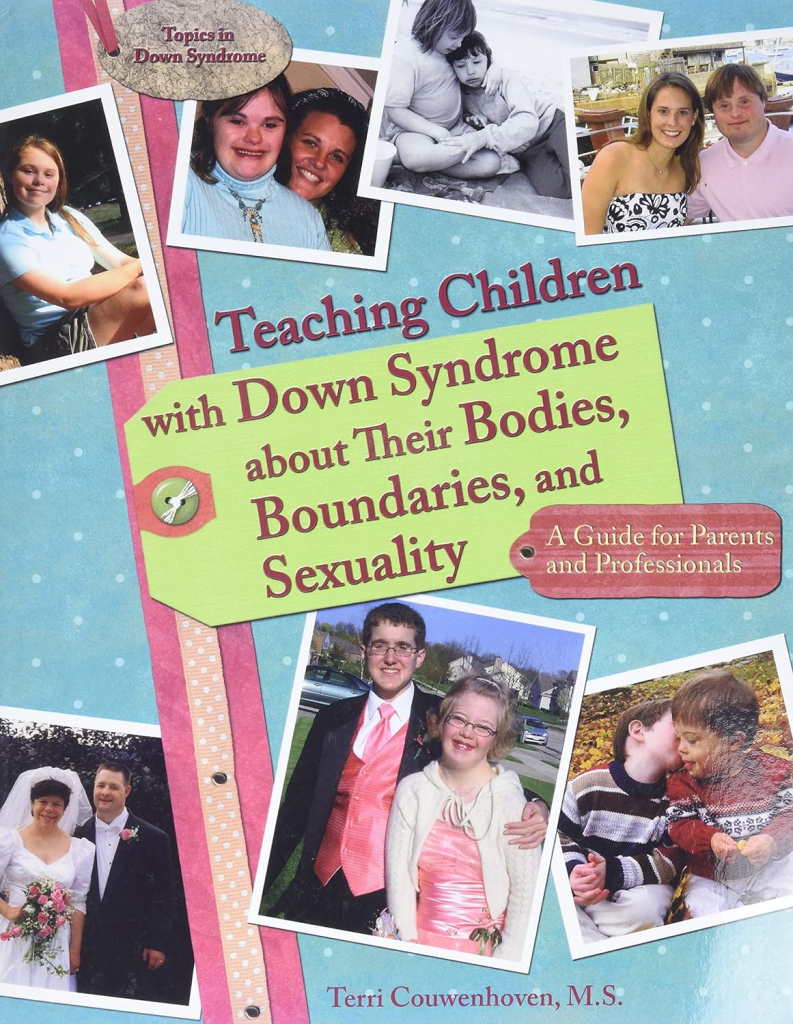
Teaching Children with Down Syndrome about Their Bodies, Boundaries and Sexuality by Terri Couwenhoven, M.S. order here: https://a.co/d/gARb2kE
Fine Motor Skills for Children with Down Syndrome, A Guide for Parents and Professionals (third edition) by Maryanne Bruni, BScOT (Reg) order here: https://a.co/d/8au2far
Gross Motor Skills in Children with Down Syndrome: A Guide for Parents and Professionals by Patricia C. Winders, P.T. order here: https://a.co/d/9F4DUV4
Gifts: Mother’s Reflect on How Children with Down Syndrome Enriched Their Lives, Edited by Kathryn Lynard, order here: https://a.co/d/fJ4ZgAj
Gifts 2: How People with Down Syndrome Enrich the World, Edited by Kathryn Lynard Soper, order here: https://a.co/d/5ltSrSH
Mental Wellness in Adults with Down Syndrome: A Guide to Emotional and Behavioral Strengths and Challenges by Dennis McGuire, Ph.D. and Brian Chicoine, M.D. order here: https://a.co/d/cbOhBLC
Different A Great Thing to Be by Heather Avis and Sarah Mensinga, order: https://a.co/d/3VL4z16
You Are Enough: A Book About Inclusion by Margaret O’Hair and inspired by Sophia Sanchez order: https://a.co/d/hRsKJAu
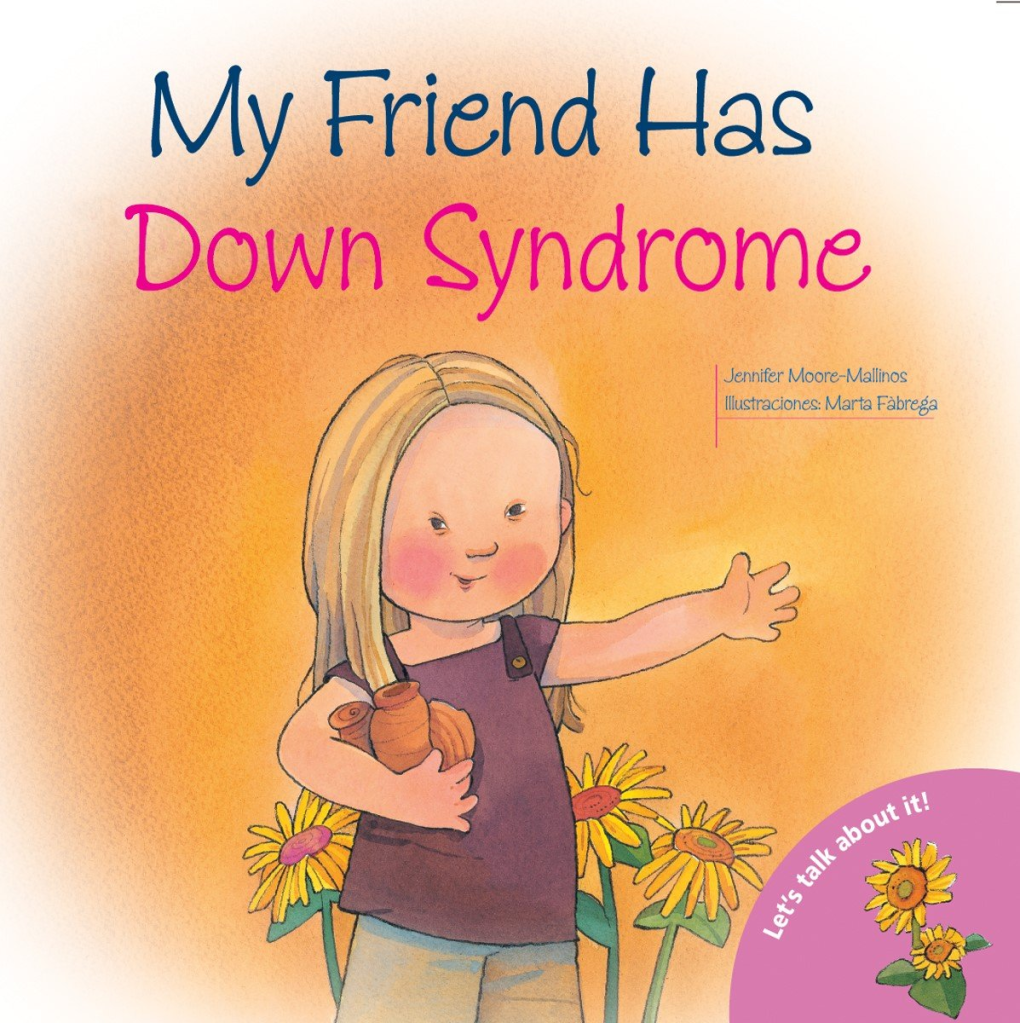
My Friend Has Down Syndrome by Jennifer Moore-Mallinos, order here: https://a.co/d/aSRCijS
These Down syndrome good reads are excellent resources for parents, families and professionals. Keep them in mind as gifts for the upcoming holiday season. In addition, many local Down syndrome support groups across the country provide lending libraries with these resources for families. Thank you for sharing and supporting us as we raise awareness and acceptance to celebrate Down Syndrome Awareness Month.
That’s what is in my noggin this week.
Teresa 🙂
Follow us on Facebook and Instagram at Down Syndrome with A Slice of Autism
Blog #254~Down Syndrome Awareness Month: Supporting Down Syndrome Businesses
Individuals with disabilities often struggle to find meaningful and competitive employment opportunities as adults. Many families think outside the box to create business opportunities for their loved one with Down syndrome. This week, I want to celebrate Down Syndrome Awareness Month by highlighting some of these business owners. As a mom to my son Nick age 29, who has a dual diagnosis of Down syndrome and autism (DS-ASD), I am a fierce advocate for indidviduals with disabilities. These are a few of my favorites that I have supported over the years.
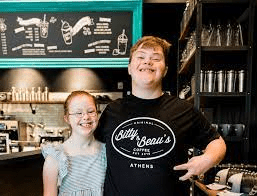
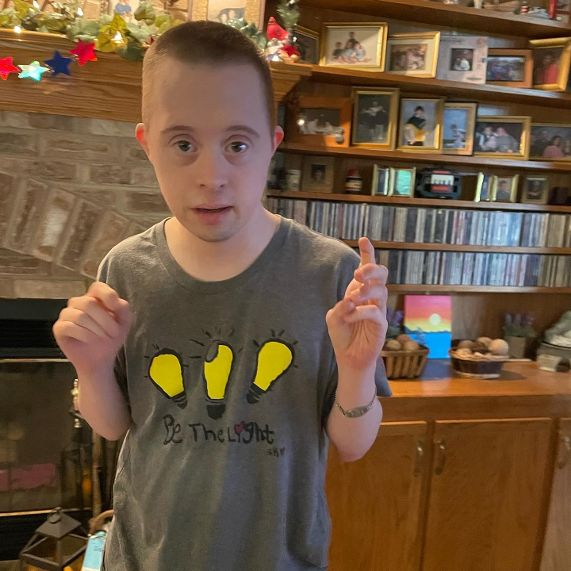
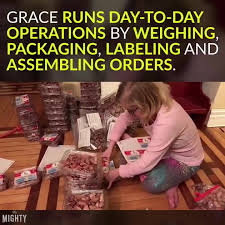
*Candidly Kind: Grace’s mission is to to spread light love and acceptance thru her original art and life including t-shirts and lots of swag gear. https://www.candidlykind.com/ Here’s a photo I took with Grace at the NDSC convention and along with my son, Nick modeling one of her designs:
*John’s Crazy Socks: “Their mission is to show what is possible when you give someone a chance”. Every day, we demonstrate what people with intellectual disabilities can do.” https://johnscrazysocks.com/
*Brittnay’s Baskets of Hope: “As part of our mission, we make and deliver baskets to celebrate the arrival of babies with Down syndrome that feature information and guidance for the parents and gifts of love and joy for the babies and their siblings”. https://www.brittanysbasketsofhope.org/ Follow her on social media to see all the beautiful babies that she highlights daily.
21 Pineapples Shirt Company: Nate is on a mission “To change the way others perceive people with Down syndrome & other special abilities one Hawaiian shirt at a time”. https://21pineapples.com/
Bravo to these young entreprenuers who have created businesses with their passion and talents. Many of these business owners give a portion of their proceeds to help others. Thank you for taking a look at these enterprises that would make great gifts for the holidays. Please feel free to share and follow each on social media.
That’s what is in my noggin this week.
~Teresa 🙂
Follow Nick and navigating DS-ASD on Facebook and Instagram at Down Syndrome with a Slice of Autism
October is Down Syndrome Awareness Month. My son, Nick is 29 years old and has a dual diagnosis of Down syndrome and autism (DS-ASD). As a parent, writer and advocate, my mission is to educate others to better understand more about Down syndrome and autism. Down syndrome awareness is about promoting understanding, acceptance and inclusion of all individuals with Down syndrome in all aspects of our society.
Down syndrome also called Trisomy 21, is a condition in which a person is born with an extra chromosome.
Here are 7 easy ways that you can promote Down syndrome awareness and acceptance:
1. Post information and stories about individuals with Down syndrome on your social media platforms. You can follow many inspiring individuals on Facebook and Instagram like Nick at #Down Syndrome with a Slice of Autism. Here are a few of my favorites:#noahsdaddotcom #calebs_crew #brittanysbaskets #chrisnikic #dsdn #chucklesandmeatloaf #nothingdownaboutit #sean_from_born_this_way #troymadeit #abigail_the_advocate #theluckyfew #aceismyfriend #ndss #ndsc
2. Use and promote “person first language” to respectively speak about a person with a disability. Individuals with Down syndrome should always be referred to as people first. Instead of “a Down syndrome child,” it should be “a child with Down syndrome.” Also avoid “Down’s child” and describing the condition as “Down’s,” as in, “He has Down’s.”
3. Check with your local Down syndrome support group to see if they have promotional materials, like books and bookmarks that can be distributed at libraries and schools.
4. Many local Down syndrome support groups have public speakers available to talk with schools, businesses, community groups, hospitals, and other organizations.
6. Encourage your kids to volunteer for Special Olympics and Best Buddies programs through their school.
7. Check out my book A New Course: A Mother’s Journey Navigating Down Syndrome and Autism is helping so many readers understand both Down syndrome and a co-occurring Down syndrome and autism (DS-ASD). It’s available on Amazon. Please utilize the share buttons on social media and order your copy here: @ https://amzn.to/2W3Un6X
Advocates for Down syndrome will tell you that “Down syndrome is just a part of who they are, not a definition of who they are”. The first step is awareness, the second step is acceptance and inclusion. Individuals with Down syndrome and their families want to encourage acceptance without judgement and change perception to see the whole person for who they are. Thank you for supporting and sharing information about Down syndrome awareness this month. Together we can promote understanding, acceptance and inclusion of all individuals with Down syndrome. That’s what is in my noggin this week.
Blog #252~DS-ASD:Teaching Personal Hygiene and Independent Living Skills at Home
The importance of teaching personal hygiene and other independent living skills at home can’t be emphasized enough. Parents, caregivers, teachers and aides are all on the front lines to support individuals with a dual diagnosis of Down syndrome and autism (DS-ASD). My son Nick is 29 years old and has DS-ASD, and honestly one of the most challenging areas to teach is personal hygiene. One thing that I have learned over the years is that it is never to early or late to work on these skills. This week we will examine specific skills and strategies to teach your loved one with DS-ASD.
Personal Hygiene and Independent Living Skills at Home:
*Using the toilet
*Putting clothes in the hamper/ hanging up towel
*Picking out clothes to wear/ dressing skills
*Brushing Teeth/ flossing
*Washing hands & face
*Putting on deodorant
*Shaving
*Beauty Regimens
*Menstrual cycle cleanliness
*Bathing/ showering & drying off
*Brushing hair
*Blowing nose
*Clipping nails/ tolerating and desensitizing nail clipping
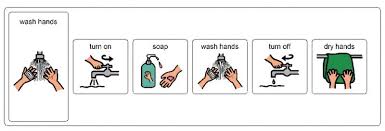
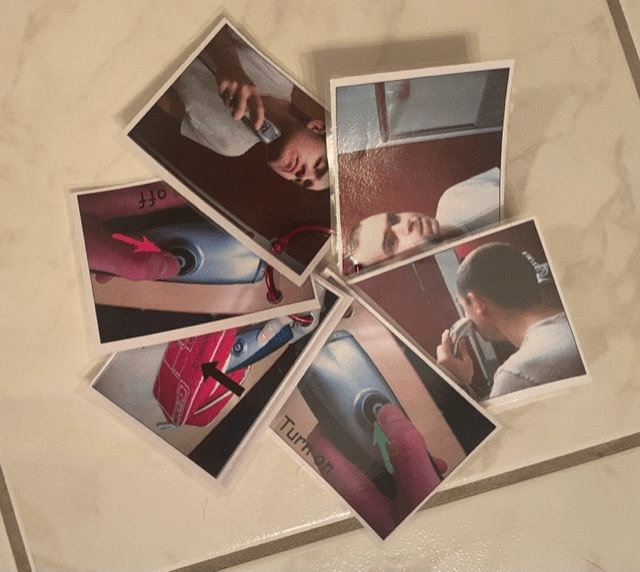
From the list above, consider the strengths of your child, start with a more preferred activity and build from there. Offer support using visuals or visual modeling with breakdown of the steps. Here are a few examples, many of which you can get from Google Images and YouTube. Consider whether the child responds better to understanding actual photographs, videos or Picture Exchange Communication(PECS) Symbols. Many speech and occupational therapists have visual supports that they can share with you. So, be sure to ask your child’s school or private therapists for these as well.
Washing Hands Routine:
Shaving Photo Visuals on a Key Ring:
Video Modeling of Brushing Teeth:
Over the years, we have used all of these visual supports and modeling techniques to teach these tasks. It can be very beneficial to work with a BCBA behaviorist who can help target skills, breakdown the steps and practice on a consistent basis. The BCBA can also build in schedules and rewards to help support and motivate your child.
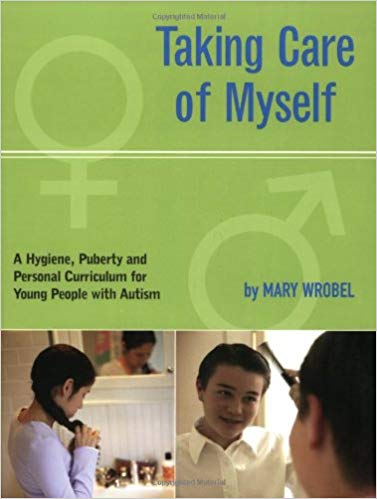
Here are some great resources for teaching personal hygiene and boundaries by author Mary Wrobel:
Independent living, hygiene and home management skills help to build confidence, a sense of ownership and belonging. Building these skills sets will give your child more jobs/day program and housing options when they become an adult.
To view more independent living skills click on the two previous blogs:
We hope that you have gained some insight and strategies for building independence from the past three blogs #250-252. Our goal and passion is to make this road of a dual diagnosis easier for other families. We also want to inspire you as a parent, teacher or caregiver to help your child reach their full potential. 🙂
For more information on navigating co-occurring DS-ASD in my book. Click here to order: https://amzn.to/2W3Un6X
Blog #251~DS-ASD: Independent Living Skills at Home
As a parent, teacher and caregiver, how do you help a child reach their full potential and become as independent as possible? I am a parent of a 29 year old son who has a dual diagnosis of Down syndrome and autism (DS-ASD). I work daily with my son Nick, on how to be responsible and do things independently. This gives him a sense of accomplishment and belonging. Last week’s blog focused on how to teach skills and jobs you can introduce in the kitchen. Click here to view: https://wp.me/p2ke99-3aS
This week, I have a full list of jobs for the kitchen, laundry and around the main floor living area.
Home Management Skills:
Cleaning up toys, putting away in bin/basket
Sweeping/ mopping the floor
Vacuuming the floor
Dust furniture
Throwing away items in the trash
Taking out the trash
Empty out recyclables and can crushing
Taking garbage and recycle bins to the curb
Picking up the mail
Wiping off countertops and windows
Set the table
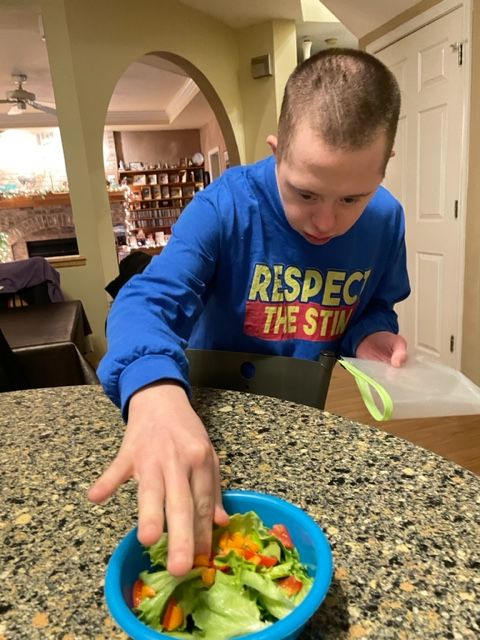
Assist with meal planning, food preparation and making choices of food and snacks
Washing dishes
Loading and unloading the dishwasher
Feed pets
Put dirty clothes in the hamper
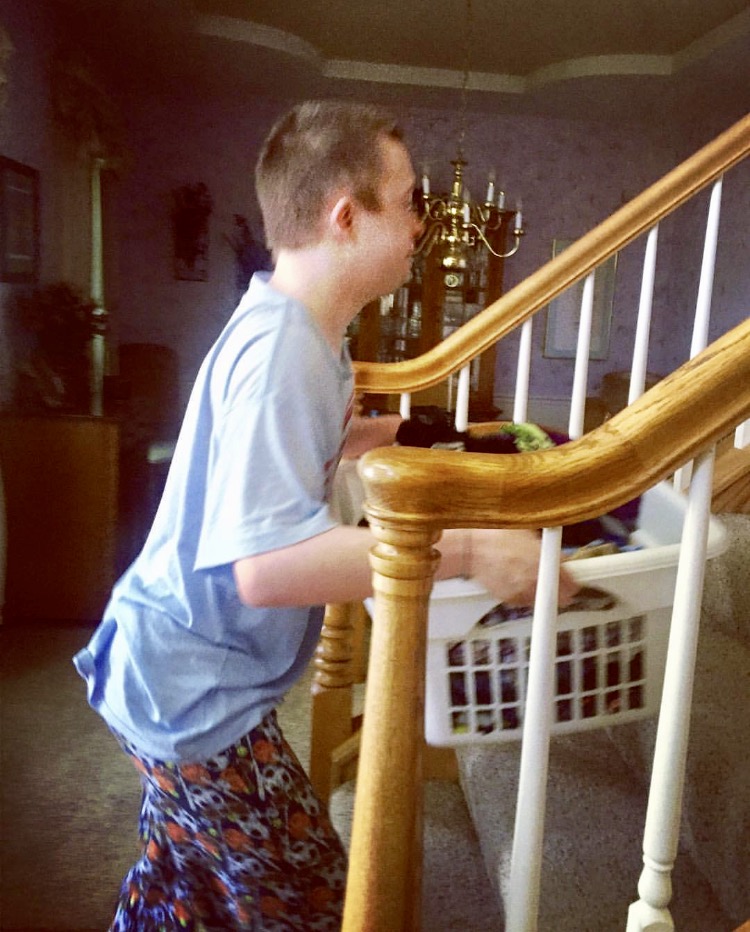
Carry and load laundry into washer and dryer
Folding clothes
Put away clothes
Hang up coats
Making the bed
Bring in and put away groceries
Water plants
In last week’s blog I mentioned the that these jobs didn’t happen overnight. We have built on these for many years. I suggest you start small and use lots of praise and rewards. Over the years we have modeled the jobs ourselves, used visuals, and video modeling to teach these tasks. It can be very beneficial to work with a BCBA behaviorist who can help you target skills, by meeting the child where they are at, breaking down the task and using the hand over hand technique as well as point prompts to support the child.
These home management skills will help to build self-esteem, along with a sense of ownership and belonging. Building a skill set of independence will give your child housing options when they become an adult. The next blog will move into the bathroom and include some personal hygiene skills. We hope that you feel inspired as a parent, teacher or caregiver to help your child to reach their full potential.
That’s what is in my noggin this week.
~Teresa 🙂
For more information on navigating co-occurring DS-ASD. Click here to order: https://amzn.to/2W3Un6X
Blog #250~DS-ASD: Teaching Independent Living Skills
The ultimate goal for parents, teachers and caregivers is to help the child reach their full potential and become as independent as possible. I am a parent to a soon to be 29 year old son who has a dual diagnosis of Down syndrome and autism (DS-ASD). I strive and struggle daily to help my son Nick, but also coach and encourage and other families by offering strategies to assist their children. Independent living skills teach kids how to be responsible and give a sense of accomplishment. How do you start teaching these skills? That’s what I want to focus on for this week’s blog and it’s also a goal that I set for myself and Nick this year.
5Tips for teaching independent living skills:
*Meet the child where they are at and build activities around their strengths
*Use visual schedules, task strips, token boards, modeling/video modeling, point prompts and hand over hand techniques
*Start with a preferred activity and include fun tasks
*Focus on one area or task at a time and build from there
*Use a highly preferred reinforcer that is motivating to your child
The first thing to do when starting to teach a skill is to identify an activity or task. Then, you want to meet the child where they are at according to their skill level. It’s helpful to pick something that you can build around the child’s strengths. My son Nick is very good at matching and knowing where things belong. He’s always had a keen eye and we play upon this strength. It helps to focus on one area of the house at a time. Let’s start with the kitchen, what tasks could your child do?
Kitchen Task Ideas:
*Help load or unload the dishwasher/ wash and dry dishes
*Wipe down countertops and windows
*Sweep and mop floor
*Feeding pets
*Help with garbage and recycling/ can crushing
*Set the table
*Assist in meal preparation and making choices of food and snacks
*Sweep and mop floor
*Put away groceries
Using visuals can help the child make choices and understand the steps involved by breaking down the task. Schedules and token boards give the child a clear beginning and end to what is expected and provide predictability. Task strips like the one below help to break down the activity into smaller steps:
Nick’s kitchen tasks includes unloading groceries and the dishwasher and emptying the recycling container to the outdoor bin. When the weather permits, he helps push the garbage and recycling bins to the curb. This is followed by a highly preferred reward= Sprite. Nick also helps with meal prep and wiping the countertops down. He takes great pride in his jobs and this gives him a sense of accomplishment.
These jobs didn’t happen overnight. Over the years we’ve used visuals to teach tasks but also modeling/ video models, using the hand over hand technique and fading back to point prompts. It can be a a lot of frontloaded work getting started and teaching your child. Working with a BCBA behaviorist can be very beneficial in identifying target behaviors and building the skill set to complete living skills independently.
This blog will be the first of many to focus on teaching independent living skills around the house. Nick and I will take you through one room at a time. Our goal and passion is to make this road of a dual diagnosis easier for other families. We also want to inspire you as a parent, teacher or caregiver to help your child reach their full potential.
That’s what is in my noggin this week.
~Teresa 🙂
For more information on navigating co-occurring DS-ASD in my book. Click here to order: https://amzn.to/2W3Un6X
























 Down Syndrome with a Slice of Autism